Objects of the Bible

The gifts of the magi

Three portable valuables handed to a refugee family about to need exactly that.

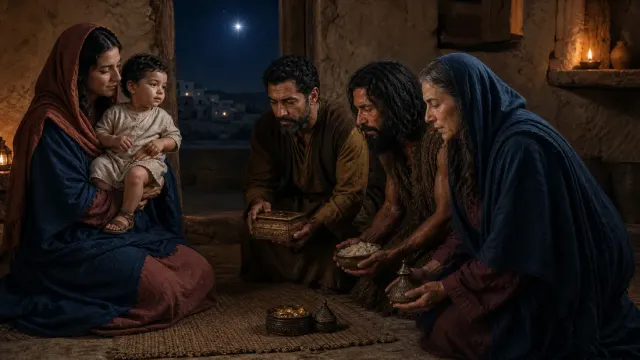
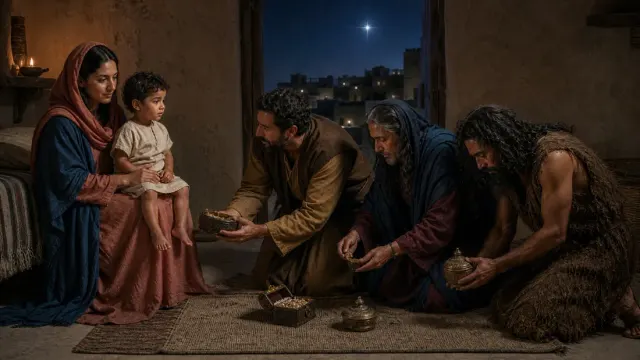
When they had opened their treasures, they presented unto him gifts; gold, and frankincense, and myrrh. That is the whole of it, one verse, with no explanation of the choice and no reaction recorded from anyone in the house. The three gifts are why later tradition settled on three visitors, though Matthew gives no number. Gold is money. Frankincense is temple incense. Myrrh is a burial spice, and also the thing later offered to him on the cross mingled with wine, which he refused.

Where it appearsMatthew 2

Scroll down to the account
The gifts of the magi

The movements, in the order the text gives them.

The Account of The gifts of the magi

  1. 01

    Matthew 2:11

    They fell down, and worshipped him

    The gesture is recorded before the gifts, and it is made by foreigners to a child in an ordinary house.

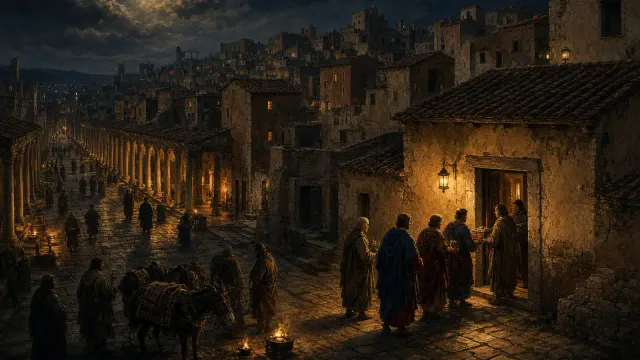
    The visitors go down before their treasures come out. Matthew's order keeps the expensive objects from becoming the center of the room. They see the child with Mary, fall down, worship him, and only then open what they have brought. The gifts express an acknowledgment already made with their bodies.

    The pronouns are just as exact. Mary is present, but him is the object of worship and the recipient of the gifts. The household receives visitors; the child receives homage. Matthew does not need a throne to make the encounter royal. The men who asked for the King of the Jews have found a child in a house, and the account records no demand for more impressive surroundings.

    There is also a useful restraint in the inventory. Three kinds of gifts are named, but no head count follows. Three gifts have been made to carry three men through centuries of pictures. Matthew supplies the valuables. He does not supply that arithmetic.

    Verse by verse

    1. 2:11

      The Greek proskyneo can describe bowing in homage or worship. Here the bodily action and the royal quest establish the immediate setting.

    2. 2:11

      House is the stated location. Neither a stable nor a simultaneous visit by shepherds appears in Matthew 2:11.
    Matthew 2:11

    King James Version · 1 verse

    2:11And when they were come into the house, they saw the young child with Mary his mother, and fell down, and worshipped him: and when they had opened their treasures, they presented unto him gifts; gold, and frankincense, and myrrh.

    Matthew 2:11: They fell down, and worshipped him
  2. 02

    Matthew 2:11

    Gold, and frankincense, and myrrh

    Three nouns and no commentary. The account does not say what the choice meant and has never needed to.

    These are three substances before they are three symbols. Gold is gold, and the two aromatics arrive as actual valuables, not labels on a theological diagram. Matthew names them without assigning a separate meaning to each one. That silence does not make the later symbolism worthless; it keeps interpretation from being mistaken for a quotation.

    Scripture gives the substances a wider range than the familiar set of meanings sometimes allows. Exodus 30 includes myrrh in the holy anointing oil and frankincense in the incense. Myrrh therefore does not belong exclusively to funerals. John 19:39 does place it at Jesus' burial, which makes that later association substantial without proving how much the visitors understood.

    The combined effect in this verse is costly homage. Their treasures are opened and transferred, not displayed and packed away again. Matthew names no weight, price, or portion assigned to each visitor. What matters is the direction in which the wealth moves: toward the child.

    Verse by verse

    1. 2:11

      Exodus 30:23-25 places myrrh in anointing oil; Exodus 30:34 names frankincense in the incense mixture.

    2. 2:11

      The passage gives three kinds of valuables, not their quantities or market prices. A modern monetary total would be guesswork.

    Matthew 2:11

    King James Version · 1 verse

    2:11And when they were come into the house, they saw the young child with Mary his mother, and fell down, and worshipped him: and when they had opened their treasures, they presented unto him gifts; gold, and frankincense, and myrrh.

    Matthew 2:11: Gold, and frankincense, and myrrh
  3. 03

    Matthew 2:13-14

    He took the young child and his mother by night

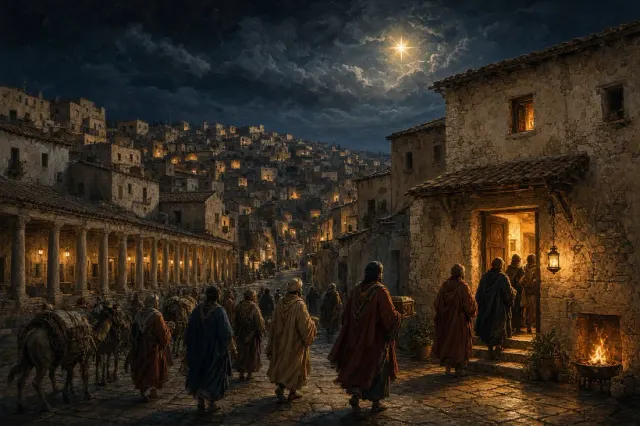
    The flight comes two verses later, and it is the kind of journey that requires portable value.

    The gifts have reached a family that must leave by night. Placing those two scenes together gives the valuables an immediate practical significance: they can travel. The suggestion that they helped support the flight to Egypt is reasonable, but Matthew never records a sale or a payment. The connection is an inference, not an itemized account.

    The detail that Matthew does record is the hour. Joseph does not receive an instruction and then a leisurely interval for preparation. The command to take the child and his mother is answered by a sentence repeating the action, with by night added. The obedience has the shape of the instruction.

    Royal homage has not made the household secure. The same child receives gifts from distant visitors and requires protection from the ruler nearby. Matthew names the threatened violence without disguising it: Herod will seek the young child to destroy him. Gold is portable. A house is not. The passage now concerns getting the people out.

    Verse by verse

    1. 2:13

      The angel gives Egypt as the destination and a further divine message as the limit of the stay, not a calendar date.

    2. 2:14

      By night specifies the departure. The route, means of transport, and use of the visitors' gifts are not recorded.

    Matthew 2:13-14

    King James Version · 2 verses

    2:13And when they were departed, behold, the angel of the Lord appeareth to Joseph in a dream, saying, Arise, and take the young child and his mother, and flee into Egypt, and be thou there until I bring thee word: for Herod will seek the young child to destroy him.

    2:14When he arose, he took the young child and his mother by night, and departed into Egypt:

    Matthew 2:13-14: He took the young child and his mother by night
  4. 04

    Matthew 2:15

    Out of Egypt have I called my son

    The exile is given a citation, which turns a refugee crossing into a repetition of a national one.

    Egypt is shelter here, but the quotation remembers it as the place from which a son was called out. That double role gives the verse its depth. The land associated with Israel's captivity now receives the endangered child, and Matthew understands the child's departure through Israel's earlier deliverance.

    Hosea 11:1 begins by naming Israel. In its original setting, the line looks back to the exodus rather than presenting a detached forecast about an unnamed infant. Matthew does not erase that first setting. His fulfillment claim presents Jesus as embodying the history of the son whom God brought from Egypt. The correspondence depends on Israel's history remaining visible.

    The gifts themselves have dropped out of the account. Matthew tracks the child, the threat, and the word spoken through the prophet, not the household accounts. Until the death of Herod measures the refuge; my son explains its scriptural significance. A journey made under danger is also placed within a much older relationship.

    Verse by verse

    1. 2:15

      The cited prophet is Hosea, specifically Hosea 11:1. Its original subject is explicitly Israel.

    2. 2:15

      Matthew presents this as fulfillment through the correspondence between Israel and Jesus. The verse does not specify how long the family lived in Egypt.

    Matthew 2:15

    King James Version · 1 verse

    2:15And was there until the death of Herod: that it might be fulfilled which was spoken of the Lord by the prophet, saying, Out of Egypt have I called my son.

    Matthew 2:15: Out of Egypt have I called my son
  5. 05

    Mark 15:23

    Wine mingled with myrrh: but he received it not

    The third gift returns at the end as a painkiller, offered at the cross and refused.

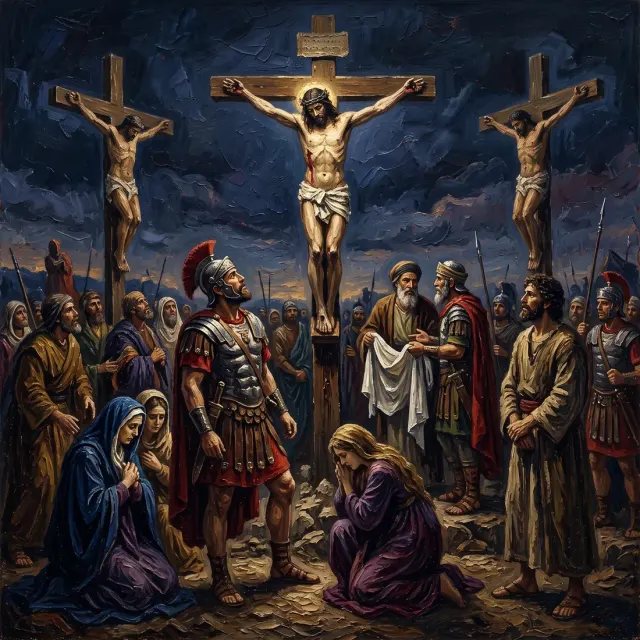
    Myrrh returns without a treasure chest. In Matthew it is given to the child as a valuable gift; here, in Mark, it is mixed into wine offered before crucifixion. The substance is familiar, but the setting has changed completely. No claim that this is the same supply is possible. The connection belongs to the canonical reading, not to an inventory carried across the years.

    Mark's sentence is unusually firm about the result and silent about the explanation. He received it not. It does not state who prepared the mixture, its strength, or Jesus' stated reason for refusing it. Describing an exact medical effect would supply information the passage does not give.

    The refusal is also local, not a declaration that no drink is ever received. John 19:30 records Jesus receiving vinegar near the end. Different moments and different drinks should not be pressed into one. The costly aromatic that accompanied homage at the beginning now appears beside the machinery of execution.

    Verse by verse

    1. 15:23

      The text explicitly records refusal of the myrrh-treated wine. It does not quote an explanation for the refusal.

    2. 15:23

      John 19:39 places myrrh with aloes among the burial spices. Myrrh therefore appears in three distinct Gospel settings: gifts, drink, and burial.

    Mark 15:23

    King James Version · 1 verse

    15:23And they gave him to drink wine mingled with myrrh: but he received it not.

    Mark 15:23: Wine mingled with myrrh: but he received it not

Why it matters

The practical reading is the one the next paragraph forces on you. Within a few verses the family is told to leave for Egypt at night and stay there until Herod dies, which is an expensive journey for a carpenter. The gifts are small, portable and universally negotiable, and they arrive immediately before the only period of the account in which the family has no income and no home. Matthew does not connect the two. He simply puts them one after the other.

2 songs

The music

Every song in the catalogue whose passage falls inside these chapters.

  1. Matthew 1-2; Luke 2:1-38

    Glory in the Highest

  2. Matthew 2:1-23

    The Star and the Sword

    Play here
    Open song pageRead lyrics

Nearby

All the objects

Report an error on this page