- 01
Luke 2:6-7
There was no room for them in the inn
The birth is reported in one verse with no description, and the only furniture named is a trough.
- 02
Luke 2:8-9
Shepherds abiding in the field, keeping watch over their flock by night
The audience for the announcement is chosen and the account says exactly what they were doing when it came.
- 03
Luke 2:12
This shall be a sign unto you
The sign is not the star or the song. It is an object anyone could check, in a town small enough to check it.
- 04
Luke 2:15-16
They came with haste, and found
They go and verify, which is the response the sign was built for, and the account confirms the detail matched.
- 05
Luke 2:19
Mary kept all these things, and pondered them in her heart
The chapter ends with a private verb. Everyone else tells people; she keeps and compares.


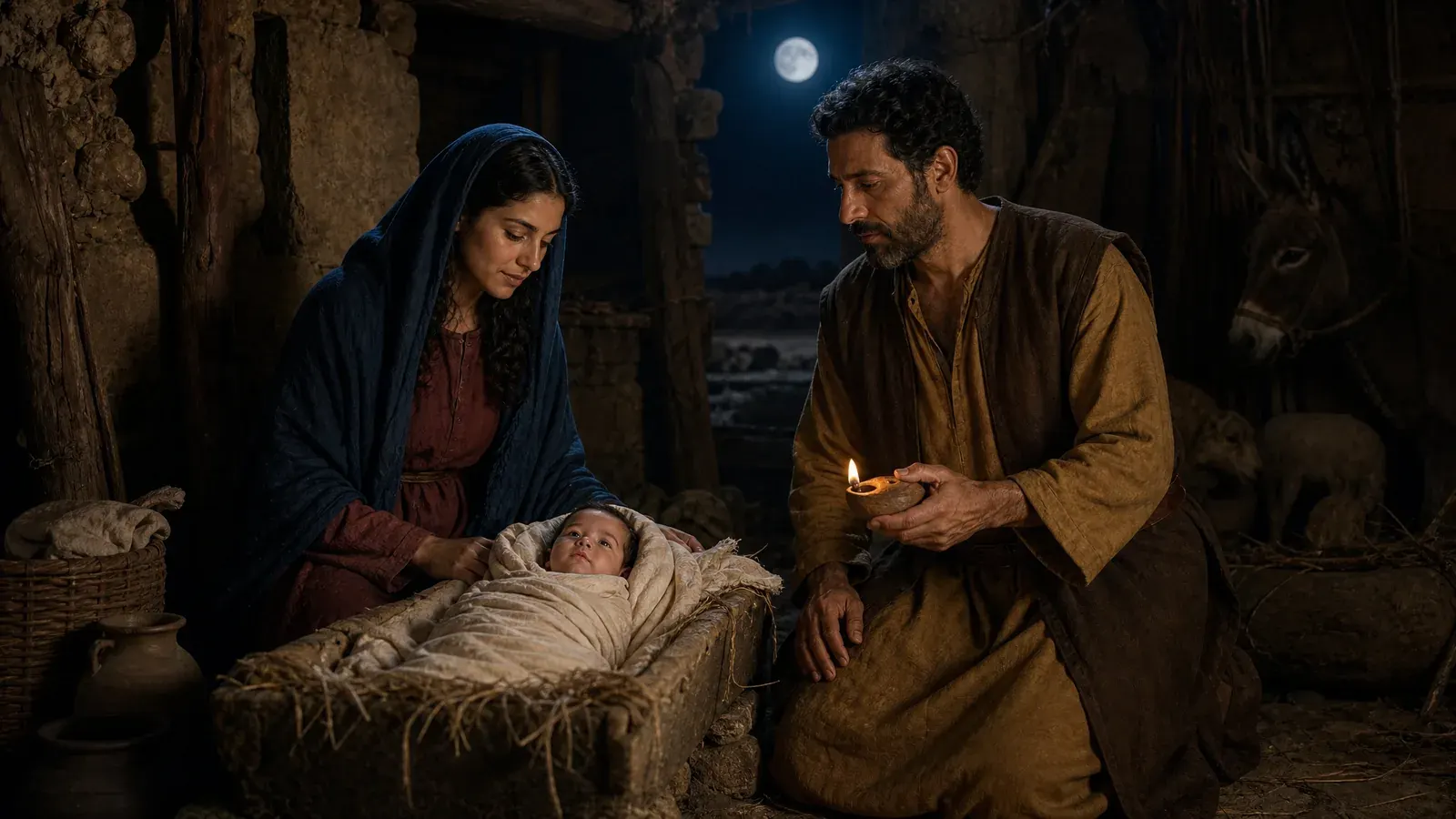
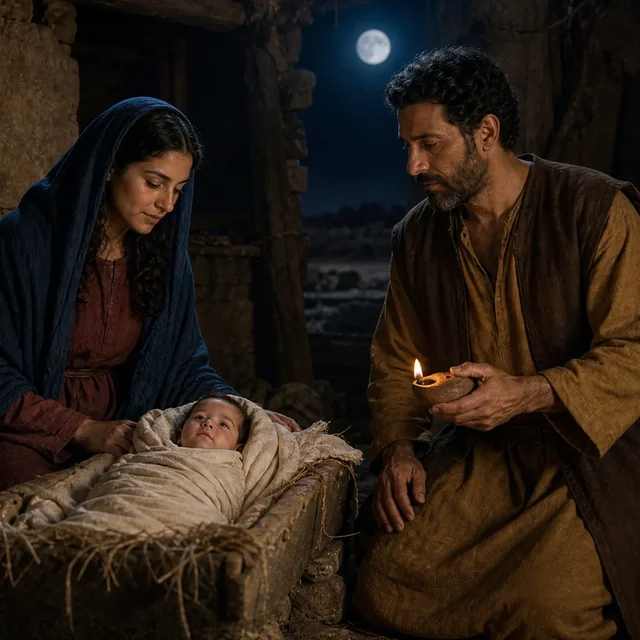
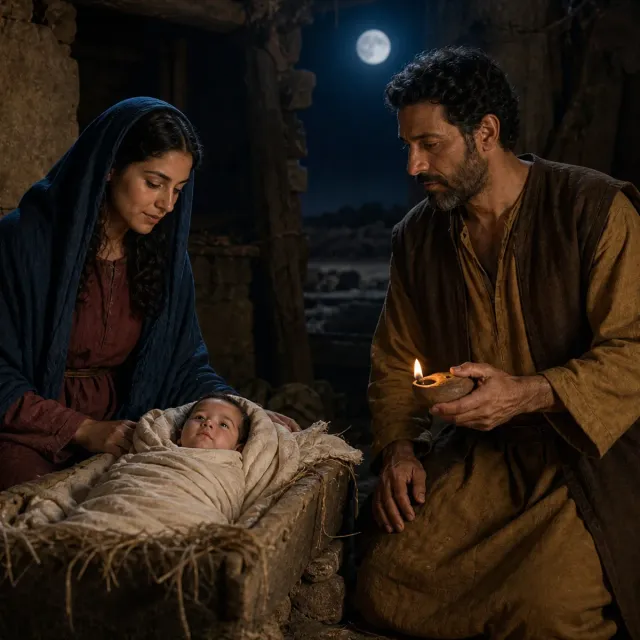



The sentence gives Mary three verbs and the accommodation problem one clause. She brought forth, wrapped, and laid. The Book of Luke does not linger over a landlord refusing a desperate couple; it never introduces a landlord at all. Its attention stays on the mother handling her newborn and the feeding trough that has become his bed. The practical reason is plain. There was no room for them in the lodging place.
Even the timing is quieter than the familiar scene often suggests. While they were there does not say that labor began at the town gate. The passage leaves the interval unspecified. What it specifies is the object. Not a throne, and not yet an object of pilgrimage: a manger. The chapter has opened with an imperial decree moving people across the map, then narrowed to one woman arranging a place for her child. The emperor gets the opening announcement. Mary gets the verbs.