
New · FreePlay The Witnesses The in-depth puzzle battle quest through Bible history

People of the Bible

Joseph of Nazareth

Not one recorded word, four dreams, and three moves that kept a child alive.

Joseph is a carpenter in Nazareth engaged to Mary, and he is described as a just man who did not want to make her a public example. He is planning a quiet divorce when he is told in a dream to take her, and he wakes and does it. Every appearance he makes is the same shape: a dream, then a departure. Take the child and his mother and flee into Egypt. Take them and go into the land of Israel. Warned again, he turns aside into Galilee. He is never quoted, and he is last seen looking for a twelve year old in Jerusalem.

Where he appearsMatthew 1 to 2 · Luke 2

Scroll down to the account
Joseph of Nazareth

The movements, in the order the text gives them.

The Account of Joseph of Nazareth

  1. 01

    Matthew 1:18-25

    Minded to put her away privately

    A just man looking for the least damaging way out. The dream reverses the decision, gives him the name to use, and he rises from sleep and does as the angel had bidden him.

    Joseph is called just before the dream changes his decision. Matthew places his unwillingness to expose Mary publicly beside that description, not as an embarrassment that must be corrected. He has resolved on a private separation. The angel does not tell a cruel man to become considerate; the message tells a considerate man that the pregnancy does not mean what he has taken it to mean. The reason given is specific: what is conceived in her is of the Holy Ghost. Matthew supplies that explanation before granting Joseph any spoken words at all.

    The address son of David matters. The genealogy has reached Joseph, but the child is not described as conceived by him. His role is expressed through actions: he takes Mary as his wife and calls the child Jesus, exactly as instructed. The name is explained by the child's work, saving his people from their sins. Joseph does not supply the identity; he receives and acknowledges it. Nothing in the passage describes a public confrontation, Mary's explanation to him or the reactions of the town. What Matthew does record is stronger than an invented speech: Joseph wakes and changes course. His righteousness is not made rigid by an earlier decision.

    Verse by verse

    1. 1:18-19

      Espousal was a binding commitment, which explains why Joseph is called husband and contemplates putting Mary away before they live together. The passage does not describe a modern engagement.

    2. 1:20

      Son of David links Joseph with the genealogy immediately preceding the passage. The angel identifies the Holy Ghost, not Joseph, as the source of the conception.

    3. 1:21

      Jesus corresponds to the Hebrew name associated with the Lord saving. Matthew explicitly connects the name with deliverance from sins.

    4. 1:25

      Till establishes the absence of sexual relations before the birth. Whether the wording implies subsequent relations has been debated; this verse alone does not settle the larger question.
    Matthew 1:18-25

    King James Version · 8 verses

    1:18Now the birth of Jesus Christ was on this wise: When as his mother Mary was espoused to Joseph, before they came together, she was found with child of the Holy Ghost.

    1:19Then Joseph her husband, being a just man, and not willing to make her a publick example, was minded to put her away privily.

    1:20But while he thought on these things, behold, the angel of the Lord appeared unto him in a dream, saying, Joseph, thou son of David, fear not to take unto thee Mary thy wife: for that which is conceived in her is of the Holy Ghost.

    1:21And she shall bring forth a son, and thou shalt call his name JESUS: for he shall save his people from their sins.

    1:22Now all this was done, that it might be fulfilled which was spoken of the Lord by the prophet, saying,

    1:23Behold, a virgin shall be with child, and shall bring forth a son, and they shall call his name Emmanuel, which being interpreted is, God with us.

    1:24Then Joseph being raised from sleep did as the angel of the Lord had bidden him, and took unto him his wife:

    1:25And knew her not till she had brought forth her firstborn son: and he called his name JESUS.

    Matthew 1:18-25: Minded to put her away privately
  2. 02

    Matthew 2:13-15

    Flee into Egypt

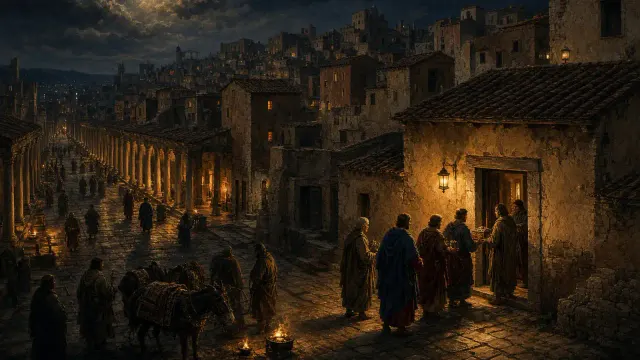
    He is told at night and leaves at night, with no indication of how long. The instruction ends be there until I bring you word, which is an open ticket and no itinerary.

    Deliverance takes the form of an interrupted night. The instruction does not give Joseph a complete itinerary or a date for coming home. It gives a destination, a reason for urgency and a stopping rule: remain until another word comes. Matthew then matches command with action almost word for word. Take the young child and his mother becomes he took the young child and his mother. The added detail is by night. Joseph's response is measured in movement rather than explanation.

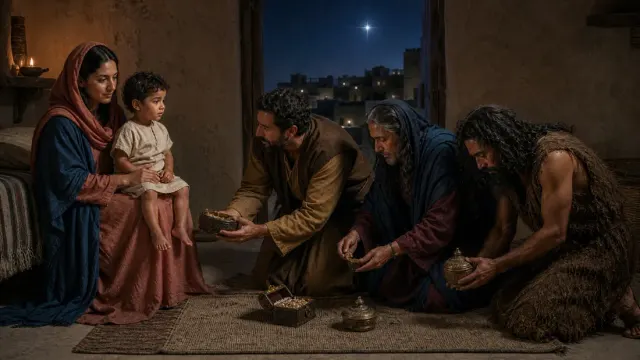
    Egypt is a striking refuge within Israel's Scriptures. The country of the exodus now shelters the child from a ruler in the land of Israel. Matthew does not leave that reversal without interpretation. He cites Hosea 11:1, where God's son originally refers to Israel brought out of Egypt. The fulfilment is therefore more than a prediction of an address: Jesus' early life takes up the course of the people whose name the prophet used. Joseph's protective journey stands inside that larger pattern without ceasing to be a journey made because a child is in danger. The promise is not permission to remain in place. The child is carried to safety.

    Verse by verse

    1. 2:13

      The stay is to last until further instruction, not a stated number of days or years. Matthew provides no Egyptian town or travel route.

    2. 2:14

      By night is an explicit detail of the departure. The text does not describe the means of transport or what the family carried.

    3. 2:15

      Hosea 11:1 originally recalls Israel's exodus. Matthew applies that history of the son called from Egypt to Jesus, rather than treating Hosea's original subject as unknown.

    Matthew 2:13-15

    King James Version · 3 verses

    2:13And when they were departed, behold, the angel of the Lord appeareth to Joseph in a dream, saying, Arise, and take the young child and his mother, and flee into Egypt, and be thou there until I bring thee word: for Herod will seek the young child to destroy him.

    2:14When he arose, he took the young child and his mother by night, and departed into Egypt:

    2:15And was there until the death of Herod: that it might be fulfilled which was spoken of the Lord by the prophet, saying, Out of Egypt have I called my son.

    Matthew 2:13-15: Flee into Egypt
  3. 03

    Matthew 2:19-23

    Turned aside into Galilee

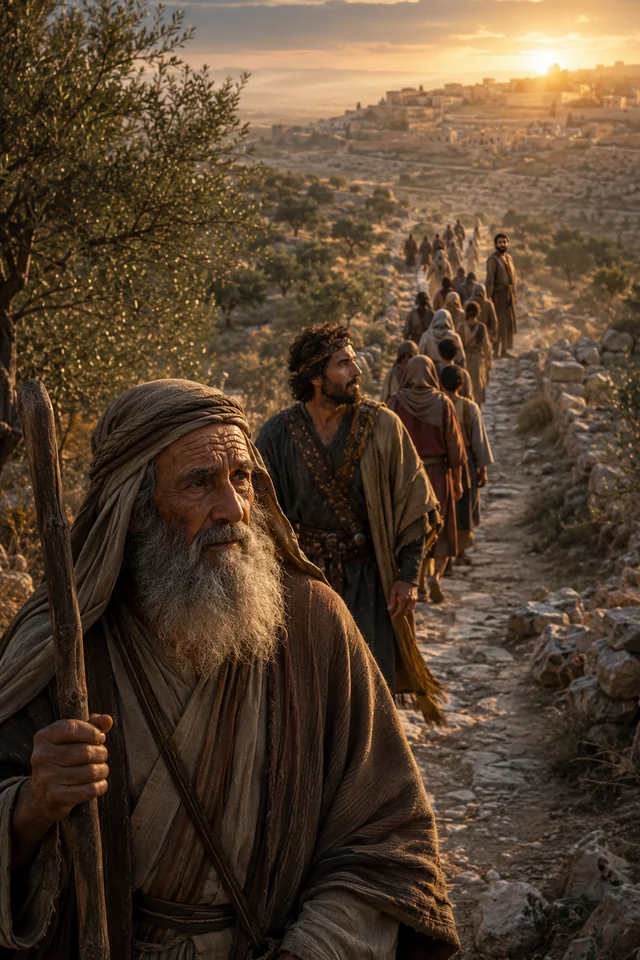
    Told the danger has died, he starts for Judea and then hears who is reigning. Warned again in a dream, he takes the family north to a town nobody expected anything from.

    Herod is dead. The danger has not obligingly died with him. Joseph obeys the command to return to the land of Israel, then hears that Archelaus rules in Judaea and is afraid to go there. Matthew states the fear without rebuking it. Another warning in a dream directs the turn toward Galilee. The passage therefore contains two stages of guidance, not one broad instruction that Joseph somehow spoils by being cautious. He returns, receives further warning and settles in Nazareth.

    The repeated verbs keep Joseph's work concrete: he rises, takes the child and his mother, comes, turns aside and dwells. None requires an invented speech about courage. Matthew places the result under the words of the prophets, in the plural: he shall be called a Nazarene. No single Old Testament verse contains that exact sentence, and proposed explanations differ. That difficulty should remain visible rather than being solved with a quotation that does not exist. What is unambiguous is the connection between the town and the designation. The child preserved through Joseph's movements will be known by the place where Joseph makes a home. The extraordinary guidance ends in the ordinary work of dwelling.

    Verse by verse

    1. 2:19-20

      The wording about those who sought the child's life recalls Exodus 4:19. Matthew gives no duration for the family's stay in Egypt.

    2. 2:22

      This is a further dream after the return instruction in 2:19-20. Joseph's fear is stated, not condemned.

    3. 2:23

      Nazarene connects Jesus with Nazareth and is not the same designation as Nazirite. Matthew's appeal to the prophets has several proposed explanations rather than one undisputed Old Testament quotation.

    Matthew 2:19-23

    King James Version · 5 verses

    2:19But when Herod was dead, behold, an angel of the Lord appeareth in a dream to Joseph in Egypt,

    2:20Saying, Arise, and take the young child and his mother, and go into the land of Israel: for they are dead which sought the young child’s life.

    2:21And he arose, and took the young child and his mother, and came into the land of Israel.

    2:22But when he heard that Archelaus did reign in Judaea in the room of his father Herod, he was afraid to go thither: notwithstanding, being warned of God in a dream, he turned aside into the parts of Galilee:

    2:23And he came and dwelt in a city called Nazareth: that it might be fulfilled which was spoken by the prophets, He shall be called a Nazarene.

    Matthew 2:19-23: Turned aside into Galilee
  4. 04

    Luke 2:41-50

    Your father and I have sought you

    Three days of searching in Jerusalem. It is Mary who speaks, and the answer she gets is about another father, and the text says they did not understand it.

    Mary says thy father; Jesus answers my Father. The change is the centre of the exchange, but it does not turn Joseph into a mistake that Luke needs to erase. The passage calls Joseph and Mary his parents, describes their yearly Passover journey and records their shared sorrow in the search. Jesus' answer identifies a prior claim upon him, not a denial that Joseph has genuinely cared for him. The next verse makes that distinction especially important: Jesus returns to Nazareth and is subject to them.

    The temple scene is also more exact than the familiar picture of a child lecturing helpless scholars. Jesus is listening and asking questions as well as giving answers. The doctors are teachers, and their astonishment concerns his understanding. Joseph and Mary, meanwhile, do not understand the saying addressed to them. Luke is willing to place extraordinary wisdom and parental bewilderment in the same room. The first words of Jesus recorded in this Gospel contain I must. His Father's purposes are not an optional addition to family life. Joseph's final appearance in an active scene therefore gives no farewell speech and no account of his death. It leaves him doing what he has done throughout: taking responsibility for a son whose identity is larger than his household.

    Verse by verse

    1. 2:42

      Luke gives the age as twelve. The passage does not call the visit a bar mitzvah or describe a separate coming-of-age ceremony.

    2. 2:44

      The company includes relatives and acquaintances. Luke states the parents' assumption without describing a supposed separation of the travelling party into men's and women's groups.

    3. 2:46

      Doctors means teachers of the law, not physicians. Jesus is described as both listening and asking questions.

    4. 2:48-50

      The contrast is between Mary's reference to Joseph as father and Jesus' reference to his Father. Luke 2:51 immediately preserves his submission to both parents.

    Luke 2:41-50

    King James Version · 10 verses

    2:41Now his parents went to Jerusalem every year at the feast of the passover.

    2:42And when he was twelve years old, they went up to Jerusalem after the custom of the feast.

    2:43And when they had fulfilled the days, as they returned, the child Jesus tarried behind in Jerusalem; and Joseph and his mother knew not of it.

    2:44But they, supposing him to have been in the company, went a day’s journey; and they sought him among their kinsfolk and acquaintance.

    2:45And when they found him not, they turned back again to Jerusalem, seeking him.

    2:46And it came to pass, that after three days they found him in the temple, sitting in the midst of the doctors, both hearing them, and asking them questions.

    2:47And all that heard him were astonished at his understanding and answers.

    2:48And when they saw him, they were amazed: and his mother said unto him, Son, why hast thou thus dealt with us? behold, thy father and I have sought thee sorrowing.

    2:49And he said unto them, How is it that ye sought me? wist ye not that I must be about my Father’s business?

    2:50And they understood not the saying which he spake unto them.

    Luke 2:41-50: Your father and I have sought you

Why it matters

Matthew gives him the legal line, a genealogy through David that makes the child an heir, and Joseph supplies the name he was told to use. His character is entirely in what he does not do: he does not shame her, does not argue, does not explain himself to anyone. The last thing we hear about him is in a question from the neighbours years later, is not this the carpenter’s son, which is a whole life summed up by people who thought they knew.

7 songs

The music

Every song in the catalogue whose passage falls inside these chapters.

  1. Matthew 1:18-25

    Emmanuel in Joseph's Dream

  2. Matthew 1-2; Luke 2:1-38

    Glory in the Highest

  3. Matthew 2:1-23

    The Star and the Sword

    Play here
    Open song pageRead lyrics
  4. Luke 2:21-40

    A Light to Lighten the Gentiles

    Play here
    Open song pageRead lyrics
  5. Luke 2:1-7

    Born in Bethlehem

    Play here
    Open song pageRead lyrics
  6. Luke 2:8-20

    Glory in the Highest

    Play here
    Open song pageRead lyrics
  7. Luke 2:41-52

    My Father's Business

    Play here
    Open song pageRead lyrics

Nearby

All the people

Report an error on this page