New · FreePlay The Witnesses The in-depth puzzle battle quest through Bible history

Objects of the Bible

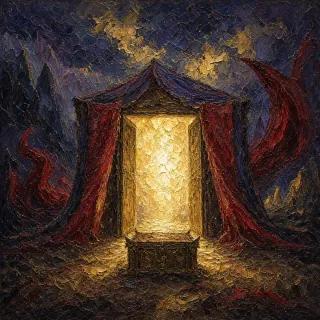
The pillar of cloud and fire

One object with two settings, and the text is careful to say it never departed.

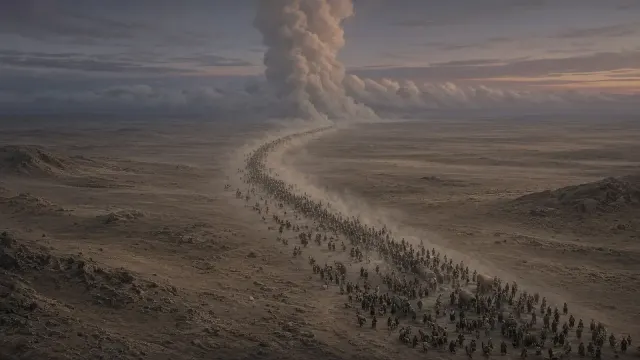
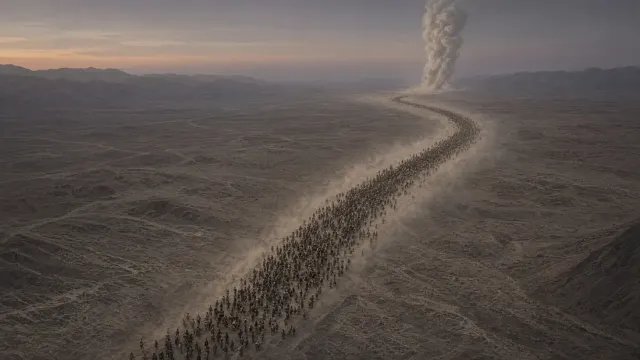
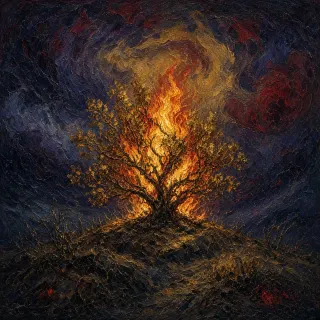
It appears the moment they leave Succoth and it is described as a single thing doing two jobs: the LORD went before them by day in a pillar of a cloud to lead them the way, and by night in a pillar of fire to give them light, to go by day and night. The sentence that follows is the one that matters most, and it is about continuity rather than spectacle: he took not away the pillar of the cloud by day, nor the pillar of fire by night, from before the people.

Where it appearsExodus 13 · Exodus 14 · Exodus 40

Scroll down to the account
The pillar of cloud and fire

The movements, in the order the text gives them.

The Account of The pillar of cloud and fire

  1. 01

    Exodus 13:21-22

    He took not away the pillar

    Guidance by day and light by night, described as one presence with two appearances, and the emphasis falls on it never leaving.

    The shortest road has already been refused before the pillar appears. Verse 17 explains that God does not take Israel by the nearer Philistine route because of the danger of returning to Egypt at the sight of war. The guidance described here is therefore not a promise of the fewest miles. It belongs to a deliberate route whose reason the chapter has supplied. The wilderness is not evidence that the guide has mislaid the map.

    The two appearances serve named purposes: the cloud leads, and the fire gives light. Day and night do not divide the journey into hours with God and hours without him. Verse 22 repeats the arrangements in a negative form, he took not away, making continuity the point worth saying twice. The passage permits travel by day and night; it does not say nobody ever slept. What remains uninterrupted is the provision of guidance. Israel has left Pharaoh's territory without being left to find its own road.

    Verse by verse

    1. 13:21

      The preceding verses explain why the shorter Philistine route was not chosen. Guidance here does not mean the shortest geographical journey.

    2. 13:22

      The negative repetition stresses that the provision was not withdrawn. It does not require uninterrupted marching through every day and night.

    Exodus 13:21-22

    King James Version · 2 verses

    13:21And the LORD went before them by day in a pillar of a cloud, to lead them the way; and by night in a pillar of fire, to give them light; to go by day and night:

    13:22He took not away the pillar of the cloud by day, nor the pillar of fire by night, from before the people.

    Exodus 13:21-22: He took not away the pillar
  2. 02

    Exodus 14:19-20

    It was a cloud and darkness to them, but it gave light by night to these

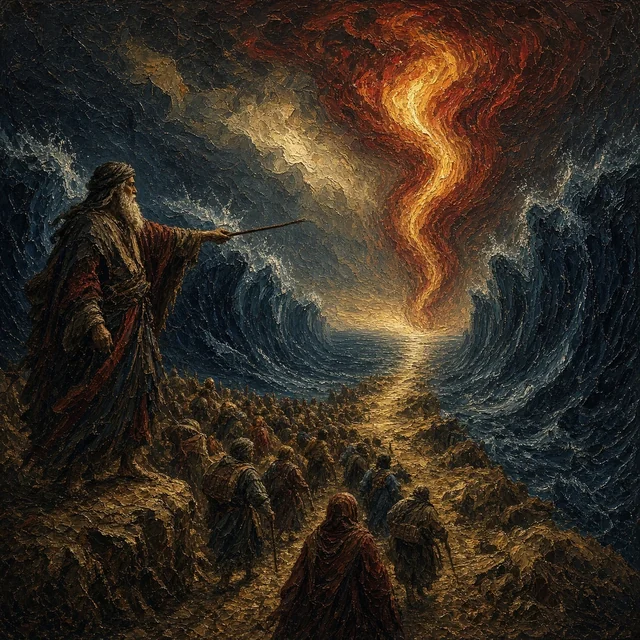
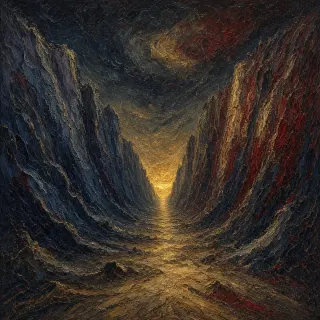
    It moves to the rear and becomes a wall between two armies. The same thing is darkness on one side and light on the other.

    The guide moves to the back. That reversal is the action on which these verses turn: what had shown Israel the way now stands between Israel and the army behind it. Leaving the front does not mean leaving the people. The pillar's new position answers a new danger. The Book of Exodus describes the angel's movement and the cloud's movement together, concentrating attention on the protection established between the camps rather than explaining the mechanics of the appearance.

    One presence has opposite effects in the same night. The King James gives darkness to the Egyptians and light to Israel, then states the practical result: neither camp comes near the other. That separation matters because verse 21 describes the east wind working through the night to open the sea. The rescue includes an interval during which pursuit is held apart from escape. The spectacular road through water has a quieter companion here: the enemy cannot close the distance while the night passes.

    Verse by verse

    1. 14:19

      The angel and the pillar both move from the front to the rear. The changed position provides protection rather than indicating abandonment.

    2. 14:20

      The King James distinguishes darkness for the Egyptians from light for Israel. The stated result is separation of the camps through the night.

    Exodus 14:19-20

    King James Version · 2 verses

    14:19And the angel of God, which went before the camp of Israel, removed and went behind them; and the pillar of the cloud went from before their face, and stood behind them:

    14:20And it came between the camp of the Egyptians and the camp of Israel; and it was a cloud and darkness to them, but it gave light by night to these: so that the one came not near the other all the night.

    Exodus 14:19-20: It was a cloud and darkness to them, but it gave light by night to these
  3. 03

    Exodus 33:9-11

    The cloudy pillar descended and stood at the door

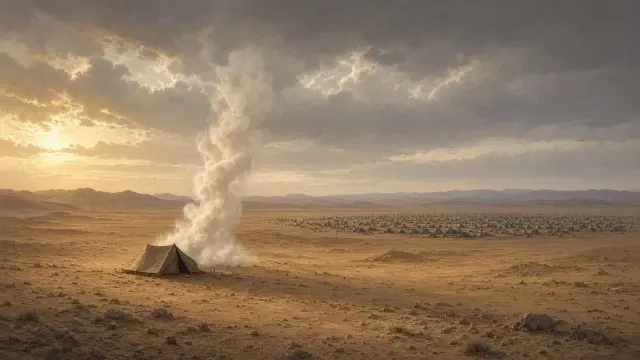
    At the tent outside the camp all the people rise and worship at their own tent doors when it comes down, every man watching from where he is.

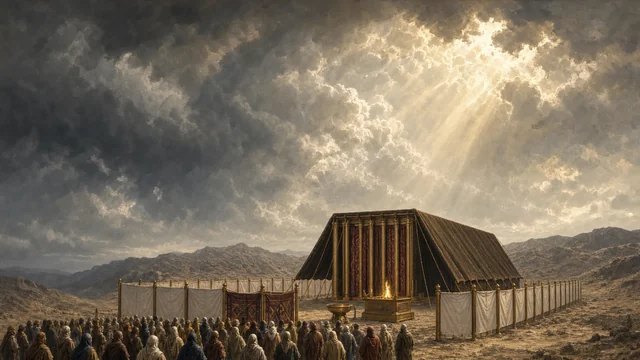
    Two kinds of doorway appear here. Moses enters the meeting tent, while the people remain at the entrances of their own tents and worship. The cloud makes his encounter publicly visible without turning the whole camp into participants in the conversation. There is access, and there is distance. Verse 7 has placed this tent outside the camp, far away; it should not simply be confused with the completed sanctuary whose construction appears later in the book.

    Face to face describes the remarkable directness of the speech, and the comparison with a man speaking to his friend explains the expression. The same chapter will say that Moses cannot see God's face and live. Reading verse 11 as unrestricted visual access would set it against verse 20 instead of attending to its stated comparison. The intimacy is real, but it is not possession of God. Moses returns to the camp; Joshua remains in attendance. The cloud marks a meeting, not a deity available on demand.

    Verse by verse

    1. 33:9

      Verse 7 locates this meeting tent outside the camp. The completed tabernacle is erected in Exodus 40.

    2. 33:11

      Face to face is explained through the comparison with conversation between friends. Exodus 33:20 still denies an unrestricted sight of the divine face.

    3. 33:11

      Joshua remains at the tent when Moses returns. The statement describes his attendance here, not a claim that he never left it in his lifetime.

    Exodus 33:9-11

    King James Version · 3 verses

    33:9And it came to pass, as Moses entered into the tabernacle, the cloudy pillar descended, and stood at the door of the tabernacle, and the LORD talked with Moses.

    33:10And all the people saw the cloudy pillar stand at the tabernacle door: and all the people rose up and worshipped, every man in his tent door.

    33:11And the LORD spake unto Moses face to face, as a man speaketh unto his friend. And he turned again into the camp: but his servant Joshua, the son of Nun, a young man, departed not out of the tabernacle.

    Exodus 33:9-11: The cloudy pillar descended and stood at the door
  4. 04

    Exodus 40:34-38

    Moses was not able to enter

    When the glory fills the tabernacle even he cannot go in. The account ends the book of Exodus on a presence too full to be approached.

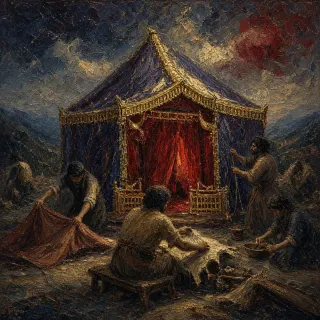
    The man who has finished the work cannot enter the finished building. That is the striking turn after verse 33. Moses has obeyed the instructions repeatedly emphasized throughout the chapter, yet the result is not a sanctuary over which its builder has unrestricted control. The cloud covers it and the glory fills it. His inability to enter is explained by that fullness, not by a newly discovered fault in the construction or a punishment announced against him.

    The final lines then move from a single day of completion to the pattern of Israel's journeys. The sanctuary is a dwelling, but it is also portable; the cloud's rising sets the people in motion, and its remaining keeps them in camp. The Book of Exodus ends not with arrival in Canaan but with a people accompanied on the way. The last emphasis is public and durable: all the house of Israel can see the presence, and it remains associated with all their journeys.

    Verse by verse

    1. 40:35

      The verse gives the filling glory as the reason Moses cannot enter. It does not identify this as punishment for disobedience.

    2. 40:36-38

      The closing verses describe a repeated pattern of travel and encampment. They look beyond the single day on which the tabernacle was erected.

    Exodus 40:34-38

    King James Version · 5 verses

    40:34Then a cloud covered the tent of the congregation, and the glory of the LORD filled the tabernacle.

    40:35And Moses was not able to enter into the tent of the congregation, because the cloud abode thereon, and the glory of the LORD filled the tabernacle.

    40:36And when the cloud was taken up from over the tabernacle, the children of Israel went onward in all their journeys:

    40:37But if the cloud were not taken up, then they journeyed not till the day that it was taken up.

    40:38For the cloud of the LORD was upon the tabernacle by day, and fire was on it by night, in the sight of all the house of Israel, throughout all their journeys.

    Exodus 40:34-38: Moses was not able to enter
  5. 05

    Numbers 9:15-23

    At the commandment of the LORD they journeyed

    Two days, a month, or a year, whatever the cloud did they did. The passage repeats the phrase until the obedience sounds like a timetable.

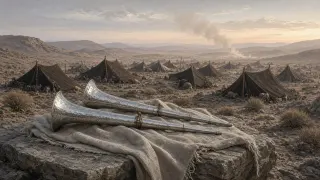
    This travel account spends remarkable time explaining why the travelers do not travel. A night, a few days, a month, even a year: the variations alter the length of the stay, not the rule governing it. The cloud's movement determines departure; its remaining determines encampment. The Book of Numbers refuses to make movement itself the measure of obedience. Sometimes the commanded action is to keep the tents exactly where they are.

    The repetition is doing work. Journeying and resting receive the same phrase, at the commandment of the LORD, until the distinction between dramatic departure and ordinary waiting loses its claim to importance. Neither is self-authorized. The passage also refuses to turn guidance into a private impression: the cloud rests over the tent of the testimony, and the closing line names Moses as the mediator of the command. This is a publicly ordered camp with a visible point of reference. Its timetable is not calculated by impatience or by the number of miles already covered.

    Verse by verse

    1. 9:15-16

      The appearance of fire belongs to the same continuing presence over the tabernacle that is described as cloud by day.

    2. 9:18-22

      Short and long stays follow the same rule. The passage does not give a separate moral explanation for each duration.

    3. 9:23

      By the hand of Moses identifies Moses as the mediator of the instruction; the camp is not directed by separate private interpretations.

    Numbers 9:15-23

    King James Version · 9 verses

    9:15And on the day that the tabernacle was reared up the cloud covered the tabernacle, namely, the tent of the testimony: and at even there was upon the tabernacle as it were the appearance of fire, until the morning.

    9:16So it was alway: the cloud covered it by day, and the appearance of fire by night.

    9:17And when the cloud was taken up from the tabernacle, then after that the children of Israel journeyed: and in the place where the cloud abode, there the children of Israel pitched their tents.

    9:18At the commandment of the LORD the children of Israel journeyed, and at the commandment of the LORD they pitched: as long as the cloud abode upon the tabernacle they rested in their tents.

    9:19And when the cloud tarried long upon the tabernacle many days, then the children of Israel kept the charge of the LORD, and journeyed not.

    9:20And so it was, when the cloud was a few days upon the tabernacle; according to the commandment of the LORD they abode in their tents, and according to the commandment of the LORD they journeyed.

    9:21And so it was, when the cloud abode from even unto the morning, and that the cloud was taken up in the morning, then they journeyed: whether it was by day or by night that the cloud was taken up, they journeyed.

    9:22Or whether it were two days, or a month, or a year, that the cloud tarried upon the tabernacle, remaining thereon, the children of Israel abode in their tents, and journeyed not: but when it was taken up, they journeyed.

    9:23At the commandment of the LORD they rested in the tents, and at the commandment of the LORD they journeyed: they kept the charge of the LORD, at the commandment of the LORD by the hand of Moses.

Why it matters

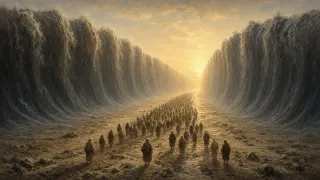
At the sea it does something else entirely. It moves from the front to the back and stands between the camp of Egypt and the camp of Israel, and it is a cloud and darkness to one and light by night to the other, so that the one came not near the other all the night. The same object, in the same place, doing opposite things depending on which side of it you are standing. Later it settles on the tabernacle, and the whole schedule of the nation is handed over to it: when the cloud was taken up they journeyed, and if it was not taken up they did not.

4 songs

The music

Every song in the catalogue whose passage falls inside these chapters.

  1. Exodus 12:31-13:22

    Out of the House of Bondage

  2. Exodus 12:37-15:21

    The Sea Stood Up

  3. Exodus 14:1-15:21

    A Way Through the Sea

  4. Exodus 14:13-31

    Stand Still and See

Nearby

All the objects

Report an error on this page