

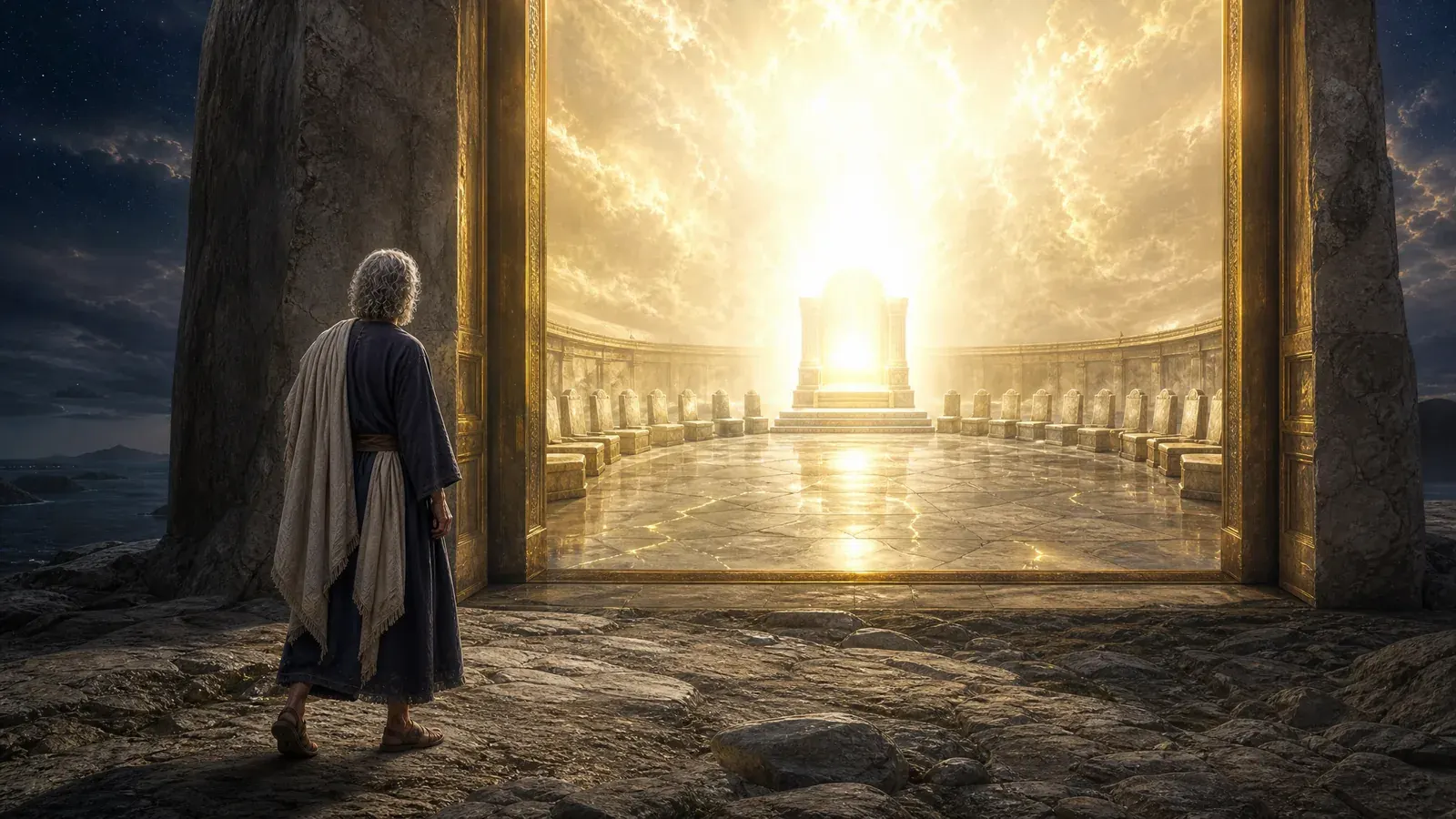
Revelation 4:1-2
A throne was set in heaven, and one sat on the throne
The first sentence establishes occupancy before anything else, and the verb sat is the load bearing word of the chapter.
Verse by verse
- 4:1
The voice like a trumpet recalls Revelation 1:10. The comparison describes the voice; it does not say that a trumpet itself speaks.
- 4:2
The Greek ekeito describes the throne as set or standing there. The verse does not narrate its construction or installation.
- 4:2
In the spirit marks John's visionary experience. The passage does not explain the physical mechanics of his ascent.
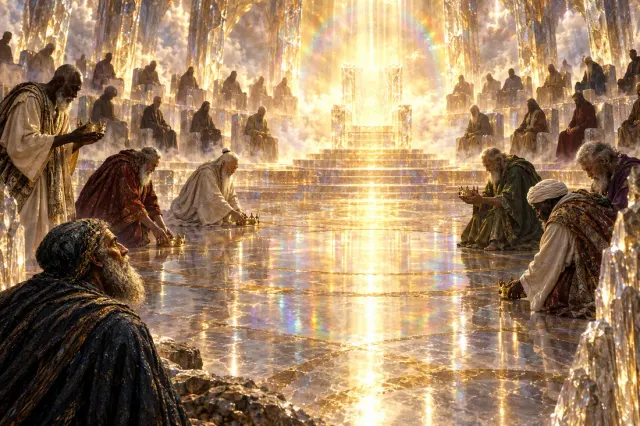

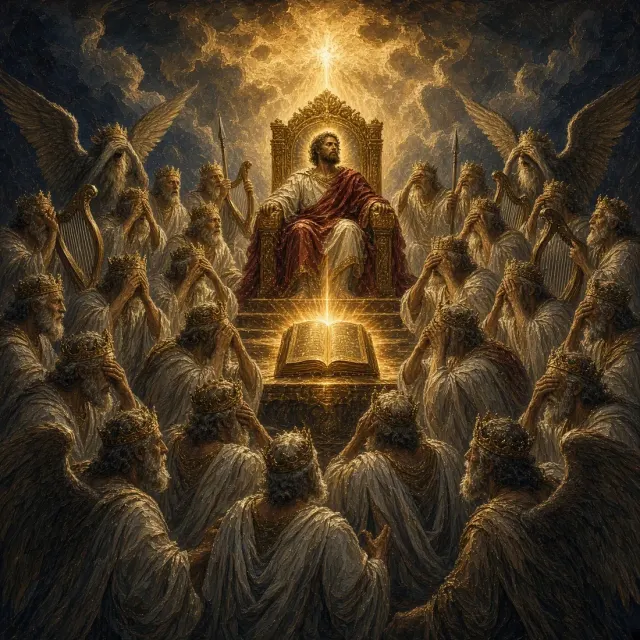
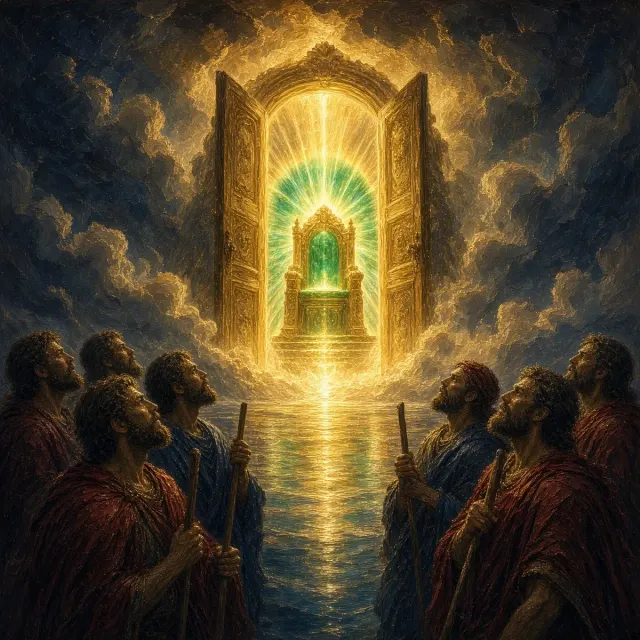
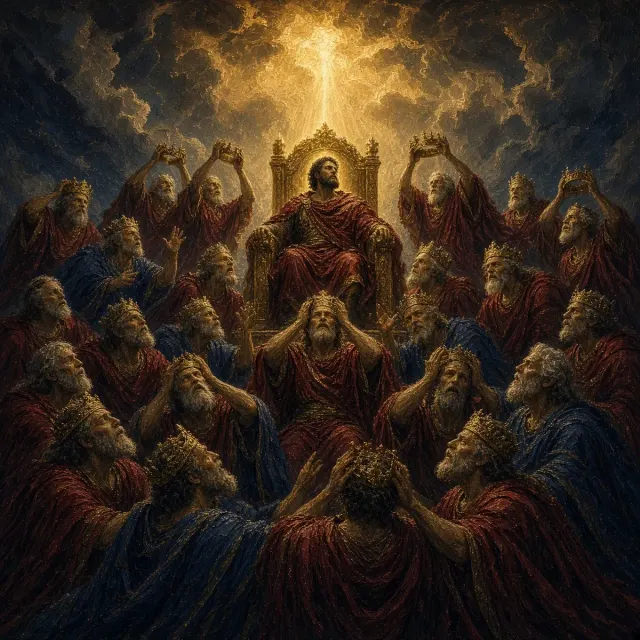
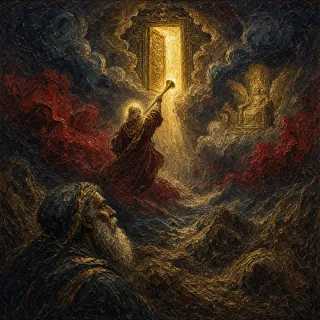


The throne is occupied before anything is explained. John has been promised a sight of things which must be hereafter, but the first thing shown is not a catastrophe or a timetable. It is the seat from which the whole vision takes its bearings. The future is introduced by authority already present.
The voice also has a history. Its trumpet-like quality recalls Revelation 1:10, where John first heard the voice that led him to the risen Christ among the candlesticks. This is not an unexplained new speaker interrupting the letters to the churches. The summons continues the revelation already under way, while the opened door changes its setting.
In the spirit describes how John receives the vision; it does not supply instructions for reconstructing the movement of his body. Nor does a throne was set require a scene of heavenly furniture being installed. The Greek describes the throne as standing there. John is admitted to see it. He does not bring it into existence by arriving. Heaven has not been waiting for an observer to acquire a centre.