

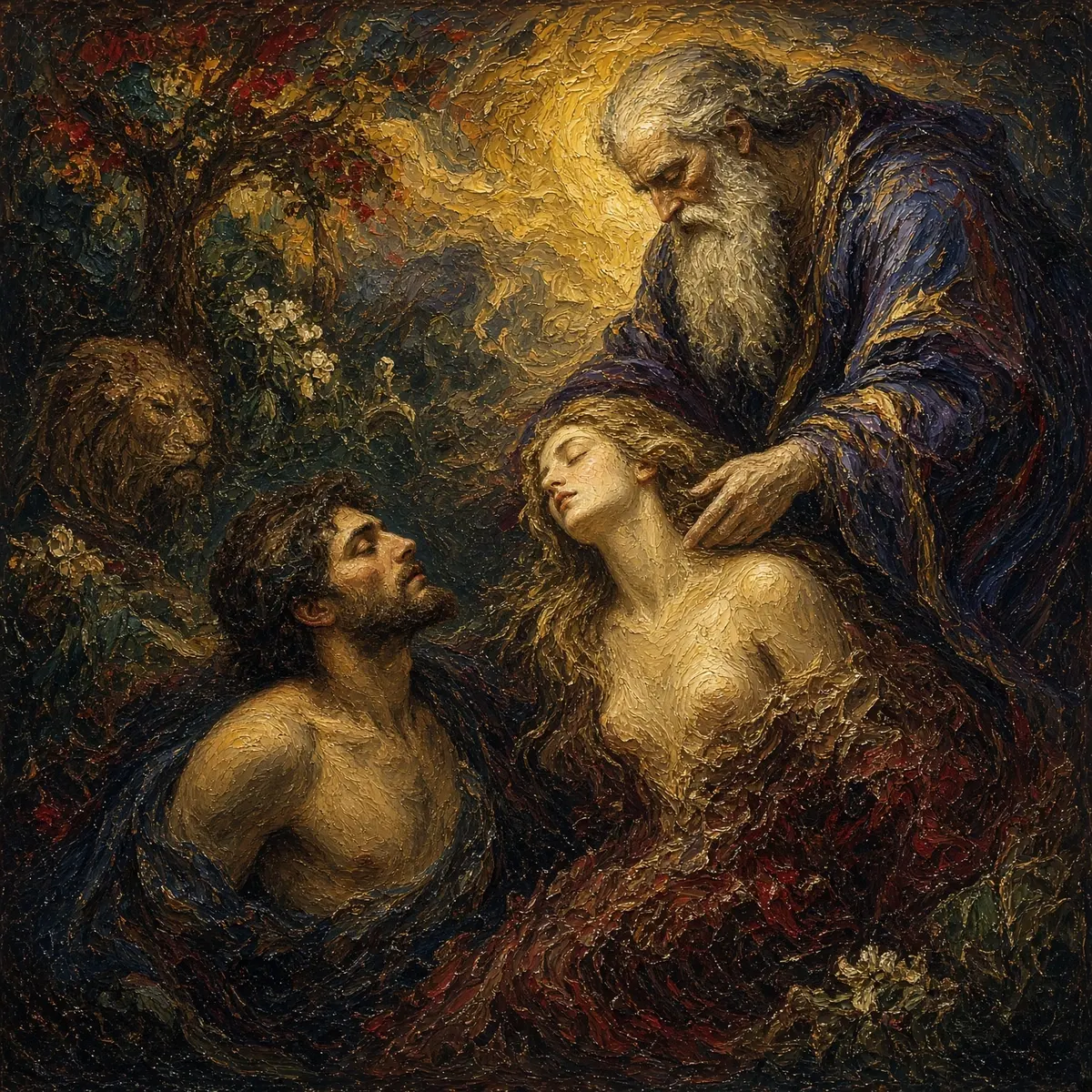
Genesis 2:16-17
Freely, except
The generosity is stated before the limit, and in far more words. The proportion is the point.
Verse by verse
- 2:16
The command is addressed to the man before the woman's formation is described in Genesis 2:21-22.
- 2:17
Deuteronomy 1:39 speaks of children without knowledge of good and evil; 1 Kings 3:9 connects such discernment with judging.
- 2:17
The death warning is certain; Genesis 3:19 and 5:5 describe its bodily outcome. Interpretations differ over how to understand in the day alongside that later death.








The command begins with permission. Freely eat comes before shalt not eat, and a whole garden stands behind the first phrase while one tree stands behind the second. The restriction is real, but it is not the whole arrangement. There is rather a lot of lunch available before the exception arrives.
The tree's full name also deserves its space. Genesis does not call it the tree of evil. It is the tree of the knowledge of good and evil, a phrase whose implications reach beyond a dangerous piece of produce. Elsewhere Scripture uses knowing good and evil for developing discernment, while Solomon asks for judgment between good and bad in 1 Kings 3:9. These parallels do not settle every question about Eden's tree. They do prevent the conclusion that knowledge itself is treated as poison.
The command identifies the act and states its consequence. It does not explain the tree's chemistry or offer a catalogue of the knowledge involved. Before the man eats, however, he already has a command clear enough to obey or violate. The boundary does not wait for the fruit to make its meaning intelligible. It has been spoken.