People of the Bible

The Serpent

More subtle than any beast of the field, and named at the end of the Bible as the devil and Satan.

Also called That old serpent; the dragon; the devil; Satan, the adversary

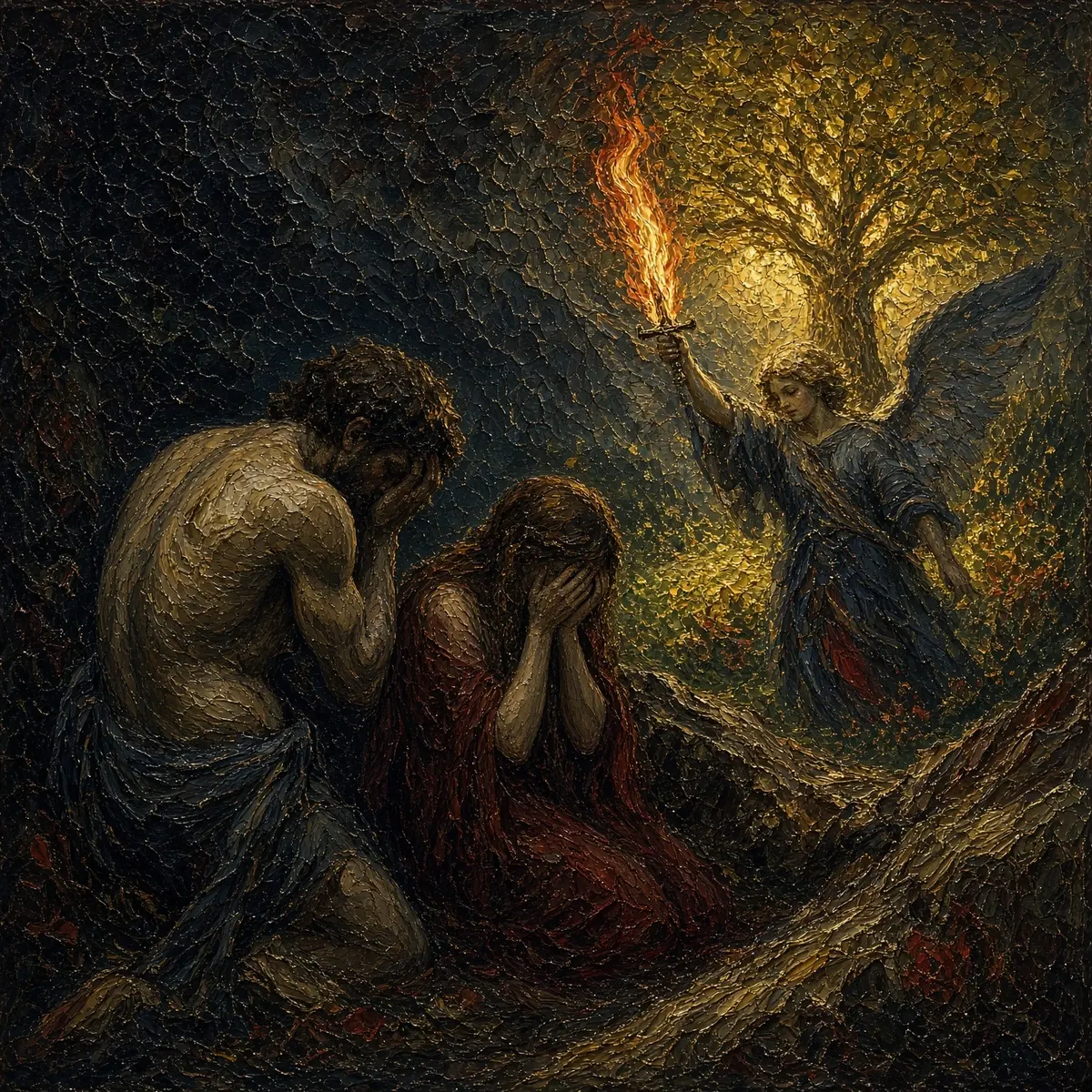
The serpent enters the Bible in the third chapter as a creature of the field, more subtle than any other, and speaks to the woman. It questions what God said, denies what God threatened, and promises that eating will open her eyes and make her like God. It is the first liar in Scripture, and its lie works. God curses it above every beast, sends it on its belly to eat dust, and pronounces enmity between it and the woman, between its seed and hers, ending with a promise that the woman's seed will bruise its head.

Genesis does not say what the serpent was beyond a serpent. The rest of Scripture does. Job shows Satan, the adversary, walking among the sons of God and accusing a righteous man. Zechariah shows him standing at the right hand of the high priest to accuse him. The Gospels show the devil tempting Jesus in the wilderness with three offers and being answered each time with the words of Scripture. Paul warns that the serpent beguiled Eve through its subtlety. Revelation closes the loop: the great dragon, that old serpent, called the devil and Satan, who deceives the whole world, is cast down, bound, and at the last thrown into the lake of fire.

Where it appearsGenesis 3 · Job 1 to 2 · Zechariah 3 · Revelation 12 · Revelation 20

Scroll down to the account

The movements, in the order the text gives them.

The Account of The Serpent

  1. 01

    Genesis 3:1-5

    Hath God said?

    The serpent, more subtle than any beast of the field, asks the woman whether God really said they could not eat of every tree. When she answers, it contradicts God flatly, you shall not surely die, and offers a motive: God knows your eyes will be opened and you will be as gods.

    The serpent enters without introduction and without explanation. He is more subtil than any beast of the field which the LORD God had made, which places him among the creatures and not above them, and the word subtil is the word for shrewd, used elsewhere for prudence. Genesis never calls him Satan; the identification is made in Revelation, that old serpent, called the Devil. What the chapter shows is a voice that questions God's word, and it shows the method exactly. First a question that overstates the prohibition: hath God said ye shall not eat of every tree? Then, when the woman answers, a flat denial: ye shall not surely die. Then a motive imputed to God: he knows that in the day ye eat, ye shall be as gods.

    Every later temptation in Scripture follows the pattern. Doubt the word, deny the consequence, slander the giver. The serpent speaks four sentences and never touches the fruit; he does not need to. Paul says he beguiled Eve through his subtilty, and Jesus says he was a liar from the beginning, meaning this beginning. The chapter also shows what the serpent does not do: he does not force, and he does not eat. The woman and the man do that themselves.

    Verse by verse

    1. 3:1

      Beast of the field which the LORD God had made: a creature. Subtil, arum, echoes naked, arummim, in 2:25: the shrewd one meets the unashamed.

    2. 3:1

      Yea, hath God said: the first question in the Bible, and it is asked of God's word by his enemy.

    3. 3:4

      Ye shall not surely die: the exact negation of 2:17. The first lie is about death.

    4. 3:5

      As gods, knowing good and evil: the promise is true in its words and false in its meaning, as 3:22 shows.

    Genesis 3:1-5

    King James Version · 5 verses

    3:1Now the serpent was more subtil than any beast of the field which the LORD God had made. And he said unto the woman, Yea, hath God said, Ye shall not eat of every tree of the garden?

    3:2And the woman said unto the serpent, We may eat of the fruit of the trees of the garden:

    3:3But of the fruit of the tree which is in the midst of the garden, God hath said, Ye shall not eat of it, neither shall ye touch it, lest ye die.

    3:4And the serpent said unto the woman, Ye shall not surely die:

    3:5For God doth know that in the day ye eat thereof, then your eyes shall be opened, and ye shall be as gods, knowing good and evil.

    Genesis 3:1-5: Hath God said?
  2. 02

    Genesis 3:14-15

    The curse and the promise

    God addresses the serpent first and does not question it. It is cursed above every beast, sent on its belly to eat dust, and set at enmity with the woman and her seed. Its head will be bruised by her seed, and it will bruise his heel. Readers have called this the first gospel.

    God asks the man and the woman what they have done; he asks the serpent nothing. The sentence begins because thou hast done this, and it is the first curse in the Bible. Cursed above all cattle, on the belly, dust for food: the creature that raised itself against God is put lower than every beast, and the posture of a snake becomes the emblem of its judgement. Isaiah keeps it in the new creation, dust shall be the serpent's meat.

    Verse 15 is spoken to the serpent but is the hope of the human race. God himself will set enmity between the serpent and the woman: the alliance of verse 6 is broken by divine act. The war is between seeds, his and hers, and it ends with a head crushed and a heel wounded. The church from the second century called this the protevangelium, the first announcement of the gospel, and read the woman's seed as Christ. Paul echoes it, the God of peace shall bruise Satan under your feet shortly, and Revelation 12 shows the dragon making war with the woman and the remnant of her seed.

    Verse by verse

    1. 3:14

      Upon thy belly: the sentence fits the creature, whatever it was before. All the days of thy life: the serpent, too, will end.

    2. 3:15

      Enmity: God's gift, not the woman's achievement. Her seed, singular: Galatians 3:16 reasons the same way about Abraham's seed. Bruise, shuph, is used of both blows; the head is crushed, the heel is struck.

    Genesis 3:14-15

    King James Version · 2 verses

    3:14And the LORD God said unto the serpent, Because thou hast done this, thou art cursed above all cattle, and above every beast of the field; upon thy belly shalt thou go, and dust shalt thou eat all the days of thy life:

    3:15And I will put enmity between thee and the woman, and between thy seed and her seed; it shall bruise thy head, and thou shalt bruise his heel.

    Genesis 3:14-15: The curse and the promise
  3. 03

    Numbers 21:4-9; 2 Kings 18:4

    The serpent of bronze

    Fiery serpents bite the people in the wilderness and Moses is told to make a serpent of bronze and lift it on a pole, so that whoever looks lives. Centuries later Hezekiah breaks it in pieces because Israel had begun to burn incense to it.

    In the wilderness the serpent returns as judgement rather than tempter. The people, going the long way round Edom, speak against God and against Moses and despise the manna, and the LORD sends fiery serpents among them. The word fiery, seraphim, describes the burning of the bite. Many die, the people confess, Moses prays, and the remedy God gives is strange: a serpent of brass on a pole, and whoever is bitten and looks on it lives. The cure is the image of the plague, lifted up. The people are not told to fight the snakes or to make medicine, only to look.

    Jesus takes this scene for himself in John 3: as Moses lifted up the serpent in the wilderness, even so must the Son of man be lifted up, that whosoever believeth in him should not perish. The serpent on the pole is the sin and its curse made visible and hung up, and looking is believing. Centuries later Hezekiah has to break the brass serpent in pieces because Israel had begun to burn incense to it, and he names it Nehushtan, a piece of bronze. Even the remedy could become an idol.

    Verse by verse

    1. 21:5

      This light bread: the manna despised. The complaint is against God and Moses together.

    2. 21:6

      Fiery serpents: seraphim, the same word as Isaiah's burning ones. The bite burned.

    3. 21:8

      Every one that is bitten, when he looketh upon it, shall live: the condition is a look, nothing more. John 3:14-15.

    4. 18:4

      Nehushtan: Hezekiah's contemptuous name for a relic that had become a god. Seven hundred years of keeping it ended in one blow.

    Numbers 21:4-9; 2 Kings 18:4

    King James Version · 7 verses

    21:4And they journeyed from mount Hor by the way of the Red sea, to compass the land of Edom: and the soul of the people was much discouraged because of the way.

    21:5And the people spake against God, and against Moses, Wherefore have ye brought us up out of Egypt to die in the wilderness? for there is no bread, neither is there any water; and our soul loatheth this light bread.

    21:6And the LORD sent fiery serpents among the people, and they bit the people; and much people of Israel died.

    21:7Therefore the people came to Moses, and said, We have sinned, for we have spoken against the LORD, and against thee; pray unto the LORD, that he take away the serpents from us. And Moses prayed for the people.

    21:8And the LORD said unto Moses, Make thee a fiery serpent, and set it upon a pole: and it shall come to pass, that every one that is bitten, when he looketh upon it, shall live.

    21:9And Moses made a serpent of brass, and put it upon a pole, and it came to pass, that if a serpent had bitten any man, when he beheld the serpent of brass, he lived.

    18:4He removed the high places, and brake the images, and cut down the groves, and brake in pieces the brasen serpent that Moses had made: for unto those days the children of Israel did burn incense to it: and he called it Nehushtan.

  4. 04

    Job 1:6-12; 2:1-7

    The adversary among the sons of God

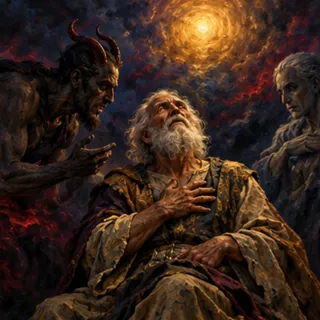
    Satan comes among the sons of God from going to and fro in the earth, and accuses Job of serving God for gain. God permits him to strike Job's goods, then his body, and sets the one limit: spare his life. Satan is the accuser, and God is the one who limits him.

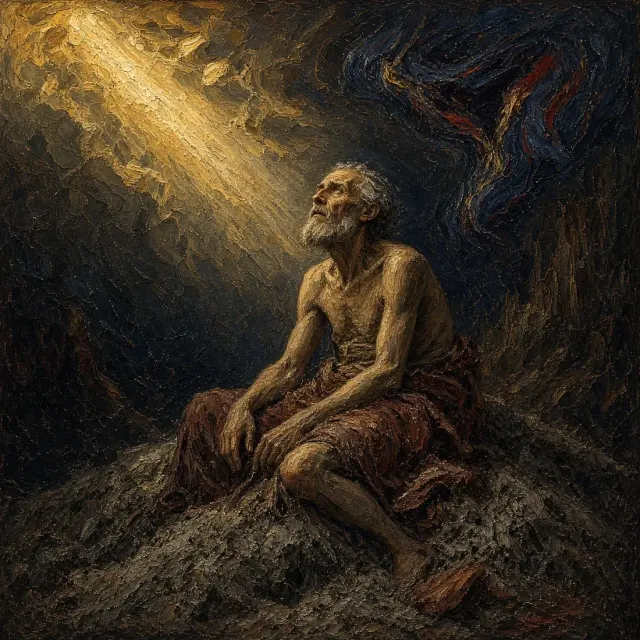
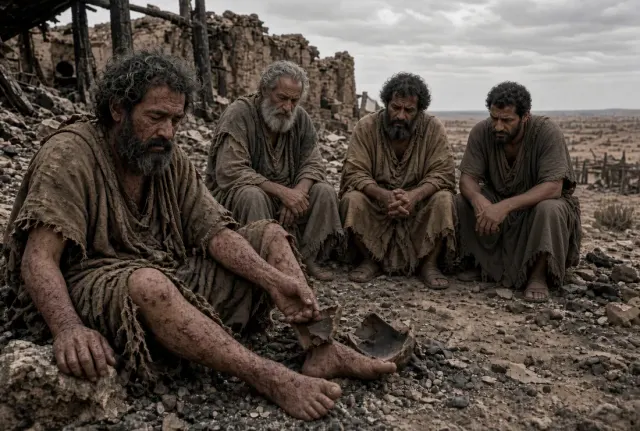
    In Job the adversary has a name, Satan, which means the accuser or opponent, and he has a place: among the sons of God presenting themselves before the LORD. He is not God's equal and does not pretend to be. He comes from going to and fro in the earth, and when God points to Job, the accuser's charge is that Job's goodness is bought: doth Job fear God for nought? Every attack on Job follows from that question, and Satan can do nothing without permission. Twice God sets the limit, all that he hath is in thy power, only upon himself put not forth thine hand, and then, he is in thine hand, but save his life.

    The scene explains the serpent of Genesis from the other side. What the serpent did in the garden, accusing God to the woman, he does here in heaven, accusing the woman's seed to God. He is the same voice in both places, and in both he is a creature under authority. Job never learns of the conversation. His account is the proof that the accuser was wrong: he fears God for nought, and says so from the ashes.

    Verse by verse

    1. 1:6

      Satan: with the article, the satan, the adversary. The name is a job description before it is a proper name.

    2. 1:7

      Going to and fro: Peter's roaring lion walketh about, 1 Peter 5:8.

    3. 1:9

      For nought: the accuser's whole case. Job's answer is 13:15, though he slay me, yet will I trust in him.

    4. 1:12; 2:6

      The two permissions, each with a limit. The adversary is on a leash.

    5. 2:4

      Skin for skin: a proverb of trade. The accuser thinks every man has a price.

    Job 1:6-12; 2:1-7: The adversary among the sons of God

    Job 1:6-12; 2:1-7

    King James Version · 14 verses

    1:6Now there was a day when the sons of God came to present themselves before the LORD, and Satan came also among them.

    1:7And the LORD said unto Satan, Whence comest thou? Then Satan answered the LORD, and said, From going to and fro in the earth, and from walking up and down in it.

    1:8And the LORD said unto Satan, Hast thou considered my servant Job, that there is none like him in the earth, a perfect and an upright man, one that feareth God, and escheweth evil?

    1:9Then Satan answered the LORD, and said, Doth Job fear God for nought?

    1:10Hast not thou made an hedge about him, and about his house, and about all that he hath on every side? thou hast blessed the work of his hands, and his substance is increased in the land.

    1:11But put forth thine hand now, and touch all that he hath, and he will curse thee to thy face.

    1:12And the LORD said unto Satan, Behold, all that he hath is in thy power; only upon himself put not forth thine hand. So Satan went forth from the presence of the LORD.

    2:1Again there was a day when the sons of God came to present themselves before the LORD, and Satan came also among them to present himself before the LORD.

    2:2And the LORD said unto Satan, From whence comest thou? And Satan answered the LORD, and said, From going to and fro in the earth, and from walking up and down in it.

    2:3And the LORD said unto Satan, Hast thou considered my servant Job, that there is none like him in the earth, a perfect and an upright man, one that feareth God, and escheweth evil? and still he holdeth fast his integrity, although thou movedst me against him, to destroy him without cause.

    2:4And Satan answered the LORD, and said, Skin for skin, yea, all that a man hath will he give for his life.

    2:5But put forth thine hand now, and touch his bone and his flesh, and he will curse thee to thy face.

    2:6And the LORD said unto Satan, Behold, he is in thine hand; but save his life.

    2:7So went Satan forth from the presence of the LORD, and smote Job with sore boils from the sole of his foot unto his crown.

  5. 05

    Zechariah 3:1-5

    Standing at the right hand to accuse

    The prophet sees Joshua the high priest in filthy garments before the angel of the LORD, and Satan standing at his right hand to resist him. The LORD rebukes Satan, the filthy garments are taken away, and Joshua is clothed anew. The accuser is answered by a change of clothes.

    Zechariah sees the high priest Joshua standing before the angel of the LORD in filthy garments, and Satan standing at his right hand to resist him, the place of the accuser in a court. The charge is not stated because it does not need to be: the garments say it. Joshua represents a priesthood and a people just back from exile, and the accuser has a case. The LORD's answer is a rebuke to the accuser, not a defence of Joshua: the LORD rebuke thee, O Satan; is not this a brand plucked out of the fire? Then the filthy garments are taken away, iniquity is caused to pass, and clean raiment and a fair mitre are put on him.

    The scene is the whole gospel in a vision. The accuser is right about the garments and wrong about the verdict, because the verdict rests on God's choice of Jerusalem and not on Joshua's record. Jude quotes the words the LORD rebuke thee as what Michael said to the devil over the body of Moses, and Romans 8 asks who shall lay anything to the charge of God's elect.

    Verse by verse

    1. 3:1

      At his right hand to resist him: the accuser's position in Psalm 109:6. Joshua the high priest is the Jeshua of Ezra 3.

    2. 3:2

      A brand plucked out of the fire: a stick already burning, pulled out. The exile was the fire.

    3. 3:4

      I have caused thine iniquity to pass from thee: forgiveness is declared before the clothing is changed. Change of raiment: festal garments.

    Zechariah 3:1-5

    King James Version · 5 verses

    3:1And he shewed me Joshua the high priest standing before the angel of the LORD, and Satan standing at his right hand to resist him.

    3:2And the LORD said unto Satan, The LORD rebuke thee, O Satan; even the LORD that hath chosen Jerusalem rebuke thee: is not this a brand plucked out of the fire?

    3:3Now Joshua was clothed with filthy garments, and stood before the angel.

    3:4And he answered and spake unto those that stood before him, saying, Take away the filthy garments from him. And unto him he said, Behold, I have caused thine iniquity to pass from thee, and I will clothe thee with change of raiment.

    3:5And I said, Let them set a fair mitre upon his head. So they set a fair mitre upon his head, and clothed him with garments. And the angel of the LORD stood by.

    Zechariah 3:1-5: Standing at the right hand to accuse
  6. 06

    Matthew 4:1-11; Luke 4:1-13

    The wilderness

    After forty days of fasting, the devil comes to Jesus with three offers: bread from stones, a leap from the temple pinnacle, and the kingdoms of the world for one act of worship. Each is answered with a verse of Deuteronomy. The tempter of the garden meets the second Adam and loses.

    The serpent who met the first Adam in a garden meets the second in a wilderness. Jesus is led there by the Spirit, fasts forty days, and the tempter comes when he is hungry. Three temptations, each beginning if thou be the Son of God, each answered with it is written from Deuteronomy, the book of Israel's forty years. Make bread from stones: man shall not live by bread alone. Throw yourself from the temple, since Scripture promises angels: thou shalt not tempt the Lord thy God. Worship me and take the kingdoms: thou shalt worship the Lord thy God, and him only. The devil quotes Scripture in the second temptation, as he quoted God's command in the garden, and is answered with Scripture rightly read.

    Matthew and Luke order the last two temptations differently, and Luke ends with the devil departing for a season, which points to Gethsemane. Everything the serpent won in Genesis 3 is refused here: the food, the presumption, the offer of godhood on the devil's terms. Hebrews says he was in all points tempted like as we are, yet without sin. The order of events in Genesis, eat, doubt God, seek to be as God, is met in reverse by a man who will not eat, will not test God, and will not bow.

    Verse by verse

    1. 4:1

      Led up of the Spirit to be tempted: the meeting is God's initiative, unlike the garden. Forty days: Israel's forty years, Deuteronomy 8:2-3.

    2. 4:3

      If thou be the Son of God: the voice from the Jordan in 3:17 is what the tempter questions, as he questioned God's word in Genesis 3:1.

    3. 4:6

      For it is written: the devil quotes Psalm 91 and leaves out in all thy ways. Scripture misapplied is his oldest tool.

    4. 4:10

      Get thee hence, Satan: the first time Jesus names him. Luke 4:13, departed for a season: he returns in Luke 22:3.

    Matthew 4:1-11; Luke 4:1-13: The wilderness

    Matthew 4:1-11; Luke 4:1-13

    King James Version · 24 verses

    4:1Then was Jesus led up of the Spirit into the wilderness to be tempted of the devil.

    4:2And when he had fasted forty days and forty nights, he was afterward an hungred.

    4:3And when the tempter came to him, he said, If thou be the Son of God, command that these stones be made bread.

    4:4But he answered and said, It is written, Man shall not live by bread alone, but by every word that proceedeth out of the mouth of God.

    4:5Then the devil taketh him up into the holy city, and setteth him on a pinnacle of the temple,

    4:6And saith unto him, If thou be the Son of God, cast thyself down: for it is written, He shall give his angels charge concerning thee: and in their hands they shall bear thee up, lest at any time thou dash thy foot against a stone.

    4:7Jesus said unto him, It is written again, Thou shalt not tempt the Lord thy God.

    4:8Again, the devil taketh him up into an exceeding high mountain, and sheweth him all the kingdoms of the world, and the glory of them;

    4:9And saith unto him, All these things will I give thee, if thou wilt fall down and worship me.

    4:10Then saith Jesus unto him, Get thee hence, Satan: for it is written, Thou shalt worship the Lord thy God, and him only shalt thou serve.

    4:11Then the devil leaveth him, and, behold, angels came and ministered unto him.

    4:1And Jesus being full of the Holy Ghost returned from Jordan, and was led by the Spirit into the wilderness,

    4:2Being forty days tempted of the devil. And in those days he did eat nothing: and when they were ended, he afterward hungered.

    4:3And the devil said unto him, If thou be the Son of God, command this stone that it be made bread.

    4:4And Jesus answered him, saying, It is written, That man shall not live by bread alone, but by every word of God.

    4:5And the devil, taking him up into an high mountain, shewed unto him all the kingdoms of the world in a moment of time.

    4:6And the devil said unto him, All this power will I give thee, and the glory of them: for that is delivered unto me; and to whomsoever I will I give it.

    4:7If thou therefore wilt worship me, all shall be thine.

    4:8And Jesus answered and said unto him, Get thee behind me, Satan: for it is written, Thou shalt worship the Lord thy God, and him only shalt thou serve.

    4:9And he brought him to Jerusalem, and set him on a pinnacle of the temple, and said unto him, If thou be the Son of God, cast thyself down from hence:

    4:10For it is written, He shall give his angels charge over thee, to keep thee:

    4:11And in their hands they shall bear thee up, lest at any time thou dash thy foot against a stone.

    4:12And Jesus answering said unto him, It is said, Thou shalt not tempt the Lord thy God.

    4:13And when the devil had ended all the temptation, he departed from him for a season.

  7. 07

    John 8:44; 2 Corinthians 11:3

    A liar from the beginning

    Jesus says the devil was a murderer from the beginning and abode not in the truth, for he is a liar and the father of it. Paul fears that as the serpent beguiled Eve through its subtlety, so the Corinthians' minds might be corrupted. Both take the reader straight back to Genesis 3.

    Jesus tells his opponents who their father is, and in doing so gives the Bible's own reading of Genesis 3. The devil was a murderer from the beginning, because the lie in the garden brought death; and he abode not in the truth, because there is no truth in him. When he speaketh a lie, he speaketh of his own: for he is a liar, and the father of it. The two words, murderer and liar, cover the serpent's two acts, the deceiving and the dying that followed. Paul takes the other half. He fears for the Corinthians lest, as the serpent beguiled Eve through his subtilty, their minds should be corrupted from the simplicity that is in Christ. The method has not changed; the church is the woman now, and the danger is the same subtle voice.

    Verse by verse

    1. 8:44

      From the beginning: Genesis 3 is meant. Father of lies: the serpent's first sentence was the first lie.

    2. 11:3

      Beguiled Eve: Paul uses the verb of Genesis 3:13. Simplicity: single-mindedness, the opposite of the serpent's subtlety.

    John 8:44; 2 Corinthians 11:3

    King James Version · 2 verses

    8:44Ye are of your father the devil, and the lusts of your father ye will do. He was a murderer from the beginning, and abode not in the truth, because there is no truth in him. When he speaketh a lie, he speaketh of his own: for he is a liar, and the father of it.

    11:3But I fear, lest by any means, as the serpent beguiled Eve through his subtilty, so your minds should be corrupted from the simplicity that is in Christ.

    John 8:44; 2 Corinthians 11:3: A liar from the beginning
  8. 08

    Revelation 12:7-9; 20:1-3, 10

    That old serpent, cast down and bound

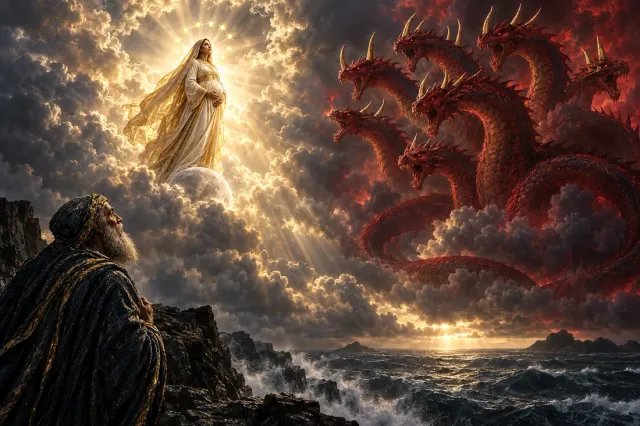
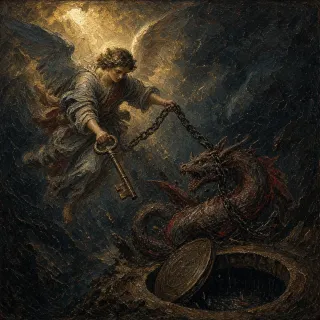
    The great dragon is cast out of heaven, that old serpent, called the devil and Satan, which deceives the whole world. An angel binds him a thousand years. At the end he is cast into the lake of fire. The account that opened with a serpent in a garden closes with the serpent's end.

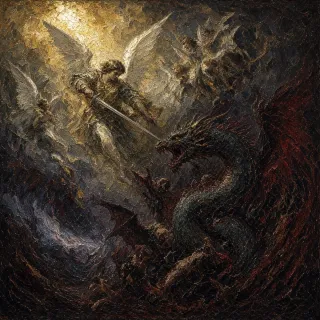
    Revelation gathers every name into one sentence: the great dragon was cast out, that old serpent, called the Devil, and Satan, which deceiveth the whole world. The serpent of Eden, the accuser of Job, the tempter of the wilderness, and the dragon of the vision are declared one being, and his end is told three times. He is cast out of heaven, so that the accuser of the brethren is heard there no more. He is bound a thousand years and shut in the pit, that he should deceive the nations no more. And after a last loosing he is cast into the lake of fire, where the beast and the false prophet are, for ever.

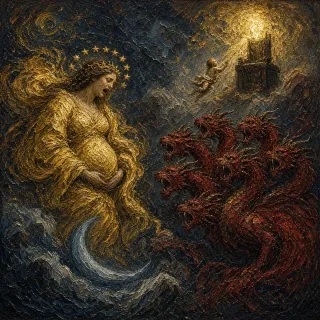
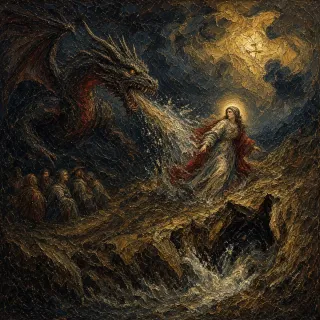
    The promise of Genesis 3:15 is completed in these verses. The head is crushed. The woman of Revelation 12, clothed with the sun, is pursued by the dragon and her seed is warred against, which is Genesis 3 told from the end, and the victory is by the blood of the Lamb. The last chapters of the Bible describe a city with a tree of life and no more curse, and no serpent in it.

    Verse by verse

    1. 12:9

      That old serpent: the ancient serpent, ho ophis ho archaios, Genesis 3 named. Four titles in one verse.

    2. 12:10

      The accuser of our brethren is cast down: Job 1 and Zechariah 3 end here.

    3. 20:2

      Bound: the same being that was on a leash in Job is now chained. Deceive the nations no more: his whole work is deception.

    4. 20:10

      The lake of fire: Matthew 25:41 says it was prepared for the devil and his angels. Genesis 3:15, fulfilled.

    Revelation 12:7-9; 20:1-3, 10

    King James Version · 7 verses

    12:7And there was war in heaven: Michael and his angels fought against the dragon; and the dragon fought and his angels,

    12:8And prevailed not; neither was their place found any more in heaven.

    12:9And the great dragon was cast out, that old serpent, called the Devil, and Satan, which deceiveth the whole world: he was cast out into the earth, and his angels were cast out with him.

    20:1And I saw an angel come down from heaven, having the key of the bottomless pit and a great chain in his hand.

    20:2And he laid hold on the dragon, that old serpent, which is the Devil, and Satan, and bound him a thousand years,

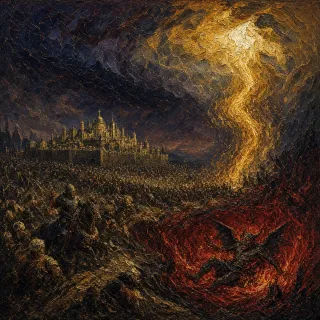
    20:3And cast him into the bottomless pit, and shut him up, and set a seal upon him, that he should deceive the nations no more, till the thousand years should be fulfilled: and after that he must be loosed a little season.

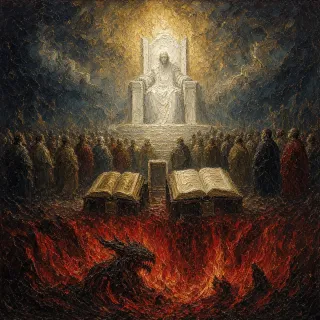
    20:10And the devil that deceived them was cast into the lake of fire and brimstone, where the beast and the false prophet are, and shall be tormented day and night for ever and ever.

    Revelation 12:7-9; 20:1-3, 10: That old serpent, cast down and bound

The people, the places and the rest of Scripture.

Reading The Serpent closely

What it did in the garden

The serpent speaks only to the woman and only twice. Its first sentence is a question that misquotes God, turning one forbidden tree into every tree, and inviting the woman to defend God by restating his word. She does, and adds a rule of her own. Its second sentence is a denial, you shall not surely die, followed by an explanation of God's motive that makes God the one who is withholding. Nothing is offered but a different account of what God is like.

The man is present, the text says she gave to her husband with her, but the serpent never addresses him. When God comes, he questions the man and the woman and lets them speak. He does not question the serpent. The curse falls first and without a hearing, and inside the curse is the promise. The serpent is told that the woman, whom it deceived, will have a seed who crushes it, and that it will wound that seed in the heel. Everything the Bible says about the defeat of evil is an expansion of that sentence.

Genesis 3
Genesis 3

How the rest of Scripture names it

Genesis never says the serpent was Satan. The identification is made slowly. In Job and Zechariah Satan is a title, the adversary, a member of the heavenly court whose function is to accuse. In 1 Chronicles 21 Satan provokes David to number Israel, where the parallel in 2 Samuel says the LORD's anger did. By the Gospels the devil is a person with a will, who tempts Jesus, enters Judas, and is called the prince of this world. The Book of Wisdom, written between the Testaments, says death entered the world through the devil's envy, which is the earliest text to put the devil in the garden.

Jesus completes the link. The devil was a murderer from the beginning and a liar and the father of it, which can only mean Genesis 3, since that is where the first lie and the first death are. Paul's warning about the serpent beguiling Eve, and his promise that the God of peace will bruise Satan under the church's feet, put the serpent and Satan in one sentence. Revelation states it outright: the dragon is that old serpent, called the devil and Satan. By the end of the Bible the creature of the field has a full name.

Job 1
Job 1

The bronze serpent

One serpent in the Bible saves rather than kills. In Numbers 21 the people speak against God and Moses, fiery serpents are sent among them, and many die. When they repent, Moses is told to make a serpent of bronze and set it on a pole, and whoever is bitten looks at it and lives. The image of the thing that was killing them becomes the means of their healing. Israel kept the bronze serpent for seven hundred years, until they began to burn incense to it and Hezekiah broke it and called it a piece of bronze.

Jesus took the account for himself. As Moses lifted up the serpent in the wilderness, he told Nicodemus, so must the Son of Man be lifted up, that whoever believes in him should not perish. The serpent on the pole is the curse displayed and defeated in one object, and it is the only place in Scripture where the enemy's own form becomes the picture of the cure.

Job 1

What came before and what followed

Nothing in Genesis explains where the serpent came from or why a creature God made good would speak against him. The text simply has it there, subtle and talking, and later Scripture fills in a rebellion in heaven that Isaiah and Ezekiel describe under the figures of the king of Babylon and the king of Tyre, and Revelation describes as war in heaven. The Bible is more interested in what the serpent did than in what it was.

What followed the garden was a long enmity. The serpent's seed and the woman's seed are at war through Cain and Abel, through Pharaoh and the infants of Israel, through Herod and the children of Bethlehem, and in the wilderness where the devil meets Jesus face to face. The heel is bruised at the cross. The head is bruised there too, according to Colossians, where Christ spoils principalities and powers and triumphs over them openly, and finally in Revelation 20, where the serpent's last deception ends in the lake of fire and the tree of life stands in a city with no serpent in it.

Job 1
Job 2

Why it matters

The serpent is the Bible's account of where the lie comes from. Its method in Genesis 3 is the method every later temptation follows: a question about what God really said, a denial that the consequences are real, and an appeal to what looks good and promises wisdom. Jesus calls the devil a liar and the father of it, and a murderer from the beginning, which is a summary of that chapter.

It is also the first character against whom a promise is made, and the promise shapes the whole account. The enmity between the serpent's seed and the woman's seed, and the bruised head and the bruised heel, are read by Paul when he tells the Romans that the God of peace will shortly bruise Satan under their feet, and by John when he sees the dragon defeated. The bronze serpent Moses lifted in the wilderness, which Jesus took as a picture of his own lifting up, shows the same enemy turned into the means of healing. From the garden to the lake of fire, the serpent is the measure of what the account is against.

13 songs

The music

Every song in the catalogue whose passage falls inside these chapters.

  1. Genesis 3:1-5:32

    Blood in the Ground

  2. Genesis 3

    East of Eden

  3. Job 1:1-12

    Doth Job Fear God for Nought?

  4. Job 1:13-22

    The LORD Gave, and the LORD Hath Taken Away

  5. Job 1-2; 38-42

    Though He Slay Me

  6. Job 2:1-13

    Seven Days without a Word

  7. Zechariah 3:1-10

    Take Away the Filthy Garments

    Play hereOpen song pageRead lyrics
  8. Revelation 12:1-6

    The Woman Clothed with the Sun

  9. Revelation 12:13-17

    War against the Remnant

  10. Revelation 12:1–17

    War in Heaven

  11. Revelation 20:7-10

    Gog and Magog

  12. Revelation 20:1-6

    The Dragon Bound

  13. Revelation 20:1–15

    The Great White Throne

Nearby

All the people

Report an error on this page