
Matthew 16:13-14
Whom do men say that I the Son of man am
The survey answers first, and every answer is a dead prophet. The crowd has settled on a category rather than a person.
Verse by verse
- 16:13
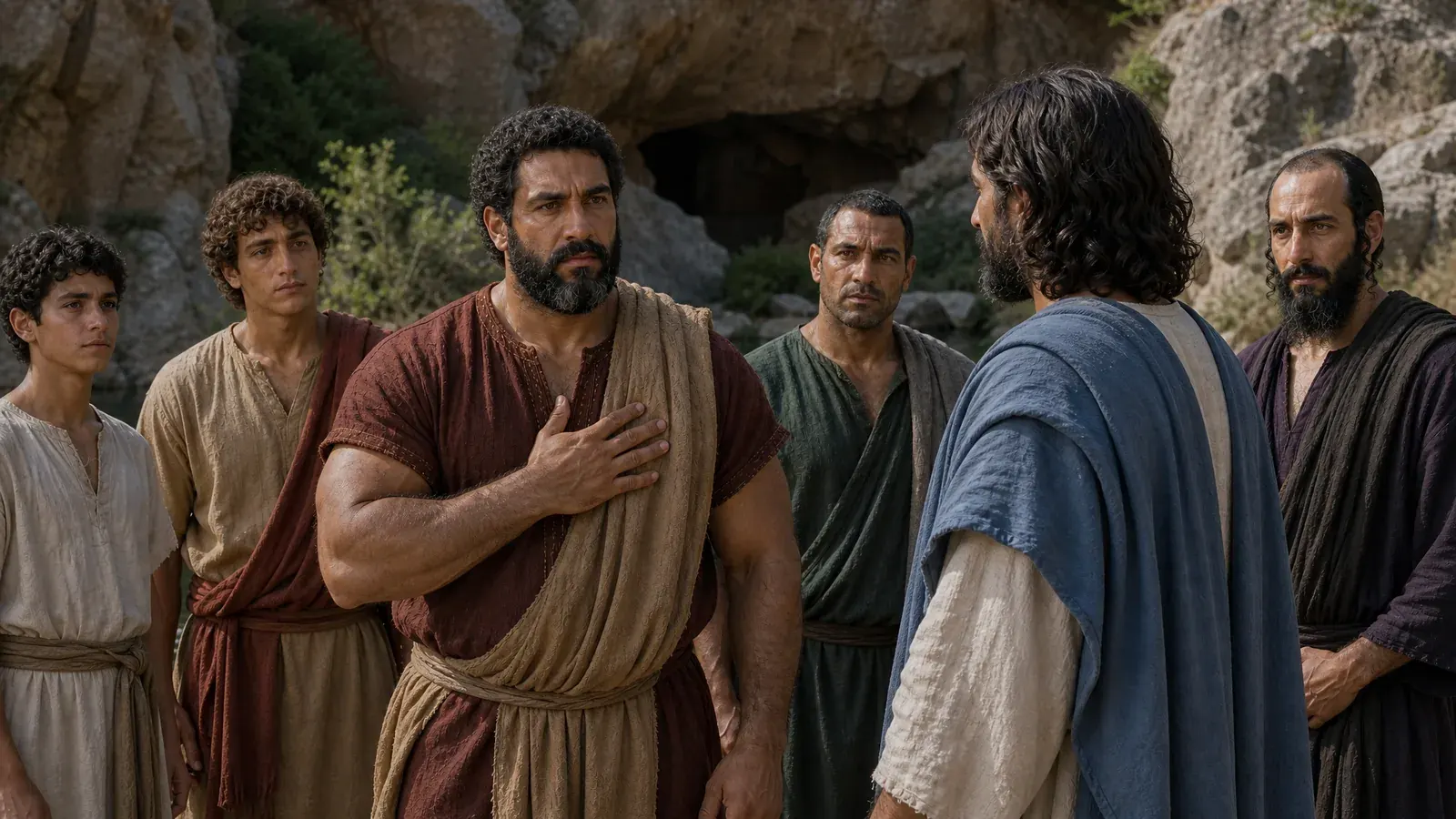
The KJV's coasts means the region or district here, not a seashore. Mark 8:27 places the exchange among the villages of Caesarea Philippi, along the way.
- 16:14
The identification with John is also voiced by Herod in Matthew 14:2, where he imagines John raised from the dead. The Book of Matthew reports that belief without endorsing it.
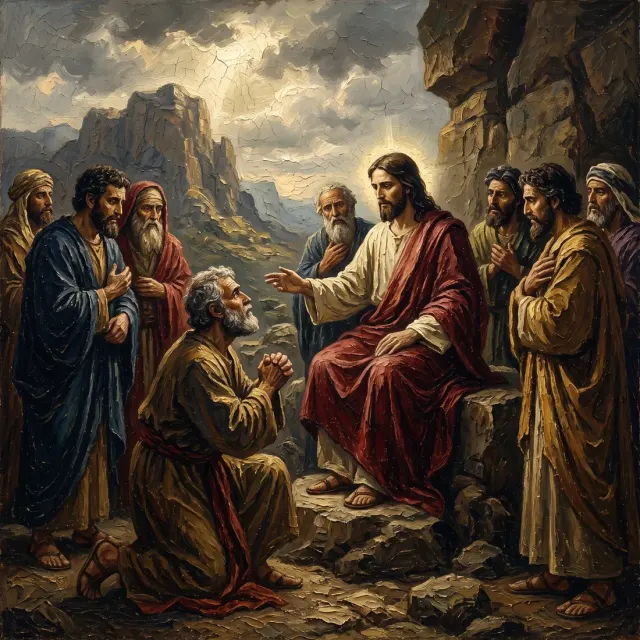
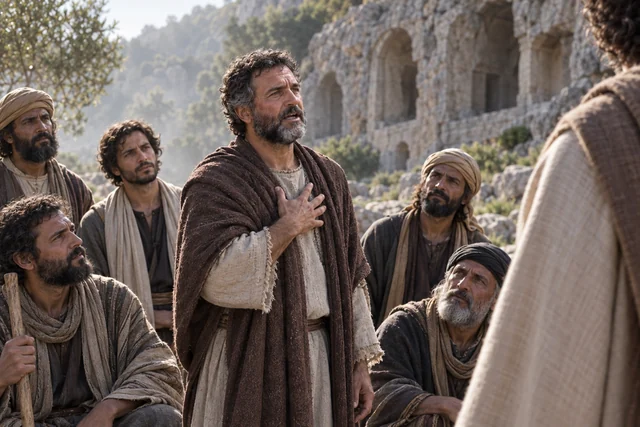
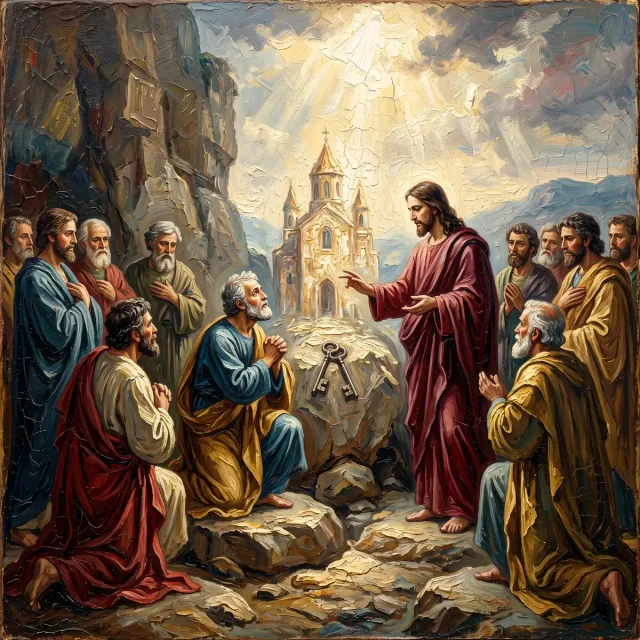

Every name in the answer is an honorable one. That is what makes the answer insufficient rather than merely insulting. John the Baptist, Elijah, Jeremiah: the public has placed Jesus among men who speak for God. The disagreement concerns which prophet has appeared, not whether something remarkable is happening. Admiration has brought the discussion a considerable distance. It has not brought it to the confession Jesus is seeking.
The location adds another layer without supplying an imaginary stage. Caesarea Philippi belongs to a region whose buildings and names advertise powerful patrons. Josephus describes a marble temple near the Jordan's springs and records Philip's naming of the city after Caesar. Here Jesus asks about his own identity, but the Book of Matthew says only that he entered the district. It does not place him at the mouth of a particular cave or have him point toward a shrine.
The disciples can report the names circulating outside their company. That is still a report, not their answer. The passage carefully separates knowing what people say about Jesus from identifying him. An impressive list of prophets remains a list of other people.