
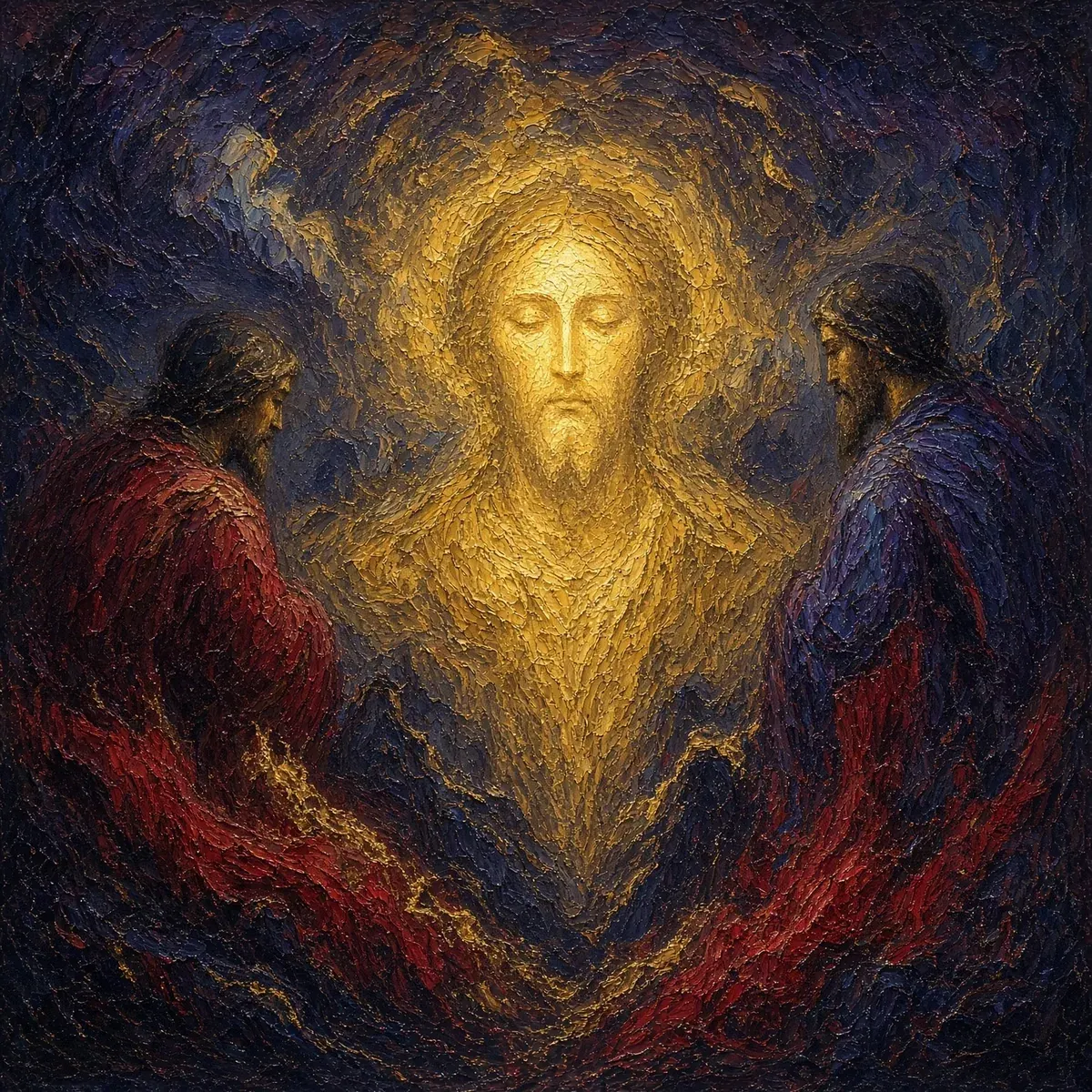

Matthew 17:1-2
His face did shine as the sun
The verb is one the gospels use nowhere else for him, and the comparisons reach for the brightest things the writers know.
Verse by verse
- 17:1
The Gospels do not name this mountain. A later geographical identification should not be inserted as though Matthew supplied it.
- 17:1
Luke 9:28 says about eight days, while Matthew and Mark say after six days. Counting the two endpoint days is a possible explanation of the approximate difference.
- 17:2
Transfigured translates metamorphoo, to transform or change form. Matthew specifies the visible change through the shining face and luminous clothing.
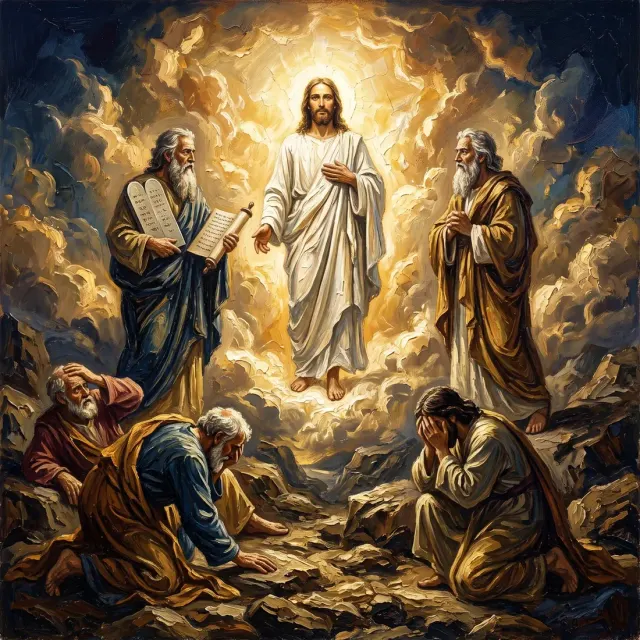
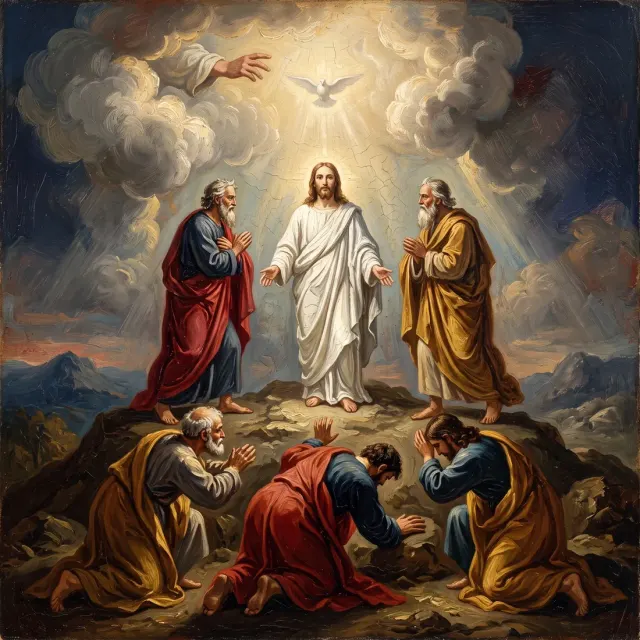
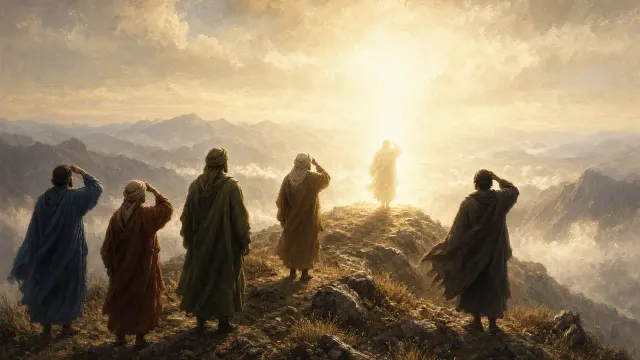
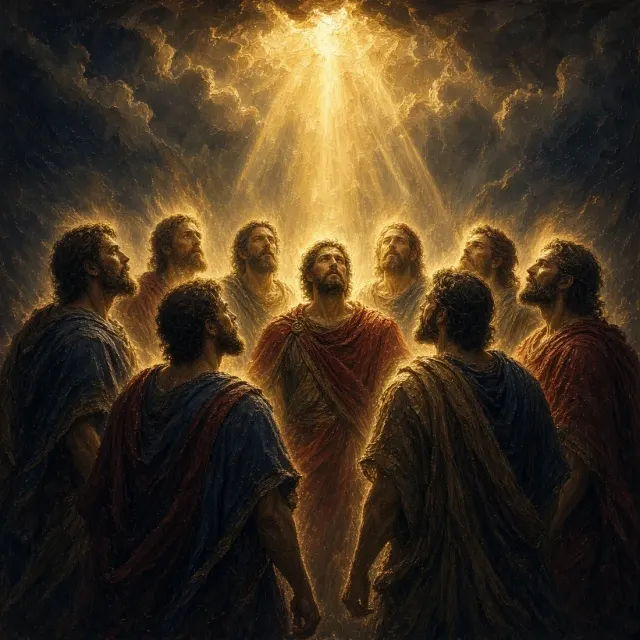



The light is described in relation to Jesus' face and clothing, not as a convenient break in the clouds. His face shines as the sun. His garments are white as light. The Book of Matthew gives comparisons rather than an explanation of the mechanics, and those comparisons put Jesus himself at the center of what the three disciples see. The man who led them up the mountain has not been replaced by someone else. He has been transfigured before them.
Moses' shining face in Exodus 34 belongs in the background. There, Israel sees the brightness after Moses has spoken with the Lord. Here the disciples witness the change in Jesus, and Moses subsequently appears in conversation with him. The resemblance connects the scene to Israel's earlier encounters with divine glory without making the two accounts interchangeable.
The six days also keep this moment attached to the preceding announcement of suffering and resurrection. The mountain is not a correction of the road to Jerusalem. Nothing in the radiance withdraws that announcement. Three disciples receive a sight of the teacher's glory, not permission to substitute a different mission for the one he has declared.