
Places of the Bible

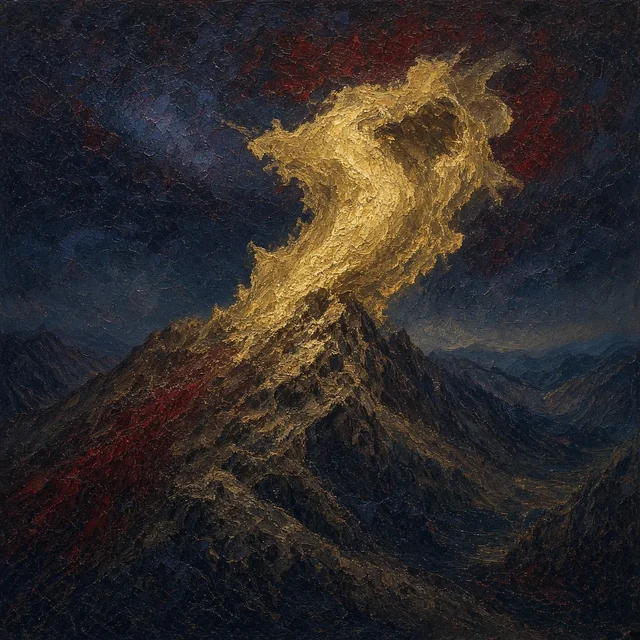
Mount Gilboa

Where the first king of Israel died with three of his sons, and the man who had most to gain wrote the lament.

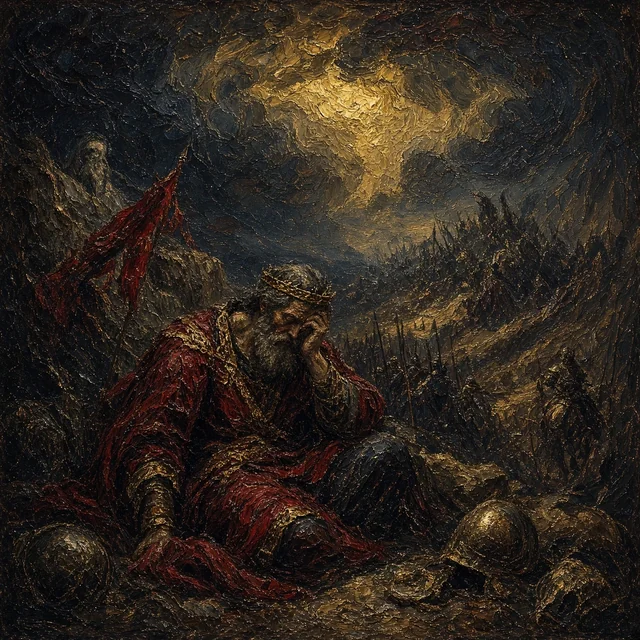
The battle is lost before it starts and the book has said so. Saul has already been to Endor, already heard a verdict, and already fallen the whole length of the earth on the floor of a house at night. The account of the fighting is brief and terrible: the men of Israel fled, and fell down slain in mount Gilboa, and the Philistines followed hard upon Saul and upon his sons, and slew Jonathan and Abinadab and Melchishua.

Where it appears1 Samuel 31 · 2 Samuel 1

Scroll down to the account

The movements, in the order the text gives them.

The Account of Mount Gilboa

  1. 01

    1 Samuel 31:1-6

    They slew Jonathan

    Three sons are named and killed in one verse. The narrative gives them no scene, which is how the chapter registers the scale.

    Jonathan's name comes first among the sons. The man who had defended David, the son whose loyalty had not followed his father's hostility, dies in the same defeat. Gilboa does not sort its casualties into the deserving and the undeserving. The names fall together.

    Saul's last recorded instruction concerns what his enemies might do to him. The fear of abuse is stated; everything else about his private thoughts must remain unstated. His armourbearer cannot carry out the order, and the two deaths are reported in short, terrible sequence. The Book of First Samuel does not decorate them.

    That same day together closes the paragraph. The compression matters: king, sons, attendant, and fighting men are gathered into one sentence, while the next verse will describe abandoned towns. This is a battlefield defeat with consequences beyond the battlefield. David is not standing over Saul, claiming a victory. According to 2 Samuel 1:1, he is at Ziklag. The throne loses its occupant without the fugitive striking him.

    Verse by verse

    1. 31:2

      The three sons killed here are named. This is not a statement that Saul had no surviving sons; Ishbosheth appears in 2 Samuel 2:8.

    2. 31:4

      Saul's stated concern is enemy abuse. The armourbearer's refusal is attributed to fear, not to an explanation supplied by later commentary.

    3. 31:6

      All his men describes those associated with Saul in this defeat. Verse 7 itself mentions surviving Israelites who flee their towns.
    1 Samuel 31:1-6

    King James Version · 6 verses

    31:1Now the Philistines fought against Israel: and the men of Israel fled from before the Philistines, and fell down slain in mount Gilboa.

    31:2And the Philistines followed hard upon Saul and upon his sons; and the Philistines slew Jonathan, and Abinadab, and Malchi-shua, Saul’s sons.

    31:3And the battle went sore against Saul, and the archers hit him; and he was sore wounded of the archers.

    31:4Then said Saul unto his armourbearer, Draw thy sword, and thrust me through therewith; lest these uncircumcised come and thrust me through, and abuse me. But his armourbearer would not; for he was sore afraid. Therefore Saul took a sword, and fell upon it.

    31:5And when his armourbearer saw that Saul was dead, he fell likewise upon his sword, and died with him.

    31:6So Saul died, and his three sons, and his armourbearer, and all his men, that same day together.

    1 Samuel 31:1-6: They slew Jonathan
  2. 02

    1 Samuel 31:8-10

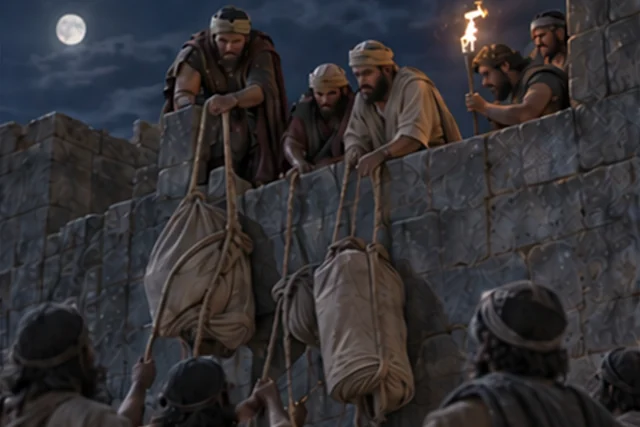
    They fastened his body to the wall

    The armour goes into a temple and the body onto a wall. The display is the point of the exercise.

    The next morning turns a death into a display. Saul had tried to prevent his enemies from abusing him while alive. They now mutilate his body and make the defeat visible in their religious and civic spaces. The fear spoken in the previous paragraph is not identical to what happens here, but the connection is grim.

    The armour and the body go to different places. One becomes a temple trophy; the other is fastened to a city wall. This is more than the removal of valuable equipment from a battlefield. The Philistines are publishing an interpretation of their victory, carrying the news into the houses of their idols and among the people. Saul's remains become part of the announcement.

    The passage does not pause to soften that fact. It names the head, the armour, the wall. A king once identified by the height of his shoulders is now exposed without his armour or his head. Gilboa's defeat is being exhibited elsewhere.

    Verse by verse

    1. 31:8

      On the morrow places the stripping of the dead after the fighting and Saul's death, not during his final exchange with the armourbearer.

    2. 31:9

      Publish here means make known or announce. The stated audiences include both the houses of the Philistine idols and the people.

    3. 31:10

      Bethshan is the place where the body is displayed; Gilboa is where Saul fell. The passage does not put the city wall on the battlefield itself.

    1 Samuel 31:8-10

    King James Version · 3 verses

    31:8And it came to pass on the morrow, when the Philistines came to strip the slain, that they found Saul and his three sons fallen in mount Gilboa.

    31:9And they cut off his head, and stripped off his armour, and sent into the land of the Philistines round about, to publish it in the house of their idols, and among the people.

    31:10And they put his armour in the house of Ashtaroth: and they fastened his body to the wall of Beth-shan.

    1 Samuel 31:8-10: They fastened his body to the wall
  3. 03

    1 Samuel 31:11-13

    All the valiant men arose, and went all night

    Jabesh-gilead repays a rescue from forty years earlier by walking through the dark to take down four bodies.

    Jabesh remembers a different Saul. In 1 Samuel 11, he had delivered this town from Nahash, whose proposed terms involved putting out its men's right eyes. The king's first great rescue and the final recovery of his body meet here. The rescued town acts when there is no living king left to thank it.

    All night is the measure of the journey, and valiant is the description given to the men. There is no speech explaining their courage. The action is to remove bodies from a place chosen to humiliate them. It cannot reverse the battle or restore the dead. It can stop the wall from having the final possession of them.

    Burning is followed by gathering bones, burial, and seven days of fasting. The text states those acts without explaining the decision to burn the bodies. An explanation about their condition may be plausible, but it would still be an explanation supplied from outside the passage. The Book of First Samuel ends with mourning, not a coronation.

    Verse by verse

    1. 31:11

      Jabeshgilead is the town Saul rescued from Nahash in 1 Samuel 11. That earlier deliverance gives this action its particular historical weight.

    2. 31:12

      The verse explicitly records burning the bodies. It does not give the reason, so proposed explanations should not be presented as information stated here.

    3. 31:13

      Burial of the bones and seven days of fasting follow the burning. The passage does not treat recovery of the bodies as a victory celebration.

    1 Samuel 31:11-13

    King James Version · 3 verses

    31:11And when the inhabitants of Jabesh-gilead heard of that which the Philistines had done to Saul;

    31:12All the valiant men arose, and went all night, and took the body of Saul and the bodies of his sons from the wall of Beth-shan, and came to Jabesh, and burnt them there.

    31:13And they took their bones, and buried them under a tree at Jabesh, and fasted seven days.

    1 Samuel 31:11-13: All the valiant men arose, and went all night
  4. 04

    2 Samuel 1:17-20

    Tell it not in Gath

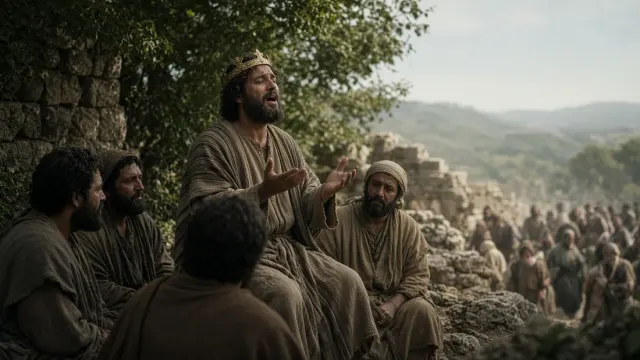
    David’s lament opens by trying to keep the news out of Philistine towns, which is a strange first instinct for a man they had sheltered.

    David names Saul in the lament, not merely Jonathan. The man who repeatedly tried to kill him is not edited out of the mourning. This does not undo the earlier record of Saul's acts. It shows what David chooses to say over the dead, and those are different kinds of speech.

    The command not to publish the news in Gath meets a fact already recorded in 1 Samuel 31:9: the Philistines have published it. The line is not a workable plan to suppress information. It is the voice of grief refusing the prospect of enemy celebration. The poem gives that refusal a city, a street, and the sound of daughters rejoicing.

    Israel's loss is called its beauty, not merely its failed leadership. The fallen men are being remembered as the nation's splendor upon its heights. Gilboa is no longer just a place where an army lost. It has become the place named inside Israel's lament. David gives the defeat words that will outlast the announcement of it.

    Verse by verse

    1. 1:17

      The heading explicitly includes both Saul and Jonathan. A reading that makes the lament only about David's friend leaves out its stated scope.

    2. 1:18

      The Hebrew has bow; the KJV supplies the use of. Some interpreters understand instruction in archery, others a title for the lament, The Bow.

    3. 1:20

      Gath and Askelon are Philistine cities. The prohibition belongs to a lament, while 1 Samuel 31:9 has already recorded the circulation of the victory news.

    2 Samuel 1:17-20

    King James Version · 4 verses

    1:17And David lamented with this lamentation over Saul and over Jonathan his son:

    1:18(Also he bade them teach the children of Judah the use of the bow: behold, it is written in the book of Jasher.)

    1:19The beauty of Israel is slain upon thy high places: how are the mighty fallen!

    1:20Tell it not in Gath, publish it not in the streets of Askelon; lest the daughters of the Philistines rejoice, lest the daughters of the uncircumcised triumph.

    2 Samuel 1:17-20: Tell it not in Gath
  5. 05

    2 Samuel 1:23-27

    How are the mighty fallen

    The song names Saul and Jonathan as lovely and pleasant in their lives, and in their death they were not divided. There is no settling of accounts in it.

    The lament begins this movement with two men and narrows to one voice speaking to one absent friend. Saul and Jonathan are remembered together; then the daughters of Israel are summoned; then David says, I am distressed for thee. Public mourning has reached its most personal sentence.

    The praise is praise within a lament. Eagles and lions express the strength and speed now lost, not a claim that the two men always agreed. Their disagreements over David remain recorded in the Book of First Samuel. In their death they were not divided refers to the dreadful togetherness of Gilboa, where father and son fell on the same day.

    Jonathan's love receives language of extraordinary affection. The earlier accounts give that affection the concrete shape of covenant, protection, and costly allegiance. The poem does not reduce it to a definition; it measures the loss. Even the final weapons of war may carry the men within the image, warriors described through what they bore. The lament has no triumphant last turn. The mighty remain fallen.

    Verse by verse

    1. 1:23

      Not divided in death describes their shared end. It does not erase the conflict between Saul and Jonathan recorded in 1 Samuel 20.

    2. 1:24

      The daughters of Israel are set against the daughters of the Philistines in verse 20. The poem contrasts the mourning of one people with the threatened rejoicing of the other.

    3. 1:26

      David calls Jonathan my brother, a term of intimate attachment rather than a statement of shared parentage. Their covenant is recorded in 1 Samuel 18:3.

    4. 1:27

      Weapons of war can denote the equipment lost or poetically the fallen warriors. The image closes the lament without announcing a replacement king.

    2 Samuel 1:23-27

    King James Version · 5 verses

    1:23Saul and Jonathan were lovely and pleasant in their lives, and in their death they were not divided: they were swifter than eagles, they were stronger than lions.

    1:24Ye daughters of Israel, weep over Saul, who clothed you in scarlet, with other delights, who put on ornaments of gold upon your apparel.

    1:25How are the mighty fallen in the midst of the battle! O Jonathan, thou wast slain in thine high places.

    1:26I am distressed for thee, my brother Jonathan: very pleasant hast thou been unto me: thy love to me was wonderful, passing the love of women.

    1:27How are the mighty fallen, and the weapons of war perished!

    2 Samuel 1:23-27: How are the mighty fallen

Why it matters

Saul asks his armourbearer to finish it and is refused, and falls upon his own sword. The bodies are fastened to the wall of Bethshan, and the men of Jabesh-gilead walk all night to take them down, because Saul had rescued their city in the first weeks of his reign, forty years earlier. Then David, who has been running from this man for years, writes a song about him and orders it taught to the children of Judah, and the song contains no accusation at all.

1 song

The music

Every song in the catalogue whose passage falls inside these chapters.

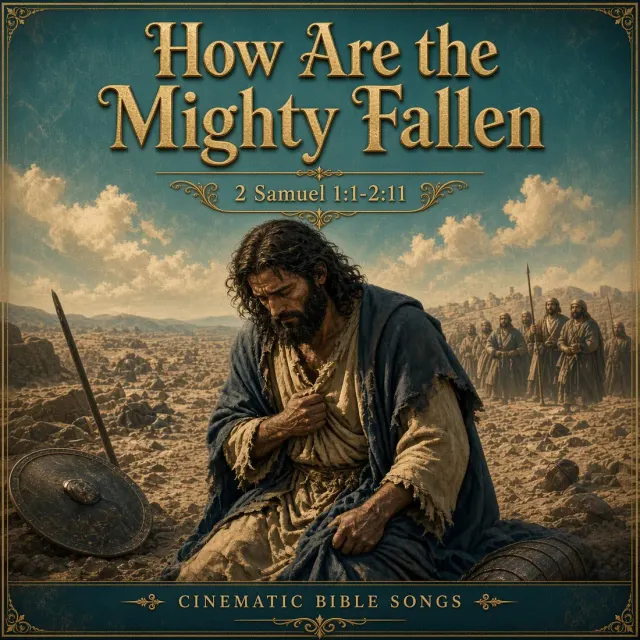
  1. 2 Samuel 1:1-2:11

    How Are the Mighty Fallen

Nearby

All the places

Report an error on this page