
The big picture
The whole nation hears Moses, its leader, call for attention before Israel enters its promised land. Israel, the people God freed from slavery, must learn and do what it hears. Moses returns to Horeb, the mountain where God spoke amid fire and gave the covenant, a binding relationship with duties. He repeats the central commands and recalls why the frightened people asked him to speak with God on their behalf.
In this chapter
- The Living People Must Listen Deuteronomy 5:1-5
Calling all Israel together, Moses tells the people to learn the laws and put them into practice.
- Rescue Calls for Undivided Worship Deuteronomy 5:6-11
God identifies himself as the one who brought Israel out of slavery in Egypt.
- Rest Includes Those Who Serve the Household Deuteronomy 5:12-15
Every seventh day must be kept apart for God.
- The Commands Protect a Neighbour's Life Deuteronomy 5:16-21
Honouring parents is linked with a long and good life in the land.
- The People Ask Moses to Hear for Them Deuteronomy 5:22-27
God spoke the commands to the whole gathering from fire, cloud, and thick darkness, then wrote them on two stone tablets.
- God Wants Their Fear to Become Lasting Obedience Deuteronomy 5:28-33
God accepts what the people have said to Moses.
Central truth
The covenant joins exclusive worship of the God who rescued Israel with duties that protect rest, households, life, property, and truthful dealings.


Scripture beside the summary
Deuteronomy · King James Version · 33Deuteronomy 5:1-5
The Living People Must Listen
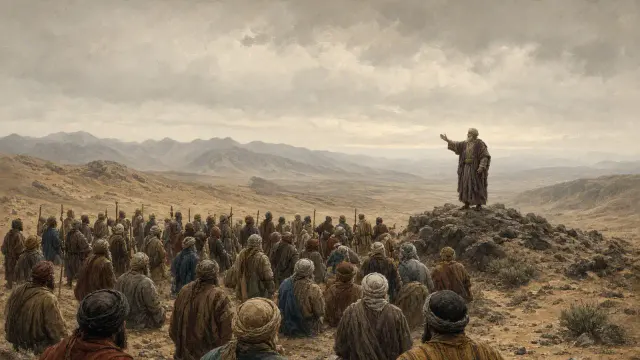
Calling all Israel together, Moses tells the people to learn the laws and put them into practice. He says the covenant belongs to those alive before him, not only to their ancestors. Recalling Horeb, he describes God speaking directly to the people from the fire. Moses stood between them and God because they were afraid to approach the mountain. The reminder joins a shared encounter with Moses' role as the one passing on God's words. The present hearers cannot treat the covenant as an obligation belonging only to people long dead.
In everyday life
A granddaughter places an inherited lease on the table before her siblings sign their new household agreement. The old terms still govern the house they now occupy. She reads them aloud so nobody can dismiss them as their parents' business. Israel is personally bound to God, not merely to conditions attached to property.
Notice
Deuteronomy 5:3 Moses stresses those alive before him. The covenant is being heard as a present claim on this gathering, not preserved only as a memory of earlier people.
Deuteronomy 5:1-5
King James Version1And Moses called all Israel, and said unto them, Hear, O Israel, the statutes and judgments which I speak in your ears this day, that ye may learn them, and keep, and do them.
2The LORD our God made a covenant with us in Horeb.
3The LORD made not this covenant with our fathers, but with us, even us, who are all of us here alive this day.
4The LORD talked with you face to face in the mount out of the midst of the fire,
5(I stood between the LORD and you at that time, to shew you the word of the LORD: for ye were afraid by reason of the fire, and went not up into the mount;) saying,
Deuteronomy 5:6-11
Rescue Calls for Undivided Worship
God identifies himself as the one who brought Israel out of slavery in Egypt. The commands begin from that rescue. Israel must have no other gods and must not make created images to bow before or serve. God describes himself as jealous, refusing divided loyalty. God warns that he punishes wrongdoing across generations among those who reject him. He also shows mercy to those who love and obey him. His name must not be used falsely or emptily. The relationship involves worship, loyalty, and truthful use of the rescuer's name.

In everyday life
The husband finds his signed name attached to a promise he never made. His spouse has used their shared bank authority to support a competing obligation kept secret from him. He asks for the document and an honest explanation. God's claim to exclusive worship cannot be reduced to a marriage or bank agreement.
Notice
Deuteronomy 5:6 Rescue from slavery is named before the prohibitions are given. The commands are addressed to people he has already freed, rather than offered as a price for rescue.
Deuteronomy 5:6-11
King James Version6I am the LORD thy God, which brought thee out of the land of Egypt, from the house of bondage.
7Thou shalt have none other gods before me.
8Thou shalt not make thee any graven image, or any likeness of any thing that is in heaven above, or that is in the earth beneath, or that is in the waters beneath the earth:
9Thou shalt not bow down thyself unto them, nor serve them: for I the LORD thy God am a jealous God, visiting the iniquity of the fathers upon the children unto the third and fourth generation of them that hate me,
10And shewing mercy unto thousands of them that love me and keep my commandments.
11Thou shalt not take the name of the LORD thy God in vain: for the LORD will not hold him guiltless that taketh his name in vain.
Deuteronomy 5:12-15
Rest Includes Those Who Serve the Household
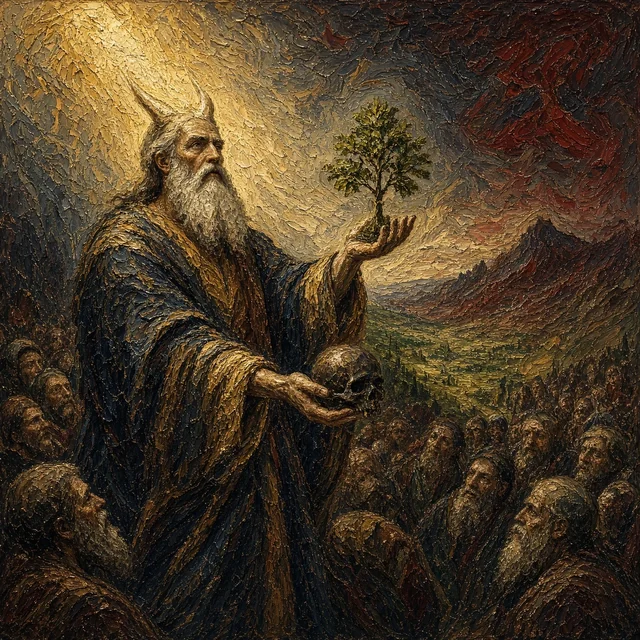
Every seventh day must be kept apart for God. After six days of work, the whole household is to stop. Sons, daughters, male and female servants, resident foreigners, and working animals are all included. The command does not let a householder rest by transferring the day's labour to someone with less power. Moses links this rest to Israel's own slavery in Egypt and God's forceful rescue. People who remember being forced to work must now give rest to those working under their authority, as well as to themselves.
In everyday life
The household employer puts aside her work bag and calls her cleaner to cancel the day's work with full pay. She does not take her own rest by leaving someone else to serve her. Both women can stop. Israel's command also includes animals and sets apart a shared sacred day for God.
Notice
Deuteronomy 5:14 The servants are to rest as their master does. Naming them prevents masters from treating rest as a privilege available only to the people giving orders.
Deuteronomy 5:12-15
King James Version12Keep the sabbath day to sanctify it, as the LORD thy God hath commanded thee.
13Six days thou shalt labour, and do all thy work:
14But the seventh day is the sabbath of the LORD thy God: in it thou shalt not do any work, thou, nor thy son, nor thy daughter, nor thy manservant, nor thy maidservant, nor thine ox, nor thine ass, nor any of thy cattle, nor thy stranger that is within thy gates; that thy manservant and thy maidservant may rest as well as thou.
15And remember that thou wast a servant in the land of Egypt, and that the LORD thy God brought thee out thence through a mighty hand and by a stretched out arm: therefore the LORD thy God commanded thee to keep the sabbath day.
Deuteronomy 5:16-21
The Commands Protect a Neighbour's Life
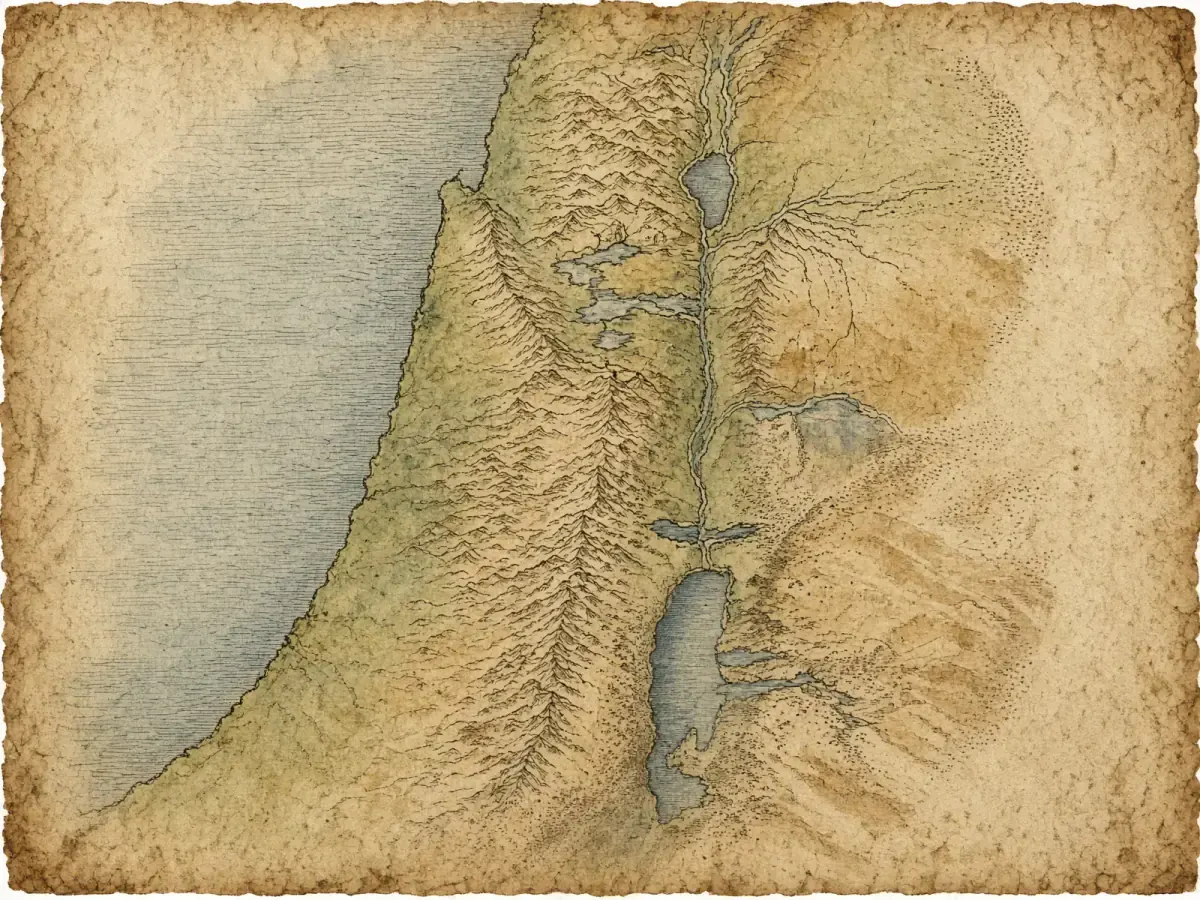
Honouring parents is linked with a long and good life in the land. The commands then forbid killing, adultery, theft, and false testimony against a neighbour. They also reach desire: a person's spouse, home, land, servants, animals, and other possessions are not to become objects of grasping envy. These instructions cover both visible acts and the wishes that push toward taking what belongs to another household. The people are not only told how to worship. They are also told how to live beside others without destroying their lives and homes.

In everyday life
The neighbour lowers his camera when he sees a private argument through the adjoining window. He deletes the recording instead of using it to damage the household he envies. Nobody outside will know the choice he makes. These commands reach many forms of wrongdoing, not only an invasion of privacy.
Notice
Deuteronomy 5:21 The list moves from acts to desire for what belongs to a neighbour. Harmful longing is named before it becomes theft or the breaking of a household.
Deuteronomy 5:16-21
King James Version16Honour thy father and thy mother, as the LORD thy God hath commanded thee; that thy days may be prolonged, and that it may go well with thee, in the land which the LORD thy God giveth thee.
17Thou shalt not kill.
18Neither shalt thou commit adultery.
19Neither shalt thou steal.
20Neither shalt thou bear false witness against thy neighbour.
21Neither shalt thou desire thy neighbour’s wife, neither shalt thou covet thy neighbour’s house, his field, or his manservant, or his maidservant, his ox, or his ass, or any thing that is thy neighbour’s.
Deuteronomy 5:22-27
The People Ask Moses to Hear for Them
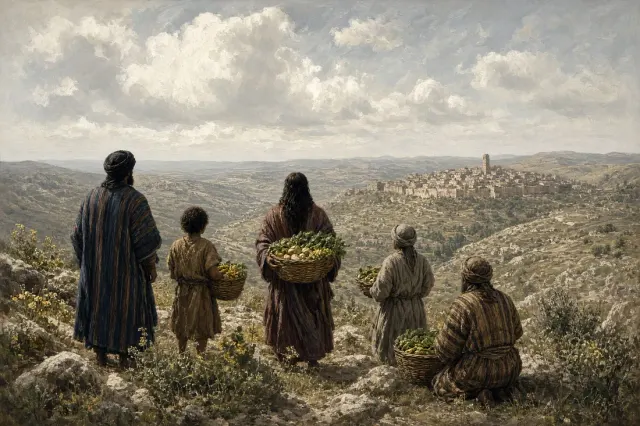
God spoke the commands to the whole gathering from fire, cloud, and thick darkness, then wrote them on two stone tablets. The tribal leaders approached Moses after hearing the voice. They recognised that they had heard God and survived, yet feared another encounter would kill them. They asked Moses to go near, hear whatever God said, and bring the words back. They promised to listen and obey. Their request explains his role as a go-between while retaining God's speech as the source of the commands he teaches.
In everyday life
The frightened residents stand behind a barrier outside their damaged homes while one chosen neighbour approaches the structural engineer. They ask her to bring back the full findings because they cannot all cross the barrier. She takes a notebook with their questions. Israel fears hearing God's own voice, not receiving an engineer's report.
Notice
Deuteronomy 5:27 The people promise to obey words they have not yet heard through Moses. Their request for distance does not include a right to disregard the message he brings.
Deuteronomy 5:22-27
King James Version22These words the LORD spake unto all your assembly in the mount out of the midst of the fire, of the cloud, and of the thick darkness, with a great voice: and he added no more. And he wrote them in two tables of stone, and delivered them unto me.
23And it came to pass, when ye heard the voice out of the midst of the darkness, (for the mountain did burn with fire,) that ye came near unto me, even all the heads of your tribes, and your elders;
24And ye said, Behold, the LORD our God hath shewed us his glory and his greatness, and we have heard his voice out of the midst of the fire: we have seen this day that God doth talk with man, and he liveth.
25Now therefore why should we die? for this great fire will consume us: if we hear the voice of the LORD our God any more, then we shall die.
26For who is there of all flesh, that hath heard the voice of the living God speaking out of the midst of the fire, as we have, and lived?
27Go thou near, and hear all that the LORD our God shall say: and speak thou unto us all that the LORD our God shall speak unto thee; and we will hear it, and do it.
Deuteronomy 5:28-33
God Wants Their Fear to Become Lasting Obedience
God accepts what the people have said to Moses. He expresses the wish that they would always have hearts that fear him and keep his commands, for their own good and their children's good. The people can return to their tents, but Moses must remain to receive further instruction. He will teach them how to live in the land. The chapter ends by urging them not to turn aside from God's way. Their response at the mountain matters, but it must continue after the fire and fear have passed.

In everyday life
The swimming instructor hears a novice's earnest promise to follow the safety rules after a frightening first lesson. She sends him home with the practice plan and books the next session. His words need to become habits when fear has faded. God seeks enduring love and obedience, not progress in a skill.
Notice
Deuteronomy 5:29 God's response concerns the heart behind future obedience. The people's words are accepted, yet the question remains whether that willingness will last through ordinary life.
Deuteronomy 5:28-33
King James Version28And the LORD heard the voice of your words, when ye spake unto me; and the LORD said unto me, I have heard the voice of the words of this people, which they have spoken unto thee: they have well said all that they have spoken.
29O that there were such an heart in them, that they would fear me, and keep all my commandments always, that it might be well with them, and with their children for ever!
30Go say to them, Get you into your tents again.
31But as for thee, stand thou here by me, and I will speak unto thee all the commandments, and the statutes, and the judgments, which thou shalt teach them, that they may do them in the land which I give them to possess it.
32Ye shall observe to do therefore as the LORD your God hath commanded you: ye shall not turn aside to the right hand or to the left.
33Ye shall walk in all the ways which the LORD your God hath commanded you, that ye may live, and that it may be well with you, and that ye may prolong your days in the land which ye shall possess.
Details worth noticing
The opening image
Deuteronomy 5:1 begins with “And Moses called all Israel, and said unto them, Hear, O Israel, the statutes and judgments which I speak in your ears this day, that ye may learn them…”
Where the chapter turns
Deuteronomy 5:14 forms a natural hinge: “But the seventh day is the sabbath of the LORD thy God: in it thou shalt not do any work, thou, nor thy son, nor thy daughter, nor thy manservant, nor thy…”
The final note
Deuteronomy 5:33 leaves the reader with “Ye shall walk in all the ways which the LORD your God hath commanded you, that ye may live, and that it may be well with you, and that ye may prolong your…”
A word trail through the chapter
The words LORD, fire, voice, commanded, keep, land help reveal the chapter’s repeated concerns.
KJV words made clear
- sabbath
- The seventh day, set apart for rest from work in honour of God.
Music and video connected to the passage
Related media appears when its Scripture reference overlaps this study. Music and video can illuminate a theme while the biblical text remains the foundation.