
Deuteronomy

34 Chapters
Deuteronomy: The Whole Book, Chapter by Chapter

Eleven Days Away, Forty Years Later
Deuteronomy opens with a geography lesson that is really a reckoning with delay. Horeb and Kadesh-barnea were only eleven days apart, yet Moses speaks in the fortieth year. He remembers the growth that required delegated judges, the scouts who returned with fruit and called the land good, and the people who transformed deliverance from Egypt into an accusation that God hated them. The judgment falls with a bitter reversal: the children feared as prey will inherit what their parents refused. Israel then tries to obey the old command after a new prohibition has been given, marching without the LORD's presence and being routed. The chapter makes distance moral as well as geographical. Israel reached the border quickly; unbelief kept it there.
One complete chapter pageOpen chapter →
Borders Israel Is Forbidden to Cross
Israel's route toward Canaan is marked as much by forbidden territory as by conquered territory. Edom, Moab, and Ammon each stand behind boundaries Israel is not permitted to erase, because the LORD has already granted those lands to others. The notices about Emims, Horims, Zamzummims, and other displaced peoples also weaken the old terror of giants without pretending such peoples were imaginary. After the condemned generation passes, the command changes at the Arnon. Sihon's kingdom is now designated for Israel, even though Moses first offers peaceful passage and payment for supplies. Sihon's refusal is followed by defeat. Yet the chapter ends by naming the Ammonite land Israel did not touch. Victory does not create an unlimited claim. The God who gives one territory can forbid another.
One complete chapter pageOpen chapter →
A Conquered Kingdom and a Crossing Denied
The defeat of Og expands Israel's eastern victories and directly answers the old terror of high walls and giant peoples. Sixty fortified cities fall, and the conquered territory is then measured, named, and assigned rather than left as a vague trophy. Reuben, Gad, and half Manasseh receive land east of Jordan, but their rest does not release their fighting men from helping the other tribes reach theirs. Moses turns these victories into Joshua's preparation: what he has already seen becomes the basis for courage about what remains. The chapter then narrows from national conquest to one denied personal request. Moses asks to cross and see the good land, but he is told to stop asking. He may look from Pisgah. Joshua will lead the people in.
One complete chapter pageOpen chapter →
A Voice Without an Image, a Covenant Beyond Exile
Moses turns the remembered past into a sustained argument for covenant faithfulness. Israel must neither add to nor subtract from the instruction, because life in the land depends on hearing and doing. Horeb becomes the controlling memory: the people heard a voice from the fire but saw no form, so no creature or heavenly body can supply a likeness God did not give. Moses can already imagine the disaster of idolatry, removal from the land, and scattering among nations, yet even that future is not beyond covenant mercy. From exile Israel may seek, return, and be heard because God will not forget the oath to the fathers. The chapter closes practically, with refuge cities east of Jordan and a fresh introduction to the law Moses will set before Israel.
One complete chapter pageOpen chapter →
Freedom Receives Its Covenant Shape
Moses brings Horeb into the present tense. The covenant spoken there is not treated as an antique agreement belonging only to people who have died; the living assembly must hear, learn, keep, and do it. The commandments begin with rescue from Egypt, then order worship, speech, Sabbath rest, family honor, life, marriage, property, testimony, and desire. Deuteronomy gives the Sabbath a social edge by insisting that servants rest as surely as masters do. After hearing God from the fire, Israel asks Moses to mediate further instruction. God approves the request, but his response exposes the deeper issue: saying the right thing in an overwhelming moment is not the same as having a heart that will keep obeying after everyone returns to ordinary life.
One complete chapter pageOpen chapter →
The Words Must Live in the House
Chapter 6 moves the covenant from the mountain into the house. Love for the one LORD must involve heart, soul, and might, and the words are to be taught until they inhabit sitting, walking, lying down, rising, doorposts, and gates. Moses knows prosperity will create a new kind of test. Israel will enter cities it did not build, houses it did not fill, wells it did not dig, and vineyards it did not plant. Fullness can make the rescue from Egypt disappear from memory. Massah warns against demanding that God prove himself on Israel's terms, while a child's future question gives the household a better pattern: explain the commands by beginning with bondage, deliverance, and the purpose for which Israel was brought out and brought in.
One complete chapter pageOpen chapter →
Chosen by Love, Forbidden to Absorb the Land's Worship
Moses ties the coming conquest directly to the problem of worship. Israel is not to preserve the defeated nations' altars, gods, or religious alliances, and the severe commands against the named peoples are explained in part by the danger of being turned toward other gods. Yet election is stripped of numerical pride: Israel was not chosen for being impressive, but because the LORD loved the people and kept the oath to the fathers. Blessing is described in crops, children, flocks, and health, while fear of stronger nations is answered by remembering Egypt rather than pretending the enemies are weak. Even the pace of conquest is practical, occurring "little by little." The chapter ends at household scale, where silver or gold attached to an idol cannot be privately salvaged without importing the condemned object into Israel's life.
One complete chapter pageOpen chapter →
The Danger of Forgetting After the Meal
Chapter 8 sets two landscapes beside each other: a wilderness where dependence was impossible to hide and a fertile land where dependence may be easier to forget. Hunger, manna, preserved clothing, and water from rock become part of Israel's schooling. The good land is then described in detail, with springs, grain, fruit, oil, minerals, and bread without scarcity. Moses does not distrust fullness, but he does distrust the explanation fullness may generate. Houses, herds, silver, and gold can lift the heart until Israel says its own power produced its wealth. The correction is not that human ability is imaginary. It is that the ability itself is given within a covenant God swore to the fathers. Forgetting finally takes religious form when Israel follows other gods, and election offers no exemption from the consequence.
One complete chapter pageOpen chapter →
Moses Removes the Grounds for Boasting
Moses attacks the idea that possession of the land will certify Israel's virtue. The nations are stronger, the cities formidable, and their wickedness is named, but Israel's righteousness is repeatedly denied as the reason for victory. The golden calf supplies the clearest evidence. While Moses receives the covenant tablets, the people make an image below, and the tablets are broken before their eyes. Taberah, Massah, Kibroth-hattaavah, and Kadesh show that Horeb was not an isolated failure. Israel survives because Moses intercedes, appealing not to the people's innocence but to God's redemption, the fathers, and the reputation of the LORD among the Egyptians. The chapter leaves no room for boasting. The inheritance rests on judgment of the nations and faithfulness to a promise, not a clean record Israel does not possess.
One complete chapter pageOpen chapter →
New Tablets, the Same Covenant
The new tablets make restoration concrete. God does not issue a revised covenant after the calf; the same words are written again and placed in the ark. Aaron dies, Eleazar succeeds him, and Levi's ministry continues, showing that priestly service outlives a particular officeholder. Moses then compresses the covenant's demand into fear, love, service, obedience, and a heart no longer stiffnecked. The LORD owns heaven and earth yet chose Israel's fathers, so election becomes a reason for inward change rather than complacency. Divine greatness is then described through impartial justice and care for the vulnerable. God loves the stranger with food and clothing, and Israel must love the stranger because it remembers being one in Egypt. The chapter joins restored covenant, continuing ministry, transformed allegiance, and practical justice in one movement.
One complete chapter pageOpen chapter →
The Land Drinks Rain from Heaven
Moses addresses a generation that has seen what its children have not. Egypt, the sea, the wilderness, and judgment within Israel create an eyewitness responsibility to teach. The land ahead differs from Egypt because its hills and valleys depend on rain from heaven, so agriculture itself becomes a reminder that possession does not equal independence. Obedience and love are connected with rain, grain, wine, oil, grass, and full tables, while idolatry threatens closed heavens and failed crops. The familiar household commands return because memory must travel into settled life through children who did not witness the original acts. Finally blessing and curse are attached to Gerizim and Ebal, giving covenant choice a visible location inside the land. Crossing Jordan brings Israel into an inheritance whose geography will continually remind it that dwelling and obedience belong together.
One complete chapter pageOpen chapter →
One Chosen Place, Many Ordinary Tables
Chapter 12 organizes worship for settled life. Israel must erase the worship sites of the nations and seek the one place the LORD chooses for his name, bringing sacrifices, tithes, vows, and firstlings there with rejoicing households. Yet central worship does not turn every dinner into a sanctuary meal. Ordinary meat may be eaten in local towns, even by people who are ritually unclean, while blood and holy gifts remain subject to distinct rules. Distance is treated practically: households far from the chosen place may slaughter ordinary meat at home, but sacred offerings still travel. The Levite repeatedly appears because sanctuary order has social consequences for a tribe without territorial inheritance. The chapter ends by warning that defeated religious practices can outlive defeated peoples. Israel must not imitate those practices even if it intends to redirect them toward the LORD.
One complete chapter pageOpen chapter →
A Convincing Sign Can Carry a False Summons
Chapter 13 tests allegiance through three increasingly intimate forms of pressure. A prophet or dreamer may produce a sign that actually happens and still deliver a false summons to other gods. A brother, child, spouse, or beloved friend may whisper the same invitation in private. An entire Israelite city may be reported as having turned aside. None of those sources of persuasion can override the covenant established by the God who brought Israel out of Egypt. The penalties prescribed are severe, but the civic case includes an important demand for careful inquiry: the report must be investigated until the matter is true and certain before destruction is carried out. The chapter therefore refuses both credulity toward spectacular signs and credulity toward alarming accusations. Authority, affection, and rumor are all measured against existing covenant obligations.
One complete chapter pageOpen chapter →
Holiness Reaches Mourning, Meals, and the Harvest
Holiness in chapter 14 reaches from the body to the table to the storehouse. Israel's identity as the LORD's children governs certain mourning practices, then frames a detailed set of food boundaries for land animals, water creatures, birds, carcasses, and a young goat cooked in its mother's milk. The chapter does not reduce every restriction to one medical or symbolic theory; belonging to the LORD remains the stated frame. The tithe then changes the mood from restriction to celebration. Households eat before God at the chosen place, with practical accommodation for those who live far away, and the Levite must not be forgotten. Every third year the produce is stored locally so Levites, strangers, the fatherless, and widows can eat and be satisfied. Holiness here involves both saying no at the table and opening the store for people without secure provision.
One complete chapter pageOpen chapter →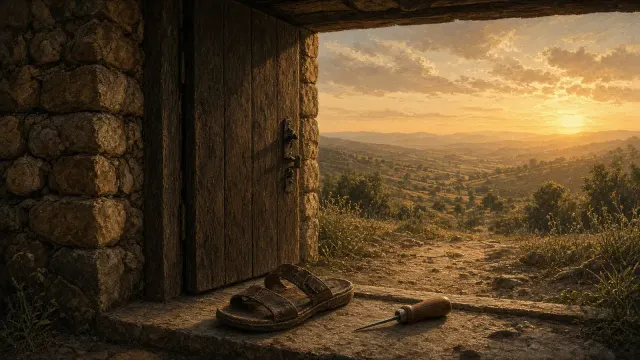
The Open Hand Cannot Watch Only the Calendar
Deuteronomy 15 keeps putting a hand on the part of ownership that would prefer not to be interrupted. A creditor has a claim, but the seventh-year release interrupts it. A household may have resources, but a poor brother can stand at the gate with a need that cannot be dismissed because the calendar makes repayment inconvenient. A master has received six years of labor, but freedom is not to begin with the former servant walking away empty. Even the firstborn of herd and flock cannot simply be treated as another productive animal. The chapter is full of real possessions, real costs, and real limits on what possession permits. Its most pointed moment comes when Moses anticipates the clever calculation before anyone makes it: do not close the hand because the year of release is near. The law reaches not only the transaction, but the reasoning used to evade its purpose.
One complete chapter pageOpen chapter →
A Calendar of Remembrance, a Community of Justice
Deuteronomy 16 turns the calendar into a memory system. Passover keeps the haste of departure from Egypt on the table; Weeks ties celebration to the first swing of the sickle; Tabernacles gathers rejoicing around the completed harvest. Again and again, abundance is measured by who gets included in it. Sons and daughters, servants, Levites, strangers, the fatherless, and widows appear inside the feast rather than outside it. Gifts vary with what each worshipper has received, but appearing before the LORD empty is not the pattern. Then the chapter moves from festival tables to city gates and makes the connection sharper than it first appears. A community that shares food still needs judgments that cannot be bought, twisted, or bent toward a favored person. The same settled life that produces harvests produces disputes, and Moses places just judgment and undivided worship beside the feasts that celebrate the land.
One complete chapter pageOpen chapter →
The King Must Remain a Brother Under the Law
Deuteronomy 17 refuses to let authority become self-authenticating. A sacrifice must actually be fit for the altar. A capital accusation must survive diligent inquiry and multiple witnesses. A hard legal dispute can be carried to an authorized court whose ruling is binding. Then Moses turns to the future king and writes limits directly into the throne. The ruler must come from among the brethren, cannot build royal security by multiplying horses, wives, and wealth, and must keep a copy of the law close enough to read all his life. The chapter’s sharpest royal image is not a crown but a man doing homework. His heart is not to rise above his brethren, because kingship does not turn him into a different order of human being. From altar to courtroom to palace, Deuteronomy insists that office, accusation, and intention answer to standards they did not create for themselves.
One complete chapter pageOpen chapter →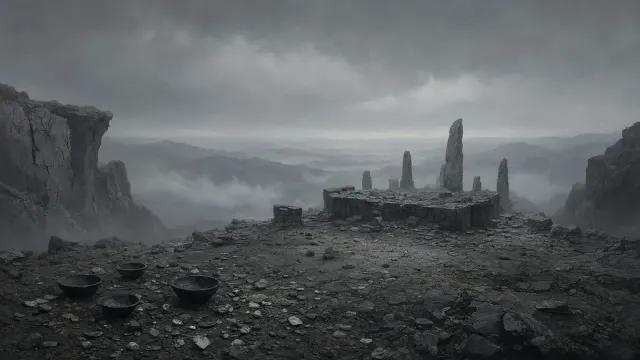
A People Taught by Words God Actually Gives
Deuteronomy 18 asks two practical questions that could easily be separated: who sustains the people appointed to sacred service, and how will Israel know what God has actually said? The Levites receive concrete provision because their inheritance is not a normal territorial share. A Levite who comes willingly to the chosen sanctuary is not to be squeezed out by those already there. Then the chapter turns from food and service to guidance. Israel is forbidden to manufacture access to the hidden world through divination, sorcery, consultation of the dead, and related practices. The answer is not spiritual silence. God promises a prophet who receives words from him, while the people become responsible to hear. Yet a divine name cannot be borrowed to make a false message true. The chapter therefore protects both provision and revelation from human gatekeeping: service must be supplied, and claimed authority must still be tested.
One complete chapter pageOpen chapter →
Justice Needs Roads, Boundaries, and Tested Witnesses
Deuteronomy 19 treats justice as something that needs infrastructure, not merely good intentions. Refuge cities must exist, but roads must also make them reachable. A fatal accident must be distinguished from murder by looking at prior hatred and intention, not by collapsing every death into the same charge. If the land expands, the network of protection must expand with it. At the same time, refuge cannot become a shield for a planned killer. The chapter then moves from physical boundaries to evidentiary ones: a landmark cannot be shifted, one witness cannot establish a charge, and a malicious witness can himself become the object of judgment. Roads, stones, testimony, and judicial inquiry all serve the same larger concern. Innocent blood can be shed by a murderer, but it can also be shed when a community designs safety badly or lets an accusation outrun the evidence.
One complete chapter pageOpen chapter →
War Does Not Erase Every Other Claim
Deuteronomy 20 speaks about war without pretending war erases everything else. The priest addresses fear before battle, but officers then release men whose house, vineyard, or marriage has not yet reached its ordinary enjoyment. A fearful man may also go home rather than spread his panic through the ranks. The chapter distinguishes distant cities, which first receive an offer of peace on terms of submission, from the named peoples of the promised land, against whom the command is far more severe. Those commands cannot be blended into one rule without losing the chapter’s own geography and distinctions. Even in a long siege, the army must know one tree from another. Fruit trees remain protected because the land must still feed people after the fighting ends. Deuteronomy presents divine assurance, human fear, conquest, destruction, and restraint in the same legal frame, refusing to simplify any of them out of existence.
One complete chapter pageOpen chapter →
What Responsibility Looks Like When Lives Are Exposed
Deuteronomy 21 keeps finding people who might otherwise disappear inside someone else’s power: an unidentified victim in a field, a captive woman in a conqueror’s house, a firstborn son of the less-loved wife, a son under a grave parental accusation, and even the body of a condemned man. The chapter does not make their situations equal, nor does it remove the severity of its own legal world. Instead, each case receives a boundary that another person’s preference cannot simply erase. A city must answer for blood shed nearby even when the killer is unknown. Desire must wait while a captive mourns. A father’s affection cannot rewrite birth order. Parents bring a rebellious son to public judgment rather than exercising private capital power. An executed body must come down before night. The common thread is not softness. It is the insistence that exposed lives remain governed by stated obligations rather than by whoever presently holds the advantage.
One complete chapter pageOpen chapter →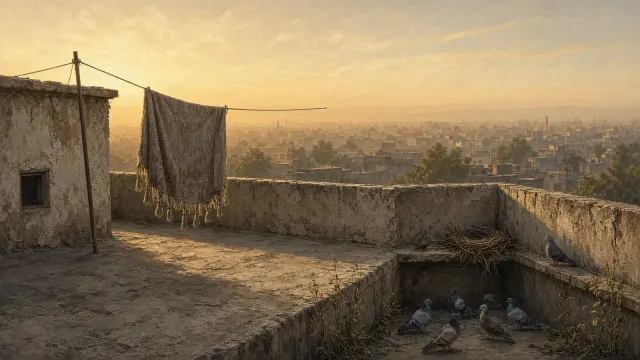
The Neighbour Cannot Simply Be Ignored
Deuteronomy 22 is a chapter of boundaries, some ordinary enough to be missed and others severe enough to dominate the page. A lost animal, a fallen beast, a bird’s nest, a dangerous roof, a vineyard, a yoke, and a garment all receive limits on what a person may ignore, take, combine, or leave unsafe. The chapter then turns to marriage accusations and sexual offences, where public standing, coercion, evidence, and ancient legal assumptions become far more difficult. A false charge against a bride is itself punishable. A woman attacked in the field is expressly declared innocent of a capital offence. The final case concerning an unbetrothed virgin remains genuinely disputed in interpretation and should not be made simpler than the wording allows. Across the chapter, Deuteronomy repeatedly refuses the easiest escape: pretending not to see a neighbour’s need, or pretending a difficult legal text says more clearly than it actually does.
One complete chapter pageOpen chapter →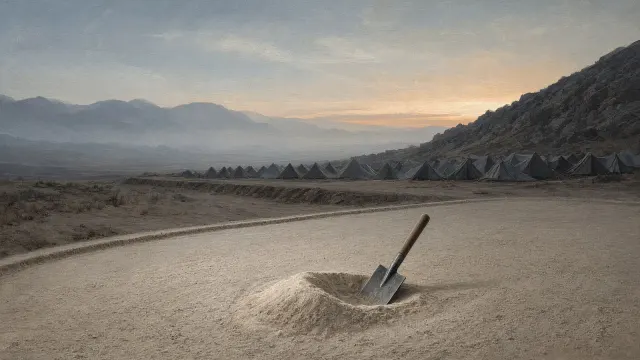
The Holy Camp Still Has Debts, Appetites, and a Shovel
Deuteronomy 23 is unusually good at putting lofty language beside ordinary logistics. The congregation has boundaries shaped by body, descent, and remembered national conduct. The military camp must be holy, which means ritual washing matters and so does bringing a tool to bury human waste. A fugitive servant is not to be returned, but is allowed to choose where to live. Sanctuary offerings are judged partly by their source, so a vow does not cleanse money simply because it is now pointed toward worship. Loans to a brother cannot carry interest, vows are optional before they are spoken and binding afterward, and another person’s vineyard or grain field can feed a hungry passerby without becoming his harvest. The chapter’s distinctions are exact. Membership, refuge, purity, debt, promise, appetite, and ownership overlap in daily life, but Deuteronomy refuses to make any one of them swallow all the others.
One complete chapter pageOpen chapter →
A Livelihood Is Not Just Another Piece of Collateral
Deuteronomy 24 puts limits around moments when one person has unusually strong leverage over another. A former husband cannot reclaim a woman after an intervening marriage. A newly married man receives a protected first year at home. A creditor cannot seize the tools that turn grain into daily bread, invade a debtor’s house, or keep a poor man’s cloak through the night. A kidnapper may not turn a brother into merchandise. Wages must reach a needy worker before sunset, guilt in capital judgment belongs to the offender rather than his children, and the stranger, fatherless, and widow cannot be pushed aside in court or collateral. Even harvesting has limits: forgotten sheaves and second passes through olives and grapes are reserved for those without the landholder’s security. Egypt keeps returning as the reason. Israel’s own past of dependence is written into how power, debt, labor, and abundance must be handled in the land.
One complete chapter pageOpen chapter →
Measured Punishment and Measures That Do Not Lie
Deuteronomy 25 is preoccupied with measure, whether the measure is forty blows, a brother’s obligation to preserve a dead brother’s name, the limit placed on intervention in a fight, the weight used in a transaction, or the remembered violence of Amalek against people too weak to keep up. Even punishment has a ceiling because the guilty man remains “thy brother.” An ox working the grain may eat from it. A widow can bring a reluctant brother-in-law before the elders rather than having her case vanish inside family preference. Dishonest weights are condemned before the scale ever reaches a customer. The closing command remembers Amalek specifically for striking the exhausted rear of Israel’s march. The chapter does not offer one sentimental theme, but it repeatedly notices how strength can exploit someone already exposed. Its answer is measured judgment, public procedure, honest standards, and memory that does not forget who was left at the back.
One complete chapter pageOpen chapter →
A Basket of Fruit Comes with a History
Deuteronomy 26 takes the harvest and makes it speak. A basket of firstfruits is not presented as proof that a farmer finally made something for himself. It becomes the end of a sentence that began with vulnerable ancestors, Egyptian bondage, a cry to God, deliverance, and the gift of land. The worshipper can point to fruit in his own hand while confessing a past much older than his field. The third-year tithe follows the same pattern: food is actually distributed to the Levite, stranger, fatherless, and widow before the householder declares that the command has been kept. Words do not substitute for the deed. The chapter closes with two matching declarations. Israel acknowledges the LORD as its God, and the LORD acknowledges Israel as his peculiar people. Possession, provision, obedience, and identity are all gathered into one covenantal relationship rather than divided into religious and economic compartments.
One complete chapter pageOpen chapter →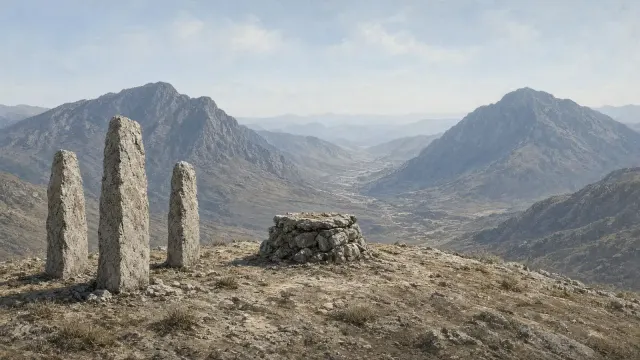
The Law Is Written Where the People Must Answer
Deuteronomy 27 turns the entrance into the land into a public act of writing, hearing, sacrificing, and answering. Great plastered stones are to carry the law plainly enough to be read. Mount Ebal, associated with the curse in the ceremony that follows, also receives an altar, burnt offerings, peace offerings, eating, and rejoicing. The people are then arranged across Gerizim and Ebal while the Levites speak curses that receive a repeated national answer: “Amen.” Many of the named offences are exactly the sort that can hide from ordinary witnesses, from a secret idol to a shifted landmark, a bribe, or a blow struck in secret. The ceremony drags concealed wrongdoing into public acknowledgment without pretending every secret act will be caught by human eyes. Its final curse widens beyond the individual examples to the failure to uphold the law by doing it. The people’s spoken assent therefore points beyond speech toward performance.
One complete chapter pageOpen chapter →
The Life of the Land Can Be Turned Inside Out
Deuteronomy 28 is built like a reversal machine. The blessings begin with city and field, children and livestock, basket and store, coming in and going out, then expand to victory, rain, lending, and national distinction. When the curses arrive, they deliberately revisit the same places and turn each one inside out. The basket empties, the sky closes, enemies reverse the sevenfold flight, houses and vineyards are begun but not enjoyed, children are carried away, and labor continues without its expected fruit. As the chapter darkens, siege enters the household and destroys bonds that ordinary life should protect. Scattering among nations brings no rest, and the final image reverses the exodus itself by sending Israel back toward Egypt and an unwanted bondage. Yet the chapter’s terror is not random. It systematically dismantles the life the covenant had described as blessing. The long list works because the reader has already been shown, in detail, exactly what is being lost.
One complete chapter pageOpen chapter →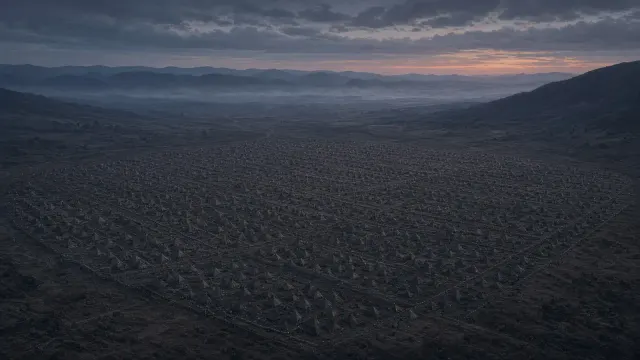
Standing Inside the Covenant Does Not Create a Private Exemption
Deuteronomy 29 gathers Israel into covenant while refusing every easy assumption about what that membership means. The people have seen Egypt, wilderness preservation, and conquered territory, yet Moses can still speak of eyes that have not truly seen and a heart that has not perceived. The assembly reaches from recognized leaders to ordinary laborers and resident strangers, then beyond those physically present. Against that breadth stands a private danger: someone may hear the covenant curse and quietly promise himself peace anyway. The chapter then imagines ruined land becoming public testimony to abandoned allegiance. It closes by drawing a clean boundary between what belongs to God in secret and what has been revealed to Israel and its children. The revealed word is not given for speculation. It is given “that we may do” it.
One complete chapter pageOpen chapter →
Beyond Scattering, the Possibility of Return
Deuteronomy 30 refuses to let exile be the final horizon. Moses speaks from the far side of blessing and curse, imagining scattered people who remember, return, and are gathered from distances that once looked like the end of the covenant future. Restoration reaches deeper than geography. The LORD promises to circumcise the heart so that love and life become possible, while the same spheres stripped away in the curses return under blessing. Then the chapter removes another imagined obstacle: the command is not hidden in heaven or stranded beyond the sea. It has already been brought near enough to hear, speak, receive, and do. The closing choice between life and death gathers the whole chapter into one claim. Life is not merely land, length of days, or prosperity. Those gifts remain, but they are finally attached to loving, obeying, and cleaving to the LORD, because “he is thy life.”
One complete chapter pageOpen chapter →
A New Leader, a Written Law, and a Song That Will Remain
Deuteronomy 31 is a chapter about succession, but it refuses to pretend that replacing Moses solves Israel's deeper problem. Joshua is publicly commissioned, and the repeated assurance is that the LORD goes before the people and will not fail them. At the same time, Moses writes the law, places it in the care of priests and elders, orders its public reading, and prepares a song that will remain in Israel's mouth after his death. The chapter is building witnesses that outlive a leader. Its most unsettling feature is the forecast of future betrayal inside the very ceremony of transition. Israel will enter the land, prosper, and turn aside. That prediction does not cancel Joshua's commission or make teaching pointless. It makes them more urgent. Leadership, written law, public hearing, remembered song, heaven, and earth all converge around one problem: how covenant words will continue to speak when Moses no longer can.
One complete chapter pageOpen chapter →
The Rock Remains While the People Change Their Allegiance
Deuteronomy 32 turns the covenant witness into poetry and gives Israel images difficult to forget. The LORD is named first as the Rock, perfect in work and just in all his ways, so the people's later corruption cannot be blamed on a defect in the one who formed them. The song remembers desert care, eaglelike protection, abundant food, and the striking claim that Jacob is the LORD's own portion. Then abundance twists into betrayal: Jeshurun grows fat and kicks, forgetting the Rock who gave life and rescue. Judgment answers that broken allegiance with equally vivid images of fire, hunger, venom, sword, and terror, yet even the threatened devastation is restrained where enemy boasting would deny the LORD's hand. The song moves finally toward vindication, mercy, and a summons to the nations to rejoice. After all that poetry, Moses makes the purpose plain. These words are not empty. They are to be set in the heart, taught to children, and treated as life.
One complete chapter pageOpen chapter →
Moses Blesses the People He Will Not Lead Across
Deuteronomy 33 follows the severe witness of the Song of Moses with blessing, not because the indictment has been withdrawn, but because Moses' final work includes speaking over the future of the people he will not lead across Jordan. The chapter moves from the LORD's radiant coming and the law as an inheritance into distinct tribal words about survival, help, priestly service, security, fruitfulness, strength, movement, dwelling, and abundance. Some blessings are expansive and some are only a line or two, and several compressed expressions resist confident reconstruction. The poetry is comfortable leaving some things dense. What holds the chapter together is not equal treatment of every tribe but the God who surrounds them all. By the end, the imagery moves from heaven to underneath: the God of Jeshurun rides the sky to help, yet “underneath are the everlasting arms.” Israel's happiness is finally grounded not in tribal strength by itself, but in being a people saved, sheltered, and sustained by the LORD.
One complete chapter pageOpen chapter →
The Land Is Shown, the Servant Is Buried, and Israel Must Go on
Deuteronomy 34 closes Moses' life with a mixture of fulfillment, boundary, grief, and continuation. From Nebo he sees the land promised to Abraham, Isaac, and Jacob, but sight does not become entry. The ancestral oath remains certain even as Moses' own commission ends outside Canaan. His death is described “according to the word of the LORD,” his grave remains unknown, and the account immediately refuses to explain him as a man simply worn out by old age: his eye was not dim and his natural force had not abated. Israel mourns for thirty days, and then the days of mourning end because the people still have somewhere to go. Joshua stands ready with the spirit of wisdom and receives their obedience. Yet succession does not flatten distinction. The final assessment says no prophet had arisen in Israel like Moses, known by the LORD “face to face.” His grave cannot be located, but his public work before Egypt and Israel remains the book's closing memory.
One complete chapter pageOpen chapter →Source: eBible.org · eng-kjv2006