The big picture
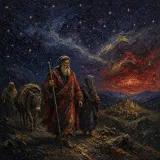
Isaac, father of the twin brothers Jacob and Esau, has now been buried. Genesis turns to Esau, Jacob’s older brother, who is also called Edom. Edom becomes the name of the people descended from him. Esau leaves Canaan, the land where both brothers had lived, because their livestock and possessions are too great for them to stay together. He settles in Mount Seir, the hill country southeast of Canaan. The chapter records Esau’s family branches and leaders. It also names the Horites, the people already living in Seir.
In this chapter
- Esau’s Clans Settle in Seir Genesis 36:1-19
Esau has three wives, Adah, Aholibamah, and Bashemath, and Genesis names their sons.
- Seir’s Earlier Families Are Listed Genesis 36:20-30
Next comes the family of Seir the Horite, whose people already live in the land.
- Kings and Chiefs Rule Edom Genesis 36:31-43
Genesis now lists kings who rule in Edom before any king rules over Israel, the people descended from Jacob.
Central truth
Esau’s household grows into Edom, a people with family branches, clan leaders, territory, and kings in the land of Seir.

Scripture beside the summary
Genesis · King James Version · 43Genesis 36:1-19
Esau’s Clans Settle in Seir
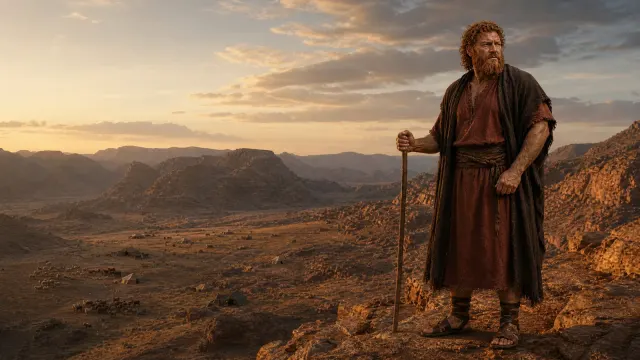
Esau has three wives, Adah, Aholibamah, and Bashemath, and Genesis names their sons. His household also includes daughters, other household members, livestock, and other property. Esau moves away from Jacob because the land cannot support both brothers’ herds. He settles in Mount Seir. The family record then follows the children of Eliphaz and Reuel. It also names the sons of Aholibamah. Amalek is born to Eliphaz and Timna, his concubine. The list then names dukes, meaning clan chiefs, from Esau’s family lines. A household has grown into several recognized branches within Edom.
In everyday life
A rancher divides a crowded family operation among his grown children. One ledger lists each child, grandchild, herd, and family branch. Years later, those branches run separate tracts under their own leaders. The names show how one household spread into several groups. Esau’s record concerns ancient clans and territory, not a modern ranch company.
Notice
Genesis 36:7 The brothers separate because their combined livestock and wealth are too much for the land. Material pressure, not another recorded fight, drives this move.
Genesis 36:1-19
King James Version1Now these are the generations of Esau, who is Edom.
2Esau took his wives of the daughters of Canaan; Adah the daughter of Elon the Hittite, and Aholibamah the daughter of Anah the daughter of Zibeon the Hivite;
3And Bashemath Ishmael’s daughter, sister of Nebajoth.
4And Adah bare to Esau Eliphaz; and Bashemath bare Reuel;
5And Aholibamah bare Jeush, and Jaalam, and Korah: these are the sons of Esau, which were born unto him in the land of Canaan.
6And Esau took his wives, and his sons, and his daughters, and all the persons of his house, and his cattle, and all his beasts, and all his substance, which he had got in the land of Canaan; and went into the country from the face of his brother Jacob.
7For their riches were more than that they might dwell together; and the land wherein they were strangers could not bear them because of their cattle.
8Thus dwelt Esau in mount Seir: Esau is Edom.
9And these are the generations of Esau the father of the Edomites in mount Seir:
10These are the names of Esau’s sons; Eliphaz the son of Adah the wife of Esau, Reuel the son of Bashemath the wife of Esau.
11And the sons of Eliphaz were Teman, Omar, Zepho, and Gatam, and Kenaz.
12And Timna was concubine to Eliphaz Esau’s son; and she bare to Eliphaz Amalek: these were the sons of Adah Esau’s wife.
13And these are the sons of Reuel; Nahath, and Zerah, Shammah, and Mizzah: these were the sons of Bashemath Esau’s wife.
14And these were the sons of Aholibamah, the daughter of Anah the daughter of Zibeon, Esau’s wife: and she bare to Esau Jeush, and Jaalam, and Korah.
15These were dukes of the sons of Esau: the sons of Eliphaz the firstborn son of Esau; duke Teman, duke Omar, duke Zepho, duke Kenaz,
16Duke Korah, duke Gatam, and duke Amalek: these are the dukes that came of Eliphaz in the land of Edom; these were the sons of Adah.
17And these are the sons of Reuel Esau’s son; duke Nahath, duke Zerah, duke Shammah, duke Mizzah: these are the dukes that came of Reuel in the land of Edom; these are the sons of Bashemath Esau’s wife.
18And these are the sons of Aholibamah Esau’s wife; duke Jeush, duke Jaalam, duke Korah: these were the dukes that came of Aholibamah the daughter of Anah, Esau’s wife.
19These are the sons of Esau, who is Edom, and these are their dukes.
Genesis 36:20-30
Seir’s Earlier Families Are Listed
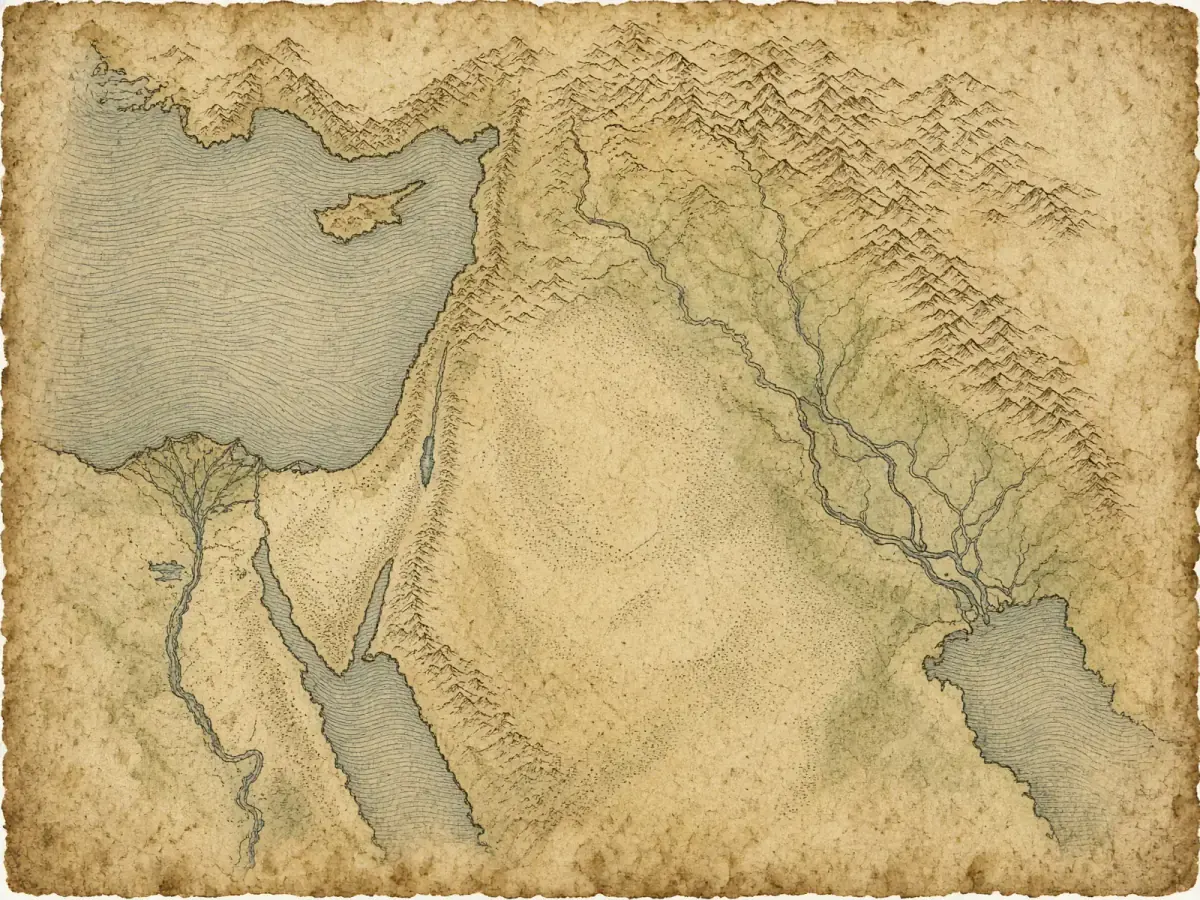
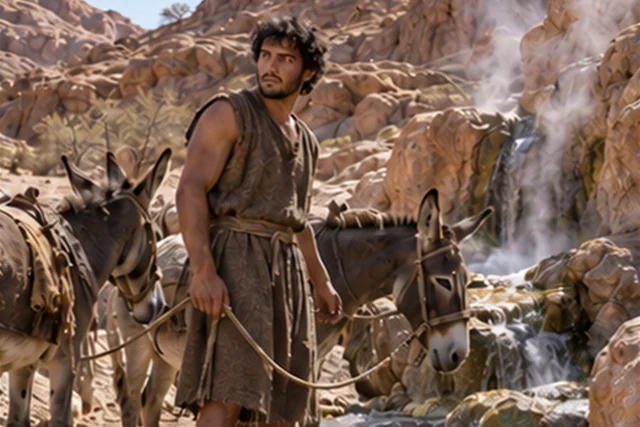
Next comes the family of Seir the Horite, whose people already live in the land. His sons are Lotan, Shobal, Zibeon, Anah, Dishon, Ezer, and Dishan. Their children and clan chiefs are then listed. Most people receive only names and family links. One line gives Anah an extra detail: he finds mules in the wilderness while tending his father’s donkeys. No further explanation is given. Aholibamah also appears in this Horite family line. The list closes by naming the Horite chiefs in Seir.
In everyday life
A property clerk opens an old deed index for a valley. The pages name families who lived there before later owners arrived. One margin note records what a farmer found while working. Most lines give only names and links between relatives. Genesis is keeping an ancient people in the family record, not tracking modern land titles.
Notice
Genesis 36:24 Anah gets one unusual detail while most names get none. The brief note shows how a family list can preserve one remembered event without explaining why it matters.
Genesis 36:20-30
King James Version20These are the sons of Seir the Horite, who inhabited the land; Lotan, and Shobal, and Zibeon, and Anah,
21And Dishon, and Ezer, and Dishan: these are the dukes of the Horites, the children of Seir in the land of Edom.
22And the children of Lotan were Hori and Hemam; and Lotan’s sister was Timna.
23And the children of Shobal were these; Alvan, and Manahath, and Ebal, Shepho, and Onam.
24And these are the children of Zibeon; both Ajah, and Anah: this was that Anah that found the mules in the wilderness, as he fed the asses of Zibeon his father.
25And the children of Anah were these; Dishon, and Aholibamah the daughter of Anah.
26And these are the children of Dishon; Hemdan, and Eshban, and Ithran, and Cheran.
27The children of Ezer are these; Bilhan, and Zaavan, and Akan.
28The children of Dishan are these; Uz, and Aran.
29These are the dukes that came of the Horites; duke Lotan, duke Shobal, duke Zibeon, duke Anah,
30Duke Dishon, duke Ezer, duke Dishan: these are the dukes that came of Hori, among their dukes in the land of Seir.
Genesis 36:31-43
Kings and Chiefs Rule Edom
Genesis now lists kings who rule in Edom before any king rules over Israel, the people descended from Jacob. Bela comes first, followed by Jobab, Husham, Hadad, Samlah, Saul, Baal-hanan, and Hadar. Several entries also give a city, homeland, or family link. Hadad is remembered for defeating Midian, a neighboring people, in the field of Moab, a land east of the Dead Sea. After the kings, the list returns to dukes, or clan chiefs, from Esau’s family. They are named by families and places. The closing line ties the chiefs and their homes to Edom. Esau’s descendants now appear as a people with land and political rule.
In everyday life
A firehouse secretary updates a wall list of former chiefs. Another board names today’s captains by district. The two records show leadership changing while local branches remain. One line even notes a chief’s major rescue. Edom’s list concerns kings, clans, and territorial rule, far beyond a volunteer fire station.
Notice
Genesis 36:31 Edom has kings before Israel does. That detail gives Esau’s descendants their own political history instead of treating them only as a side branch of Jacob’s family.
Genesis 36:31-43
King James Version31And these are the kings that reigned in the land of Edom, before there reigned any king over the children of Israel.
32And Bela the son of Beor reigned in Edom: and the name of his city was Dinhabah.
33And Bela died, and Jobab the son of Zerah of Bozrah reigned in his stead.
34And Jobab died, and Husham of the land of Temani reigned in his stead.
35And Husham died, and Hadad the son of Bedad, who smote Midian in the field of Moab, reigned in his stead: and the name of his city was Avith.
36And Hadad died, and Samlah of Masrekah reigned in his stead.
37And Samlah died, and Saul of Rehoboth by the river reigned in his stead.
38And Saul died, and Baal-hanan the son of Achbor reigned in his stead.
39And Baal-hanan the son of Achbor died, and Hadar reigned in his stead: and the name of his city was Pau; and his wife’s name was Mehetabel, the daughter of Matred, the daughter of Mezahab.
40And these are the names of the dukes that came of Esau, according to their families, after their places, by their names; duke Timnah, duke Alvah, duke Jetheth,
41Duke Aholibamah, duke Elah, duke Pinon,
42Duke Kenaz, duke Teman, duke Mibzar,
43Duke Magdiel, duke Iram: these be the dukes of Edom, according to their habitations in the land of their possession: he is Esau the father of the Edomites.
Details worth noticing
The opening image
Genesis 36:1 begins with “Now these are the generations of Esau, who is Edom.”
Where the chapter turns
Genesis 36:1 forms a natural hinge: “Now these are the generations of Esau, who is Edom.”
The final note
Genesis 36:43 leaves the reader with “Duke Magdiel, duke Iram: these be the dukes of Edom, according to their habitations in the land of their possession: he is Esau the father of the Edomites.”
A word trail through the chapter
The words duke, Esau, sons, dukes, land, daughter help reveal the chapter’s repeated concerns.
KJV words made clear
- generations
- A family record of descendants and the lines that came from them.
- bare
- Bore a child or gave birth.
- substance
- Property, possessions, and wealth owned by a household.
- dukes
- Clan chiefs or leaders, not the later European noble title.
- stead
- Place or position, especially when one ruler replaces another.
Music and video connected to the passage
Related media appears when its Scripture reference overlaps this study. Music and video can illuminate a theme while the biblical text remains the foundation.