
The big picture
Zedekiah, the king, rules Judah, the southern kingdom, as a ruler chosen by Babylon, the foreign empire. He asks Jeremiah, God's messenger, to pray while still refusing the prophet's message. Jerusalem, the capital, gains a brief respite when its besiegers withdraw because an Egyptian army approaches. God says the relief will not last. During the interval Jeremiah tries to leave the city and is arrested as a deserter. Later the king meets him in secret. The warning stays the same, but Jeremiah gains a safer cell and daily bread.
In this chapter
- A Refusing King Still Requests Prayer Jeremiah 37:1-5
Babylon's king has put Zedekiah on the throne, yet Judah still rejects what God says.
- The Besieging Army Will Return Jeremiah 37:6-10
God tells Jeremiah what to say to the king's messengers.
- The Guard Arrests Jeremiah as a Deserter Jeremiah 37:11-15
During the army's withdrawal, Jeremiah leaves the capital intending to go to Benjamin, the nearby tribal territory.
- Jeremiah Repeats the Warning and Receives Bread Jeremiah 37:16-21
After many days in the dungeon, Jeremiah is brought secretly to the king.
Central truth
Temporary military relief does not cancel God's warning, and imprisonment does not make Jeremiah replace it with the answer the king wants.


Scripture beside the summary
Jeremiah · King James Version · 21Jeremiah 37:1-5
A Refusing King Still Requests Prayer
Babylon's king has put Zedekiah on the throne, yet Judah still rejects what God says. The king, his officials, and the people refuse to heed Jeremiah. Even so, the king sends two men to ask for prayer. They want the prophet's help while ignoring his warning. No one has yet locked Jeremiah up; he goes about the city freely. Meanwhile, troops from Egypt, the kingdom to the south, advance to help. The Chaldeans, Babylon's forces surrounding Jerusalem, hear the news and pull back from the city.

In everyday life
A fishing-boat owner ignores an engineer's repeated warnings but asks her to help when a storm threatens the vessel. A brief clearing of the sky raises his hopes before he repairs anything. He still wants her help without accepting her assessment. Zedekiah seeks prayer from God's prophet amid a military siege, not advice about a boat.
Notice
Jeremiah 37:2 The refusal to listen is stated before the request for prayer. The king seeks help. That does not prove he accepts the word the prophet carries.
Jeremiah 37:1-5
King James Version1And king Zedekiah the son of Josiah reigned instead of Coniah the son of Jehoiakim, whom Nebuchadrezzar king of Babylon made king in the land of Judah.
2But neither he, nor his servants, nor the people of the land, did hearken unto the words of the LORD, which he spake by the prophet Jeremiah.
3And Zedekiah the king sent Jehucal the son of Shelemiah and Zephaniah the son of Maaseiah the priest to the prophet Jeremiah, saying, Pray now unto the LORD our God for us.
4Now Jeremiah came in and went out among the people: for they had not put him into prison.
5Then Pharaoh’s army was come forth out of Egypt: and when the Chaldeans that besieged Jerusalem heard tidings of them, they departed from Jerusalem.
Jeremiah 37:6-10
The Besieging Army Will Return
God tells Jeremiah what to say to the king's messengers. The troops sent from Egypt will turn home, and Babylon's forces will return. They will attack Jerusalem, capture it, and set it on fire. Judah must not take this brief pause as proof that the danger has passed. God pushes the warning further. Suppose the enemy suffered defeat and had no fit troops left. Even its injured survivors would leave their tents and burn the city. Such weak men would still be enough to carry out his judgement.

In everyday life
The fire crew leader sees a wind change push flames away from a village for an hour. She refuses to cancel the warning because the forecast shows the threat returning. Relief in the moment is not the same as safety. God's word makes the city's fall certain even through wounded attackers; the crew works with changing conditions.
Notice
Jeremiah 37:10 Even wounded survivors are enough in the warning. The extreme example removes confidence that reducing the enemy's strength could overturn God's announced judgement.
Jeremiah 37:6-10
King James Version6Then came the word of the LORD unto the prophet Jeremiah, saying,
7Thus saith the LORD, the God of Israel; Thus shall ye say to the king of Judah, that sent you unto me to enquire of me; Behold, Pharaoh’s army, which is come forth to help you, shall return to Egypt into their own land.
8And the Chaldeans shall come again, and fight against this city, and take it, and burn it with fire.
9Thus saith the LORD; Deceive not yourselves, saying, The Chaldeans shall surely depart from us: for they shall not depart.
10For though ye had smitten the whole army of the Chaldeans that fight against you, and there remained but wounded men among them, yet should they rise up every man in his tent, and burn this city with fire.
Jeremiah 37:11-15
The Guard Arrests Jeremiah as a Deserter
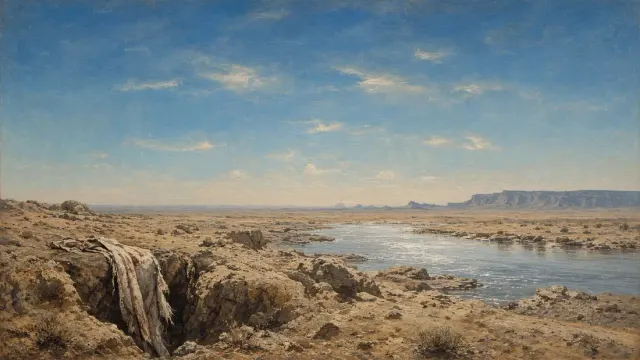
During the army's withdrawal, Jeremiah leaves the capital intending to go to Benjamin, the nearby tribal territory. Irijah, a guard captain at the city gate, seizes him. He accuses him of joining the enemy. Jeremiah denies the charge. The captain refuses to hear him and brings him to the officials. They angrily beat him and imprison him in the house of Jonathan, a scribe, an official who keeps written records, whose property has been made a prison. The prophet tried to leave the city. The guard treats this as proof that he has betrayed it.

In everyday life
A border lawyer interviews a traveller detained after an officer interpreted his departure as betrayal. The traveller's denial never reached a hearing before punishment began. She records the route and the accusation separately rather than treating them as the same fact. Jeremiah is beaten by his own officials while bearing God's unwelcome message.
Notice
Jeremiah 37:14 Jeremiah directly denies desertion, but the officer will not listen. The officer makes the charge. The account does not say it was the prophet's real aim.
Jeremiah 37:11-15
King James Version11And it came to pass, that when the army of the Chaldeans was broken up from Jerusalem for fear of Pharaoh’s army,
12Then Jeremiah went forth out of Jerusalem to go into the land of Benjamin, to separate himself thence in the midst of the people.
13And when he was in the gate of Benjamin, a captain of the ward was there, whose name was Irijah, the son of Shelemiah, the son of Hananiah; and he took Jeremiah the prophet, saying, Thou fallest away to the Chaldeans.
14Then said Jeremiah, It is false; I fall not away to the Chaldeans. But he hearkened not to him: so Irijah took Jeremiah, and brought him to the princes.
15Wherefore the princes were wroth with Jeremiah, and smote him, and put him in prison in the house of Jonathan the scribe: for they had made that the prison.
Jeremiah 37:16-21
Jeremiah Repeats the Warning and Receives Bread
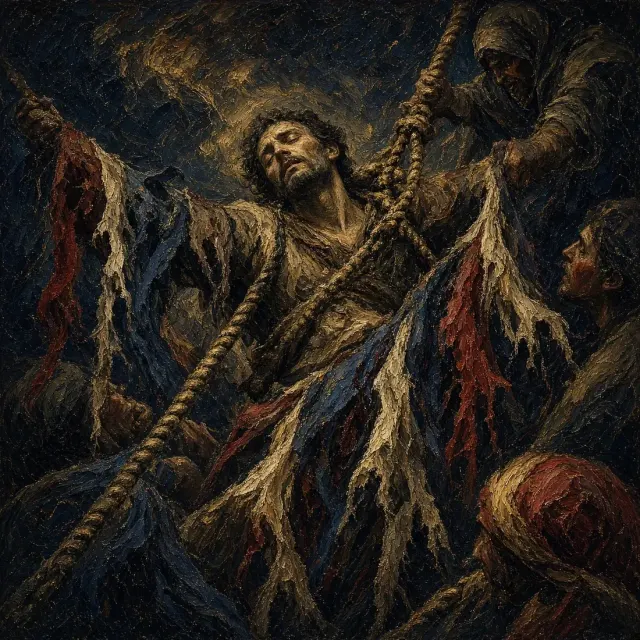
After many days in the dungeon, Jeremiah is brought secretly to the king. Zedekiah asks whether God has spoken. Jeremiah says the king will be handed to Babylon's ruler. He asks what wrong has earned him prison. He also asks where the prophets are who said no invasion would come. He pleads not to be returned to the scribe's house, where he fears dying. The king moves him to the prison court and orders daily bread while supplies last. He is still a prisoner. His conditions improve, but he has not changed his warning.
In everyday life
An imprisoned whistleblower meets privately with an official who asks whether her report has changed. She repeats the finding, then asks for relief from unsafe detention. The official grants a better room and food without resolving the dispute. Jeremiah's report is God's word about the king's coming captivity, not evidence subject to an ordinary review.
Notice
Jeremiah 37:21 The bread is promised only until the city's supply is exhausted. Food is running out. The siege Jeremiah warned about still sets limits on the help he receives.
Jeremiah 37:16-21
King James Version16When Jeremiah was entered into the dungeon, and into the cabins, and Jeremiah had remained there many days;
17Then Zedekiah the king sent, and took him out: and the king asked him secretly in his house, and said, Is there any word from the LORD? And Jeremiah said, There is: for, said he, thou shalt be delivered into the hand of the king of Babylon.
18Moreover Jeremiah said unto king Zedekiah, What have I offended against thee, or against thy servants, or against this people, that ye have put me in prison?
19Where are now your prophets which prophesied unto you, saying, The king of Babylon shall not come against you, nor against this land?
20Therefore hear now, I pray thee, O my lord the king: let my supplication, I pray thee, be accepted before thee; that thou cause me not to return to the house of Jonathan the scribe, lest I die there.
21Then Zedekiah the king commanded that they should commit Jeremiah into the court of the prison, and that they should give him daily a piece of bread out of the bakers’ street, until all the bread in the city were spent. Thus Jeremiah remained in the court of the prison.
Details worth noticing
The opening image
Jeremiah 37:1 begins with “And king Zedekiah the son of Josiah reigned instead of Coniah the son of Jehoiakim, whom Nebuchadrezzar king of Babylon made king in the land of Judah.”
Where the chapter turns
Jeremiah 37:11 forms a natural hinge: “And it came to pass, that when the army of the Chaldeans was broken up from Jerusalem for fear of Pharaoh’s army,”
The final note
Jeremiah 37:21 leaves the reader with “Then Zedekiah the king commanded that they should commit Jeremiah into the court of the prison, and that they should give him daily a piece of bread out of…”
A word trail through the chapter
The words Jeremiah, king, Chaldeans, LORD, prison, army help reveal the chapter’s repeated concerns.
KJV words made clear
- cabins
- Small enclosed cells or compartments within the prison.
- supplication
- An earnest plea asking for help or mercy.
Music and video connected to the passage
Related media appears when its Scripture reference overlaps this study. Music and video can illuminate a theme while the biblical text remains the foundation.