The big picture
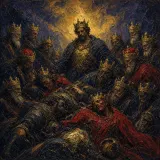
Joshua, the leader of Israel, the nation taking the promised land, has completed a southern campaign. Northern rulers now gather a much larger alliance. Jabin, king of Hazor, a leading city in that region, summons armies with many horses and chariots. Their combined strength presents another threat. The chapter follows their defeat, the destruction of cities, and the eventual pause in war before the land is divided among Israel's tribes.
In this chapter
- A Large Army Loses Its Military Strength Joshua 11:1-9
Jabin gathers kings from the northern hills, plains, and valleys, bringing a vast army with many horses and chariots to the waters of Merom.
- Hazor Burns as the Other Cities Fall Joshua 11:10-15
Joshua turns back to Hazor, kills its king, and destroys its inhabitants.
- Long Warfare Leaves Only One Peace Agreement Joshua 11:16-20
Joshua takes land across the hills, valleys, and plains, from the southern boundary to the northern mountains.
- The Land Receives Rest After the Fighting Joshua 11:21-23
Joshua destroys the Anakims, a people living in several hill-country cities, along with their towns.
Central truth
The northern kings' combined strength cannot stop the conquest, which ends this campaign with the land assigned to Israel and resting from war.

Scripture beside the summary
Joshua · King James Version · 23Joshua 11:1-9
A Large Army Loses Its Military Strength
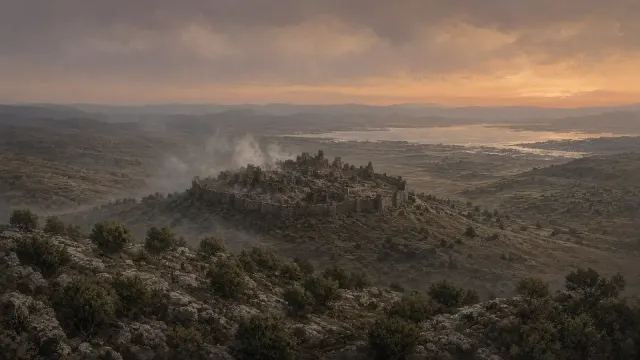
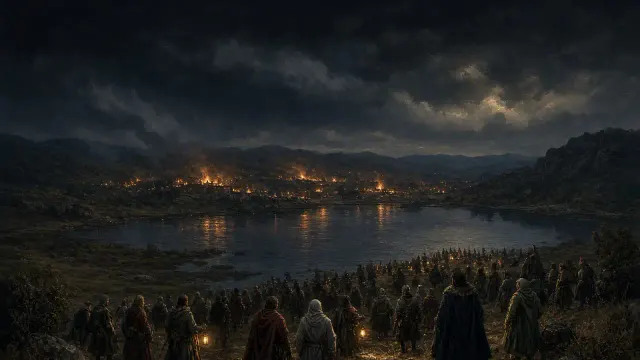
Jabin gathers kings from the northern hills, plains, and valleys, bringing a vast army with many horses and chariots to the waters of Merom. God tells Joshua not to fear and promises their defeat the next day. Joshua must disable their horses and burn their chariots. Israel attacks suddenly, pursues the fleeing troops, and defeats them. Joshua then carries out the order concerning the animals and vehicles. The enemy's impressive equipment is destroyed rather than becoming the foundation of Israel's confidence in the next fight.
In everyday life
A coastguard inspector stands before a line of confiscated speedboats after a dangerous smuggling operation ends. Their engines once made the crews seem impossible to catch. She marks them for disabling instead of putting them back into the same trade. Joshua's command includes injuring horses and killing soldiers, which this equipment inspection does not reproduce.
Notice
Joshua 11:9 Joshua disables the horses and burns the chariots as commanded. Captured military strength is not automatically kept as a new source of security for Israel.
Joshua 11:1-9
King James Version1And it came to pass, when Jabin king of Hazor had heard those things, that he sent to Jobab king of Madon, and to the king of Shimron, and to the king of Achshaph,
2And to the kings that were on the north of the mountains, and of the plains south of Chinneroth, and in the valley, and in the borders of Dor on the west,
3And to the Canaanite on the east and on the west, and to the Amorite, and the Hittite, and the Perizzite, and the Jebusite in the mountains, and to the Hivite under Hermon in the land of Mizpeh.
4And they went out, they and all their hosts with them, much people, even as the sand that is upon the sea shore in multitude, with horses and chariots very many.
5And when all these kings were met together, they came and pitched together at the waters of Merom, to fight against Israel.
6And the LORD said unto Joshua, Be not afraid because of them: for to morrow about this time will I deliver them up all slain before Israel: thou shalt hough their horses, and burn their chariots with fire.
7So Joshua came, and all the people of war with him, against them by the waters of Merom suddenly; and they fell upon them.
8And the LORD delivered them into the hand of Israel, who smote them, and chased them unto great Zidon, and unto Misrephoth-maim, and unto the valley of Mizpeh eastward; and they smote them, until they left them none remaining.
9And Joshua did unto them as the LORD bade him: he houghed their horses, and burnt their chariots with fire.
Joshua 11:10-15
Hazor Burns as the Other Cities Fall
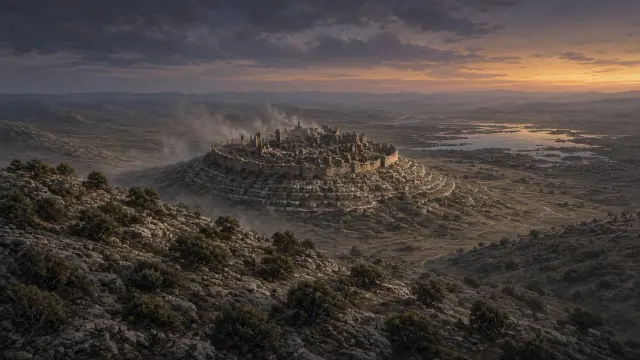
Joshua turns back to Hazor, kills its king, and destroys its inhabitants. The account identifies it as the leading city of the kingdoms that joined the alliance. Hazor is burned. Other cities are captured without being burned in the same way, but their people are also killed. Israel takes their livestock and goods. The account traces the orders from God to Moses and from Moses to Joshua, saying Joshua leaves nothing undone. The distinction between buildings preserved and lives destroyed is made explicit.
In everyday life
The heritage surveyor walks past intact walls in a town emptied by war. A visitor assumes the unburned houses mean the residents escaped harm. She points instead to the missing household records and refuses that conclusion. Standing buildings cannot answer what happened to their occupants. Hazor's destruction is part of a conquest attributed to God's command.
Notice
Joshua 11:13 Only Hazor is singled out for burning among these cities. Unburned towns must not therefore be mistaken for towns whose inhabitants were spared.
Joshua 11:10-15
King James Version10And Joshua at that time turned back, and took Hazor, and smote the king thereof with the sword: for Hazor beforetime was the head of all those kingdoms.
11And they smote all the souls that were therein with the edge of the sword, utterly destroying them: there was not any left to breathe: and he burnt Hazor with fire.
12And all the cities of those kings, and all the kings of them, did Joshua take, and smote them with the edge of the sword, and he utterly destroyed them, as Moses the servant of the LORD commanded.
13But as for the cities that stood still in their strength, Israel burned none of them, save Hazor only; that did Joshua burn.
14And all the spoil of these cities, and the cattle, the children of Israel took for a prey unto themselves; but every man they smote with the edge of the sword, until they had destroyed them, neither left they any to breathe.
15As the LORD commanded Moses his servant, so did Moses command Joshua, and so did Joshua; he left nothing undone of all that the LORD commanded Moses.
Joshua 11:16-20
Long Warfare Leaves Only One Peace Agreement
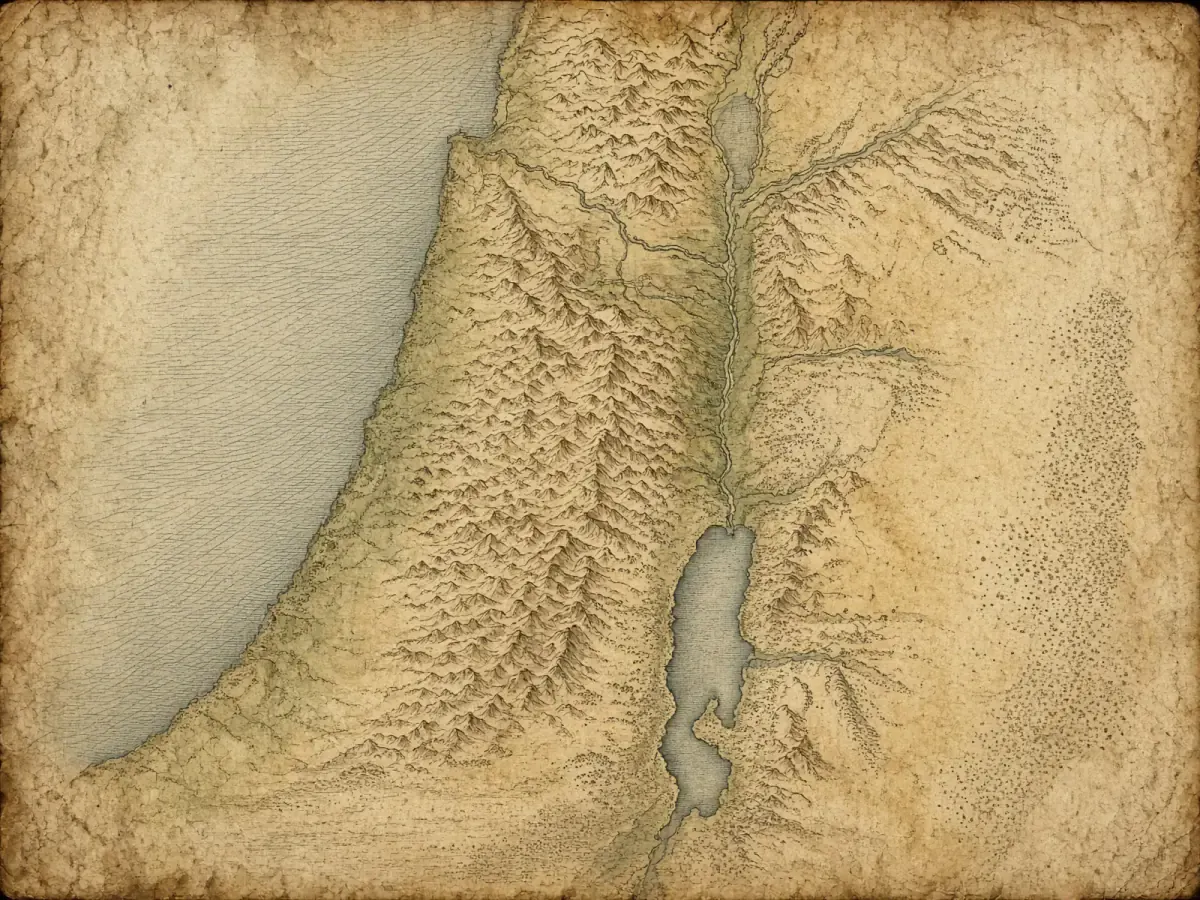
Joshua takes land across the hills, valleys, and plains, from the southern boundary to the northern mountains. The account says he fights these kings for a long time. Gibeon alone makes peace with Israel; the other cities are taken in battle. Their determined resistance is attributed to God hardening their hearts so they meet destruction rather than receiving mercy. This is a severe claim about divine judgment. The account states it without explaining how God's action and each ruler's decisions relate in detail.
In everyday life
A legal observer watches a long case move toward a final hearing after every offered settlement has been refused. Each closed discussion brings the parties nearer to a verdict they fear. She records the refusals but cannot see every motive behind them. Joshua attributes the resistance to God's hardening, something no court observer can explain by negotiation alone.
Notice
Joshua 11:18 The wars last a long time despite the compact account of them. A short list of victories should not be read as proof of an instant conquest.
Joshua 11:16-20
King James Version16So Joshua took all that land, the hills, and all the south country, and all the land of Goshen, and the valley, and the plain, and the mountain of Israel, and the valley of the same;
17Even from the mount Halak, that goeth up to Seir, even unto Baal-gad in the valley of Lebanon under mount Hermon: and all their kings he took, and smote them, and slew them.
18Joshua made war a long time with all those kings.
19There was not a city that made peace with the children of Israel, save the Hivites the inhabitants of Gibeon: all other they took in battle.
20For it was of the LORD to harden their hearts, that they should come against Israel in battle, that he might destroy them utterly, and that they might have no favour, but that he might destroy them, as the LORD commanded Moses.
Joshua 11:21-23
The Land Receives Rest After the Fighting
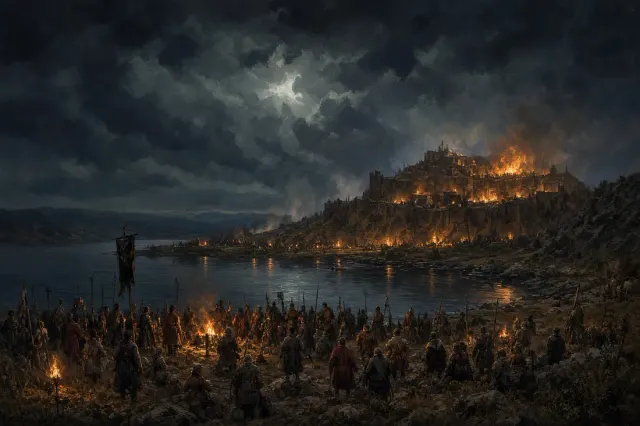
Joshua destroys the Anakims, a people living in several hill-country cities, along with their towns. The account says none remain in Israel's land, though groups remain in three coastal cities outside that area. It then describes the land as taken according to God's promise through Moses and assigned to Israel by tribal divisions. Finally, the land rests from war. That broad statement closes the campaign account. Later details will still distinguish this major victory from the work each tribe has yet to complete in its own area.
In everyday life
The returning clearance crew lays down its tools after the main route through a damaged district is opened. Families receive their assigned plots, though some enclosed areas remain untouched farther away. The end of the large operation creates room to begin settled life. Israel's rest follows the violent destruction of peoples, not clearance of damaged ground.
Notice
Joshua 11:22 The account names places where Anakims remain even while describing their removal from Israel's land. Its summary includes a geographical limit rather than claiming none exist anywhere.
Joshua 11:21-23
King James Version21And at that time came Joshua, and cut off the Anakims from the mountains, from Hebron, from Debir, from Anab, and from all the mountains of Judah, and from all the mountains of Israel: Joshua destroyed them utterly with their cities.
22There was none of the Anakims left in the land of the children of Israel: only in Gaza, in Gath, and in Ashdod, there remained.
23So Joshua took the whole land, according to all that the LORD said unto Moses; and Joshua gave it for an inheritance unto Israel according to their divisions by their tribes. And the land rested from war.
Details worth noticing
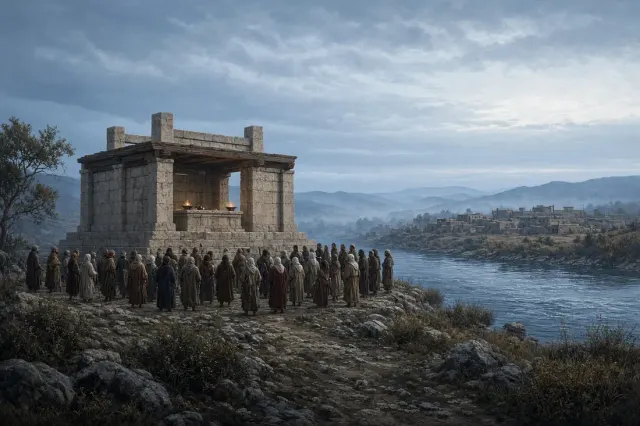
The opening image
Joshua 11:1 begins with “And it came to pass, when Jabin king of Hazor had heard those things, that he sent to Jobab king of Madon, and to the king of Shimron, and to the king of…”
Where the chapter turns
Joshua 11:13 forms a natural hinge: “But as for the cities that stood still in their strength, Israel burned none of them, save Hazor only; that did Joshua burn.”
The final note
Joshua 11:23 leaves the reader with “So Joshua took the whole land, according to all that the LORD said unto Moses; and Joshua gave it for an inheritance unto Israel according to their…”
A word trail through the chapter
The words Joshua, Israel, LORD, smote, kings, land help reveal the chapter’s repeated concerns.
KJV words made clear
- hough
- Cut the horses' leg tendons to disable them, as ordered after the battle.
Music and video connected to the passage
Related media appears when its Scripture reference overlaps this study. Music and video can illuminate a theme while the biblical text remains the foundation.