
Lyrics · Joshua
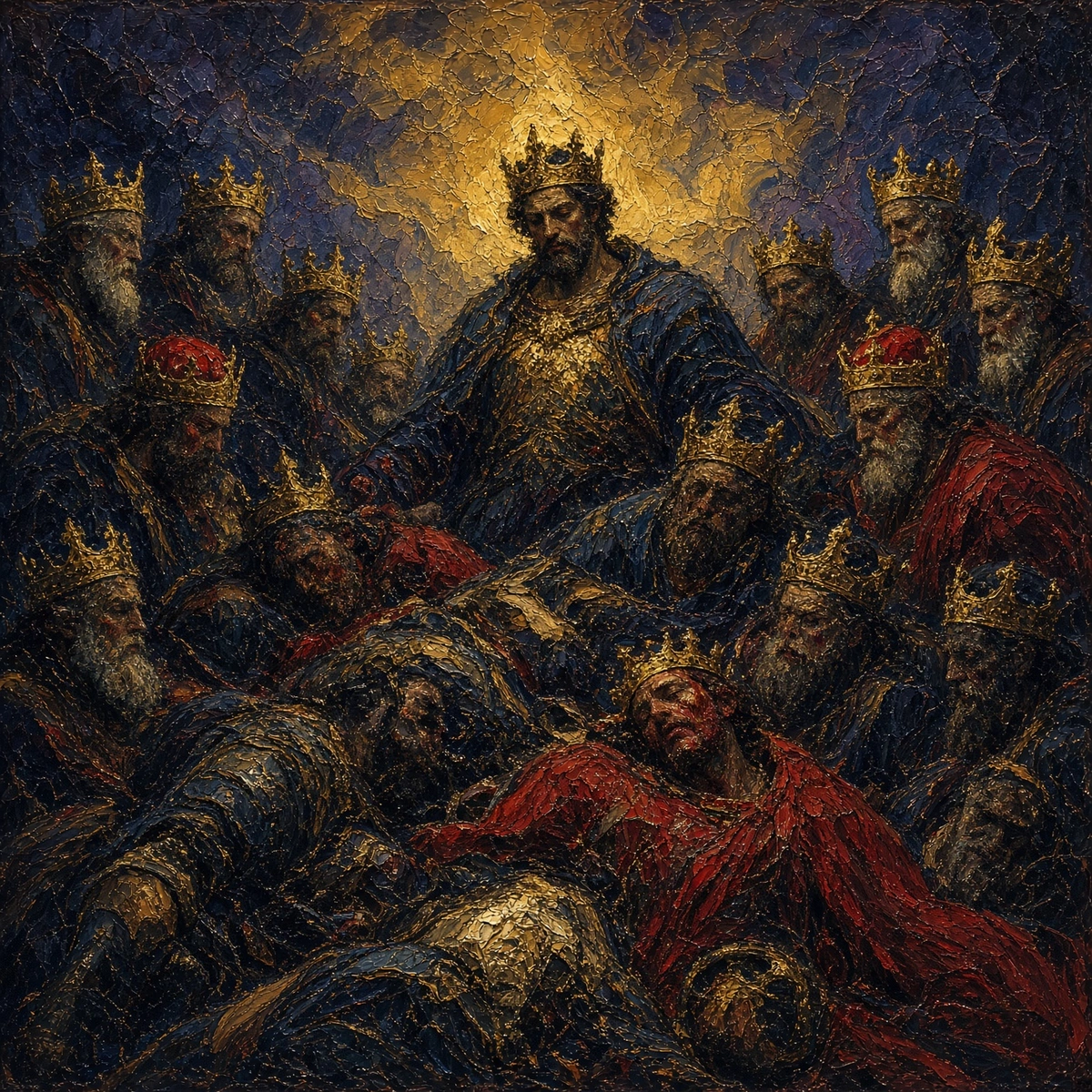
Thirty-One Kings
Joshua 11:1-12:24
Lyrics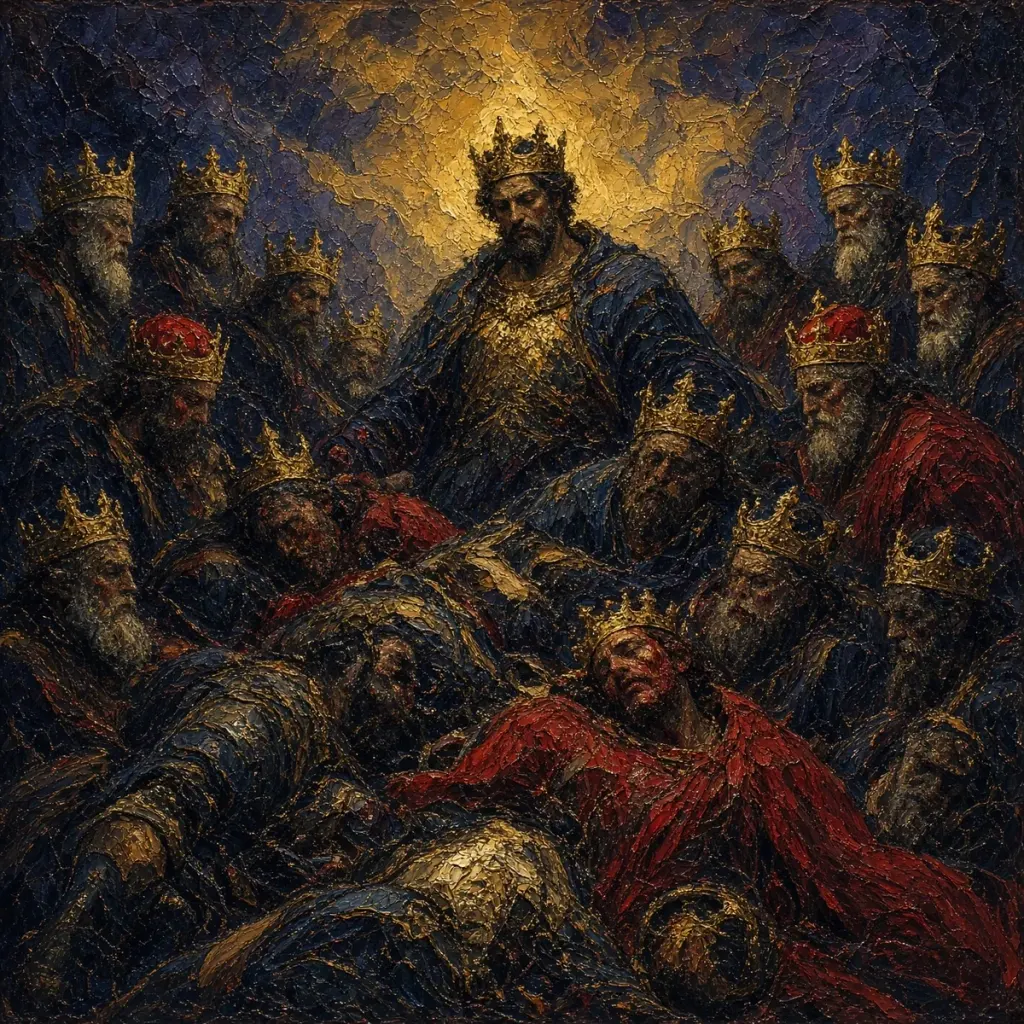
Playing next
About this song
About this song
This song belongs to the Joshua collection. One recording is available to play here, with the complete lyrics below.
- Bible book
- Joshua
- Collection
- Joshua
- Musical styles
- World Music
Named in this songJoshuaJerichoHebronMosesJerusalemBethelMegiddo
About the passage
Joshua 11: The northern coalition falls; the land rests from war
A northern coalition gathers a far larger force, complete with many horses and chariots, but the command to Joshua remains familiar: do not fear. Israel attacks suddenly at Merom, and captured military resources are not simply absorbed. Horses are disabled and chariots burned under direct instruction. Hazor, the coalition's leading city, is also treated differently from the others. It is burned, while the chapter explicitly says Israel did not burn every captured city. The summary of the campaign then slows its own pace by saying Joshua fought these kings for a long time. Gibeon stands as the only city named here as having made peace, and the continued resistance of the others is interpreted as divine hardening under judgment. Finally, the feared Anakim are removed from much of the hill country, though named coastal exceptions remain. The land rests from major war without the book pretending that every district has been fully occupied.
Study Joshua 11 in depthJoshua 12: Thirty-one kings, counted one by one
Campaign narrative gives way to a register. The chapter first returns east of Jordan, where Moses defeated Sihon and Og and distributed their territories to Reuben, Gad, and half Manasseh. Those victories belong in the same inheritance record as Joshua's western campaigns, preserving continuity across both river and leadership change. West of Jordan, the list then becomes almost rhythmic: king after king is followed by the word "one." Jericho and Ai stand beside rulers whose battles were not given equal narrative space, because the register counts outcomes rather than dramatic importance. The total reaches thirty-one western kings, but the list does not claim that every named city was permanently occupied the moment its ruler fell. Jerusalem and Gezer already show why that distinction matters. The Book of Joshua has now counted defeated rulers and is ready to turn from military totals to boundaries, households, cities, villages, and the slower work of actually receiving an inheritance.
Study Joshua 12 in depth