The big picture
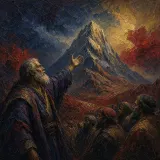
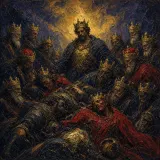
Joshua, Israel's ageing leader, has led major victories, but the people do not yet occupy all the promised land. Israel, the nation divided into tribes, must now receive named portions of land. God tells Joshua to begin that division. Earlier grants by Moses, the former leader, are recalled too. These lie east of Jordan, the river between the two areas. Some inhabitants remain, and the tribe responsible for sacred service receives a different kind of provision.
In this chapter
- An Ageing Leader Must Divide Remaining Land Joshua 13:1-7
God tells the ageing Joshua that much land still remains to be possessed.
- The Eastern Holdings and Levi's Provision Joshua 13:8-14
The account recalls land already given east of Jordan to Reuben, Gad, and half of Manasseh.
- Reuben Receives Its Cities and Boundaries Joshua 13:15-23
Reuben's families receive land from the river Arnon across the plateau and its towns, including land once ruled by Sihon.
- Gad Receives Towns Across the Eastern Region Joshua 13:24-28
Moses' grant to Gad is described through cities, districts, and boundaries east of Jordan.
- Half of Manasseh Receives the Northern East Joshua 13:29-33
The eastern half of Manasseh receives Bashan, the former kingdom of Og, along with towns and part of Gilead.
Central truth
God gives shares of land before all of it is held, while Levi receives support through service instead of fields.

Scripture beside the summary
Joshua · King James Version · 33Joshua 13:1-7
An Ageing Leader Must Divide Remaining Land
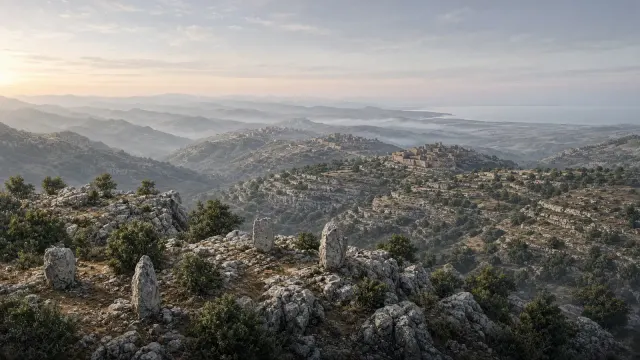
God tells the ageing Joshua that much land still remains to be possessed. He names areas controlled by the Philistines and other peoples, stretching from the southern border toward northern mountains and coastlands. God promises to drive those inhabitants out. Joshua must now assign the land among nine tribes and half of Manasseh. He will use lots, a way of settling shares before God. His age does not cancel the work ahead. The completed campaigns and the unfinished occupation are held together without treating them as the same thing.
In everyday life
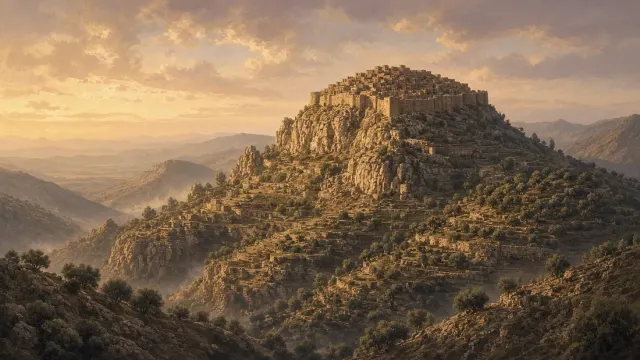
A retiring librarian walks past empty shelves in the new branch. She labels rooms for books still packed in crates. Her successor will finish the move, but the division cannot wait for every book to arrive. She marks what remains as carefully as what is ready. Israel's land assignment rests on God's promise, not a library schedule.
Notice
Joshua 13:1 God names both Joshua's age and the amount of unfinished work. The transition to dividing land does not mean the entire promised area is already occupied.
Joshua 13:1-7
King James Version1Now Joshua was old and stricken in years; and the LORD said unto him, Thou art old and stricken in years, and there remaineth yet very much land to be possessed.
2This is the land that yet remaineth: all the borders of the Philistines, and all Geshuri,
3From Sihor, which is before Egypt, even unto the borders of Ekron northward, which is counted to the Canaanite: five lords of the Philistines; the Gazathites, and the Ashdothites, the Eshkalonites, the Gittites, and the Ekronites; also the Avites:
4From the south, all the land of the Canaanites, and Mearah that is beside the Sidonians, unto Aphek, to the borders of the Amorites:
5And the land of the Giblites, and all Lebanon, toward the sunrising, from Baal-gad under mount Hermon unto the entering into Hamath.
6All the inhabitants of the hill country from Lebanon unto Misrephoth-maim, and all the Sidonians, them will I drive out from before the children of Israel: only divide thou it by lot unto the Israelites for an inheritance, as I have commanded thee.
7Now therefore divide this land for an inheritance unto the nine tribes, and the half tribe of Manasseh,
Joshua 13:8-14
The Eastern Holdings and Levi's Provision
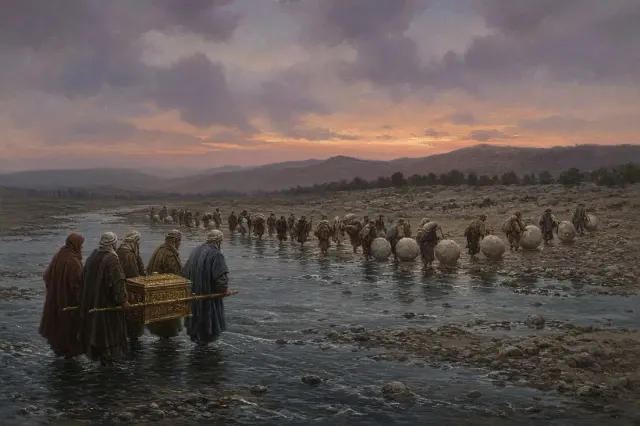
The account recalls land already given east of Jordan to Reuben, Gad, and half of Manasseh. It describes the plains, cities, and former kingdoms conquered under Moses. Yet two groups, the Geshurites and Maachathites, remain among Israel because they have not been expelled. The tribe of Levi receives no comparable stretch of land. Its provision comes from offerings made to God. The land record includes older claims and people still living there. It also explains how one tribe lives from sacred service instead of its own fields.
In everyday life
The campground warden checks the pitch plan before assigning new spaces. Several families already hold plots, and other users still dispute shared ground. The caretaker has a home paid for by site fees rather than a private pitch. Different rights appear on one plan. Levi's provision comes from worship offerings, which camping fees cannot represent.
Notice
Joshua 13:13 The remaining peoples are named directly within the land record. A list of assigned land does not conceal the fact that Israel has not removed everyone there.
Joshua 13:8-14
King James Version8With whom the Reubenites and the Gadites have received their inheritance, which Moses gave them, beyond Jordan eastward, even as Moses the servant of the LORD gave them;
9From Aroer, that is upon the bank of the river Arnon, and the city that is in the midst of the river, and all the plain of Medeba unto Dibon;
10And all the cities of Sihon king of the Amorites, which reigned in Heshbon, unto the border of the children of Ammon;
11And Gilead, and the border of the Geshurites and Maachathites, and all mount Hermon, and all Bashan unto Salcah;
12All the kingdom of Og in Bashan, which reigned in Ashtaroth and in Edrei, who remained of the remnant of the giants: for these did Moses smite, and cast them out.
13Nevertheless the children of Israel expelled not the Geshurites, nor the Maachathites: but the Geshurites and the Maachathites dwell among the Israelites until this day.
14Only unto the tribe of Levi he gave none inheritance; the sacrifices of the LORD God of Israel made by fire are their inheritance, as he said unto them.
Joshua 13:15-23
Reuben Receives Its Cities and Boundaries
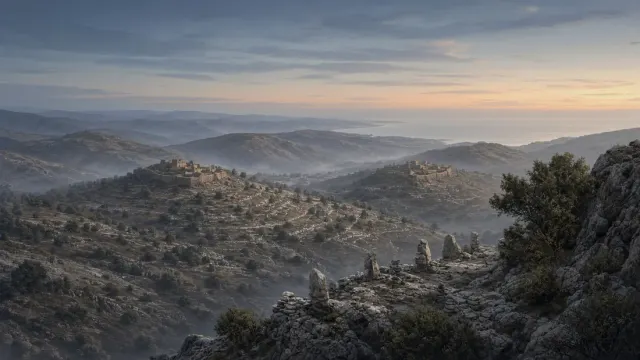
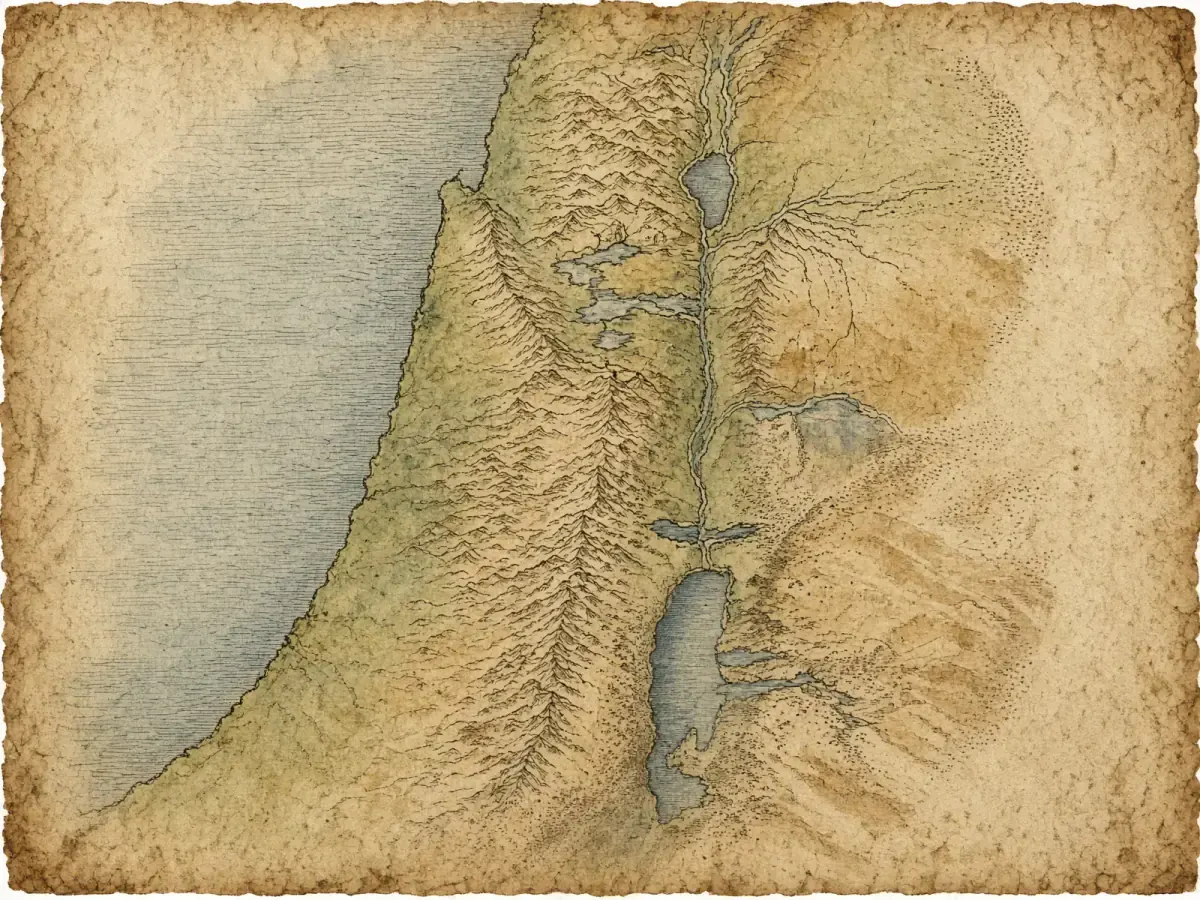
Reuben's families receive land from the river Arnon across the plateau and its towns, including land once ruled by Sihon. The account names cities and recalls the defeat of rulers linked with the area. It also records that Israel killed Balaam, identified as a soothsayer, among the dead. Jordan forms the western boundary. Reuben's inheritance includes both the named cities and their nearby villages. The land description therefore carries memories of conquest as well as information about where the tribe's families are to live.
In everyday life
A cemetery custodian checks a burial-ground plan where family sections are marked by paths, walls, and old plot numbers. One entry recalls a disputed death connected with the ground's earlier history. She preserves it rather than reducing everything to acreage. Reuben's land was gained through conquest and given to a living tribal people.
Notice
Joshua 13:22 Balaam's death appears inside the land record rather than a separate battle account. The brief mention connects a named opponent with the land Israel took.
Joshua 13:15-23
King James Version15And Moses gave unto the tribe of the children of Reuben inheritance according to their families.
16And their coast was from Aroer, that is on the bank of the river Arnon, and the city that is in the midst of the river, and all the plain by Medeba;
17Heshbon, and all her cities that are in the plain; Dibon, and Bamoth-baal, and Beth-baal-meon,
18And Jahazah, and Kedemoth, and Mephaath,
19And Kirjathaim, and Sibmah, and Zareth-shahar in the mount of the valley,
20And Beth-peor, and Ashdoth-pisgah, and Beth-jeshimoth,
21And all the cities of the plain, and all the kingdom of Sihon king of the Amorites, which reigned in Heshbon, whom Moses smote with the princes of Midian, Evi, and Rekem, and Zur, and Hur, and Reba, which were dukes of Sihon, dwelling in the country.
22Balaam also the son of Beor, the soothsayer, did the children of Israel slay with the sword among them that were slain by them.
23And the border of the children of Reuben was Jordan, and the border thereof. This was the inheritance of the children of Reuben after their families, the cities and the villages thereof.
Joshua 13:24-28
Gad Receives Towns Across the Eastern Region
Moses' grant to Gad is described through cities, districts, and boundaries east of Jordan. The land includes towns in Gilead, a region east of the river, and portions of the former kingdom of Sihon. Its valley boundary runs along Jordan toward the sea of Chinnereth, a lake farther north. The grant is divided among Gad's families and includes towns with their villages. These details distinguish Gad's share from the neighbouring eastern holdings. The tribe receives places for its households, not merely an undefined right somewhere beyond the river.
In everyday life
A rural postmistress drives a new route with a list naming both village centres and scattered lanes. She stops at a boundary sign to check her list. Some farms belong to her round, and others to the next village's carrier. The names make responsibility local and specific. Gad receives an inheritance, not a temporary delivery assignment.
Notice
Joshua 13:28 The repeated reference to families and villages brings the local grant down to household level. Gad's share includes more than the larger towns named along its borders.
Joshua 13:24-28
King James Version24And Moses gave inheritance unto the tribe of Gad, even unto the children of Gad according to their families.
25And their coast was Jazer, and all the cities of Gilead, and half the land of the children of Ammon, unto Aroer that is before Rabbah;
26And from Heshbon unto Ramath-mizpeh, and Betonim; and from Mahanaim unto the border of Debir;
27And in the valley, Beth-aram, and Beth-nimrah, and Succoth, and Zaphon, the rest of the kingdom of Sihon king of Heshbon, Jordan and his border, even unto the edge of the sea of Chinnereth on the other side Jordan eastward.
28This is the inheritance of the children of Gad after their families, the cities, and their villages.
Joshua 13:29-33
Half of Manasseh Receives the Northern East
The eastern half of Manasseh receives Bashan, the former kingdom of Og, along with towns and part of Gilead. The grant includes sixty towns linked with Jair. Other cities belong to the family line of Machir, an ancestor within the tribe. Moses assigned these lands before Israel crossed the river. The account again states that Levi receives no land inheritance because God himself is its inheritance. The eastern record closes by distinguishing broad land ownership from the special provision tied to service of God.
In everyday life
The miller lays out storage rights for several branches of a family who share his grain business. A cluster of northern storehouses belongs to one branch, while the resident keeper is supported through the mill's income. Naming both arrangements prevents a missing entry from looking like neglect. Levi receives God himself as its inheritance, a claim the miller cannot make about his support.
Notice
Joshua 13:33 Levi's absence from the map is explained as a different inheritance, not an accidental omission. The account names God himself as the tribe's provision.
Joshua 13:29-33
King James Version29And Moses gave inheritance unto the half tribe of Manasseh: and this was the possession of the half tribe of the children of Manasseh by their families.
30And their coast was from Mahanaim, all Bashan, all the kingdom of Og king of Bashan, and all the towns of Jair, which are in Bashan, threescore cities:
31And half Gilead, and Ashtaroth, and Edrei, cities of the kingdom of Og in Bashan, were pertaining unto the children of Machir the son of Manasseh, even to the one half of the children of Machir by their families.
32These are the countries which Moses did distribute for inheritance in the plains of Moab, on the other side Jordan, by Jericho, eastward.
33But unto the tribe of Levi Moses gave not any inheritance: the LORD God of Israel was their inheritance, as he said unto them.
Details worth noticing
The opening image
Joshua 13:1 begins with “Now Joshua was old and stricken in years; and the LORD said unto him, Thou art old and stricken in years, and there remaineth yet very much land to be…”
Where the chapter turns
Joshua 13:13 forms a natural hinge: “Nevertheless the children of Israel expelled not the Geshurites, nor the Maachathites: but the Geshurites and the Maachathites dwell among the Israelites…”
The final note
Joshua 13:33 leaves the reader with “But unto the tribe of Levi Moses gave not any inheritance: the LORD God of Israel was their inheritance, as he said unto them.”
A word trail through the chapter
The words children, inheritance, Moses, cities, gave, tribe help reveal the chapter’s repeated concerns.
KJV words made clear
- soothsayer
- A person who claims to discover hidden knowledge or predict events through forbidden spiritual practices.
Music and video connected to the passage
Related media appears when its Scripture reference overlaps this study. Music and video can illuminate a theme while the biblical text remains the foundation.