
The big picture
Joshua 3 opens in verse 1 with “And Joshua rose early in the morning; and they removed from Shittim, and came to Jordan…”, reaches its middle movement near verse 9 with “And Joshua said unto the children of Israel, Come hither, and hear the words of the LORD…”, and closes in verse 17 with “And the priests that bare the ark of the covenant of the LORD stood firm on dry ground…” Repeated or prominent terms include Jordan, LORD, people, covenant, priests. Together, those details trace this chapter’s own movement from its opening to its conclusion.
Scripture beside the summary
Joshua · King James Version · 17Joshua 3:1-6
1–6: Joshua rose early in the morning; and they removed from Shittim, and…
Joshua 3:1–6 opens with “And Joshua rose early in the morning; and they removed from Shittim, and came to Jordan, he and…” and reaches “And Joshua spake unto the priests, saying, Take up the ark of the covenant, and pass over before…” by its final verse. That movement develops the focus on Joshua 3 develops its own movement around Jordan, LORD, people, covenant, priests, with particular weight carried by people, covenant, Joshua.
Context that brings the passage to life
“And Joshua rose early in the morning; and they removed from Shittim, and came to Jordan, he and all the children of…” Naming Israel and Jordan keeps the account rooted in particular people or places. Follow where the name returns and what changes around it.
“And it came to pass after three days, that the officers went through the host;” This familiar narrative signal moves the clock forward. What follows is a new scene, consequence, or answer to an earlier tension.
Joshua 3:1-6
King James Version1And Joshua rose early in the morning; and they removed from Shittim, and came to Jordan, he and all the children of Israel, and lodged there before they passed over.
2And it came to pass after three days, that the officers went through the host;
3And they commanded the people, saying, When ye see the ark of the covenant of the LORD your God, and the priests the Levites bearing it, then ye shall remove from your place, and go after it.
4Yet there shall be a space between you and it, about two thousand cubits by measure: come not near unto it, that ye may know the way by which ye must go: for ye have not passed this way heretofore.
5And Joshua said unto the people, Sanctify yourselves: for to morrow the LORD will do wonders among you.
6And Joshua spake unto the priests, saying, Take up the ark of the covenant, and pass over before the people. And they took up the ark of the covenant, and went before the people.
Joshua 3:7-12
7–12: The LORD said unto Joshua, This day will I begin to magnify thee in the…
Joshua 3:7–12 opens with “And the LORD said unto Joshua, This day will I begin to magnify thee in the sight of all Israel…” and reaches “Now therefore take you twelve men out of the tribes of Israel, out of every tribe a man.” by its final verse. That movement develops the focus on Joshua 3 develops its own movement around Jordan, LORD, people, covenant, priests, with particular weight carried by Israel, Jordan, Joshua.
Context that brings the passage to life
“And the LORD said unto Joshua, This day will I begin to magnify thee in the sight of all Israel, that they may know…” Naming Israel and Joshua keeps the account rooted in particular people or places. Follow where the name returns and what changes around it.
“And thou shalt command the priests that bear the ark of the covenant, saying, When ye are come to the brink of the…” The promise, blessing, or covenant language needs its named recipient and scope. Those details prevent a personal word in the story from becoming a promise detached from context.
Joshua 3:7-12
King James Version7And the LORD said unto Joshua, This day will I begin to magnify thee in the sight of all Israel, that they may know that, as I was with Moses, so I will be with thee.
8And thou shalt command the priests that bear the ark of the covenant, saying, When ye are come to the brink of the water of Jordan, ye shall stand still in Jordan.
9And Joshua said unto the children of Israel, Come hither, and hear the words of the LORD your God.
10And Joshua said, Hereby ye shall know that the living God is among you, and that he will without fail drive out from before you the Canaanites, and the Hittites, and the Hivites, and the Perizzites, and the Girgashites, and the Amorites, and the Jebusites.
11Behold, the ark of the covenant of the Lord of all the earth passeth over before you into Jordan.
12Now therefore take you twelve men out of the tribes of Israel, out of every tribe a man.
Joshua 3:13-17
13–17: It shall come to pass, as soon as the soles of the feet of the priests…
Joshua 3:13–17 opens with “And it shall come to pass, as soon as the soles of the feet of the priests that bear the ark of…” and reaches “And the priests that bare the ark of the covenant of the LORD stood firm on dry ground in the…” by its final verse. That movement develops the focus on Joshua 3 develops its own movement around Jordan, LORD, people, covenant, priests, with particular weight carried by Jordan, people, priests.
Context that brings the passage to life
“And it shall come to pass, as soon as the soles of the feet of the priests that bear the ark of the LORD , the Lord of…” The command cannot be understood from the verb alone. Its recipient, purpose, and place in the larger covenant or argument define the responsibility.
“And it came to pass, when the people removed from their tents, to pass over Jordan, and the priests bearing the ark of…” This familiar narrative signal moves the clock forward. What follows is a new scene, consequence, or answer to an earlier tension.
“And as they that bare the ark were come unto Jordan, and the feet of the priests that bare the ark were dipped in the…” Naming Jordan keeps the account rooted in particular people or places. Follow where the name returns and what changes around it.
Joshua 3:13-17
King James Version13And it shall come to pass, as soon as the soles of the feet of the priests that bear the ark of the LORD , the Lord of all the earth, shall rest in the waters of Jordan, that the waters of Jordan shall be cut off from the waters that come down from above; and they shall stand upon an heap.
14And it came to pass, when the people removed from their tents, to pass over Jordan, and the priests bearing the ark of the covenant before the people;
15And as they that bare the ark were come unto Jordan, and the feet of the priests that bare the ark were dipped in the brim of the water, (for Jordan overfloweth all his banks all the time of harvest,)
16That the waters which came down from above stood and rose up upon an heap very far from the city Adam, that is beside Zaretan: and those that came down toward the sea of the plain, even the salt sea, failed, and were cut off: and the people passed over right against Jericho.
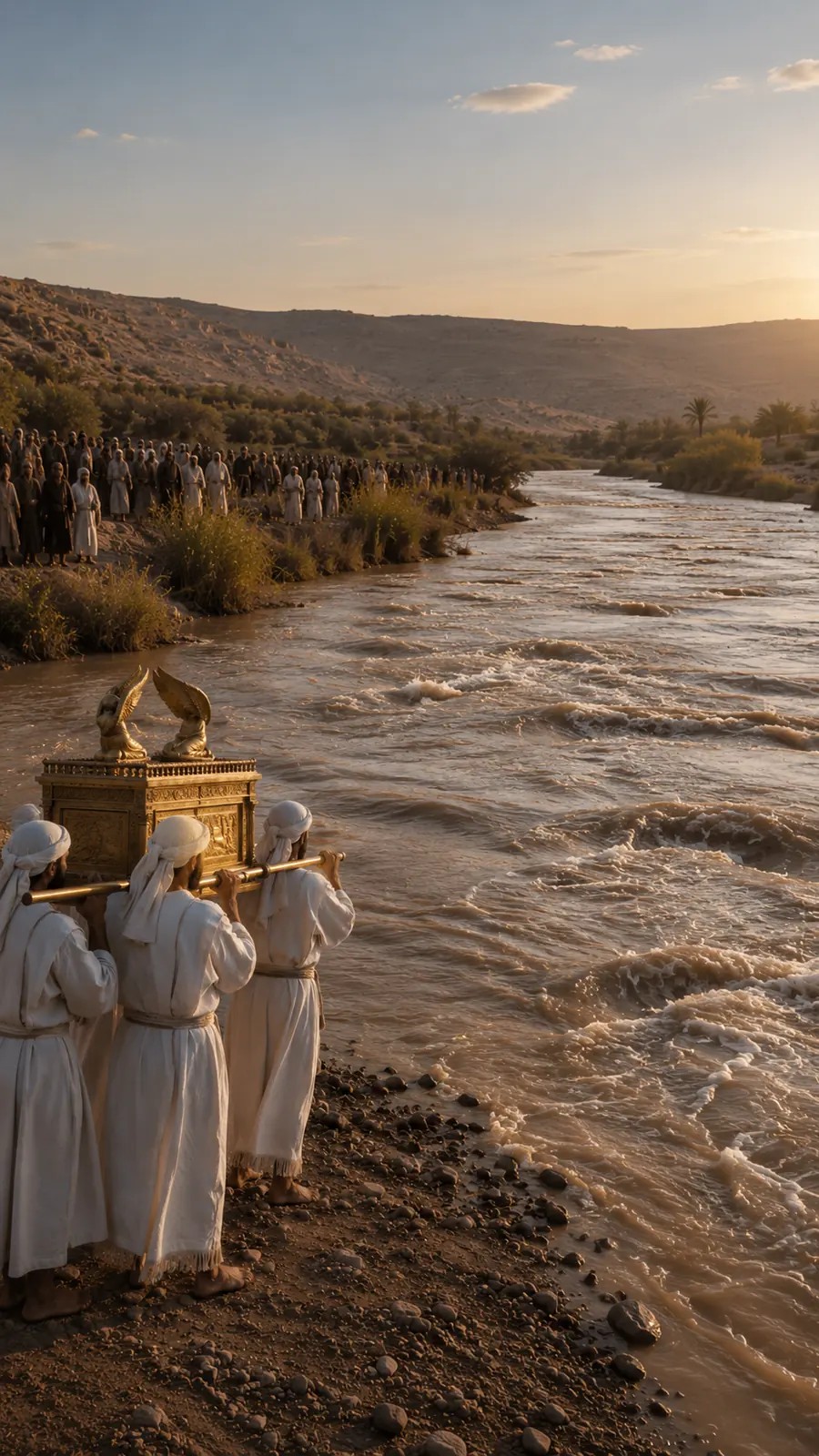
17And the priests that bare the ark of the covenant of the LORD stood firm on dry ground in the midst of Jordan, and all the Israelites passed over on dry ground, until all the people were passed clean over Jordan.
Details worth noticing
The opening image
Joshua 3:1 begins with “And Joshua rose early in the morning; and they removed from Shittim, and came to Jordan, he and all the children of Israel, and lodged there before they…”
Where the chapter turns
Joshua 3:12 forms a natural hinge: “Now therefore take you twelve men out of the tribes of Israel, out of every tribe a man.”
The final note
Joshua 3:17 leaves the reader with “And the priests that bare the ark of the covenant of the LORD stood firm on dry ground in the midst of Jordan, and all the Israelites passed over on dry…”
A word trail through the chapter
The words Jordan, LORD, people, covenant, priests, Joshua help reveal the chapter’s repeated concerns.
How does blame move through the conversation?
The man points to the woman and indirectly to God; the woman points to the serpent. Neither response repairs trust.
Where does mercy appear?
Continued life, the promise involving offspring, and clothing accompany the expulsion.
KJV words made clear
- behold
- look, or pay close attention
- unto
- to
- thee
- you
- thou
- you
- spake
- spoke
Text first
Where readers differ
The chapter summary begins with what the passage says and how its parts fit together. It does not assume one denomination has already settled every question. Where a conclusion depends on a tradition, literary theory, or historical reconstruction, that dependence is named openly.
The KJV text is presented first. Interpretive conclusions are labeled, and differences are introduced only when they help a reader understand why serious communities do not always reach the same answer.
Comparative interpretive notes for this chapter are in preparation. Until reviewed notes are ready, this page separates the KJV text from summary and application without claiming that serious readers agree on every question.