
Numbers

36 Chapters
Numbers: The Whole Book, Chapter by Chapter
Names Counted Before the Wilderness Journey
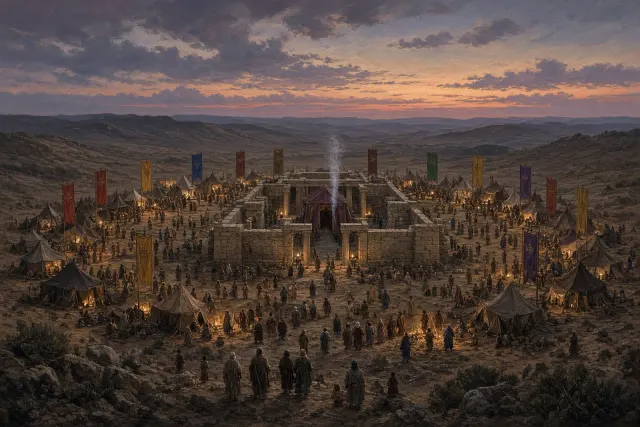
Numbers opens with a census that sounds administrative until its limits become clear. Moses and Aaron count by name, household, tribe, age, and military fitness, producing 603,550 men able to go to war. The repeated tribal formula makes everyone comparable without pretending that every tribe is the same size, and Joseph appears through Ephraim and Manasseh while Levi stands outside the military total. That exception is not leisure. The Levites receive the tabernacle, its equipment, its transport, and its protective perimeter. The opening register therefore does two jobs at once: it prepares an army and marks the sanctuary as the center that army does not control. Before anyone marches, Numbers has already distinguished belonging to Israel from being counted for one particular purpose.
One complete chapter pageOpen chapter →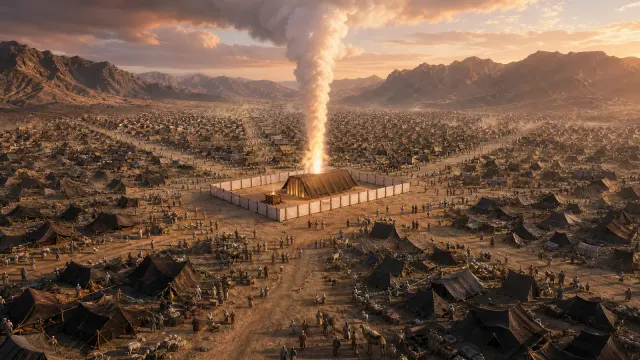
A Camp Arranged Around the Tabernacle
The census becomes geography. Israel is placed around the tabernacle in four three-tribe camps: Judah in the east, Reuben in the south, Ephraim in the west, and Dan in the north. Each division keeps its named leaders and tribal counts, but those figures now determine where people pitch and when they move. Judah leads, Reuben follows, the tabernacle and Levites occupy the middle, Ephraim comes third, and Dan serves as the assigned rear. The arrangement refuses to make the camp a featureless mass. Families keep their identities and standards while taking their bearings from one shared center. The chapter closes by repeating both the 603,550 military total and Levi's exclusion from it, then records that Israel camped and marched as commanded. Order around the sanctuary is now ready to become motion.
One complete chapter pageOpen chapter →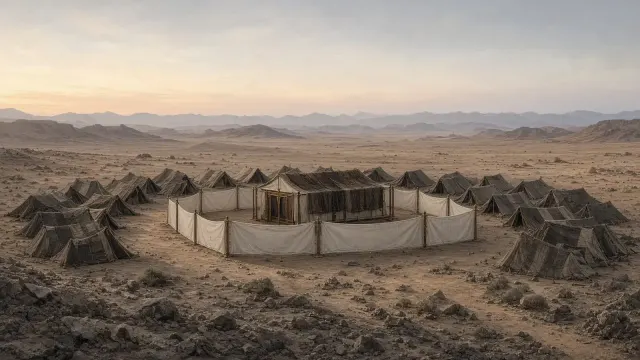
Levites Stand in Place of the Firstborn
Numbers narrows from Israel's camps to Levi's internal structure. Aaron's surviving sons hold the priestly office, while Gershon, Kohath, and Merari receive distinct service around the tabernacle. The Levitical census begins at one month old because this count is not selecting laborers; it is preparing for substitution in place of Israel's firstborn. That purpose explains why infants belong in the register even though chapter 4 will count working-age men separately. The chapter also refuses to hide a numerical problem: its family subtotals add to 22,300 while the stated total is 22,000, and the later redemption uses the stated figure. Israel has 22,273 firstborn males, leaving 273 to be redeemed at five sanctuary shekels each. The final arithmetic is exact even where the earlier discrepancy remains visible.
One complete chapter pageOpen chapter →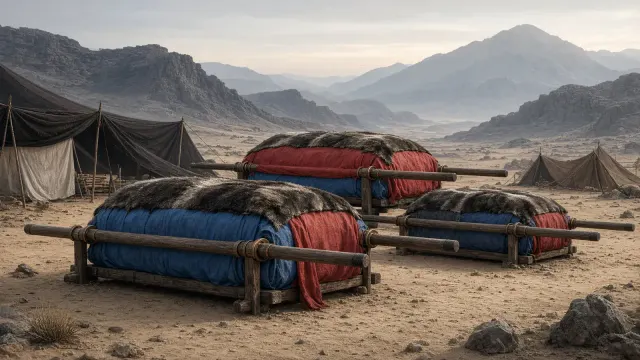
Holy Things Must Travel Without Being Exposed
Chapter 4 counts a different slice of Levi: men from thirty to fifty who can perform the tabernacle's labor. Kohath carries the most holy furnishings, but only after Aaron and his sons have covered and prepared them. Gershon carries the curtains and coverings, while Merari carries the structural pieces down to sockets, pegs, and cords. The chapter treats supervision as part of safety. Priests must assign the Kohathites their burdens so that the carriers are not exposed to forbidden sight or touch, and Ithamar oversees the other family charges. The final totals, 2,750 Kohathites, 2,630 Gershonites, and 3,200 Merarites, produce a workforce of 8,580. This is not a reduced version of chapter 3's census. It is a different count for a different purpose, built around service rather than substitution.
One complete chapter pageOpen chapter →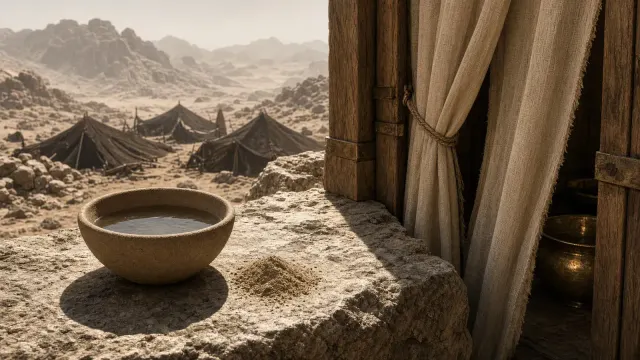
Defilement, Restitution, and a Disputed Accusation
The holiness of Israel's camp reaches into three very different kinds of disorder. Ritual uncleanness can require temporary exclusion without implying moral guilt. A trespass against another person requires confession, repayment, an added fifth, and atonement, so religious ritual does not erase the debt owed to the injured party. The longest case concerns a husband's jealousy when adultery is suspected but no witness or ordinary proof exists. The procedure is severe and unequal, yet Numbers repeatedly preserves the possibility that the woman is innocent. The husband does not administer his own sentence; the priest presents the case before the LORD, states a conditional oath, and conducts the prescribed rite. The chapter therefore refuses one blanket category for impurity, proven wrongdoing, and suspicion. Each condition receives its own kind of response.
One complete chapter pageOpen chapter →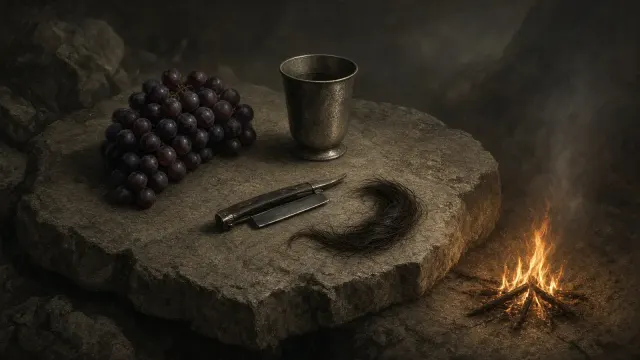
A Voluntary Vow and a Blessing for Israel
Numbers 6 moves from a voluntary period of unusual consecration to a blessing spoken over the whole congregation. A man or woman may take a Nazirite vow, marked by total abstention from products of the vine, uncut hair, and separation from the dead. The chapter regulates accidental interruption as carefully as deliberate completion, showing that even an unplanned defilement can restart the vow's days without permanently excluding the person. Completion has its own offerings and ceremony, after which ordinary permission to drink wine returns. Then the focus widens. Aaron and his sons are given words to place the LORD's name upon Israel: blessing, keeping, grace, divine attention, and peace. The special separation chosen by some therefore ends beside a blessing that belongs to the covenant people as a whole.
One complete chapter pageOpen chapter →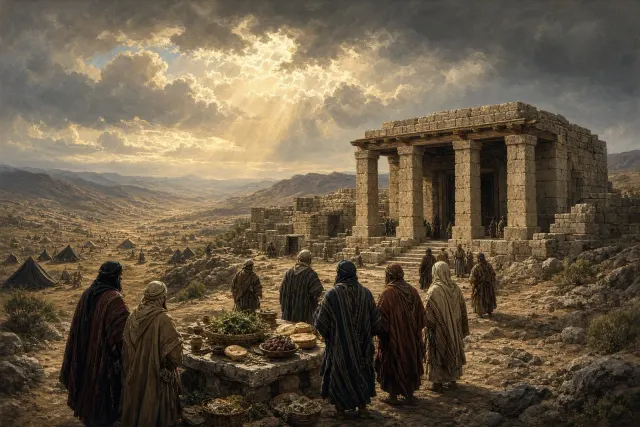
Twelve Offerings Receive Twelve Full Entries
The longest chapter in this opening portion of Numbers is deliberately repetitive. Israel's leaders first provide wagons and oxen for the tabernacle's transport, and the distribution follows the actual burdens of Gershon, Merari, and Kohath rather than a rule of equal equipment. Then each tribal prince receives one full day and one full entry for the altar's dedication. The gifts are identical, but the givers are not collapsed into a single line. Only after twelve named presentations does Numbers total the silver, gold, and sacrificial animals. The accounting closes with a different kind of event. Moses enters the tabernacle and hears the voice speaking from above the mercy seat. After a chapter crowded with objects that can be weighed and counted, the final reality is a voice that cannot be entered on the inventory.
One complete chapter pageOpen chapter →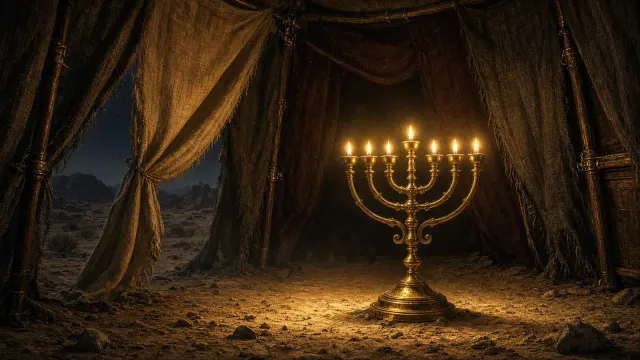
The Levites Are Prepared and Given for Service
Numbers 8 moves from the lampstand to the Levites, joining the sanctuary's light with the people appointed to serve around it. Aaron tends the seven lamps according to the pattern already given, then the Levites are cleansed, presented publicly before Israel, and offered for service. The congregation lays hands on them, they lay hands on the sacrificial animals, and Aaron presents them before the LORD. Their appointment again reaches back to the firstborn of Egypt: Levi is taken in place of Israel's firstborn and given to Aaron for work that protects the wider congregation from dangerous approach. Only after cleansing and atonement do the Levites begin service. The chapter closes with age limits, beginning at twenty-five and ending regular labor at fifty, while still allowing older Levites to assist their brethren in keeping the charge.
One complete chapter pageOpen chapter →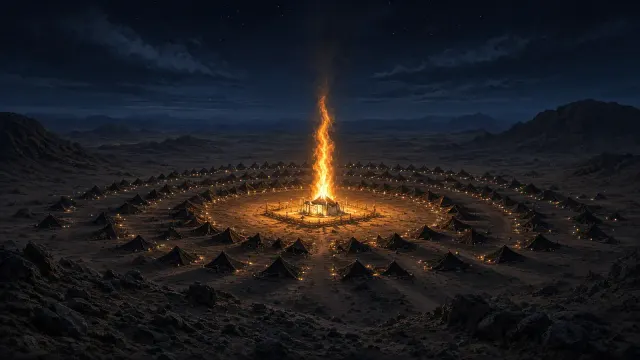
An Appointed Feast and an Unsettled Travel Calendar
Numbers 9 combines a remembered deliverance with a travel schedule nobody can predict. Israel keeps the Passover in Sinai during the first month of the second year, before the census date that opened the book. Men barred by corpse defilement then ask why they must miss the feast, and Moses waits for a ruling rather than improvising. The answer provides a second-month Passover for those genuinely prevented by uncleanness or distant travel while preserving the full rites of the feast and distinguishing inability from deliberate refusal. The chapter then turns to the cloud over the tabernacle. It may remain overnight, several days, a month, or a year. Israel moves when it rises and stays when it remains. Resting in place and setting out are described with the same language of obedience, making the cloud rather than a fixed calendar the governor of the journey.
One complete chapter pageOpen chapter →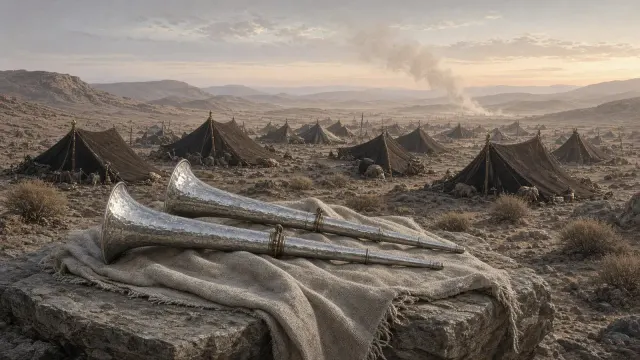
The Ordered Camp Finally Moves
The preparation at Sinai finally becomes motion. Two silver trumpets create distinct signals for assembly, leadership meetings, camp departures, war, and worship. On the twentieth day of the second month, the cloud rises and Judah leads the first ordered journey away from Sinai. The procession is arranged so Gershon and Merari can carry and erect the tabernacle before Kohath arrives with its holy furnishings, turning earlier job descriptions into coordinated movement. Moses also asks Hobab to accompany Israel as experienced eyes in the wilderness, placing practical human knowledge beside the guidance of the cloud without treating them as rivals. The chapter closes with the ark, the cloud, and Moses' words at departure and rest. Israel leaves Sinai not as a crowd improvising a route but as a camp whose sound, sequence, burdens, and prayers have all been given form.
One complete chapter pageOpen chapter →
A Burden Shared and a Craving Buried
The ordered journey almost immediately becomes a chapter of complaint. An unspecified grievance brings fire at the camp's edge; a second complaint turns remembered Egyptian food into an argument against manna. Moses then tells the LORD that carrying the people alone is too heavy, and his burden is answered with seventy elders who receive the spirit and share responsibility. The people's demand for meat receives a very different answer: abundance that becomes judgment. Between those two responses, Eldad and Medad prophesy in the camp, and Joshua asks Moses to stop them. Moses refuses to protect his role by shrinking the circle of the Spirit's work. The chapter therefore distinguishes a leader's confessed inability from a congregation's rejection of provision. One burden is shared. One craving is granted until it becomes bitter, and the graves at Kibroth-hattaavah preserve the difference.
One complete chapter pageOpen chapter →
The Disputed Servant Prays for His Accuser
Miriam and Aaron speak against Moses, beginning with his Ethiopian wife and moving quickly to the claim that the LORD has spoken through them as well. The response does not deny other prophetic gifts. It distinguishes Moses' role by the manner of divine communication: visions and dreams for prophets, but direct and plain speech with the servant who is faithful in all the LORD's house. Miriam is then struck with leprosy while Aaron confesses the sin of them both. The sharpest reversal comes when Aaron asks the very man whose authority they challenged to intervene, and Moses immediately prays for Miriam's healing. Her exclusion is real but limited to seven days. The entire camp waits until she is received again. The chapter therefore ends not with Moses celebrating vindication but with the congregation delaying its journey until his accuser can return.
One complete chapter pageOpen chapter →
The Same Land Produces Two Conclusions
Twelve tribal leaders enter Canaan under one commission and return with one body of evidence but two incompatible conclusions. Moses asks them to investigate the people, cities, land, trees, and produce, and the scouts come back after forty days carrying grapes, pomegranates, and figs. They agree that the land flows with milk and honey and that its inhabitants and fortifications are formidable. The divide appears in what those facts mean. Caleb says Israel should go up and possess the land. The other men say Israel cannot, escalating their report until the inhabitants become giants and the scouts become grasshoppers in their own eyes. Numbers calls their resulting message an evil report. The chapter therefore distinguishes observation from interpretation. The crisis is not that the scouts saw hard facts. It is that men who saw the same land used those facts to announce opposite futures.
One complete chapter pageOpen chapter →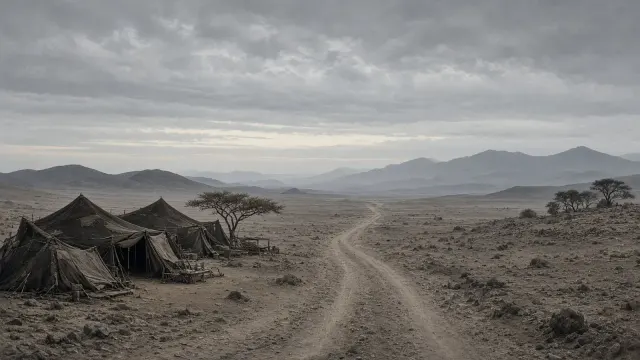
A Generation Refuses the Land and Receives the Wilderness
Numbers 14 turns the scouts' divided report into a national refusal. The congregation weeps, wishes for death, fears for its children, and proposes choosing a captain to return to Egypt. Joshua and Caleb defend the land and the LORD's presence, but the crowd moves toward stoning them until divine glory interrupts. Moses then intercedes when the LORD threatens destruction, asking that divine power be shown through the mercy already declared in the LORD's own character. Pardon is granted, yet the counted generation is barred from the land and sentenced to die during forty years in the wilderness, while the children feared as prey are promised entry. The scouts who brought the evil report die by plague. Finally, the people confess and attempt to advance anyway. Because the command has changed, their eager ascent is another act of disobedience, and without Moses or the ark they are defeated.
One complete chapter pageOpen chapter →
Future Bread, Present Accountability, and a Visible Reminder
Numbers 15 begins in the shadow of the sentence pronounced on the wilderness generation, yet its first words look beyond that sentence to settled life. Grain, oil, wine, and bread all assume that Israel will enter the land and live from its produce. The chapter then turns from future worship to present accountability, carefully separating failure committed in ignorance from defiance that despises the LORD's word. That distinction is followed by the man found gathering sticks on the Sabbath, whose case is held until a ruling is given rather than filled out with motives the text never supplies. The closing command puts remembrance on the edge of ordinary clothing: fringes and a blue cord are meant to catch the eye, turn sight toward the commandments, and resist the wandering of heart and eyes. Promise, atonement, judgment, and memory all meet here. Israel's future remains real, but so does the demand to remember whose people they are.
One complete chapter pageOpen chapter →
The Contested Priest Stands Between Death and Life
Numbers 16 takes a challenge to priestly and Mosaic authority and refuses to leave it as a contest of personalities. Korah's Levite grievance, the Reubenite accusations of Dathan and Abiram, and the support of 250 recognized leaders are brought before the LORD's choice. The judgments are distinct and terrible: the earth opens beneath the rebel households, fire consumes the incense offerers, and their censers are hammered into a permanent covering for the altar. Yet the next morning the congregation accuses Moses and Aaron of killing the LORD's people, and another plague begins. The chapter's final image answers the accusation in an unexpected way. Aaron, whose office has just been contested, runs into the stricken assembly with authorized incense and stands "between the dead and the living." The same priestly service challenged as illegitimate becomes the means of atonement. Numbers therefore ends the crisis not with Aaron enjoying vindication, but with the priest in the middle of danger, serving the people who had opposed him.
One complete chapter pageOpen chapter →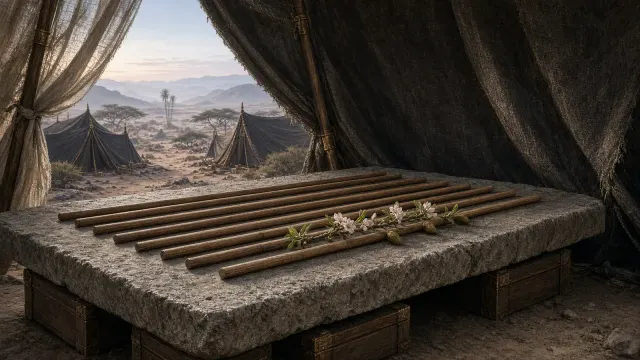
A Staff Bears Fruit and the People Fear to Approach
Numbers 17 replaces competing claims with twelve named rods laid before the LORD. The procedure is quiet compared with the earth, fire, and plague of the previous chapter, but its purpose is just as serious: the LORD will make his choice visible so that murmuring does not keep ending in death. Aaron's rod does more than sprout. By the next morning it carries buds, blossoms, and almonds, while the other rods are returned to their owners unchanged. The chosen rod is then kept before the testimony as a continuing sign. Yet the people receive a token meant to preserve life with fresh fear, crying that anyone who comes near the tabernacle will die. The chapter deliberately ends before correcting that fear. It establishes the appointment and records the congregation's alarm, leaving Numbers 18 to explain how priests and Levites will guard access so that the sanctuary may remain among Israel without every approach becoming another fatal crisis.
One complete chapter pageOpen chapter →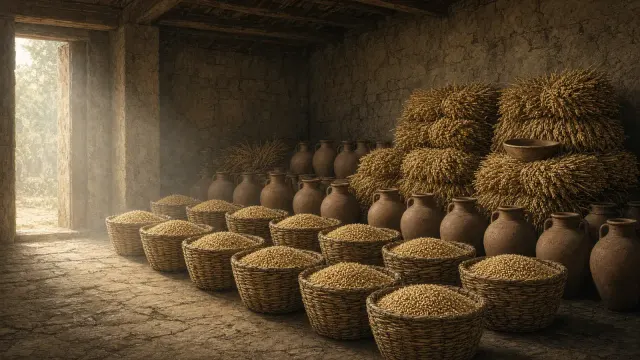
The Sanctuary’s Gifts Come with a Charge to Keep
Numbers 18 answers the fear at the end of the previous chapter by defining who guards the sanctuary, who serves where, and how those servants are sustained. Aaron and his sons do not receive a confirmed priesthood as unrestricted privilege. They bear responsibility for the sanctuary and altar, while the Levites assist under boundaries that protect both them and the congregation from another outbreak of wrath. The chapter then becomes surprisingly practical. Priestly households receive carefully distinguished portions of offerings, firstfruits, and firstborn gifts; human firstborn and unclean animals are redeemed rather than sacrificed. Levites receive Israel's tithes because they do not share the ordinary tribal land inheritance, yet even those who receive a tithe must give the best tenth of it to the LORD through Aaron. Service, support, holiness, and accountability are kept together. The sanctuary can remain at the center of Israel because access is ordered, and the people appointed to guard that order are themselves bound by it.
One complete chapter pageOpen chapter →
A Way Back from the Uncleanness of Death
Numbers 19 turns from sanctuary guardianship to the uncleanness created by death. A red heifer is prepared outside the camp, yet its blood is sprinkled toward the tabernacle, keeping the entire rite oriented toward the holy place whose purity is at stake. Its ashes are stored for future use, creating a remedy that can be ready when death enters a tent or is encountered in the open. The chapter's most striking reversal is that those who prepare and handle the means of cleansing themselves become temporarily unclean. Ritual uncleanness is therefore not another word for moral guilt. Corpse contact lasts seven days and requires purification on the third and seventh days; time alone is not enough. Running water, ashes, hyssop, washing, and a clean helper bring the unclean person back, while refusal to use the provided means has consequences for the sanctuary. Numbers treats mortality as a condition that spreads through ordinary life, but it also provides an appointed route of return.
One complete chapter pageOpen chapter →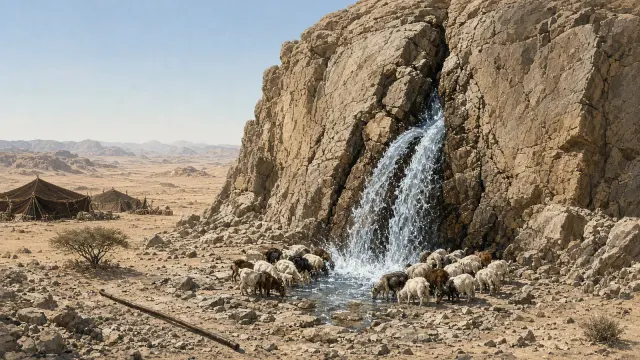
Water Flows, but the Leaders Will Not Cross
Numbers 20 is framed by the deaths of Miriam and Aaron, and between those losses Moses learns that he too will not lead Israel into the land. The chapter begins with real thirst and a familiar public accusation. At Meribah, Moses takes the rod as commanded but strikes the rock instead of speaking to it, and the LORD identifies the deeper failure as unbelief and failure to sanctify him before the people. Water nevertheless comes abundantly for both people and cattle. Provision is not an acquittal. The route then closes again when Edom, addressed as Israel's brother, refuses peaceful passage and appears in force, causing Israel to turn away rather than fight. At Mount Hor the consequences of Meribah become visible in Aaron's death, but the priesthood does not die with him. His garments pass to Eleazar before he dies. Numbers places loss beside continuity: leaders are removed, roads are blocked, yet water is given, the congregation moves on, and priestly service continues.
One complete chapter pageOpen chapter →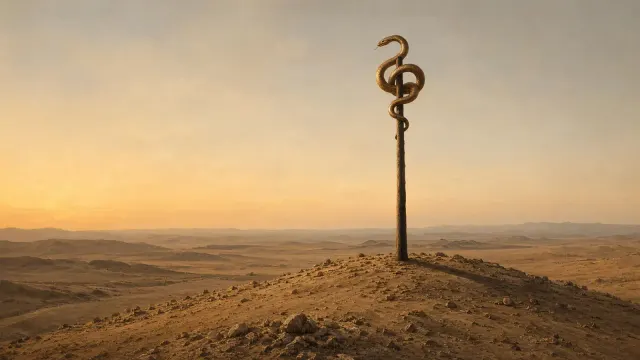
Judgment, Healing, and the First Occupied Kingdoms
Numbers 21 moves quickly between reversal, judgment, provision, song, and conquest. At Hormah, a place previously associated with Israel's disastrous unauthorized advance, the people appeal to the LORD and receive victory after Arad attacks and takes prisoners. Soon afterward discouragement on the road becomes open contempt for the food God has provided, and deadly serpents enter the camp. The people confess, Moses intercedes, and life is given through looking at the bronze serpent raised on a pole. The itinerary then breaks into poetry: an obscure citation from the Book of the Wars of the LORD and a brief song at a well preserve more than geography. By the chapter's end Israel is no longer merely moving through wilderness. Sihon and Og come out to fight, are defeated, and their territories are occupied. The congregation has towns behind it before crossing Jordan. That new position explains why Moab will look across the border in the next chapter and become afraid.
One complete chapter pageOpen chapter →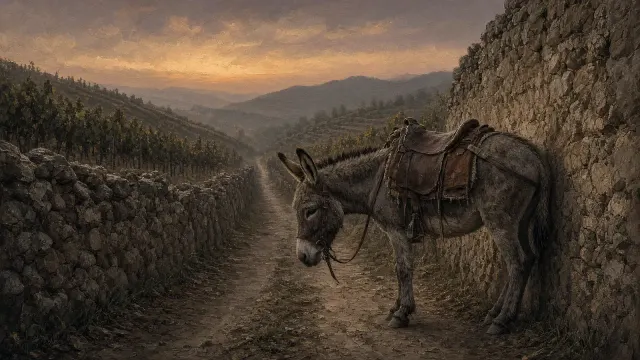
The Hired Seer Needs His Eyes Opened
Numbers 22 shifts the viewpoint outside Israel's camp. Balak of Moab sees what has happened to the Amorite kingdoms and tries to answer military fear with a purchased curse. Balaam can receive divine words, but he cannot make those words serve the king's purpose. The first refusal is narrowed as it travels back to Balak, inviting a more impressive embassy and greater promises of honor. Permission to travel comes with a strict limit on speech, and the road exposes Balaam's dependence even more sharply. His donkey sees the armed angel before he does, turns aside three times, and is beaten for repeatedly saving his life. The LORD opens the animal's mouth and then Balaam's eyes. By the time Balaam reaches Balak, the lesson is already established: physical arrival does not mean verbal control. The king can choose the meeting place, prepare sacrifices, and promise reward, but the word placed in Balaam's mouth remains outside his ownership.
One complete chapter pageOpen chapter →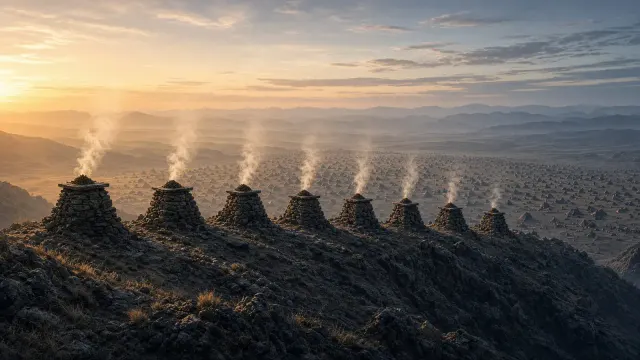
Another Hill Cannot Reverse the Blessing
Numbers 23 turns Balak's campaign into a repeated demonstration of what he cannot control. Seven altars, seven bullocks, seven rams, another hill, another view, and another round of sacrifice all fail to produce the curse he wants. Balaam's first oracle refuses the commission at its root: he cannot curse those whom God has not cursed. The second goes further, declaring that God's blessing is not available for renegotiation simply because Balak changes location or increases effort. Israel is pictured as distinct, accompanied by the LORD, and beyond the reach of the divination hired against it. Balak's demands shrink as the chapter proceeds. First he wants a curse; then he asks Balaam to stop blessing; finally he tries one more height at Peor. His arrangements multiply while his control disappears. The chapter ends beside yet another set of offerings, with the king still hoping that different scenery might somehow produce a different divine answer.
One complete chapter pageOpen chapter →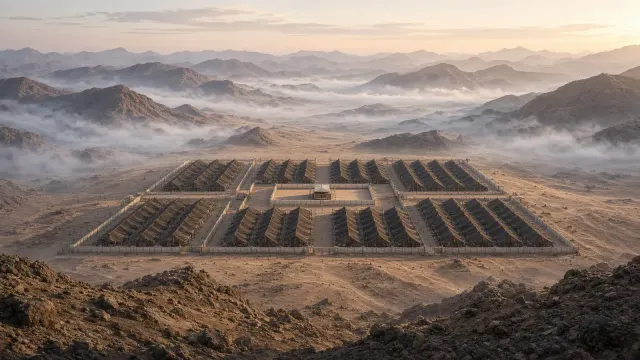
The Unwanted Blessing Reaches Toward a Coming King
Numbers 24 closes Balak's failed commission by widening Balaam's vision far beyond the curse that was requested. Balaam no longer seeks enchantments but looks toward Israel's ordered camp as the Spirit of God comes upon him. Tents become riverside gardens, abundant waters, royal strength, and the image of a lion at rest after victory. The blessing then turns back on Balak: the one who blesses Israel is blessed, and the one who curses is cursed. Balak angrily dismisses Balaam and withdraws the honor he had promised, yet dismissal does not end the speech. Further oracles reach toward a future ruler from Jacob, figured as a star and sceptre, whose dominion touches Moab and Edom. The view then expands again to Amalek, the Kenites, Asshur, Eber, and ships from Chittim. Apparent security repeatedly gives way to overthrow. Balak wanted one hostile word against the camp below; he receives instead a vision in which Israel remains blessed and surrounding powers prove temporary.
One complete chapter pageOpen chapter →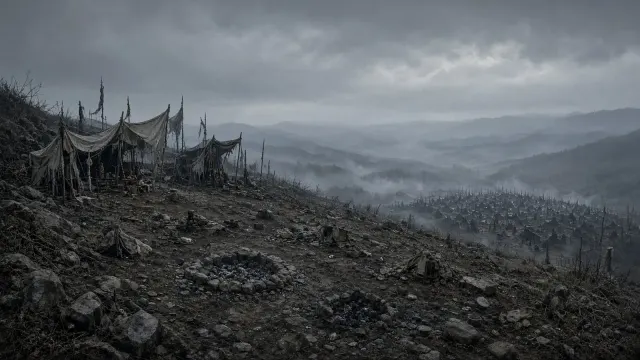
The Danger Enters the Camp at Peor
Numbers 25 makes a sharp turn from the failed curse outside the camp to compromise inside it. Balak could not purchase a word strong enough to overturn Israel's blessing, yet Israelites themselves join sexual misconduct with sacrificial meals and worship at Baal-peor. Judgment enters the camp in the form of a plague and orders against those joined to the cult. In the middle of public mourning, Zimri brings Cozbi, a Midianite woman from a leading household, before the congregation. Phinehas kills them, the plague stops, and the LORD explicitly interprets his act as zeal that turned away wrath and made atonement for Israel. The covenant of peace that follows such violence is intentionally striking, but the passage ties the approval to this named priest and crisis rather than giving an unlimited license for private religious violence. The chapter closes by naming the households involved and shifting attention toward Midian, whose connection to Peor will lead directly into later conflict.
One complete chapter pageOpen chapter →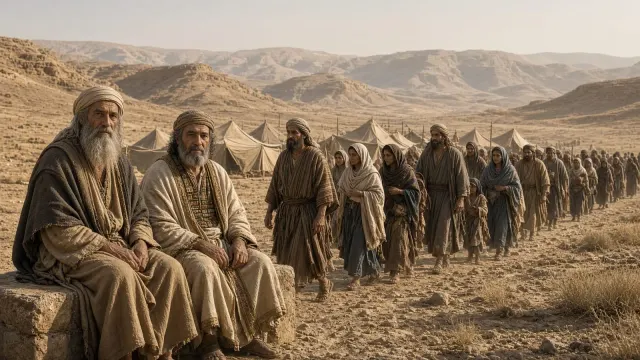
Nearly the Same Total, a Different Generation
Numbers 26 takes a second military census after the plague and turns a long list of names into evidence that an entire generation has changed. Men twenty years old and upward who are able to go to war are counted by tribal families, while the Levites are counted separately from one month old because their role and inheritance are different. The total of 601,730 is remarkably close to the first census, yet the closing lines forbid a superficial reading of that similarity: apart from Caleb and Joshua, none of the men from the earlier military registration remains. Within the lists, memory keeps interrupting arithmetic. Dathan, Abiram, Korah, Er, Onan, Nadab, and Abihu are recalled, while the survival of Korah's children is expressly preserved. Five daughters of Zelophehad are named in a male military roll because their household will soon raise an inheritance question. The census therefore looks backward to judgment and forward to land, war, succession, and settlement all at once.
One complete chapter pageOpen chapter →
An Inheritance Secured and a Shepherd Appointed
Numbers 27 addresses continuity first within a family and then within national leadership. Zelophehad's five daughters, already named in the census, publicly ask why their father's name should disappear from his family simply because he has no son. Moses brings the case before the LORD, and the answer is direct: "The daughters of Zelophehad speak right." Their inheritance is granted, and the ruling becomes a statute governing similar cases. The chapter then turns to Moses himself. He will see the land but will not lead Israel into it because the sentence of Meribah still stands. His recorded response is concern for the congregation, asking that they not be left "as sheep which have no shepherd." Joshua is chosen, publicly commissioned before Eleazar and the people, and given authority while Moses is still alive. Both halves of the chapter protect continuity without pretending death is absent: a father's line retains its holding, and a departing leader does not leave Israel directionless.
One complete chapter pageOpen chapter →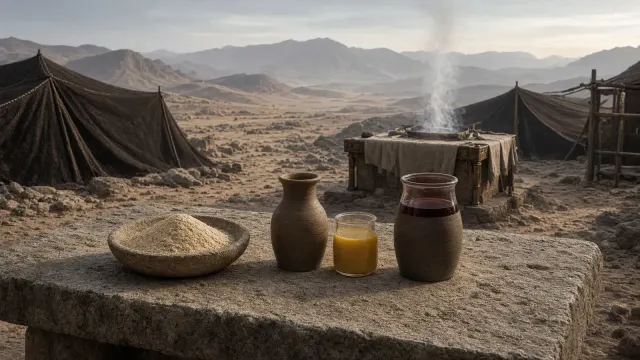
The Calendar Is Built on the Daily Offering
Numbers 28 follows Joshua's appointment not with military strategy but with a calendar of worship. The future nation will be measured not only by campaigns and territory but by mornings, evenings, Sabbaths, months, Passover, weeks, and harvest. Two lambs every day form the foundation, each with its grain, oil, and drink offering, and every special observance is added "beside the continual burnt offering" rather than replacing it. The monthly and festival sacrifices increase in scale while remaining carefully proportioned and distinguished by type. Passover on the fourteenth is kept distinct from the seven-day feast beginning on the fifteenth. The chapter ends with firstfruits, a command that quietly assumes fields, grain, and settled agricultural life ahead. Israel is still on the plains of Moab, but Numbers is already ordering the rhythm of life in the land. The new generation inherits more than territory. It inherits an appointed pattern in which ordinary daily worship remains underneath every larger celebration.
One complete chapter pageOpen chapter →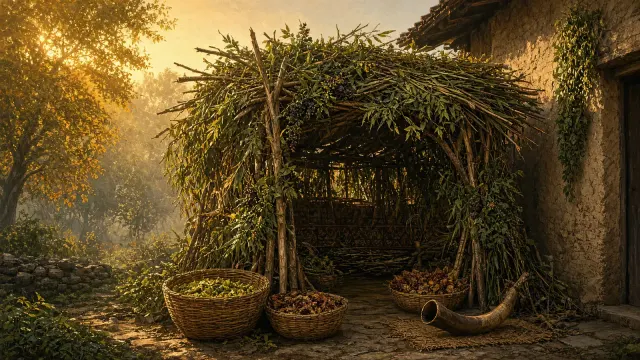
The Seventh Month Gathers the Offerings Together
Numbers 29 gathers the seventh month's observances into one dense calendar and keeps showing how obligations accumulate rather than replace one another. The first day adds trumpet blasts, assembly, and special sacrifices beside the monthly and continual offerings. The tenth day adds affliction, cessation from work, and offerings that are explicitly separate from the established atonement rite. The seven-day feast then begins at its largest scale, with thirteen bullocks, and reduces that number by one each day while the rams, lambs, goat, and continual service remain steady. An eighth-day solemn assembly breaks the descending pattern with a smaller distinct offering. The chapter closes by placing the fixed festival schedule beside vows and freewill offerings, preparing the move from appointed sacrifices to obligations created by spoken promises.
One complete chapter pageOpen chapter →
Words Bind, and Silence Can Confirm Them
Numbers 30 treats vows as words that can become binding obligations and then defines how those obligations operate inside particular household relationships. A man who binds himself is required to do what came from his mouth. A young woman's vow in her father's house may stand through his silence or be annulled by his objection on the day he hears it. The same pattern appears in marriage, while the vows of widows and divorced women stand without a father's or former husband's veto. The chapter does not erase the unequal authority built into the household cases, but it also does not present that authority as unlimited or indefinite. Silence confirms a vow, and a husband who waits and later overturns what he had already allowed can bear the resulting iniquity himself.
One complete chapter pageOpen chapter →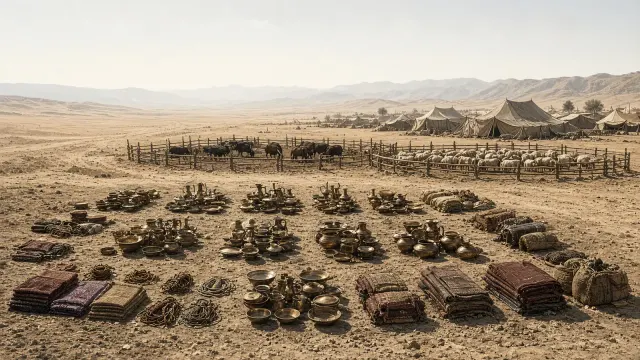
Victory, Captives, and the Uncleanness of War
Numbers 31 returns to the crisis at Peor through the campaign against Midian, and the chapter refuses to let victory become a simple triumphal report. Balaam dies with the Midianite kings, and the surviving women and children are brought to the camp, where Moses issues the chapter's starkest order concerning the captives. The army itself must then remain outside the camp for purification because killing and contact with the dead still produce impurity. Spoil is divided equally between the combatants and the congregation, but each half pays a different levy to the sanctuary servants. The inventory counts livestock and human captives with the same numerical precision. Finally, the officers report that none of their own soldiers is missing and present gold as an additional offering for their lives, placing the army's return under one more act of accountability.
One complete chapter pageOpen chapter →
An Eastern Inheritance with a Western Obligation
Numbers 32 begins with a practical request and turns it into a public covenant of responsibility. Reuben and Gad see that the conquered land east of the Jordan suits their great herds and ask to receive it without being brought across the river. Moses hears in that request the danger of Kadesh, where discouragement once helped keep a generation from entering the land. The tribes answer by promising that their families and livestock will settle east while their armed men cross with Israel and remain until the western inheritances are secured. Moses accepts the arrangement only on that condition and places it before Eleazar, Joshua, and the tribal leaders so it will survive his death. Half of Manasseh also receives eastern territory, and settlement begins, but the chapter leaves the promised western service still to be performed.
One complete chapter pageOpen chapter →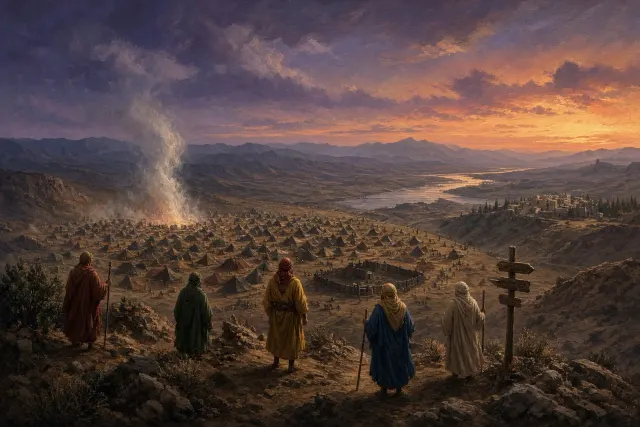
The Road Is Recorded, and the Land Is Not Yet Secure
Numbers 33 turns Israel's wilderness movement into a written itinerary commanded by the LORD. The route begins with an exact date, the day after Passover, while Egypt buries its firstborn, and then proceeds through a long sequence of departures and encampments. Most stations receive only a name, which gives special weight to the few details preserved: Elim has twelve fountains and seventy palms, Rephidim has no water, and Aaron's death is fixed to the first day of the fifth month in the fortieth year. The record finally reaches the plains of Moab by Jordan near Jericho. At that point the chapter shifts from the road already traveled to the land ahead, commanding the removal of Canaan's inhabitants and cult objects, the division of territory by lot, and warning that Israel itself is not exempt from judgment in the land it receives.
One complete chapter pageOpen chapter →
The Inheritance Receives Boundaries and Named Stewards
Numbers 34 gives the western inheritance an outer edge before it gives the tribes their internal portions. The southern boundary moves through a chain of named places from the salt sea toward the river of Egypt, while the great sea forms the west. The northern line runs through Mount Hor and the entrance of Hamath, and the eastern boundary descends toward Chinnereth, follows the Jordan, and returns to the salt sea. The outline concerns the land still to be divided among nine and a half tribes, because Reuben, Gad, and half of Manasseh have already received their inheritance east of the Jordan. The chapter then names Eleazar, Joshua, and tribal representatives who will administer the western division. Moses transmits the arrangement, but his own name is absent from the list of men who will carry it out.
One complete chapter pageOpen chapter →
Refuge, Judgment, and Blood That Cannot Be Bought Off
Numbers 35 distributes the Levites through Israel's territory and places the law of refuge inside that settlement. Forty-eight Levitical towns are to be supplied from the tribal inheritances, with larger tribes contributing more, and six of those towns serve as cities of refuge. They protect a person who kills unintentionally from being killed before communal judgment, but refuge is not an acquittal for murder. The chapter distinguishes deliberate attacks marked by deadly means, hatred, or ambush from killings without enmity or intent to harm. The congregation must judge between the killer and the avenger and protect the unintentional manslayer, who must remain within the refuge boundary until the high priest's death. Capital judgment requires more than one witness, and payments cannot buy either a murderer's life or an early return from refuge. Bloodshed is finally treated as a matter affecting the land where the LORD dwells.
One complete chapter pageOpen chapter →
The Daughters Keep Their Inheritance, and the Tribe Keeps Its Land
Numbers 36 returns to Zelophehad's daughters and shows how one just ruling can create a second legal question without cancelling the first. The family heads of Manasseh accept that the daughters possess their father's inheritance, but they point out that marriage into another tribe could transfer that land out of Manasseh, even through the Jubilee. The LORD's answer declares the concern valid while preserving the daughters' title: they may marry whom they think best, but within the family of their father's tribe. The rule is then extended to other daughters who possess inherited land so tribal allotments do not shift from one tribe to another. Mahlah, Tirzah, Hoglah, Milcah, and Noah marry within Manasseh, and their inheritance remains there. Numbers closes on the plains of Moab, with Jericho still across the Jordan and possession arranged in law before it is completed in geography.
One complete chapter pageOpen chapter →Source: eBible.org · eng-kjv2006