The big picture
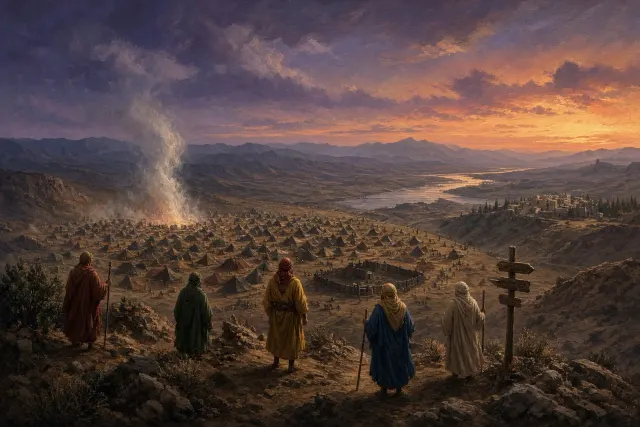
The route from Egypt, the land they left, has brought Israel, God's rescued people, beside Jordan, the river at the edge of the promised land. Moses, their leader, records the stages of their travels at God's command. Aaron, the priest who died along the way, appears among the remembered losses. The list reaches the present camp in Moab, a neighbouring region. God then gives commands about taking the land and warns that disobedience can bring Israel's own removal.
In this chapter
- Moses Records the Departure from Egypt Numbers 33:1-4
The record begins with Israel leaving Egypt under Moses and Aaron.
- Early Camps Lead to Sinai Numbers 33:5-15
The route moves from Rameses through a series of camps toward the sea.
- Many Camps Fill the Desert Years Numbers 33:16-37
The list continues from Sinai through many stopping places, including Kibroth-hattaavah and Hazeroth, camps already associated with earlier events.
- Aaron's Death Marks the Later Route Numbers 33:38-49
Aaron goes up mount Hor at God's command and dies there in the fortieth year after Egypt, aged 123.
- Entry Requires Removal and Faithfulness Numbers 33:50-56
Crossing Jordan brings duties, God tells Moses: Israel must drive out the inhabitants, destroy their images and remove their worship sites.
Central truth
The record of Israel's camps recalls God's rescue and a generation's losses before warning that possession of the land requires obedience.

Scripture beside the summary
Numbers · King James Version · 56Numbers 33:1-4
Moses Records the Departure from Egypt
The record begins with Israel leaving Egypt under Moses and Aaron. God commanded Moses to write the stages of their travel. They left Rameses, an Egyptian starting place, on the fifteenth day of the first month, the day after Passover. They went out openly while Egyptians buried the firstborn God had struck. The account also calls this judgement on Egypt's gods. Israel's departure is therefore remembered alongside the severe loss in the land they leave, not only as the start of a route.
In everyday life
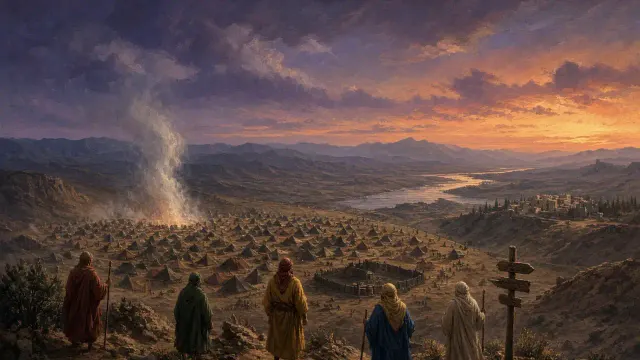
A refugee grandmother writes the date her family left on the inside cover of a travel notebook. Beside it she notes the grief surrounding their departure, unwilling to remember safety without the suffering left behind. The first page holds both release and loss. Numbers identifies the deaths as God's judgement, not an unexplained crisis.
Notice
Numbers 33:2 Moses writes the stages because God commands him to do so. The list preserves the people's route as part of what they are meant to remember.
Numbers 33:1-4
King James Version1These are the journeys of the children of Israel, which went forth out of the land of Egypt with their armies under the hand of Moses and Aaron.
2And Moses wrote their goings out according to their journeys by the commandment of the LORD: and these are their journeys according to their goings out.
3And they departed from Rameses in the first month, on the fifteenth day of the first month; on the morrow after the passover the children of Israel went out with an high hand in the sight of all the Egyptians.
4For the Egyptians buried all their firstborn, which the LORD had smitten among them: upon their gods also the LORD executed judgments.
Numbers 33:5-15
Early Camps Lead to Sinai
The route moves from Rameses through a series of camps toward the sea. The people pass through the sea and continue into the desert. At Elim, an oasis stopping place, they find twelve springs and seventy palm trees. Other camps lead toward Rephidim, where there is no drinking water, and finally Sinai, the desert where they receive God's commands. The short place list keeps both relief and need in view. It does not expand every stop into a full account of what happened there.
In everyday life
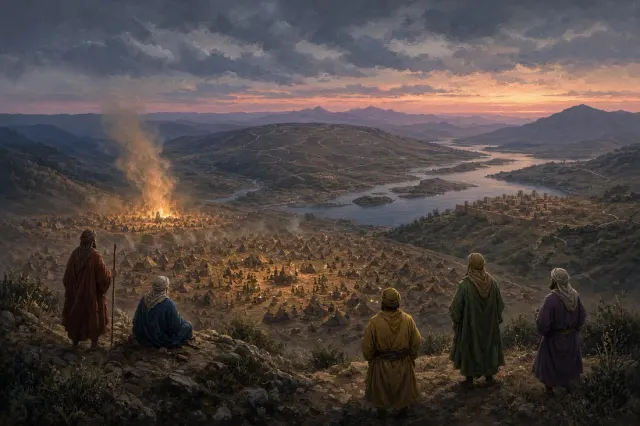
The delivery cyclist traces her first long route on a paper map, marking the public fountain where she filled her bottles and the stretch with no water. The place names hold memories the mileage total cannot show. She follows the line to the final stop. Israel's route includes a miraculous passage through the sea.
Notice
Numbers 33:9 Elim's springs and palms interrupt a mostly bare list of names. The detail preserves a remembered place of provision along a route that also included thirst.
Numbers 33:5-15
King James Version5And the children of Israel removed from Rameses, and pitched in Succoth.
6And they departed from Succoth, and pitched in Etham, which is in the edge of the wilderness.
7And they removed from Etham, and turned again unto Pi-hahiroth, which is before Baal-zephon: and they pitched before Migdol.
8And they departed from before Pi-hahiroth, and passed through the midst of the sea into the wilderness, and went three days’ journey in the wilderness of Etham, and pitched in Marah.
9And they removed from Marah, and came unto Elim: and in Elim were twelve fountains of water, and threescore and ten palm trees; and they pitched there.
10And they removed from Elim, and encamped by the Red sea.
11And they removed from the Red sea, and encamped in the wilderness of Sin.
12And they took their journey out of the wilderness of Sin, and encamped in Dophkah.
13And they departed from Dophkah, and encamped in Alush.
14And they removed from Alush, and encamped at Rephidim, where was no water for the people to drink.
15And they departed from Rephidim, and pitched in the wilderness of Sinai.
Numbers 33:16-37
Many Camps Fill the Desert Years
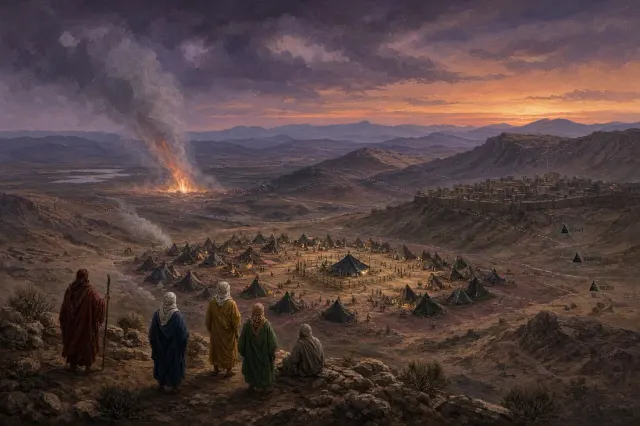
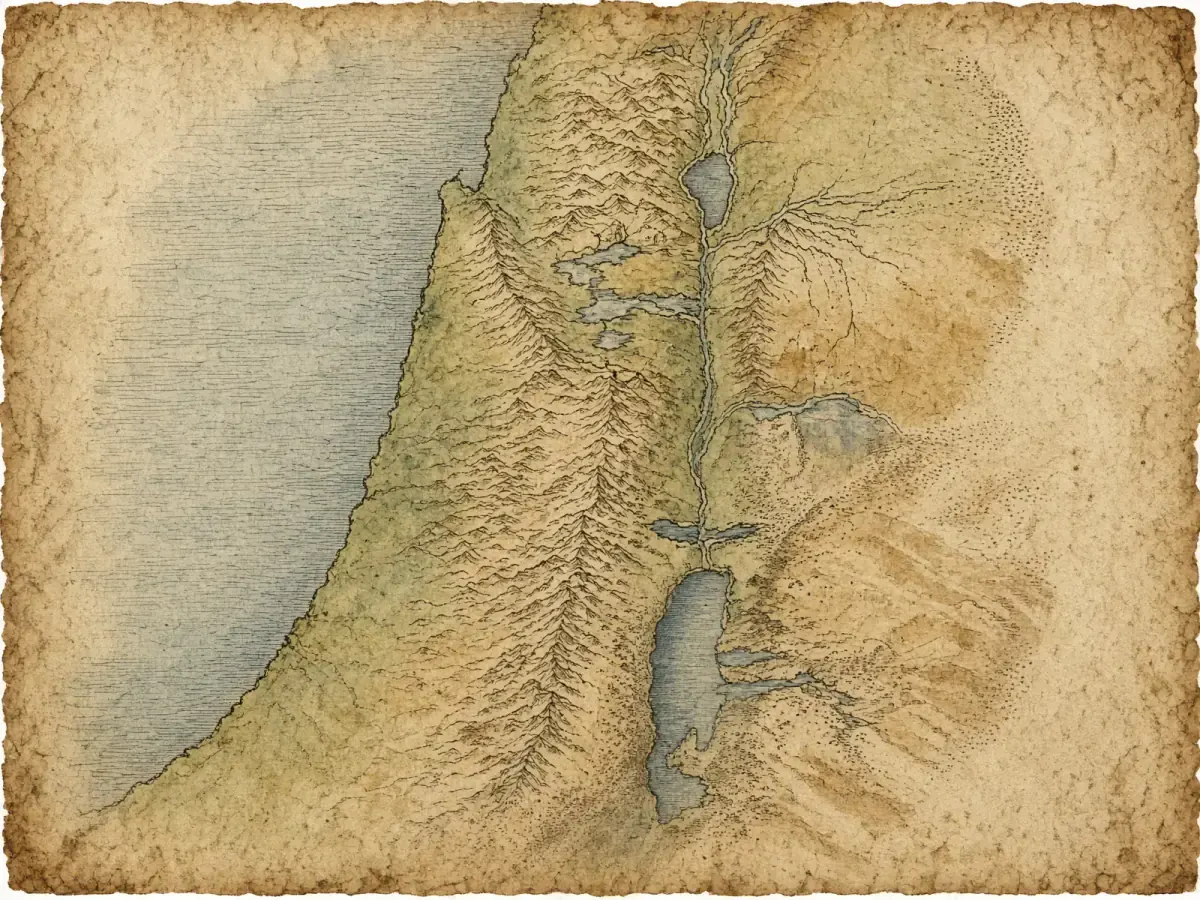
The list continues from Sinai through many stopping places, including Kibroth-hattaavah and Hazeroth, camps already associated with earlier events. It names departures and arrivals without assigning a separate account to every location. Eventually the route reaches Kadesh in the desert of Zin and then mount Hor near Edom, a neighbouring land. The repeated pattern records a people repeatedly packing and settling without yet reaching their lasting home. The many names preserve the length and stages of that life without explaining every delay.
In everyday life
A seasonal road worker opens a box of old lodging receipts and arranges them by place. Some names bring back clear memories; others mark weeks she can barely recall. Together they show years spent moving before she found a settled home. Israel's long route also carries God's judgement on the earlier generation.
Notice
Numbers 33:37 The list finally reaches mount Hor on Edom's border. Many brief entries have carried the people toward the place where Aaron's death will receive fuller attention.
Numbers 33:16-37
King James Version16And they removed from the desert of Sinai, and pitched at Kibroth-hattaavah.
17And they departed from Kibroth-hattaavah, and encamped at Hazeroth.
18And they departed from Hazeroth, and pitched in Rithmah.
19And they departed from Rithmah, and pitched at Rimmon-parez.
20And they departed from Rimmon-parez, and pitched in Libnah.
21And they removed from Libnah, and pitched at Rissah.
22And they journeyed from Rissah, and pitched in Kehelathah.
23And they went from Kehelathah, and pitched in mount Shapher.
24And they removed from mount Shapher, and encamped in Haradah.
25And they removed from Haradah, and pitched in Makheloth.
26And they removed from Makheloth, and encamped at Tahath.
27And they departed from Tahath, and pitched at Tarah.
28And they removed from Tarah, and pitched in Mithcah.
29And they went from Mithcah, and pitched in Hashmonah.
30And they departed from Hashmonah, and encamped at Moseroth.
31And they departed from Moseroth, and pitched in Bene-jaakan.
32And they removed from Bene-jaakan, and encamped at Hor-hagidgad.
33And they went from Hor-hagidgad, and pitched in Jotbathah.
34And they removed from Jotbathah, and encamped at Ebronah.
35And they departed from Ebronah, and encamped at Ezion-gaber.
36And they removed from Ezion-gaber, and pitched in the wilderness of Zin, which is Kadesh.
37And they removed from Kadesh, and pitched in mount Hor, in the edge of the land of Edom.
Numbers 33:38-49
Aaron's Death Marks the Later Route
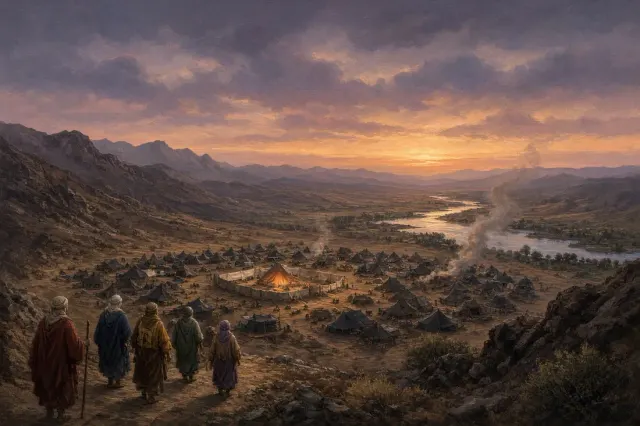
Aaron goes up mount Hor at God's command and dies there in the fortieth year after Egypt, aged 123. The route record pauses to give the day and month. It also recalls a Canaanite ruler hearing of Israel's approach. The camps then continue through places near Moab and the mountains of Abarim until the people reach the plains beside Jordan, near Jericho, a town across the river. The record arrives at their present position with the loss of their priest still clearly marked.
In everyday life
The long-distance driver's daughter traces his last route on a wall map and places a dated note where he died. Other stops remain small dots, but that one carries a name and age. The route continues in another driver's hands. Aaron's death fulfils God's command and ends a priestly role, not a driving career.
Notice
Numbers 33:38 Aaron's death receives a precise date within a brief route list. The pause makes a personal and priestly loss stand out among the camp names.
Numbers 33:38-49
King James Version38And Aaron the priest went up into mount Hor at the commandment of the LORD, and died there, in the fortieth year after the children of Israel were come out of the land of Egypt, in the first day of the fifth month.
39And Aaron was an hundred and twenty and three years old when he died in mount Hor.
40And king Arad the Canaanite, which dwelt in the south in the land of Canaan, heard of the coming of the children of Israel.
41And they departed from mount Hor, and pitched in Zalmonah.
42And they departed from Zalmonah, and pitched in Punon.
43And they departed from Punon, and pitched in Oboth.
44And they departed from Oboth, and pitched in Ije-abarim, in the border of Moab.
45And they departed from Iim, and pitched in Dibon-gad.
46And they removed from Dibon-gad, and encamped in Almon-diblathaim.
47And they removed from Almon-diblathaim, and pitched in the mountains of Abarim, before Nebo.
48And they departed from the mountains of Abarim, and pitched in the plains of Moab by Jordan near Jericho.
49And they pitched by Jordan, from Beth-jesimoth even unto Abel-shittim in the plains of Moab.
Numbers 33:50-56
Entry Requires Removal and Faithfulness
Crossing Jordan brings duties, God tells Moses: Israel must drive out the inhabitants, destroy their images and remove their worship sites. The land is given to Israel, and family shares must match their numbers while being assigned by lot. Leaving the inhabitants in place will bring lasting trouble, compared to thorns and sharp pricks. God also warns that he can do to Israel what he intended for those being driven out. The gift does not place Israel outside the reach of judgement.
In everyday life
A conservation ranger takes responsibility for a damaged reserve under a charter that requires specific restoration work. She reads the clause stating that failure can cost her team the right to manage it. Receiving the ground does not remove the conditions attached. Numbers commands the displacement of peoples and destruction of their worship sites.
Notice
Numbers 33:56 God warns that Israel can face the fate intended for the inhabitants. Being given the land is not presented as immunity from God's judgement if they disobey.
Numbers 33:50-56
King James Version50And the LORD spake unto Moses in the plains of Moab by Jordan near Jericho, saying,
51Speak unto the children of Israel, and say unto them, When ye are passed over Jordan into the land of Canaan;
52Then ye shall drive out all the inhabitants of the land from before you, and destroy all their pictures, and destroy all their molten images, and quite pluck down all their high places:
53And ye shall dispossess the inhabitants of the land, and dwell therein: for I have given you the land to possess it.
54And ye shall divide the land by lot for an inheritance among your families: and to the more ye shall give the more inheritance, and to the fewer ye shall give the less inheritance: every man’s inheritance shall be in the place where his lot falleth; according to the tribes of your fathers ye shall inherit.
55But if ye will not drive out the inhabitants of the land from before you; then it shall come to pass, that those which ye let remain of them shall be pricks in your eyes, and thorns in your sides, and shall vex you in the land wherein ye dwell.
56Moreover it shall come to pass, that I shall do unto you, as I thought to do unto them.
Details worth noticing
The opening image
Numbers 33:1 begins with “These are the journeys of the children of Israel, which went forth out of the land of Egypt with their armies under the hand of Moses and Aaron.”
Where the chapter turns
Numbers 33:52 forms a natural hinge: “Then ye shall drive out all the inhabitants of the land from before you, and destroy all their pictures, and destroy all their molten images, and quite…”
The final note
Numbers 33:56 leaves the reader with “Moreover it shall come to pass, that I shall do unto you, as I thought to do unto them.”
A word trail through the chapter
The words pitched, departed, removed, encamped, land, wilderness help reveal the chapter’s repeated concerns.
KJV words made clear
- unto
- to
- spake
- spoke
Music and video connected to the passage
Related media appears when its Scripture reference overlaps this study. Music and video can illuminate a theme while the biblical text remains the foundation.