The big picture
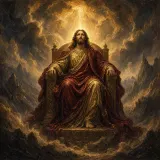
Colossians 1 moves from a report about one congregation to claims that take in creation, the church, and reconciliation. Paul gives thanks for faith, love, and hope already bearing fruit among the Colossians, then prays for knowledge that becomes fruitful conduct and endurance. The scale rises sharply when Christ is named as the image of the invisible God, the one through whom and for whom all things were created, yet the chapter refuses to let that supremacy become abstract. The one before all things is also the one who makes peace through “the blood of his cross.” The Colossians themselves are drawn into that reconciliation, with continuing faith held beside what Christ has accomplished. Paul finally describes a mystery once hidden but now disclosed among the Gentiles, a message aimed not at a spiritual elite but at bringing “every man” to maturity in Christ.
In this chapter
- News of Their Love Travels Back Along the Gospel's Route Colossians 1:1-8
The opening of Colossians is crowded with people and movement.
- Glorious Power Appears as Patient Endurance Colossians 1:9-14
Paul’s prayer refuses to separate understanding from conduct.
- Every Created Power Is Placed on the Creaturely Side Colossians 1:15-17
Three verses redraw the scale of the letter.
- The Cosmic Account Reaches a Bloodstained Cross Colossians 1:18-20
The scale stays cosmic, but the center of the paragraph is a cross.
- Reconciliation Has a Personal Address and a Continuing Condition Colossians 1:21-23
After speaking about reconciliation on the scale of “all things,” Colossians turns and says, in effect, this includes you.
- The Mystery Is Being Published, Not Protected from Ordinary Believers Colossians 1:24-29
The “mystery” in Colossians is remarkable for how little effort Paul spends keeping it mysterious.

Scripture beside the summary
Colossians · King James Version · 29Colossians 1:1-8
News of Their Love Travels Back Along the Gospel's Route
The opening of Colossians is crowded with people and movement. The believers are at Colosse, but they are also “in Christ,” and Paul’s thanksgiving immediately links them with Timothy, Epaphras, the saints, and a gospel that is bearing fruit far beyond one city. Hope is “laid up” for them in heaven, yet its effect is visible on the ground in faith and love. The gospel has arrived as something heard, learned, and known “in truth,” not as a private insight invented inside the congregation. Epaphras stands in the middle of that route: he taught them, then carried news of their love back to Paul. The result is almost circular. A message travels to Colosse, produces a community marked by faith and love, and then produces news worth sending back along the same road. The Book of Colossians begins with doctrine already turning into relationships before any controversy is named.
Deep dive
The Colossians are located both at Colosse and in Christ. The greeting names their physical community without making that location the whole of their identity. Paul introduces Timothy as a brother, and the thanksgiving soon names Epaphras as the minister through whom they learned the gospel. The opening is populated by relationships, not just an abstract account of religious knowledge.
Faith in Christ and love for all the saints are connected with hope laid up in heaven. Hope here is not merely the intensity of an optimistic feeling. It concerns what is secured for them and has been announced in the gospel. Its heavenly location does not leave earthly relationships untouched: love for other believers appears among its present effects.
The gospel is described as bearing fruit among them as it does throughout the world. That expansive language places this particular community within a larger movement rather than at the edge of a private local teaching. Epaphras carries their love in the Spirit back to Paul in his report. The message that reached them now produces news worth carrying in the other direction. Hearing, learning, knowing grace, and loving others belong to the same opening account.
Words to trace: Christ, Jesus, faithful, Father, grace, Lord
Verse-by-verse path
- Colossians 1:1
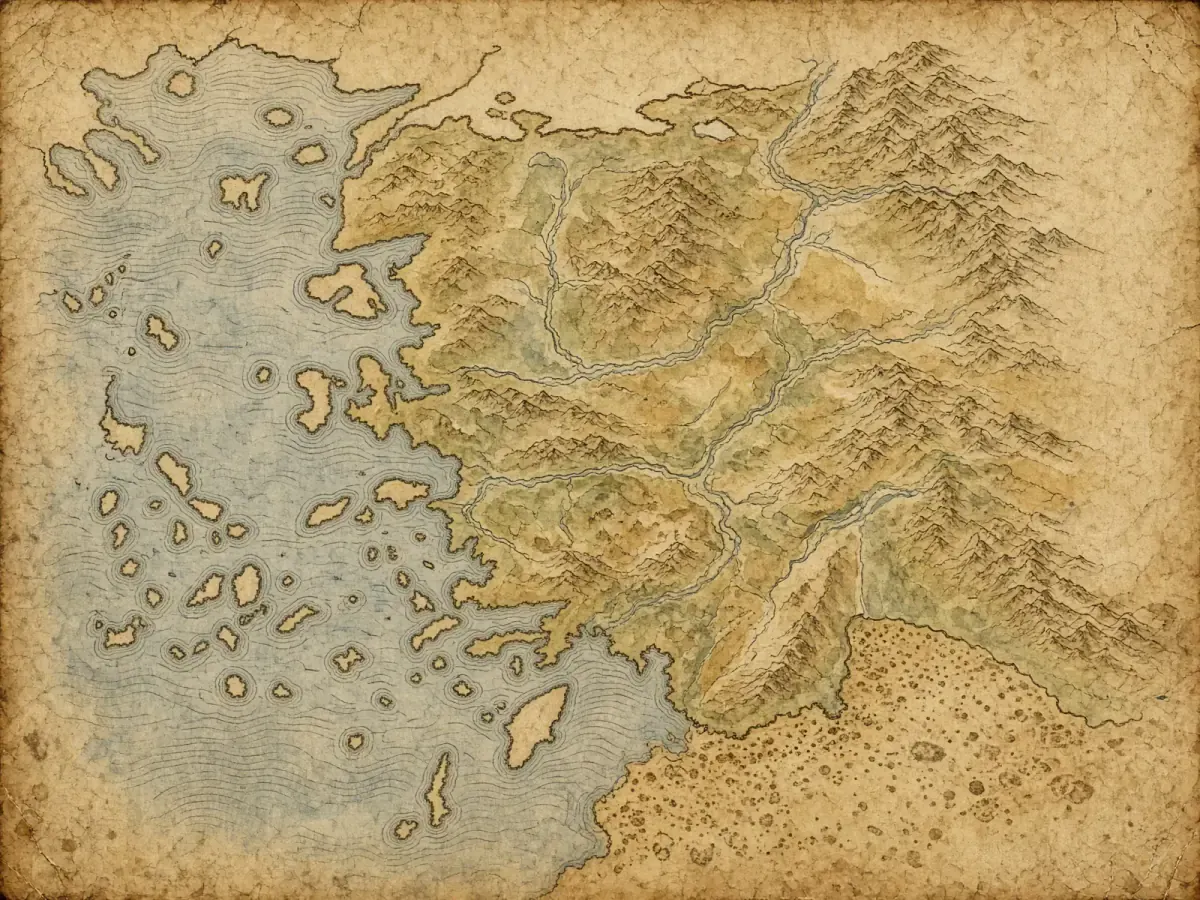
Colosse was a small town in the Lycus valley of Phrygia, a few miles from Laodicea and Hierapolis (4:13), and Paul had never been there (2:1). Timothy is named as co-sender here as in five other letters. Tacitus records a great earthquake in the valley in AD 60, around the time the letter is usually dated.
- Colossians 1:2
The town was famous for a dyed wool, a deep purple-red that took its name from the place. “Faithful brethren” can equally be “believing brethren”. In the earliest copies the greeting stops at “God our Father”; “and the Lord Jesus Christ” was added to match Paul’s usual form.
- Colossians 1:3
Verses 3 to 8 form one Greek sentence, and verses 9 to 20 another. “Praying always” can belong with the thanksgiving, so that the thanks is what is always offered. The plural “we” keeps Timothy in the prayer with Paul.
- Colossians 1:4
“Since we heard” marks this as a church Paul knew by report only. Faith, love and hope appear together, the triad of 1 Corinthians 13:13 and 1 Thessalonians 1:3, and here hope is given as the reason for the other two: they love “for the hope”.
- Colossians 1:5
“Laid up” is apokeimai, stored away, as the servant kept his pound “laid up in a napkin” (Luke 19:20) and as Paul later speaks of a crown “laid up for me” (2 Timothy 4:8). “Heard before” is proakouo, found only here: they heard the true word before any rival teaching reached them.
- Colossians 1:6
“In all the world” is deliberate breadth for a gospel then a few decades old. Many manuscripts read “bearing fruit and increasing”, two verbs that echo the Greek of Genesis 1:28, “Be fruitful, and multiply”; the King James text lacks the second here but has both in verse 10.
- Colossians 1:7
Epaphras was a Colossian, “one of you” (4:12), and evidently the founder of the church; his name is a shortened form of Epaphroditus, though he is not the Philippian of that name. “Fellowservant” is syndoulos, fellow slave. Instead of “for you”, the best early witnesses say he serves “on our behalf”, which makes Epaphras Paul’s own representative at Colosse.
- Colossians 1:8
“Declared” is deloo, to make plain. “Your love in the Spirit” is the only clear mention of the Holy Spirit in the whole letter, a striking silence in a book that speaks so much of Christ. The report Epaphras brought was about their love, not about their troubles, at least at first.
Colossians 1:1-8
King James Version1Paul, an apostle of Jesus Christ by the will of God, and Timotheus our brother,
2To the saints and faithful brethren in Christ which are at Colosse: Grace be unto you, and peace, from God our Father and the Lord Jesus Christ.
3We give thanks to God and the Father of our Lord Jesus Christ, praying always for you,
4Since we heard of your faith in Christ Jesus, and of the love which ye have to all the saints,
5For the hope which is laid up for you in heaven, whereof ye heard before in the word of the truth of the gospel;
6Which is come unto you, as it is in all the world; and bringeth forth fruit, as it doth also in you, since the day ye heard of it, and knew the grace of God in truth:
7As ye also learned of Epaphras our dear fellowservant, who is for you a faithful minister of Christ;
8Who also declared unto us your love in the Spirit.
Colossians 1:9-14
Glorious Power Appears as Patient Endurance
Paul’s prayer refuses to separate understanding from conduct. Knowledge of God’s will is meant to become a worthy walk, fruitful work, and still deeper knowledge of God, so learning and living keep feeding one another. The most surprising turn comes in the language of power. “All might” and “glorious power” could sound like the prelude to spectacle, but Paul names patience, longsuffering, and joy as their immediate expression. Colossians gives endurance a surprisingly large theological frame. Thanksgiving then shifts from what Paul desires for the believers to what the Father has already done for them. They have been “made meet” for an inheritance, delivered from darkness, and transferred into the kingdom of the beloved Son. The prayer for growth therefore rests on a change already announced. Redemption and forgiveness are not prizes held out at the end of sufficient progress; they are the ground from which that progress is described.
Deep dive
The prayer begins with knowledge of God's will, but its purpose is not the accumulation of impressive information. Wisdom and spiritual understanding lead into a way of life worthy of the Lord, fruitful in good works and increasing in the knowledge of God. Knowing and doing develop together rather than competing for importance.
The language of strength is expansive: all might, glorious power. Its immediately named result is patience and longsuffering with joyfulness. The scale of the power does not require an equally spectacular public display. Paul applies it to endurance, giving ordinary persistence a place within language that could easily be mistaken for a promise of uninterrupted triumph.
Thanksgiving then identifies what the Father has already done. The KJV's "made us meet" means qualified or made fit to share the inheritance. Deliverance from darkness and transfer into the Son's kingdom describe a change of dominion, not merely an improved outlook within the same allegiance. The Son is characterized by the Father's love, and redemption in him is identified with forgiveness of sins. The KJV explicitly includes his blood. The prayer's desired growth therefore rests upon an already announced rescue, not upon uncertainty about whether the Father is willing to receive them.
Words to trace: knowledge, power, blood, cause, cease, darkness
Verse-by-verse path
- Colossians 1:9
“Since the day we heard it” answers verse 6, “since the day ye heard of it”: their hearing and Paul’s hearing are set side by side. “Filled” is pleroo, the first touch of the fulness language that runs through the letter (1:19; 2:9–10).
- Colossians 1:10
“Unto all pleasing” is areskeia, a word ordinary Greek used in a bad sense, for obsequious people-pleasing; it is found only here in the New Testament, turned to pleasing the Lord. “Fruitful” and “increasing” are the two participles used of the gospel itself in verse 6, now applied to the believers.
- Colossians 1:11
“Strengthened with all might” is literally empowered with all power, the root doubled. “Glorious power” is the might of his glory. Older interpreters distinguished the two virtues: “patience”, hypomone, endures hard circumstances, while “longsuffering”, makrothumia, bears with difficult people.
- Colossians 1:12
“Made meet” is hikanoo, to make sufficient or qualify, used elsewhere only in 2 Corinthians 3:6, “made us able ministers”. The inheritance is literally “the portion of the lot”, the language of Canaan divided among the tribes by lot in Joshua 14–19.
- Colossians 1:13
“Power” is exousia, authority or domain. “Translated” is methistemi, the verb used for resettling a conquered population in another land, as the kings of Assyria did with Israel. “His dear Son” is literally the Son of his love, a Hebrew-shaped phrase.
- Colossians 1:14
“Through his blood” is absent from the oldest manuscripts; copyists likely added it from Ephesians 1:7, where it belongs. The phrase “even the forgiveness of sins” defines redemption here by its first and plainest result.
Colossians 1:9-14
King James Version9For this cause we also, since the day we heard it, do not cease to pray for you, and to desire that ye might be filled with the knowledge of his will in all wisdom and spiritual understanding;
10That ye might walk worthy of the Lord unto all pleasing, being fruitful in every good work, and increasing in the knowledge of God;
11Strengthened with all might, according to his glorious power, unto all patience and longsuffering with joyfulness;
12Giving thanks unto the Father, which hath made us meet to be partakers of the inheritance of the saints in light:
13Who hath delivered us from the power of darkness, and hath translated us into the kingdom of his dear Son:
14In whom we have redemption through his blood, even the forgiveness of sins:
Colossians 1:15-17
Every Created Power Is Placed on the Creaturely Side
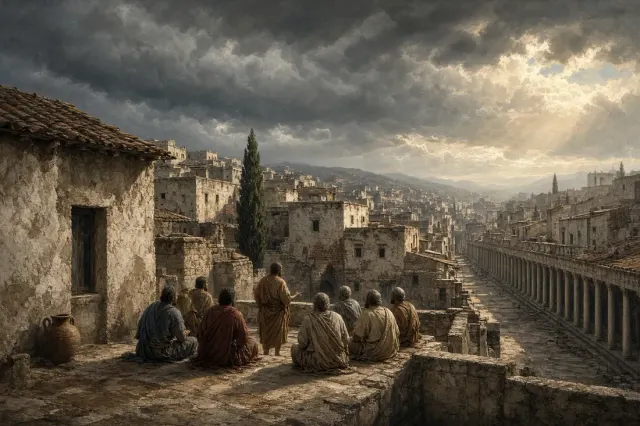
Three verses redraw the scale of the letter. Christ is called “the image of the invisible God,” placing divine disclosure and divine invisibility in the same line, and the title “firstborn of every creature” is immediately surrounded by language that explains the kind of priority being claimed. Everything in heaven and earth, visible and invisible, including thrones, dominions, principalities, and powers, is said to be created by him and for him. That catalogue matters because spiritual powers will soon reappear as possible objects of fear, fascination, or religious dependence. Colossians has already placed them on the creaturely side of the line. Christ is not presented as the highest member inside the same class. He is before all things, their source and purpose, and the one by whom they “consist.” Origin, goal, priority, and continued coherence are all gathered around him before the letter ever begins its direct warnings about rival spiritual claims.
Deep dive
Calling Christ the image of the invisible God brings disclosure and invisibility into one sentence. The God not seen is made known in him. The following title, "firstborn of every creature," requires the explanation the passage immediately gives rather than isolation from it. The Greek prototokos means firstborn and can express priority and inherited supremacy as well as birth order. Psalm 89:27 uses firstborn language for the royal figure made highest among earthly kings.
Some readings take the title to place Christ first within creation; the dominant Christian reading understands supremacy over creation. The next verse supplies the main contextual reason for the latter: all things are created by him and for him. Heaven and earth, visible and invisible, thrones, dominions, principalities, and powers are included. The text does not carve out an independent class of heavenly beings whose authority stands outside his creative relation.
He is before all things, and all things hold together through him. Creation is therefore related to Christ in origin, purpose, priority, and continued coherence. The catalogue of powers prepares for chapter 2, where rival claims involving spiritual authorities will be challenged. Whatever status such powers may possess, this paragraph places their existence on the created side of the relation, not alongside Christ as an additional source of divine fullness.
Words to trace: created, invisible, consist, creature, dominions, earth
Verse-by-verse path
- Colossians 1:15
“Image” is eikon, the word of Genesis 1:27 in Greek, and also the word for the emperor’s head on a coin (Mark 12:16). “Firstborn” is a title of rank as well as birth: in Psalm 89:27 God says of David’s line, “I will make him my firstborn, higher than the kings of the earth”. Arius later pressed this verse in the fourth-century debates.
- Colossians 1:16
“By him” is literally “in him”, and the verse closes with two more prepositions, through him and unto him, so that Christ is sphere, agent and goal of creation. Thrones, dominions, principalities and powers were ranks of angels in Jewish writings of the period, and later Christian lists of angelic orders drew on these names.
- Colossians 1:17
“He” is emphatic: he himself is before all things. “Consist” is synistemi, perfect in tense, to hold together and stay so. Greek philosophers asked what binds the universe into one; Philo of Alexandria answered that the divine Word is the bond of all things. Colossians gives the answer a name.
Colossians 1:15-17
King James Version15Who is the image of the invisible God, the firstborn of every creature:
16For by him were all things created, that are in heaven, and that are in earth, visible and invisible, whether they be thrones, or dominions, or principalities, or powers: all things were created by him, and for him:
17And he is before all things, and by him all things consist.
Colossians 1:18-20
The Cosmic Account Reaches a Bloodstained Cross
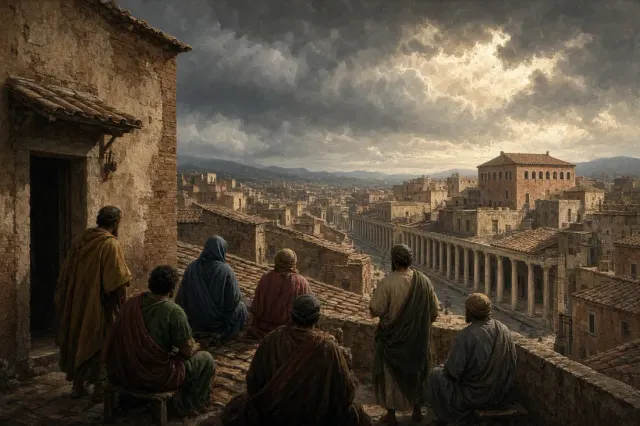
The scale stays cosmic, but the center of the paragraph is a cross. Christ is head of the church, beginning, and “firstborn from the dead,” so his preeminence now includes resurrection as well as creation. “All fulness” dwells in him, and the repeated language of “all things” carries reconciliation across earth and heaven. Yet Colossians does not describe that peace as an elevated principle floating above suffering. It names its means with almost jarring concreteness: “the blood of his cross.” The one through whom all things came to be is also the one whose death stands at the center of their reconciliation. That pairing keeps the letter from splitting a majestic Christ from a crucified Christ. Whatever debates surround the reach of “reconcile all things,” the paragraph itself makes one point unmistakable: supremacy is not achieved by avoiding the cross. The cosmic account reaches its climax at the place of execution.
Deep dive
The body is now identified as the church, with Christ as its head. The scope narrows from all creation to a particular community without changing the one at the center. He is the beginning and the firstborn from the dead, connecting his priority with resurrection as well as creation. The stated result is preeminence in everything, not merely a distinguished position within a larger spiritual hierarchy.
All fullness dwells in him, and reconciliation comes through him. The repeated "all things" reaches back to the creation language, extending the announcement of peace across heaven and earth. Interpretations differ over whether this points to the eventual salvation of every being or to a restored cosmic order that includes the defeat and subjection of hostile powers. The following warning about continuing in faith and the later language of judgment prevent the larger phrase from being treated as though it supplied an uncomplicated account of every individual's outcome.
The means of peace is the blood of his cross. That concrete phrase keeps the account from becoming a description of distant cosmic harmony detached from suffering and death. The one through whom all things were created is also the one through whose execution peace is made. Colossians does not replace the cross with an elevated picture of Christ; it places the cross at the center of that picture.
Words to trace: beginning, blood, body, church, cross, dead
Verse-by-verse path
- Colossians 1:18
“Beginning” is arche, which also means origin or ruler, and may recall “In the beginning” of Genesis 1:1. The first half of the passage called Christ firstborn of creation (verse 15); this verse calls him “firstborn from the dead”. “Have the preeminence” is proteuo, to be first, found only here.
- Colossians 1:19
“The Father” is supplied by the King James; the Greek can be read with “all the fulness” as the subject: in him all the fulness was pleased to dwell. The wording echoes the Greek of Psalm 68:16, where God is pleased to dwell on his chosen hill. The temple mountain has become a person.
- Colossians 1:20
“Having made peace” is eirenopoieo, peacemaking, the verb behind the “peacemakers” of Matthew 5:9, found only here. The order “things in earth, or things in heaven” reverses the “in heaven, and... in earth” of verse 16, as though reconciliation works from the ground up.
Colossians 1:18-20
King James Version18And he is the head of the body, the church: who is the beginning, the firstborn from the dead; that in all things he might have the preeminence.
19For it pleased the Father that in him should all fulness dwell;
20And, having made peace through the blood of his cross, by him to reconcile all things unto himself; by him, I say, whether they be things in earth, or things in heaven.
Colossians 1:21-23
Reconciliation Has a Personal Address and a Continuing Condition
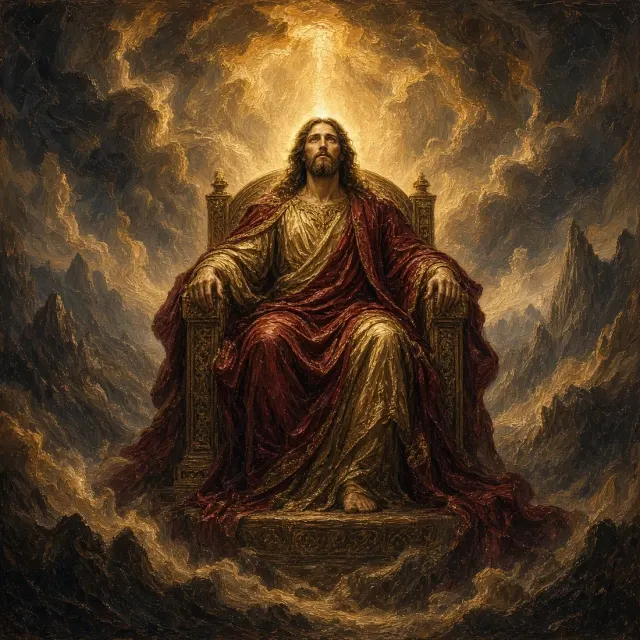
After speaking about reconciliation on the scale of “all things,” Colossians turns and says, in effect, this includes you. The Colossians’ former alienation is described in both mind and conduct, while reconciliation is attached to Christ’s “body of his flesh through death.” Nothing about the change is vague or merely psychological. The intended end is presentation as holy, unblameable, and unreproveable before God, but the sentence also contains an “if”: they are to continue grounded and settled in the faith, not moved away from the gospel’s hope. The passage does not allow either half to erase the other. Reconciliation is spoken of as accomplished, and continuing faith is spoken of as necessary. Paul then places his own ministry under the same gospel the Colossians have already heard. He offers no secret replacement message waiting beyond Epaphras’s teaching. The foundation remains the gospel that first reached them and has now drawn Paul into its service.
Deep dive
The movement from all things to the addressed community is immediate. Their former alienation involved the mind and wicked works, joining inward hostility with actual conduct. Reconciliation is not described as the discovery that the hostility had never mattered. It occurs through Christ's death, and the phrase "body of his flesh" makes that death stubbornly concrete.
The intended presentation is holy, unblameable, and beyond accusation in God's sight. That goal supplies the setting for the condition about continuing in faith, grounded and settled, without moving from the gospel's hope. The condition should neither be deleted in the interest of reassurance nor detached from the reconciliation just announced. Traditions differ over its place in a doctrine of perseverance, but the sentence itself holds accomplished reconciliation and continuing faith together.
Paul again describes the gospel in universal language, now as proclaimed throughout creation under heaven. This is an expansive claim about its reach and scope, not a travel log demonstrating that every individual had already heard. His own ministry belongs to that gospel rather than offering the Colossians a replacement for what reached them through Epaphras. The foundation under discussion is the message they have heard, not a secret stage of instruction still missing from it.
Words to trace: alienated, body, continue, creature, death, enemies
Verse-by-verse path
- Colossians 1:21
“Sometime” is 1611 English for formerly. The enmity is placed “in your mind”, dianoia, a hostility that begins in thinking and shows in deeds. The grammar of verses 21 and 22 breaks down in several manuscripts, which read “ye were reconciled” instead of “hath he reconciled”, a sign of how early scribes wrestled with it.
- Colossians 1:22
“The body of his flesh” is a doubled phrase, perhaps pressed against anyone who thought Christ’s body less than real. A Dead Sea Scroll commentary on Habakkuk uses the same Hebrew phrase. “Unreproveable” is anegkletos, one against whom no charge can be brought in court.
- Colossians 1:23
“Settled” is hedraios, seated firmly. “Moved away” is metakineo, to be shifted, as a boundary stone might be moved. “To every creature” is literally in all creation, an echo of the “all things” of verses 16 to 20. “I Paul” puts his name into the sentence, as in Ephesians 3:1.
Colossians 1:21-23
King James Version21And you, that were sometime alienated and enemies in your mind by wicked works, yet now hath he reconciled
22In the body of his flesh through death, to present you holy and unblameable and unreproveable in his sight:
23If ye continue in the faith grounded and settled, and be not moved away from the hope of the gospel, which ye have heard, and which was preached to every creature which is under heaven; whereof I Paul am made a minister;
Colossians 1:24-29
The Mystery Is Being Published, Not Protected from Ordinary Believers
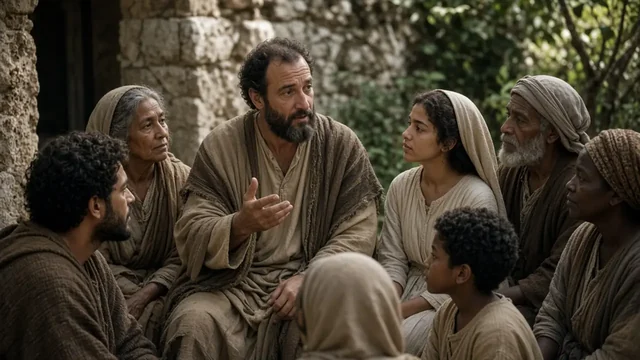
The “mystery” in Colossians is remarkable for how little effort Paul spends keeping it mysterious. It was hidden across ages and generations, but now it is “made manifest” to the saints, with its riches appearing among Gentiles in the announcement of Christ among them, the hope of glory. Paul’s suffering belongs to the cost of this ministry, not to an unfinished payment for forgiveness. The cross has already been named as the place where peace is made. His afflictions are instead tied to service for Christ’s body, the church, and to the labor of making the word fully known. Then comes the repeated phrase that punctures any idea of a spiritual aristocracy: “every man.” Warning, teaching, wisdom, and maturity are all directed toward each person. Paul can describe his own effort as labor and striving while, in the same sentence, describing God as the one working mightily in him. Human exertion and divine energy are not competitors here.
Deep dive
Paul rejoices in sufferings endured for the church and speaks of filling up what remains of Christ's afflictions in his own flesh. The expression is difficult, but its setting is his ministry for Christ's body. It is commonly understood as participation in the sufferings of Christ's people or the afflictions belonging to the mission before its completion. The paragraph does not say that Christ's cross failed to make peace or that Paul must supply unpaid forgiveness. Those claims would run against the reconciliation just described.
The mystery was hidden across earlier ages and generations but is now made manifest to the saints. Its significance lies in former concealment and present disclosure, not permanent incomprehensibility. Christ in or among the Gentile believers is the hope of glory. The plural address includes a community newly participating in riches once hidden from view.
Three repetitions of "every man" mark proclamation, warning, teaching, and the goal of maturity. The disclosed mystery does not create a small spiritual aristocracy above ordinary believers. Paul labors toward the maturity of each person in Christ. His strenuous effort and God's mighty working appear in the same sentence: divine energy does not make his labor imaginary, and his labor does not become an independent source of the result.
Words to trace: Christ, glory, mystery, afflictions, ages, behind
Verse-by-verse path
- Colossians 1:24
“Fill up” is antanapleroo, a triple compound found only here, to fill up in turn. The word “afflictions”, thlipsis, is never used in the New Testament for Christ’s saving death. Some connect the verse with the Jewish expectation of a set measure of suffering before the end, the woes of the Messiah; that link is a proposal.
- Colossians 1:25
“To fulfil the word of God” means to carry the preaching to completion, to give it its full reach. Romans 15:19 uses the same verb: from Jerusalem to Illyricum Paul had “fully preached the gospel of Christ”. The commission is, once more, given “for you”.
- Colossians 1:26
“Hid from ages and from generations” can be read in time, hidden through all past eras, or in persons, hidden from the aions, spiritual powers, and from human generations alike. “Now” is set against both, and the disclosure goes to “his saints”, not a select circle of them.
- Colossians 1:27
“God would make known” uses thelo, God willed it; the disclosure is God’s choice. “Christ in you” can equally be “Christ among you”, Christ present among the Gentiles, which fits the phrase “among the Gentiles” just before it. “The riches of the glory” is the phrase of Ephesians 1:18.
- Colossians 1:28
“Warning” is noutheteo, to put in mind, correction by word. “Perfect” is teleios, which in the mystery religions described the fully initiated; if the teaching troubling Colosse promised such a rank to a few, Paul answers with “every man” three times. “Present” is the paristemi of verse 22.
- Colossians 1:29
“Striving” is agonizomai, the athlete’s straining in the contest, and the theme returns at once in 2:1, “what great conflict I have”. The Greek of the last clause piles up its root, literally according to his energy that energises in me in power.
Colossians 1:24-29
King James Version24Who now rejoice in my sufferings for you, and fill up that which is behind of the afflictions of Christ in my flesh for his body’s sake, which is the church:
25Whereof I am made a minister, according to the dispensation of God which is given to me for you, to fulfil the word of God;
26Even the mystery which hath been hid from ages and from generations, but now is made manifest to his saints:
27To whom God would make known what is the riches of the glory of this mystery among the Gentiles; which is Christ in you, the hope of glory:
28Whom we preach, warning every man, and teaching every man in all wisdom; that we may present every man perfect in Christ Jesus:
29Whereunto I also labour, striving according to his working, which worketh in me mightily.
Questions to keep in mind while reading
- Identify the audience, problem, argument, command, and pastoral purpose.
- Follow connecting words so that one sentence remains inside the author’s reasoning.
- Distinguish a universal theological claim from an instruction shaped by a particular situation.
Text first
Where readers differ
The chapter summary begins with what the passage says and how its parts fit together. It does not assume one denomination has already settled every question. Where a conclusion depends on a tradition, literary theory, or historical reconstruction, that dependence is named openly.
The KJV text is presented first. Interpretive conclusions are labeled, and differences are introduced only when they help a reader understand why serious communities do not always reach the same answer.
Comparative interpretive notes for this chapter are in preparation. Until reviewed notes are ready, this page separates the KJV text from summary and application without claiming that serious readers agree on every question.
Questions beneath the surface
- What account of God, human freedom, responsibility, and the good life emerges from Colossians 1?
- Which tension does the chapter refuse to resolve quickly?
- What changes when the chapter is read as part of the whole canon rather than as an isolated moral lesson?
- Where might a sincere reader confuse a familiar tradition with something the text states directly?
Questions for serious personal contemplation
These open-ended questions make room for tension, honest response, prayer, and conclusions that remain accountable to the chapter.
Observe without rushing
What part of Colossians 1 makes you stop, feel unsettled, or feel surprised, and why?
Which detail in the passage would be easiest to overlook? How does that detail change your understanding?
Where do you see tension between what happens and this focus: A house church hearing that all creation, reconciliation, and the church hold together in the supremacy of Christ?
What important question does the passage leave open instead of resolving quickly?
Examine your inner life honestly
Which person, response, fear, or desire in the passage feels most like your own life right now?
What assumption about God, other people, or yourself does this text challenge?
Which part would you rather soften, avoid, or explain away too quickly? What might that reaction reveal?
If this Scripture could ask you one direct question, what do you think it would ask?
Respond with wisdom and courage
What do you need to remember, confess, grieve, thank God for, or trust after reading this passage?
How might another faithful person read this situation differently without ignoring the text?
What obedient response would be costly, uncomfortable, or slow, yet still faithful to Scripture?
What question will you carry into prayer this week, and which verses will you keep in front of you?
Music and video connected to the passage
Related media appears when its Scripture reference overlaps this study. Music and video can illuminate a theme while the biblical text remains the foundation.