The big picture
Jeremiah 44 is an argument over causation conducted among Judeans living throughout Egypt. Both Jeremiah and his opponents agree that Jerusalem has become a ruin. They disagree completely about why. The people defend worship of the queen of heaven by appealing to remembered prosperity: when they burned incense and poured offerings, they had food and security; after stopping, they suffered sword and famine. Jeremiah answers that the worship they credit with blessing was itself part of the disobedience that brought judgment after years of warning. The Book of Jeremiah makes the disagreement unusually clear because both sides interpret the same history. Their mouths then harden into competing commitments. The people vow to continue their offerings, and the Lord answers with an oath that judgment will reach them in Egypt. A small number will still escape and return to Judah, preserving the exception inside the severe warning. Pharaoh Hophra’s coming downfall becomes the sign that Egypt’s king is no more able than Zedekiah was to decide whose word will stand.
In this chapter
- Jerusalem Is the Opening Evidence Jeremiah 44:1-6
The chapter begins by widening the audience beyond Tahpanhes.
- The Remnant Repeats What Ruined the Land Jeremiah 44:7-14
The word “remnant” is made painfully concrete by naming men, women, children, and infants.
- The Queen of Heaven Receives Their Explanation Jeremiah 44:15-19
The people’s answer is no longer a request for clarification.
- The Same Incense, a Different Verdict Jeremiah 44:20-23
Jeremiah answers by repeating much of the people’s own evidence and reversing its meaning.
- An Oath Against Their Vows Jeremiah 44:24-30
The people have made vows with their mouths and carried them out with their hands, and the Lord answers those vows with an oath of his own.
Scripture beside the summary
Jeremiah · King James Version · 30Jeremiah 44:1-6
Jerusalem Is the Opening Evidence
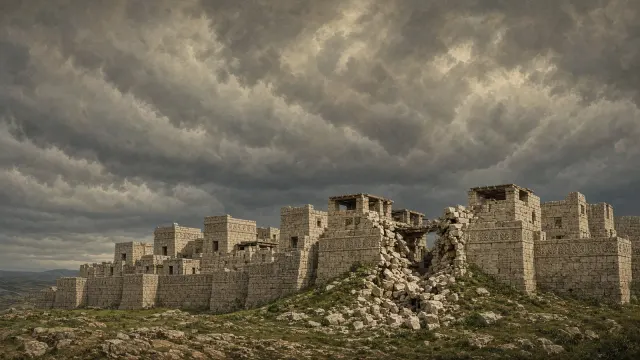
The chapter begins by widening the audience beyond Tahpanhes. Judeans are living at Migdol, Noph, Pathros, and elsewhere in Egypt, and the Book of Jeremiah addresses them together by pointing back to something they have already seen: Jerusalem and Judah lie desolate. The argument over cause starts from common evidence rather than disputed ruins. Jeremiah’s explanation links the devastation to worship of other gods despite repeated prophetic warnings. The familiar language of the Lord “rising early” and sending servants emphasizes persistence. Judgment was not the first communication. Appeal, warning, and refusal came before it. Incense is therefore not a small private devotional detail tucked away from public history. In this chapter it represents conduct practiced across generations and communities, exactly the conduct that will continue to be defended in Egypt. The ruined city enters the debate as evidence whose meaning is contested. Everyone can point to the same streets. The disagreement concerns what those streets prove about the worship that preceded their destruction.
Deep dive
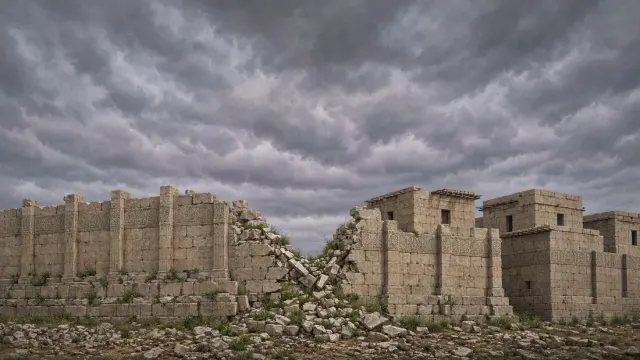
The geographical opening extends beyond the company at Tahpanhes. Migdol, Noph, and Pathros join the address, so the confrontation concerns Judeans settled in several Egyptian locations. Their departure from Judah has not removed the ruins of Jerusalem from the argument. Those ruins are evidence the hearers have themselves seen.
The explanation places destruction after repeated prophetic appeals. The phrase about "rising early" and sending servants emphasizes persistent initiative; judgment did not arrive as an unexplained first response. The contrast between that repeated sending and their refusal to incline an ear gives the historical review its shape. Incense is not a passing detail of private devotion here. Burning it to other gods identifies the practice that connected household and public life with the disobedience described. The remainder of the chapter will show the same practice continuing in Egypt, defended now by a competing account of why Judah fell.
Words to trace: anger, burn, cities, dwell, gods, incense
Verse-by-verse path
- Jeremiah 44:1
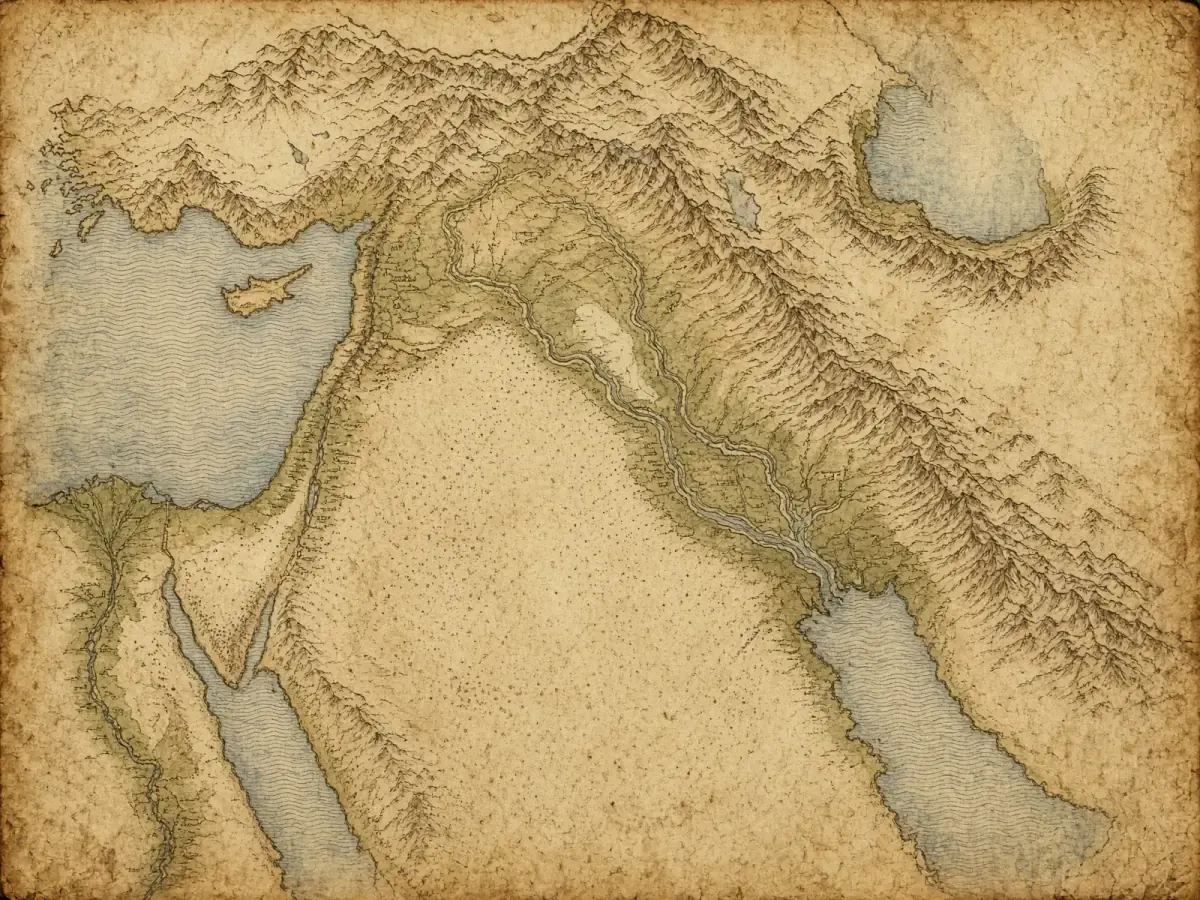
The places run from north to south. Migdol and Tahpanhes were frontier posts in the eastern Delta; Israel had camped “between Migdol and the sea” in Exodus 14:2. Noph is Memphis, near modern Cairo. Pathros is Upper Egypt, from an Egyptian phrase meaning “the southern land”. Judeans were spread along the whole length of the Nile.
- Jeremiah 44:2
“No man dwelleth therein” was made literally true by the listeners themselves. Gedaliah’s settlement had kept people in Judah; their flight to Egypt finished emptying it. The ruins they are asked to remember include the land they left behind a few months earlier.
- Jeremiah 44:3
“Whom they knew not” means gods with no history with them, gods who had done nothing for Israel. The phrase comes from Deuteronomy 32:17, “to gods whom they knew not, to new gods that came newly up”. The list, neither they, ye, nor your fathers, spans three generations of strangers.
- Jeremiah 44:4
“Oh” renders na, the Hebrew particle of pleading, please. The prophets’ whole message is put in God’s mouth as a plea: please, do not do this abominable thing that I hate. The word for abomination, to’evah, is the one Deuteronomy uses of practices the nations did.
- Jeremiah 44:5
The verb “burn incense” is the chapter’s keyword; the word occurs ten times in its thirty verses in the King James. Here it is what the prophets begged them to stop doing, and the next verses show it is exactly what they have gone on doing in Egypt.
- Jeremiah 44:6
Anger is “poured forth” and “kindled”: liquid and fire. The worship under discussion consists of drink offerings poured out and incense set alight, so the judgment is described in the same two elements as the offerings that provoked it.
Jeremiah 44:1-6
King James Version1The word that came to Jeremiah concerning all the Jews which dwell in the land of Egypt, which dwell at Migdol, and at Tahpanhes, and at Noph, and in the country of Pathros, saying,
2Thus saith the LORD of hosts, the God of Israel; Ye have seen all the evil that I have brought upon Jerusalem, and upon all the cities of Judah; and, behold, this day they are a desolation, and no man dwelleth therein,
3Because of their wickedness which they have committed to provoke me to anger, in that they went to burn incense, and to serve other gods, whom they knew not, neither they, ye, nor your fathers.
4Howbeit I sent unto you all my servants the prophets, rising early and sending them, saying, Oh, do not this abominable thing that I hate.
5But they hearkened not, nor inclined their ear to turn from their wickedness, to burn no incense unto other gods.
6Wherefore my fury and mine anger was poured forth, and was kindled in the cities of Judah and in the streets of Jerusalem; and they are wasted and desolate, as at this day.
Jeremiah 44:7-14
The Remnant Repeats What Ruined the Land
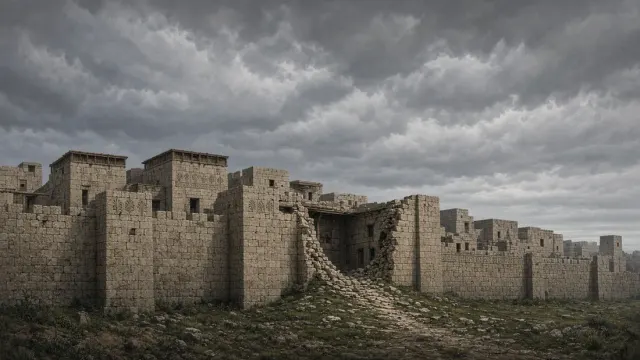
The word “remnant” is made painfully concrete by naming men, women, children, and infants. What remains after Jerusalem is not an abstract national idea but a vulnerable population capable of being reduced further. The Book of Jeremiah accuses that remnant of repeating in Egypt the worship that formed part of Judah’s earlier rebellion. Responsibility is spread across fathers, kings, royal wives, present hearers, and their wives, so the explanation cannot be pushed entirely onto one old administration. Then the language produces a deliberate collision. The refugees have “set their faces” toward Egypt, and the Lord says he will set his face against them. Their chosen direction meets a declared opposition. Sword, famine, and pestilence return as the vocabulary of judgment, making Egypt resemble the danger they meant to escape. Yet the severe statement about no return contains its own exception: some will escape. The chapter will later call them a small number. Collective failure is announced without requiring the text to erase every individual survivor.
Deep dive
The list of man, woman, child, and suckling makes the word "remnant" concrete. What remains is not only a political claim to Judah's future but a vulnerable human community. The review also distributes responsibility across generations and households: fathers, kings, royal wives, and the present hearers are all named. The accusation cannot be confined to a distant court whose wrongdoing supposedly ended when the monarchy collapsed.
A deliberate verbal confrontation follows. The refugees have set their faces to enter Egypt; the LORD declares that he will set his face against them. Their chosen direction is answered by a determined opposition. The sword, famine, and pestilence repeat the vocabulary of Jerusalem's destruction.
The sweeping warning about no return is qualified at the close of verse 14 by an exception for escapees. Verse 28 will identify a small number who return. The passage therefore denies the remnant's plan a successful collective future in Egypt without requiring the disappearance of every individual. Its own wording preserves that distinction.
Words to trace: Judah, land, Egypt, wickedness, dwell, famine
Verse-by-verse path
- Jeremiah 44:7
“Against your souls” means to your own harm. The list runs down from adults to “child and suckling”, the pair used in Lamentations 2:11 of infants fainting in Jerusalem’s streets. The remnant had fled to save these very children.
- Jeremiah 44:8
“That ye might cut yourselves off” states the result as though it were the purpose, a form of prophetic irony: they are behaving as if extinction were their aim. “The works of your hands” can mean idols, or here perhaps the cakes and offerings they made with their own hands.
- Jeremiah 44:9
“Wickedness” is said five times. “The wickedness of their wives” is literally “of his wives”, the wives of each king: Solomon’s foreign wives who turned his heart (1 Kings 11:4), Maachah and her Asherah image (1 Kings 15:13). The women are named because verse 19 will show them leading this worship.
- Jeremiah 44:10
“Humbled” is dukke’u, crushed or contrite, the root of Psalm 51:17’s “a broken and a contrite heart”. Not even the fall of Jerusalem has broken them. “Unto this day” means after everything: the siege, the fire, the murder at Mizpah.
- Jeremiah 44:11
“I will set my face against… and cut off” is the formula of the priestly law, where God sets his face against the one who eats blood or gives children to Molech and cuts him off (Leviticus 17:10, 20:3). The verdict is phrased as a sentence under Israel’s own statutes.
- Jeremiah 44:12
The verse turns the conditional of 42:15–18 into a statement. There it was “if ye wholly set your faces”; now they are the ones “that have set their faces”. The consequences, and the four words of disgrace, are carried over almost clause for clause.
- Jeremiah 44:13
“Punish” is paqad, to visit. The same verb meant a visit for good in 29:10, “I will visit you, and perform my good word”. Everything depends on which visit comes; for this community in Egypt, it will be the kind that came to Jerusalem.
- Jeremiah 44:14
“They have a desire to return” is literally “they lift up their soul”, an idiom of longing. The refugees long for the home they chose to leave. The final clause sounds circular, but it states that the only ones to return will be those who escape.
Jeremiah 44:7-14
King James Version7Therefore now thus saith the LORD, the God of hosts, the God of Israel; Wherefore commit ye this great evil against your souls, to cut off from you man and woman, child and suckling, out of Judah, to leave you none to remain;
8In that ye provoke me unto wrath with the works of your hands, burning incense unto other gods in the land of Egypt, whither ye be gone to dwell, that ye might cut yourselves off, and that ye might be a curse and a reproach among all the nations of the earth?
9Have ye forgotten the wickedness of your fathers, and the wickedness of the kings of Judah, and the wickedness of their wives, and your own wickedness, and the wickedness of your wives, which they have committed in the land of Judah, and in the streets of Jerusalem?
10They are not humbled even unto this day, neither have they feared, nor walked in my law, nor in my statutes, that I set before you and before your fathers.
11Therefore thus saith the LORD of hosts, the God of Israel; Behold, I will set my face against you for evil, and to cut off all Judah.
12And I will take the remnant of Judah, that have set their faces to go into the land of Egypt to sojourn there, and they shall all be consumed, and fall in the land of Egypt; they shall even be consumed by the sword and by the famine: they shall die, from the least even unto the greatest, by the sword and by the famine: and they shall be an execration, and an astonishment, and a curse, and a reproach.
13For I will punish them that dwell in the land of Egypt, as I have punished Jerusalem, by the sword, by the famine, and by the pestilence:
14So that none of the remnant of Judah, which are gone into the land of Egypt to sojourn there, shall escape or remain, that they should return into the land of Judah, to the which they have a desire to return to dwell there: for none shall return but such as shall escape.
Jeremiah 44:15-19
The Queen of Heaven Receives Their Explanation
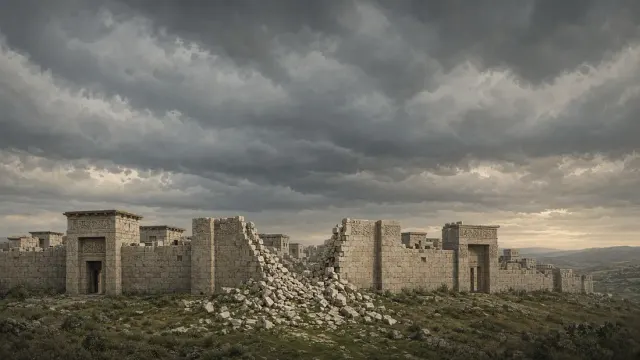
The people’s answer is no longer a request for clarification. They tell Jeremiah directly that they will not listen and will instead perform what has gone out of their own mouths. Their defense of the queen of heaven rests on remembered experience. They associate the period of incense, drink offerings, and cakes with full stomachs and security, then connect the abandonment of that worship with deprivation, sword, and famine. The Book of Jeremiah lets their causal argument stand in full before answering it. The title “queen of heaven” is all the chapter itself gives; it does not identify a proper foreign name that must be supplied from outside. The social pattern is also broader than isolated female devotion. Men are described as knowing what their wives did, and the women insist the offerings were not made without their men. Household participation is part of the defense. Their disagreement with Jeremiah is therefore public, shared, and historical: they see the same calamity and interpret it as proof that the old worship should have continued.
Deep dive
The response no longer claims that Jeremiah has misunderstood a sincere request for guidance. It rejects the word he has spoken and substitutes a commitment to what comes from their own mouths. Their appeal is to remembered experience: food and security accompanied the cult, while shortage and death followed its abandonment. They do not deny the calamity. They use it as evidence for the opposite religious conclusion.
The name "queen of heaven" is a cult title in this passage; the chapter does not identify the deity with a specific foreign proper name. Its attention falls on incense, drink offerings, cakes, and the community defending them. The men are introduced as knowing what their wives have done, and the women's reply insists that the offerings were not made without their men. That detail prevents the disagreement from being reduced to a secret practice by isolated women. Household participation is part of their defense, and shared responsibility is part of Jeremiah's answer.
Words to trace: drink, incense, offerings, heaven, pour, queen
Verse-by-verse path
- Jeremiah 44:15
The crowd is a qahal gadol, a great assembly, perhaps gathered for a festival. Pathros lay far to the south, and at Elephantine in Upper Egypt papyri of the fifth century BC show a Jewish garrison with its own temple of YHW, whose documents mention other deities alongside him.
- Jeremiah 44:16
“The word that thou hast spoken unto us in the name of the LORD”: they accept that Jeremiah speaks in the LORD’s name and still refuse to listen. It is the most direct refusal of a prophet in the book, spoken to his face.
- Jeremiah 44:17
In 7:18 the whole family served the queen of heaven: children gathered wood, fathers lit the fire, women kneaded dough. Most scholars identify her with Ishtar or Astarte, the goddess linked with the planet Venus, though the Book of Jeremiah uses only the title. “Plenty of victuals” is literally “we were filled with bread”.
- Jeremiah 44:18
The time “since we left off” most likely points to Josiah’s reform of 622 BC, when such cults were purged (2 Kings 23:4–14). After it came Josiah’s death at Megiddo, vassalage and siege. It is a reading of their chronology: the people date their disasters from the reform.
- Jeremiah 44:19
“Cakes to worship her” may mean cakes “to make her image”, shaped like the goddess; moulds of that kind have been excavated at Mari on the Euphrates. “Without our men” invokes the law of Numbers 30, under which a wife’s vow stood only if her husband did not annul it. Their husbands had consented.
Jeremiah 44:15-19
King James Version15Then all the men which knew that their wives had burned incense unto other gods, and all the women that stood by, a great multitude, even all the people that dwelt in the land of Egypt, in Pathros, answered Jeremiah, saying,
16As for the word that thou hast spoken unto us in the name of the LORD, we will not hearken unto thee.
17But we will certainly do whatsoever thing goeth forth out of our own mouth, to burn incense unto the queen of heaven, and to pour out drink offerings unto her, as we have done, we, and our fathers, our kings, and our princes, in the cities of Judah, and in the streets of Jerusalem: for then had we plenty of victuals, and were well, and saw no evil.
18But since we left off to burn incense to the queen of heaven, and to pour out drink offerings unto her, we have wanted all things, and have been consumed by the sword and by the famine.
19And when we burned incense to the queen of heaven, and poured out drink offerings unto her, did we make her cakes to worship her, and pour out drink offerings unto her, without our men?
Jeremiah 44:20-23
The Same Incense, a Different Verdict
Jeremiah answers by repeating much of the people’s own evidence and reversing its meaning. Yes, the incense was burned in Judah’s cities and Jerusalem’s streets. Yes, fathers, kings, princes, and ordinary people participated. The Book of Jeremiah does not deny the practice was longstanding or that periods of prosperity overlapped with it. Jeremiah’s claim is that those facts do not prove divine approval. The Lord remembered the worship, and the accumulation of conduct eventually reached the point described as something he could “no longer bear.” That wording introduces duration into the argument. Earlier prosperity may coexist with delayed judgment, so the sequence the people cite cannot by itself establish that the queen of heaven produced their well being. Jeremiah places the later disaster inside a longer history of warnings, disobedience, and remembered offense. The repeated “because” and “therefore” make the clash explicit. Nobody is arguing about whether Judah was devastated. They are arguing over which religious explanation best accounts for the devastation they all acknowledge.
Deep dive
Jeremiah repeats the locations and participants from their defense: Judah's cities, Jerusalem's streets, fathers, kings, princes, and people. He does not answer by changing the subject or by denying that the practice had a long history. He contests what that history proves. The activity they treat as protection is the very activity the LORD remembered in judgment.
The statement that the LORD could "no longer bear" their conduct introduces duration into the argument. The presence of earlier prosperity did not, in Jeremiah's explanation, demonstrate approval, and the later arrival of disaster did not prove that abandoning the cult caused it. Their reading depended on the sequence of remembered conditions; his reply places those conditions within a longer history of warnings and disobedience. The repeated "because" and "therefore" of verse 23 make the disagreement explicit. These are competing explanations of the same ruined land, not competing reports about whether it was ruined.
Words to trace: LORD, people, burned, evil, incense, land
Verse-by-verse path
- Jeremiah 44:20
In chapter 42 the answer took ten days. Here Jeremiah replies at once, to “all the people which had given him that answer”. There is nothing new to ask God; this answer has been given many times over forty years.
- Jeremiah 44:21
“Came it not into his mind” is literally “did it not come up upon his heart”. The same idiom was used of child sacrifice in 7:31 and 19:5: “neither came it into my heart”. Their incense did come up into God’s heart, but as something remembered against them.
- Jeremiah 44:22
“Could no longer bear” uses nasa, to carry, the same verb that forms the Hebrew for forgiving, “bearing iniquity” (Exodus 34:7). The long patience of God is pictured as a load carried until it could be carried no longer.
- Jeremiah 44:23
Law, statutes, testimonies: torah, chuqqot, edot, the triad of Deuteronomy (4:45). This is the only place the Book of Jeremiah uses the word “testimonies”. “Because” comes twice and “therefore” once, as if the argument had been set out on a line.
Jeremiah 44:20-23
King James Version20Then Jeremiah said unto all the people, to the men, and to the women, and to all the people which had given him that answer, saying,
21The incense that ye burned in the cities of Judah, and in the streets of Jerusalem, ye, and your fathers, your kings, and your princes, and the people of the land, did not the LORD remember them, and came it not into his mind?
22So that the LORD could no longer bear, because of the evil of your doings, and because of the abominations which ye have committed; therefore is your land a desolation, and an astonishment, and a curse, without an inhabitant, as at this day.
23Because ye have burned incense, and because ye have sinned against the LORD, and have not obeyed the voice of the LORD, nor walked in his law, nor in his statutes, nor in his testimonies; therefore this evil is happened unto you, as at this day.
Jeremiah 44:24-30
An Oath Against Their Vows
The people have made vows with their mouths and carried them out with their hands, and the Lord answers those vows with an oath of his own. The Book of Jeremiah does not treat the statement “ye will surely accomplish your vows” as approval. It recognizes a settled course and immediately places divine judgment against it. The Lord swears by his great name that the familiar profession “The Lord GOD liveth” will no longer continue among this condemned Judean community in Egypt as though its worship and covenant standing remained untouched. The promise to “watch over” them also reverses earlier restoration language: here the watching is for calamity rather than good. Still, the small number who escape the sword and return to Judah are explicitly preserved within the warning. The final question is whose words will stand. Pharaoh Hophra’s coming delivery into the hands of his enemies serves as the sign, and the comparison with Zedekiah makes the point. Egypt’s ruler cannot guarantee the refuge any more than Judah’s king could guarantee Jerusalem.
Deep dive
Their mouths and hands have agreed: the people have both promised the offerings and performed them. The declaration that they will accomplish their vows recognizes that settled course; it does not endorse the worship. It is immediately followed by an opposing oath. The LORD swears by his own name that the familiar profession of his living presence will no longer continue among this condemned community as though its worship were unchanged.
The promise to "watch over them" is given a severe reversal: for calamity rather than good. Yet the small number who escape and return to Judah remain explicitly within the word. The final test is expressed as "whose words shall stand", bringing the dispute back to the rival claims made in the confrontation.
Pharaoh Hophra's delivery to his enemies will be the sign. The comparison with Zedekiah is precise: the ruler of the hoped-for refuge is no more beyond overthrow than Judah's king was. This verse does not name Hophra's enemies or say that Nebuchadnezzar personally kills him. It announces the failure of the royal protection on which the refugees' choice has rested.
Words to trace: Egypt, Judah, land, LORD, hand, surely
Verse-by-verse path
- Jeremiah 44:24
“And to all the women”: the women are singled out as the leaders of this worship. This is the last speech Jeremiah is recorded as giving to his people. The book’s remaining chapters are either dated earlier or are oracles on the nations.
- Jeremiah 44:25
Some of the Hebrew verbs addressed here are feminine plural, spoken to the women in particular. “Ye will surely accomplish your vows” is heavy irony: carry on, then. The word vow appears four times in the verse, with every form of the verb for keeping it.
- Jeremiah 44:26
God swears by his own name, as in Genesis 22:16. “The Lord GOD liveth” is the oath formula Jeremiah had required in 4:2, to be sworn “in truth, in judgment, and in righteousness”, and had heard sworn falsely in 5:2. In Egypt it will no longer be sworn at all.
- Jeremiah 44:27
“Watch over” is shoqed, the verb of the almond rod at Jeremiah’s call: “I will hasten my word” (1:11–12), where the almond tree, shaqed, puns on the watching. In 31:28 God promised to watch over Israel to build; here the watch is set against the Judeans in Egypt.
- Jeremiah 44:28
“A small number” is literally “men of number”, few enough to be counted. Deuteronomy 4:27 had warned that Israel would be “left few in number among the heathen”. The contest of words is phrased as a court verdict: whose word will stand, mine or theirs.
- Jeremiah 44:29
A sign given in advance, to be checked later, the way Jeremiah’s death sentence on Hananiah was checked in 28:16–17. “In this place” has been Jeremiah’s phrase for Jerusalem throughout the book; now it means Egypt.
- Jeremiah 44:30
Pharaoh Hophra, the Egyptian Wahibre and Herodotus’s Apries, lost his throne after a failed campaign in Libya around 570 BC, when his own army made Amasis king. Herodotus (2.169) says the Egyptians later strangled him. Zedekiah’s ally and the Judeans’ refuge fell to his own people.
Jeremiah 44:24-30
King James Version24Moreover Jeremiah said unto all the people, and to all the women, Hear the word of the LORD, all Judah that are in the land of Egypt:
25Thus saith the LORD of hosts, the God of Israel, saying; Ye and your wives have both spoken with your mouths, and fulfilled with your hand, saying, We will surely perform our vows that we have vowed, to burn incense to the queen of heaven, and to pour out drink offerings unto her: ye will surely accomplish your vows, and surely perform your vows.
26Therefore hear ye the word of the LORD, all Judah that dwell in the land of Egypt; Behold, I have sworn by my great name, saith the LORD, that my name shall no more be named in the mouth of any man of Judah in all the land of Egypt, saying, The Lord GOD liveth.
27Behold, I will watch over them for evil, and not for good: and all the men of Judah that are in the land of Egypt shall be consumed by the sword and by the famine, until there be an end of them.
28Yet a small number that escape the sword shall return out of the land of Egypt into the land of Judah, and all the remnant of Judah, that are gone into the land of Egypt to sojourn there, shall know whose words shall stand, mine, or theirs.
29And this shall be a sign unto you, saith the LORD, that I will punish you in this place, that ye may know that my words shall surely stand against you for evil:
30Thus saith the LORD; Behold, I will give Pharaoh-hophra king of Egypt into the hand of his enemies, and into the hand of them that seek his life; as I gave Zedekiah king of Judah into the hand of Nebuchadrezzar king of Babylon, his enemy, and that sought his life.
Questions to keep in mind while reading
- Identify the historical crisis, covenant failure, warning, and promised hope.
- Distinguish the prophet’s immediate audience from later biblical connections.
- Do not turn present-day headlines into confident fulfillment claims without textual evidence.
Text first
Where readers differ
The chapter summary begins with what the passage says and how its parts fit together. It does not assume one denomination has already settled every question. Where a conclusion depends on a tradition, literary theory, or historical reconstruction, that dependence is named openly.
The KJV text is presented first. Interpretive conclusions are labeled, and differences are introduced only when they help a reader understand why serious communities do not always reach the same answer.
Comparative interpretive notes for this chapter are in preparation. Until reviewed notes are ready, this page separates the KJV text from summary and application without claiming that serious readers agree on every question.
Questions beneath the surface
- What account of God, human freedom, responsibility, and the good life emerges from Jeremiah 44?
- Which tension does the chapter refuse to resolve quickly?
- What changes when the chapter is read as part of the whole canon rather than as an isolated moral lesson?
- Where might a sincere reader confuse a familiar tradition with something the text states directly?
Questions for serious personal contemplation
These open-ended questions make room for tension, honest response, prayer, and conclusions that remain accountable to the chapter.
Observe without rushing
What part of Jeremiah 44 makes you stop, feel unsettled, or feel surprised, and why?
Which detail in the passage would be easiest to overlook? How does that detail change your understanding?
Where do you see tension between what happens and this focus: Jeremiah 44 develops its own movement around Judah, land, LORD, Egypt, incense?
What important question does the passage leave open instead of resolving quickly?
Examine your inner life honestly
Which person, response, fear, or desire in the passage feels most like your own life right now?
What assumption about God, other people, or yourself does this text challenge?
Which part would you rather soften, avoid, or explain away too quickly? What might that reaction reveal?
If this Scripture could ask you one direct question, what do you think it would ask?
Respond with wisdom and courage
What do you need to remember, confess, grieve, thank God for, or trust after reading this passage?
How might another faithful person read this situation differently without ignoring the text?
What obedient response would be costly, uncomfortable, or slow, yet still faithful to Scripture?
What question will you carry into prayer this week, and which verses will you keep in front of you?
Music and video connected to the passage
Related media appears when its Scripture reference overlaps this study. Music and video can illuminate a theme while the biblical text remains the foundation.