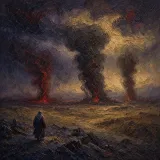
The big picture
Two messengers reach Sodom, where a violent crowd threatens the visitors. Lot's household is urged to escape before judgment. The chapter ends in an isolated cave, showing that survival does not automatically resolve fear or moral disorder.
Central truth
The LORD judges Sodom's grave wickedness and mercifully brings Lot out, yet the rescue is followed by disobedience, loss, fear, and further sexual wrongdoing within Lot's family.
The study notes have a page of their own
The movement by movement analysis, the words to trace, the verse by verse notes and where readers differ are written for someone studying alone. They are on the Deep Personal Reflections page for this chapter. This page is the lesson.
A chapter-specific teaching brief
These anchors come from this chapter itself. They help a teacher use the Level 1 overview, the Level 2 study, and the Scripture text as one lesson.
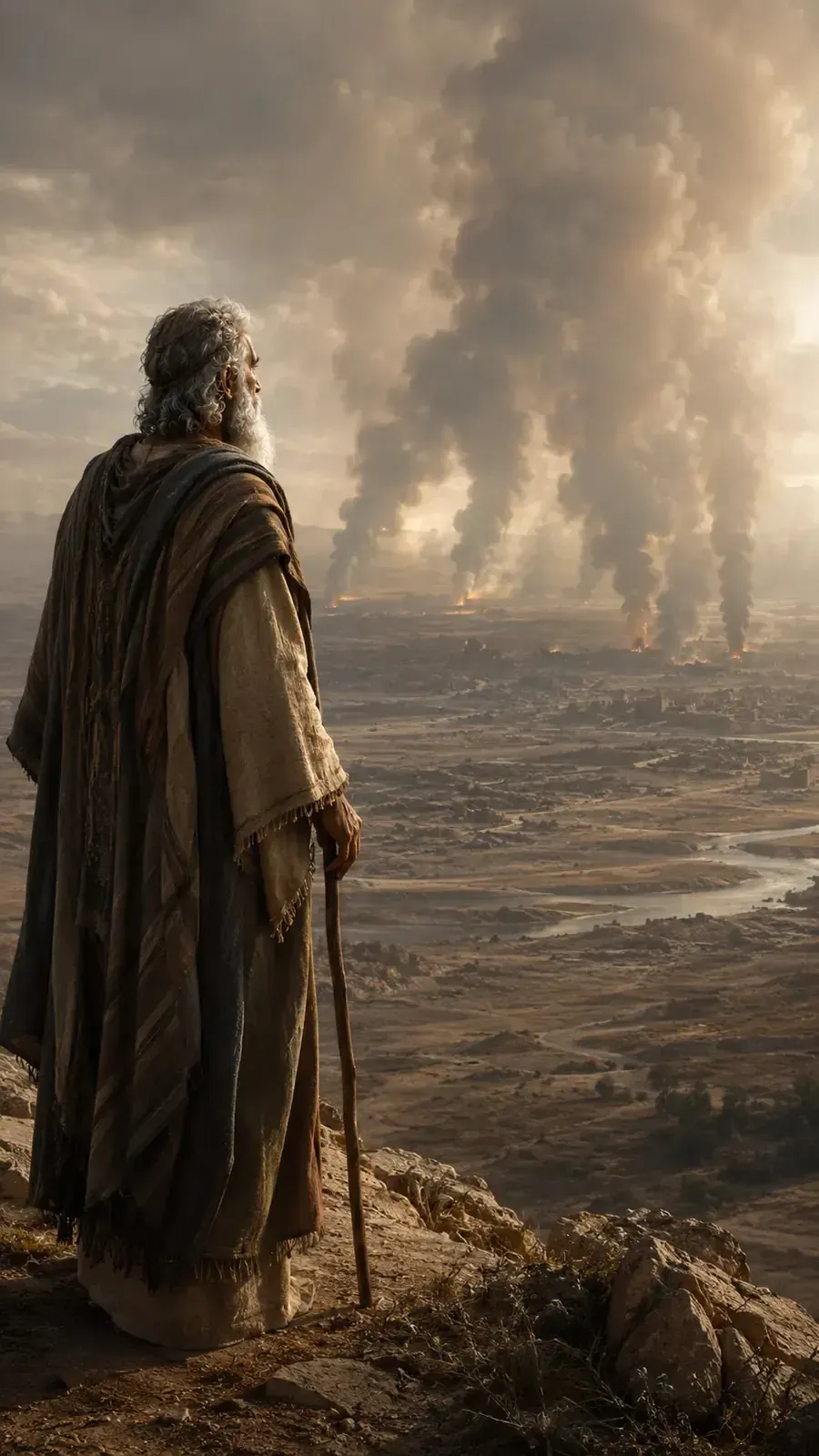
Open with the chapter’s first image
Genesis 19:1: “And there came two angels to Sodom at even; and Lot sat in the gate of Sodom: and Lot seeing them rose up to meet them; and he bowed himself with his face…”
Slow down at the turning point
Genesis 19:20: “Behold now, this city is near to flee unto, and it is a little one: Oh, let me escape thither, (is it not a little one?) and my soul shall live.”
Keep this word trail visible
father, city, daughters, LORD, door, night
What to explain, in order
Teach the passage in this order. Each step names the verses it rests on, so every point can be shown in the text before it is applied.
Genesis 19:1-3
Begin at the gate, with Abraham's tent in mind
Start by setting Lot at the gate of Sodom beside Abraham at his tent door in 18:1-8. Both see visitors, both bow, both press hospitality and prepare food. Lot "pressed upon them greatly" (19:3) because he knows what the street is at night; that is the first hint of danger. Explain that sitting in the gate suggests Lot has become a man of some standing in the city he once only pitched toward (13:12). Teach this first because the night that follows is the collapse of the very thing Lot is trying to offer.
Genesis 19:4-11
Name the violence and the indefensible offer
Read 19:4-11 once, plainly, without voices. Explain "know" in 19:5 from 19:8, where the same word is used of the daughters: the crowd intends sexual assault on the guests. Say clearly that Lot's offer of his daughters is wrong, and that the text gives it no approval; the crowd turns on Lot instead. Then point to the reversal in 19:10-11: the guests protect their host, pull him inside and blind the attackers. This is the hardest part of the chapter, so give it here, early, before learners are tired, and keep the content notice in place.
Genesis 19:12-22
Mercy that takes hold of a lingering man
Now the visitors say why they came: "the cry of them is waxen great before the face of the LORD" (19:13), the same outcry of 18:20-21. Lot warns his sons in law, "But he seemed as one that mocked" (19:14). At dawn he still lingers, and 19:16 is the theological centre of the chapter: hands take hold of four people, "the LORD being merciful unto him". Explain that the mercy is named before Lot has done anything right. His bargaining for Zoar in 19:18-22 shows a man rescued but still afraid, and God grants even that request.
Genesis 19:23-29
Judgement, a backward look, and a remembered prayer
Read the destruction in 19:24-25 as the Book of Genesis gives it: sudden, total, and from the LORD. Then slow down on two figures. Lot's wife looks back and becomes a pillar of salt (19:26); explain that the command of 19:17 was "look not behind thee", so the issue is disobedience, and that her inner motive is not told. Abraham returns to the place of his prayer and sees only smoke (19:27-28). Teach 19:29 last in this step, because it ties the whole rescue to Abraham's intercession: God remembered Abraham, and so Lot was sent out.
Genesis 19:30-38
The cave: reported, not approved
Lot leaves Zoar because he is afraid, though Zoar was spared at his own request (19:30). In the cave the elder daughter reasons that no man is left (19:31), which is false, and the daughters make their father drunk on two nights. Read this section briefly and soberly. Explain that the repeated line about Lot not perceiving is the text's report, not an excuse it offers, and that Leviticus 18 later names this act as forbidden. End on 19:37-38: Moab and Ammon begin here, and they will return in Numbers, Deuteronomy and Ruth.
Where learners get stuck
The misreadings this passage tends to produce, and how to answer each from the text.
"Lot was a hero because he protected his guests at any cost."
Lot does go out and shut the door (19:6), and hospitality mattered. But the cost he proposes is borne by his daughters, not by himself (19:8), and the plan fails: the guests pull Lot back inside and blind the crowd (19:10-11). 2 Peter 2:7-8 calls Lot righteous and vexed by what he saw, which is a verdict on the man in Sodom, not an endorsement of this offer. Teach the difference clearly so no learner hears that sacrificing one vulnerable person to protect another is faithful.
"Lot's wife was turned into salt just for being curious."
The command was explicit and urgent: "look not behind thee, neither stay thou in all the plain" (19:17). Her looking back from behind him (19:26) is disobedience to a word given for her rescue, at the moment the city was being overthrown. Genesis does not tell us what she felt, and teachers should not invent it. Jesus uses her as a warning in Luke 17:32, "Remember Lot's wife", about clinging to the life being left. Keep the point on obedience to rescue, not on punished curiosity.
"Sodom was destroyed for one single sin, and the Bible never says anything else about it."
Genesis speaks of a great cry against the city (18:20; 19:13) and shows a crowd of every age intending to assault strangers (19:4-9). Later Scripture adds other words: Ezekiel 16:49-50 names pride, "fulness of bread", idleness and neglect of the poor and needy, along with abomination, and Jude 7 speaks of fornication and "going after strange flesh". Read all of these passages as they stand rather than shrinking Sodom to one fault. The broader point for the room is that the cry of the oppressed reaches God.
"The daughters had no choice, so what they did was acceptable."
Their fear is reported (19:31), but their premise is wrong: Zoar, a living city, had just been spared nearby (19:21-23), and God had sent no word that the human race had ended. The plan required deceiving and intoxicating their father on two nights (19:32-35). The Book of Genesis neither commands nor praises it, and Leviticus 18:7 forbids it. Explain that understanding someone's fear is not the same as calling their action right, and keep the discussion brief and age appropriate.
Learning objectives
- Identify the mob's threatened violence and Lot's indefensible proposal.
- Trace the angels' protective actions toward Lot's household.
- Explain mercy as the stated reason for taking Lot by the hand.
- Connect Lot's rescue with God's remembering Abraham.
- Distinguish the daughters' stated reasoning from the account's endorsement.
- Apply clear limits against reenactment, victim-blaming, and modern disaster claims.
Teacher preparation
- Read Genesis 18:20–33 and 13:12–13 to connect the outcry, Abraham's appeal, and Lot's earlier location.
- Prepare a brief content notice covering threatened sexual assault, the proposed surrender of daughters, destruction, and incest.
- Explain "know" in 19:5 through the sexual sense clarified by verse 8; do not reduce the mob's demand to polite acquaintance.
- Distinguish the sons-in-law wording in verse 14 from the two daughters present in verse 15; acknowledge household details not fully explained.
- Provide a non-speaking participation option; never dramatize the assault, assign victim roles, or request disclosures of sexual harm.
Evidence and interpretation checks
Explicit
Locate Genesis 19:4–11 and 16: the mob threatens assault, Lot offers his daughters, and the visitors rescue him and later lead his family out.
Scripture-supported
Use 2 Peter 2:7–8 with Genesis 19:8; Lot's later description as righteous does not turn every action reported here into a moral example.
Strong inference
Compare Genesis 19:16 with 29: rescue is grounded in expressed mercy and God's remembering Abraham, not in a flawless escape performance.
Possible or traditional reading
Present specific explanations of Lot's wife's inner motive in Genesis 19:26 as inference; Luke 17:31–33 supplies a later warning about looking back.
Limit
State that Genesis 19:1–38 authorizes neither sexual coercion nor identifying a modern disaster as God's judgment; the daughters' claim in 19:31 is their speech.
Discussion with answer guidance
1. What exposes the mob's demand as violence rather than ordinary hospitality failure?
What a good answer contains
The men of the city surround the house, "both old and young, all the people from every quarter" (19:4), and demand the guests be brought out "that we may know them" (19:5). Lot's own reply, "do not so wickedly" (19:7), and his offer of daughters who "have not known man" (19:8) show the sexual sense of the word. Then come threats, "now will we deal worse with thee, than with them", and an attempt to break the door (19:9). A weak answer calls this rudeness to visitors; the text describes an intended assault by a crowd.
Show teacher guidance
Read verses 4–9: coercive sexual intent, threats, and pressure against the door. Do not soften the demand or excuse Lot's proposed substitute victims.
2. Who is actually protecting whom at the doorway?
What a good answer contains
Lot goes out and shuts the door behind him (19:6), which looks like protection, but his offer in 19:8 hands two other vulnerable people to the same danger, and the crowd rejects him anyway. It is the guests who act: they "pulled Lot into the house to them, and shut to the door" (19:10) and strike the attackers with blindness (19:11). A good answer sees that the rescuers are the ones Lot thought he was rescuing, and refuses to praise the offer of his daughters as courage.
Show teacher guidance
Compare Lot's attempted intervention with verses 10–11. The guests pull him inside and stop the attackers; his proposal has not saved the situation.
3. What happens while Lot hesitates to leave?
What a good answer contains
He lingers, even after a night of warnings and with the sun about to rise (19:15). The visitors do not wait for him to find his resolve: "the men laid hold upon his hand, and upon the hand of his wife, and upon the hand of his two daughters" and set them outside the city (19:16). The verse names the reason in the middle of the action, "the LORD being merciful unto him". The strong answer notices that the rescue is carried out by hands that take hold, not by Lot's speed or his merit.
Show teacher guidance
Read verses 15–16. The visitors take four people by the hand, and the passage explicitly identifies the LORD's mercy.
4. How are Zoar, the backward look, and Abraham's view distinguished?
What a good answer contains
Zoar is spared because Lot asks for it: he fears the mountain and pleads for the little city, and the request is granted (19:18-22). His wife is outside the city with the others, but she "looked back from behind him, and she became a pillar of salt" (19:26), against the command of 19:17. Abraham, far away, rises early, returns to where he had stood before the LORD, and sees only the smoke rising "as the smoke of a furnace" (19:27-28). Good answers keep the three apart: a granted request, a disobeyed command, and a witness who had prayed.
Show teacher guidance
Trace verses 17–29: Zoar is spared at Lot's request, his wife disobeys, and Abraham sees the aftermath from elsewhere.
5. Does the cave account approve the daughters' solution to preserving offspring?
What a good answer contains
No. The daughters give their own reason, that "there is not a man in the earth to come in unto us" (19:31), and the plan is theirs; God gives no instruction anywhere in 19:30-38. Their reason is also mistaken, since Zoar had just been spared. The Book of Genesis reports the wine, the two nights and the twice repeated line that Lot "perceived not when she lay down, nor when she arose" (19:33, 35), and it names the sons, Moab and Ben-ammi. A weak answer reads silence as approval; Leviticus 18:7 later forbids exactly this.
Show teacher guidance
Read verses 30–38 as reported reasoning and action, not divine instruction. Name the incest and Lot's stated lack of awareness without embellishment.
6. How do Lot's wife and the cave aftermath complicate the account of his rescue?
What a good answer contains
The rescue is real and it is God's: "the LORD being merciful unto him" (19:16) and "God remembered Abraham, and sent Lot out of the midst of the overthrow" (19:29). Yet the family that leaves Sodom loses the wife on the way (19:26), loses Zoar to fear (19:30), and ends in a cave with drunkenness and incest. A good answer holds both: mercy does not wait for a worthy family, and being brought out does not mean the damage of the city has been left behind.
Show teacher guidance
Hold verses 16 and 29 beside 26 and 30–38. Mercy is real, but loss and wrongdoing continue after escape.
Responsible application
Heart and habits
Ask learners to evaluate a fictional decision made from fear and assumed lack of alternatives; distinguish explanation from moral justification.
Relationships and community
State how a community must refuse to sacrifice one vulnerable person's safety for another's protection; anchor the discussion in verse 8.
Reading disaster responsibly
Draft a response to a fictional claim that a present-day catastrophe proves its victims were Sodom; identify the missing divine authorization.
Session plans
Two timings of the same lesson. The shorter keeps the reading, the central discussion and one response; the longer gives the confusions and the application their own time.
45 minutes
Boundaries and the outcry
Give the content notice, offer a silent option, and read 18:20-21 so the room knows why the visitors came to Sodom.
The night at the door
Read 19:1-11 plainly. Take questions one and two, then confusion one, keeping the focus on who actually protects whom.
Taken by the hand
Read 19:12-22. Ask question three and write the phrase about the LORD being merciful on the board.
Smoke and salt
Read 19:23-29. Use question four and confusion two, and end the step on 19:29, God remembering Abraham.
The cave, briefly
Summarise or read 19:30-38 as fits the group. Answer question five in two or three sentences and do not discuss detail.
Handout and prayer
Read the key verse together, give out the sheet, and pray for all who live with violence done to them.
90 minutes
Boundaries and the two tents
Give the content notice and the silent option. Read 18:1-8 quickly so learners can compare Abraham's welcome with Lot's in 19:1-3.
The night at the door
Read 19:1-11. Take questions one and two. Explain the word know from 19:8 and give confusion one its full answer.
Mercy at dawn
Read 19:12-22. Take question three. Ask the group to list every action of the visitors and every action of Lot in 19:15-22.
The overthrow and the witness
Read 19:23-29 and Luke 17:28-33. Use question four and confusion two, then read 19:29 beside 18:23-33.
What later Scripture says
Read Ezekiel 16:49-50, Jude 7 and 2 Peter 2:6-9 and work through confusion three without letting any one passage silence the others.
The cave and its legacy
Read 19:30-38 soberly. Take questions five and six and confusion four, then note Moab and Ammon in Ruth 1:4 and Deuteronomy 23:3.
Application
Use the application on not sacrificing one vulnerable person for another, or the one on reading disasters responsibly.
Handout and prayer
Read the key verse, point to the take-home line, and pray for safety and mercy for those harmed by others.
Adapting the lesson
Children
Tell the account in outline only: wicked men wanted to hurt visitors, God's messengers kept Lot's family safe and led them out by the hand, and God judged the city. Do not describe the crowd's intention or the cave. Let children hold hands in a line and walk out of a paper city, then talk about God's mercy in 19:16 and about obeying when someone says do not look back.
Youth
Give the content notice and let anyone write instead of speak. Young people will notice Lot's offer of his daughters; let them say it is wrong, and confirm that the text never approves it. Spend time on the lingering in 19:16, since many of them know what it is to delay leaving something harmful. Never ask anyone about personal experience of abuse, and tell the group who they can talk to afterwards.
Adults
Read the whole chapter and name the crowd's intent and the incest accurately, without sensational detail. Adults can carry the later Scripture on Sodom (Ezekiel 16, Jude 7, 2 Peter 2) and the comparison with Abraham's tent in chapter 18. Expect someone in the room to have survived abuse; refuse any suggestion that victims share blame, and refuse any claim that a modern disaster reveals who God is punishing.
One to one
Ask first how the person wants to handle the hard parts of this chapter, and respect the answer. Read 19:15-17 together and let the hands of 19:16 carry the conversation: mercy taking hold of someone who is slow to leave. If they raise harm done to them, listen rather than teach, and make sure they know where to find safe help.
Song and video learning lab
A song or video may interpret, compress, or dramatize the text. Its value becomes clearer when its choices are compared with Scripture.
- Before the media: the exact passage and its central movement.
- During the media: the words, people, events, and emotions the artist emphasizes.
- After the media: what it clarifies, what it leaves out, and what belongs back in the biblical text.
Handout
One page for learners to take home. The print button prints this section alone.
Genesis 19:1-38
The passage in brief
Two angels come to Sodom, and Lot takes them into his house. The men of the city surround it and threaten violence, and Lot makes a wrong and desperate offer. The visitors protect him instead, and at dawn they take Lot, his wife and his daughters by the hand and lead them out, because the LORD was merciful. God destroys the cities. Lot's wife looks back and becomes a pillar of salt. Lot escapes, but his family's troubles continue after the rescue.
A verse to keep
And while he lingered, the men laid hold upon his hand, and upon the hand of his wife, and upon the hand of his two daughters; the LORD being merciful unto him: and they brought him forth, and set him without the city.
Genesis 19:16 · King James Version
Questions to take home
In 19:10-11, who protects whom at the door of Lot's house?
What does 19:16 say was the reason Lot's family was brought out?
What does 19:29 say God remembered, and why does that matter?
This week
Name one thing you are slow to leave behind, and ask God this week to take you by the hand.
Music and video connected to the passage
Related media appears when its Scripture reference overlaps this study. Music and video can illuminate a theme while the biblical text remains the foundation.