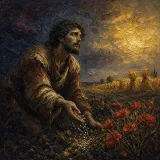
The big picture
Psalm 126 remembers a restoration so astonishing that the people felt like dreamers, then turns around and asks the LORD to restore them again. The Book of Psalms lets laughter and unfinished need remain in the same chapter. Mouths once filled with laughter and tongues with singing became public evidence of a great divine act, even to the nations. Yet the community still needs another turning. Two images explain how renewal can come. Streams in the dry south suggest a sudden filling of channels that seemed empty, while sowing and reaping suggest a slower process in which tears accompany the labor until joy arrives with the harvest. The final return with sheaves echoes the opening return of Zion. Remembered joy does not deny present tears, and present tears do not erase the reality of what has already been done.
Central truth
Psalms 126 and 137 hold exile and restoration together: Zion’s return produces laughter and harvest hope, while Babylon’s rivers preserve grief, violated memory, and a fierce appeal for justice.
The study notes have a page of their own
The movement by movement analysis, the words to trace, the verse by verse notes and where readers differ are written for someone studying alone. They are on the Deep Personal Reflections page for this chapter. This page is the lesson.
A chapter-specific teaching brief
These anchors come from this chapter itself. They help a teacher use the Level 1 overview, the Level 2 study, and the Scripture text as one lesson.
Open with the chapter’s first image
Psalms 126:1: “When the LORD turned again the captivity of Zion, we were like them that dream.”
Slow down at the turning point
Psalms 126:2: “Then was our mouth filled with laughter, and our tongue with singing: then said they among the heathen, The LORD hath done great things for them.”
Keep this word trail visible
LORD, captivity, bearing, bringing, doubtless, dream
What to explain, in order
Teach the passage in this order. Each step names the verses it rests on, so every point can be shown in the text before it is applied.
Psalms 126 and 137
Exile and return held together
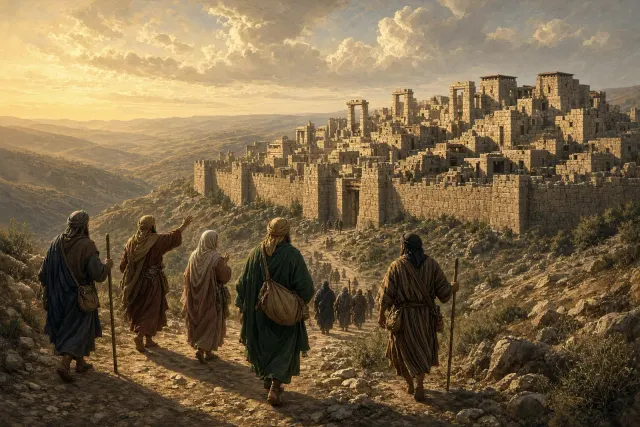
Begin by telling the class the setting of both psalms: the exile of Judah to Babylon after Jerusalem fell in 586 BC, and the return that began under Cyrus about seventy years later, recorded in Ezra 1. Psalm 137 is sung in Babylon, Psalm 126 after the first return. Teach the history first, briefly, so learners know that these are the songs of refugees: people who lost their city, their temple and many of their children. Tell the class that the lesson will move between laughter and tears, and that both are in the Bible.
Psalm 126:1-3
Like them that dream
Read verses 1-3. Explain turned again the captivity as restored the fortunes, brought back the exiles. Teach the dreamlike disbelief: it seemed too good to be true. Then the laughter and singing, and the testimony of the nations, the LORD hath done great things for them, echoed by the people, for us. Point out that Psalm 126 is a Song of Degrees, sung by pilgrims on the way to Jerusalem. Teach that remembering what God has done is part of worship, and invite learners to recall a time God restored them.
Psalm 126:4-6
Streams in the dry south
Teach verse 4 as a new prayer. The south is the Negev, dry wadis that fill suddenly with water when the winter rains come. The people ask God to restore them fully, like a dry riverbed flooding overnight. Then teach verses 5-6: the farmer who weeps as he sows precious seed, and comes back rejoicing with sheaves. Explain that this joins present pain to future harvest. Teach it with care for the grieving, and mention that Christians have read it of every costly faithfulness, including the sorrow of evangelism and the hope of resurrection.
Psalm 137:1-4
Harps go silent
Turn to Psalm 137 and read verses 1-4 slowly. Explain the rivers of Babylon, the Euphrates and its canals, and the willows or poplars along them. Then show the captors' demand for mirth, a song of Zion for entertainment. Teach the question of verse 4 as the cry of people who will not turn their worship into a show for those who destroyed their home. Teach that grief can be a form of faithfulness, and that silence before God is sometimes the honest prayer.
Psalm 137:5-6
Jerusalem must not be forgotten
Now teach the vow of verses 5-6. The singer calls down a curse on himself if he forgets Jerusalem: let my right hand, the one that plays the harp, lose its skill, and let my tongue, the one that sings, stick to my mouth. Explain that he prefers Jerusalem above his chief joy, because Jerusalem was the place of God's presence and promise. Teach this as loyalty to God's purposes even in exile. Ask the class what they would never want to forget about God, whatever happened.
Psalm 137:7-9
Edom, Babylon and terrible justice
Read verses 7-9 without softening them. Explain that Edom, Judah's kin, cheered the destruction, and that Babylon had slaughtered Judah's children, as Lamentations 2:20-21 and 4:10 describe. Explain verse 8 as a prayer for justice that matches the crime, and verse 9 as a cry of grief from people who had seen this done to their own little ones. Teach that the prayer is handed to God, not acted on. Then read Romans 12:17-21 and Luke 23:34, and let the class see where the gospel takes such grief.
Where learners get stuck
The misreadings this passage tends to produce, and how to answer each from the text.
"Psalm 137:9 means God approves of killing children."
Psalm 137:9 is the cry of exiles who had seen Babylon kill their own children, and it speaks the horror back in a prayer for justice against Babylon. Scripture records it honestly; it does not command it, and the speakers do not do it. God forbids the shedding of innocent blood (Proverbs 6:17) and Jesus welcomed children (Mark 10:14). The verse shows how deep grief speaks, and that such grief can be brought to God rather than acted out.
"If someone has hurt me badly, Psalm 137 shows I can take revenge."
The exiles of Psalm 137 pray "Remember, O LORD" (137:7); they hand the matter to God. Romans 12:19 says "Vengeance is mine; I will repay, saith the Lord", and Jesus prayed for those who crucified him. Psalm 137 gives permission to tell God the full truth of our anger, which is far better than acting on it or pretending it is not there. It never gives permission for revenge.
"Christians should always be joyful and singing."
Psalm 137 shows God's people hanging up their harps and asking "How shall we sing the LORD's song in a strange land?" (137:4), and Scripture includes their lament. Even Psalm 126 has people who "sow in tears" (126:5). Romans 12:15 says to weep with those that weep. There are seasons for laughter and seasons for silence, and both can be faithful before God.
"They that sow in tears shall reap in joy means if I cry enough God must give me what I want."
Psalm 126:5-6 is a picture of costly faithfulness: the sower goes out weeping and still sows. The harvest is God's gift, not something earned by tears. The promise is that faithful sowing in sorrow is not wasted, and that God turns mourning to joy in his time, as Jesus says in John 16:20. Trust the harvest to God.
Learning objectives
- Contrast the emotional worlds of Psalm 126 and Psalm 137.
- Explain the harvest images of tears, seed, sheaves, and rejoicing in Psalm 126.
- Describe why the captives refuse a demanded song in Psalm 137.
- Trace the role of remembering Zion in both psalms.
- Handle Psalm 137:7–9 as an appeal arising from conquest trauma without softening its violence.
- Explain how both psalms direct exile and return toward the Lord rather than nostalgia alone.
Teacher preparation
- Locate Babylon, Jerusalem, Edom, and the Negev, and explain that the 'streams in the south' of Psalm 126:4 evoke sudden watercourses in an arid region.
- Read the fall of Jerusalem in 2 Kings 25 and Edom’s hostility in Obadiah before teaching Psalm 137:7.
- Prepare Psalm 137:9 carefully. Name the horror of the image, its setting in ancient retaliatory warfare, and the fact that the psalm voices judgment rather than giving hearers a personal command.
- Notice that Psalm 126 moves from completed restoration in verses 1–3 to a fresh request in verse 4; restored people can still need restoration.
- Keep the two psalms distinct before comparing them. One laughs and carries sheaves; the other hangs up harps and refuses coerced entertainment.
Evidence and interpretation checks
Explicit
Psalm 126:1–3 explicitly says the Lord turned Zion’s captivity, filling mouths with laughter and causing even the nations to say the Lord had done great things.
Scripture-supported
Psalm 137:1–6 explicitly connects weeping, silent harps, refusal to sing, and the oath not to forget Jerusalem.
Strong inference
Because Psalm 126:4 asks the Lord to 'turn again' captivity after verses 1–3 celebrate return, the psalm strongly suggests restoration is experienced as real yet incomplete.
Possible or traditional reading
Psalm 137:9 has traditionally been read as imprecatory prayer, poetic retaliation, or an appeal to the justice Babylon itself practiced. Those readings explain the verse but do not remove its disturbing violence.
Limit
Neither psalm gives a complete chronology of the exile or return. Psalm 137 does not authorize private revenge, and Psalm 126 does not promise every period of grief will resolve on a predictable schedule.
Discussion with answer guidance
1. What changes between Psalm 126:1–3 and verse 4?
What a good answer contains
Verses 1-3 remember a restoration already given: "When the LORD turned again the captivity of Zion, we were like them that dream" (126:1), with mouths full of laughter and the nations saying "The LORD hath done great things for them" (126:2), and the people answering "The LORD hath done great things for us; whereof we are glad" (126:3). Then verse 4 prays, "Turn again our captivity, O LORD, as the streams in the south." A good answer sees that the people rejoice in what God has done and still ask for more, because the restoration is not complete. A weak answer treats the prayer as a contradiction.
Show teacher guidance
The first section celebrates what the Lord has done; verse 4 asks him to turn captivity again. Let the class hold accomplished and needed restoration together.
2. Why do tears and seed belong in the same image in Psalm 126:5–6?
What a good answer contains
Because sowing in a dry land was hard and costly, and the harvest was uncertain. "They that sow in tears shall reap in joy. He that goeth forth and weepeth, bearing precious seed, shall doubtless come again with rejoicing, bringing his sheaves with him" (126:5-6). In famine the seed was food that could have been eaten, so planting it was an act of hope through tears. A strong answer sees that the tears and the seed go out together, and the joy and the sheaves come back together. A weak answer separates them into a sad time followed by a happy time.
Show teacher guidance
The sower goes out weeping while carrying seed and returns rejoicing with sheaves. The image joins costly present labor to hoped-for harvest.
3. Why are the harps hanging on willows in Psalm 137:2?
What a good answer contains
Because their captors demand entertainment. "We hanged our harps upon the willows in the midst thereof. For there they that carried us away captive required of us a song; and they that wasted us required of us mirth, saying, Sing us one of the songs of Zion. How shall we sing the LORD's song in a strange land?" (137:2-4). A good answer sees that the silence is both grief and refusal: the songs of Zion are worship, not a performance for those who destroyed Zion. A weak answer reads the harps as decoration or as a loss of faith.
Show teacher guidance
Verse 3 supplies the reason: captors demand a Zion song for entertainment. The silent instruments become part of the refusal.
4. What does 'remember' do in Psalm 137:1, 5–7?
What a good answer contains
Memory runs the psalm. Verse 1: "we wept, when we remembered Zion." Verses 5-6: "If I forget thee, O Jerusalem, let my right hand forget her cunning. If I do not remember thee, let my tongue cleave to the roof of my mouth", a self-curse on the hand that plays the harp and the tongue that sings. Verse 7: "Remember, O LORD, the children of Edom", who cheered the destruction (Obadiah 11-14). A strong answer sees memory as grief, as loyalty and as an appeal to God's justice. A weak answer misses that the last remembering is handed to God.
Show teacher guidance
It moves from captives remembering Zion, to self-curse if Jerusalem is forgotten, to asking the Lord to remember Edom. Memory drives grief, loyalty, and appeal for judgment.
5. How should verse 9 be read without pretending it is gentle?
What a good answer contains
Read it plainly. "Happy shall he be, that taketh and dasheth thy little ones against the stones" (137:9) is the cry of people who saw their own children killed when Jerusalem fell, addressed to Babylon, which Isaiah 13:16 and Jeremiah 51 also foretold would be judged. It is raw grief and longing for justice, spoken to God in prayer, not a command and not an act. A good answer names its horror, and holds it beside Romans 12:19 and Jesus' prayer for his enemies. A weak answer either explains it away as gentle or uses it to justify revenge.
Show teacher guidance
Name the retaliatory image plainly and keep it inside the psalm’s address to Babylon under judgment. Do not convert it into permission for personal violence.
6. What do the two psalms teach by placing songs and silence beside each other?
What a good answer contains
Psalm 126 has mouths "filled with laughter" and tongues "with singing" (126:2); Psalm 137 has harps hung up and the question "How shall we sing the LORD's song in a strange land?" (137:4). A good answer sees that Scripture gives words for both: the joy of restoration and the silence of exile. Worship is honest, not performance on demand. Singing when God has restored us and lamenting when we are in Babylon are both faithful. A weak answer thinks one psalm is more spiritual than the other.
Show teacher guidance
Psalm 126’s mouth is filled with laughter and singing; Psalm 137 refuses a forced song. Worship is not presented as emotional theater on demand.
Responsible application
Do not manufacture cheerfulness
Use Psalm 137:1–4 to give a group permission to name grief accurately without requiring a celebratory tone before the text itself reaches one.
Remember together without coercion
Use both psalms to build communal memory through reading, song, and testimony from the text, while never forcing participants to disclose private losses.
Sow while the field is wet with tears
Use Psalm 126:5–6 to plan faithful work during difficult seasons: define the seed that can still be planted without claiming control over the harvest.
Session plans
Two timings of the same lesson. The shorter keeps the reading, the central discussion and one response; the longer gives the confusions and the application their own time.
45 minutes
Exile and return
Summarise the fall of Jerusalem and the return under Cyrus in two minutes. Read 126:1 and 137:1.
Like them that dream
Read Psalm 126 and take questions one and two. Address confusion four.
Harps on the willows
Read 137:1-4 and take question three. Address confusion three.
If I forget thee
Read 137:5-7 and take question four.
The hardest verse
Read 137:8-9 and take question five. Address confusions one and two with Romans 12:17-21. Allow time for questions.
Songs and silence
Take question six. Read the key verse together and pray for those in exile, grief or displacement.
90 minutes
Refugees
Ask whether anyone has lived far from home or lost a place they loved. Read 2 Kings 25:8-11 and Ezra 1:1-3.
Laughter
Read 126:1-3 and take question one. Invite people to share a time God did great things for them.
Sowing in tears
Read 126:4-6 and take question two. Address confusion four.
By the rivers
Read 137:1-4 and take question three. Address confusion three. Allow silence.
Remember
Read 137:5-7 and Obadiah 10-14. Take question four.
Daughter of Babylon
Read 137:8-9 and Lamentations 2:20-21. Take question five. Address confusions one and two, reading Romans 12:17-21 and Luke 23:33-34.
Application
Take question six. In pairs, talk about how to worship honestly in both joyful and grieving seasons.
Handout and prayer
Read the key verse together and pray for refugees and the grieving.
Adapting the lesson
Children
Use Psalm 126 and 137:1-4 only; leave verses 7-9 out entirely. Act out sowing seeds while looking sad, then gathering a big bundle of paper sheaves and smiling. Read 126:5-6. For 137:1-4, explain that God's people were far from home and too sad to sing. Teach that God is with us when we are sad and brings us joy again.
Youth
Many will know songs based on these psalms. Start with the feeling of being made to perform happiness when you are sad. Read 137:1-4. Then read 137:9 and talk honestly about anger and justice, and how the psalm hands them to God. Read 126:5-6 for those in hard seasons. Watch for anyone carrying deep anger and follow up privately.
Adults
Give time to the history of exile and return and to the ethics of the imprecatory psalms. Discuss how the church can make room for lament and anger in worship, and how Romans 12 and the cross transform the cry for vengeance. Consider refugees and the displaced in your community. Read Psalm 126 for those waiting for restoration.
One to one
Ask whether they are in a season of laughter or of exile. Read the matching psalm. If they are grieving, sit with 137:1-4 and do not hurry them. If they are angry at someone who hurt them, let them pray 137:7 honestly, then talk gently about handing justice to God. Close with 126:5-6 as a promise.
Song and video learning lab
A song or video may interpret, compress, or dramatize the text. Its value becomes clearer when its choices are compared with Scripture.
- Before the media: the exact passage and its central movement.
- During the media: the words, people, events, and emotions the artist emphasizes.
- After the media: what it clarifies, what it leaves out, and what belongs back in the biblical text.
Handout
One page for learners to take home. The print button prints this section alone.
Psalms 126 and 137
The passage in brief
Psalms 126 and 137 come from Israel's exile in Babylon and their return. In Psalm 126 the returned exiles remember God bringing them home, so joyful it felt like a dream, and pray for full restoration like streams in the desert. Those who sow in tears will reap in joy. In Psalm 137 the exiles sit by Babylon's rivers and weep, hang up their harps, refuse to sing for their captors, vow never to forget Jerusalem, and cry to God for justice against those who destroyed it.
A verse to keep
They that sow in tears shall reap in joy. He that goeth forth and weepeth, bearing precious seed, shall doubtless come again with rejoicing, bringing his sheaves with him.
Psalms 126:5-6 · King James Version
Questions to take home
What great things has the LORD done for you, as in 126:3?
What are you sowing in tears right now?
How can you bring anger or grief to God honestly, as the exiles do in Psalm 137, without taking revenge?
This week
Write down one thing you are sowing in tears and pray Psalm 126:5-6 over it each day this week.
Music and video connected to the passage
Related media appears when its Scripture reference overlaps this study. Music and video can illuminate a theme while the biblical text remains the foundation.