The big picture
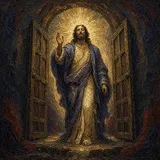
Psalm 24 begins so broadly that the holy hill cannot be mistaken for God's entire territory. The Book of Psalms names the earth, its fullness, the world, and its inhabitants as belonging to the Lord before it asks who may ascend into a particular holy place. Access is then described through clean hands, a pure heart, undivided desire, and truthful speech, while blessing and righteousness are still received from the God of salvation. The final movement reverses the direction. Human beings have been asking how to approach God's dwelling; now the gates themselves are commanded to rise for the King of glory. The world's owner does not enter as a visitor seeking permission. Repeated questions identify him as the Lord, strong in battle and Lord of hosts, so worshippers approach carefully while the sovereign approaches as one to whom everything already belongs.
Central truth
Psalms 15 and 24 place worship under the LORD's searching ownership: those who approach his holy place are described by truthful speech, clean conduct, justice, integrity, and undivided allegiance, while the gates themselves are summoned to receive the King of glory.

The study notes have a page of their own
The movement by movement analysis, the words to trace, the verse by verse notes and where readers differ are written for someone studying alone. They are on the Deep Personal Reflections page for this chapter. This page is the lesson.
A chapter-specific teaching brief
These anchors come from this chapter itself. They help a teacher use the Level 1 overview, the Level 2 study, and the Scripture text as one lesson.
Open with the chapter’s first image
Psalms 24:1: “The earth is the LORD’s, and the fulness thereof; the world, and they that dwell therein.”
Slow down at the turning point
Psalms 24:3: “Who shall ascend into the hill of the LORD? or who shall stand in his holy place?”
Keep this word trail visible
glory, King, LORD, lift, doors, everlasting
What to explain, in order
Teach the passage in this order. Each step names the verses it rests on, so every point can be shown in the text before it is applied.
Psalms 15:1, 24:3
Two questions at the holy hill
Begin with the questions. Read 15:1 and 24:3 together and explain the setting: worshipers approaching the tabernacle or temple on Zion, perhaps asking at the gate what is required to enter. Explain abide as staying as a guest in someone's tent, under his protection. Teach this first because the psalms are not entrance exams for heaven but descriptions of the kind of person who belongs in God's presence. Tell the class that both psalms answer with character rather than with ritual, which is itself the surprise, since a sanctuary might be expected to ask about sacrifices.
Psalm 15:2-5
The worshiper has a tongue and a wallet
Walk through the answer of Psalm 15 one line at a time. Upright walking, righteous work, truth in the heart. No backbiting, no harm, no reproach taken up against a neighbour, which means not repeating gossip. Honour for those who fear the LORD and contempt for the vile. Keeping costly oaths. Then money: no usury, which in Israel meant charging interest to a poor brother, as Exodus 22:25 forbids, and no bribe against the innocent. End with he that doeth these things shall never be moved, which echoes the stability of the tree in Psalm 1.
Psalm 24:1-2
The earth beneath the hill
Open Psalm 24 with its first claim. The earth belongs to the LORD with everything in it, because he founded it on the seas. Explain that in the ancient world the seas were a picture of chaos, and here God has built the world securely upon them. Teach this before the entrance question because it frames it: the one whose hill we climb owns the ground at the bottom too. Point to 1 Corinthians 10:26, where Paul uses the verse to say that food sold in the market belongs to God.
Psalm 24:3-6
Hands, heart, soul and oath
Now read the question and answer of verses 3-6. Explain each of the four phrases: clean hands for deeds, a pure heart for motives, not lifting up the soul unto vanity for worship given to nothing, not swearing deceitfully for honest words. Then show that such a person receives blessing and righteousness from the God of his salvation; he does not earn the hill but receives a gift there. Explain the generation of them that seek him as the community of seekers. Jesus' beatitude in Matthew 5:8 is close at hand: the pure in heart shall see God.
Psalm 24:7-10
Open the gates twice
Read verses 7-10 as a liturgy with two voices, one calling to the gates and one asking who is coming. Explain that ancient gates were lifted, and that everlasting doors are addressed as if even they must bow. The answer comes twice: first the LORD mighty in battle, then the LORD of hosts. Many readers connect this with David bringing the ark to Jerusalem in 2 Samuel 6, and the church has long sung it at the ascension of Christ. Teach it last because the psalm ends not with the worshiper's integrity but with the King's glory.
Where learners get stuck
The misreadings this passage tends to produce, and how to answer each from the text.
"These psalms are a list of rules for getting into heaven."
Psalm 15 and Psalm 24 describe the character of those who belong in God's presence; they are not a payment scheme. Psalm 24:5 says such a person "shall receive the blessing from the LORD, and righteousness from the God of his salvation", so righteousness is received. The same Psalter includes Psalm 32 and 51 for those who fail. The lists show what a life shaped by God looks like.
"As long as I come to worship, what I say about people does not matter much."
Psalm 15 gives speech more room than any other subject: truth in the heart, no backbiting, no reproach against a neighbour, keeping costly oaths (15:2-4). The question in 15:1 is who may dwell with God, and the answer is largely about the tongue. James 1:26 says the same in the New Testament. Worship and gossip cannot live comfortably together.
"The earth is the LORD's means nature is sacred and church is not."
Psalm 24:1 says everything belongs to God, and the next verses still climb the hill to his holy place. The psalm does not set creation against the sanctuary; it says the sanctuary is the place where the owner of the whole earth is honoured. Every part of life is under God, and gathered worship is where that is confessed together. Keep both halves of the psalm.
"Swearing to your own hurt means you must keep a promise even if it means sinning."
The man of 15:4 keeps a costly promise, not a wicked one. The same psalm forbids harm to a neighbour and bribery against the innocent (15:3, 15:5). A vow to do evil, like Jephthah's in Judges 11 or Herod's in Mark 6, is not what the psalm praises. The point is faithfulness when keeping your word becomes expensive.
Learning objectives
- Compare the entrance questions in Psalm 15:1 and Psalm 24:3 and identify what each question assumes about approaching God.
- List the concrete behaviors Psalm 15 names instead of reducing holiness to a private attitude.
- Explain clean hands and a pure heart in Psalm 24:4 using the surrounding lines about vanity and false swearing.
- Identify the shift in Psalm 24 from worshipers seeking the LORD to gates welcoming the King of glory.
- Distinguish integrity from sinless perfection by attending to the relational and ethical language of both psalms.
- Explain how the LORD's ownership of the earth in Psalm 24:1–2 governs the sanctuary language that follows.
Teacher preparation
- Write Psalm 15:1 and Psalm 24:3 side by side before class; their paired questions give the lesson a natural spine.
- Mark Psalm 15:2–5 by speech, neighbor conduct, loyalty, promises, lending, and bribery.
- Explain Psalm 15:5's usury as interest-taking in an ethical context concerned with exploitation of the needy.
- Read Psalm 24 in three movements: creation owned, worshipers ascending, and the King of glory entering.
- Avoid making a dress code out of clean hands.
Evidence and interpretation checks
Explicit
Psalm 15:2–5 explicitly names upright walking, righteous work, truth in the heart, restrained speech, faithful promises, non-exploitative lending, and refusal of bribes as marks of the one who dwells securely.
Scripture-supported
Psalm 24:4 itself links clean hands and pure heart with rejecting vanity and deceitful swearing.
Strong inference
The paired questions of Psalm 15:1 and 24:3 strongly invite comparison: both ask who may approach the LORD, and both answer with character rather than ancestry, status, or impressive religious performance.
Possible or traditional reading
Psalm 24 is often associated with a liturgical procession and, traditionally, with the ark's entrance into Jerusalem.
Limit
These lists are not exhaustive and do not teach that flawless performance earns access to God.
Discussion with answer guidance
1. What is nearly parallel about Psalm 15:1 and Psalm 24:3, and what different words does each use for the place approached?
What a good answer contains
Both begin with the same kind of question. Psalm 15:1 asks "LORD, who shall abide in thy tabernacle? who shall dwell in thy holy hill?" and Psalm 24:3 asks "Who shall ascend into the hill of the LORD? or who shall stand in his holy place?" A good answer notices the verbs: abide and dwell speak of staying as a guest, ascend and stand of climbing up and holding your place. Tabernacle recalls the tent; holy hill and holy place name Zion. A weak answer treats both as asking who goes to church.
Show teacher guidance
Both psalms ask who may approach: Psalm 15 names tabernacle and holy hill; Psalm 24 names the LORD's hill and holy place.
2. Which requirements in Psalm 15 concern speech, and why does the psalm give speech so much room?
What a good answer contains
Most of the list is about the mouth: he "speaketh the truth in his heart" (15:2), he "backbiteth not with his tongue", he does not take up "a reproach against his neighbour" (15:3), and he "sweareth to his own hurt, and changeth not" (15:4). A strong answer sees that speech is where the neighbour is most easily harmed, and that truth begins in the heart before it reaches the lips. Verse 5 then adds money. A weak answer lists only outward rituals and misses that worship is tested by how we talk about others.
Show teacher guidance
Identify truth in the heart, no backbiting tongue, no evil against a neighbor, no reproach, and promise-keeping.
3. What does Psalm 15:4 mean by swearing to one's own hurt and changing not?
What a good answer contains
It means keeping a promise even when keeping it costs you. The person "sweareth to his own hurt, and changeth not" (15:4): he gave his word, circumstances turned against him, and he did not take it back. A good answer gives a concrete example, a price agreed, a commitment made, and notes that Joshua 9 shows Israel keeping an oath to the Gibeonites though it was costly. A weak answer turns the line into a duty to keep a promise to do wrong, which the rest of the psalm rules out.
Show teacher guidance
The line describes keeping a commitment even when doing so becomes costly.
4. Psalm 24:1 says the earth is the LORD's.
What a good answer contains
"The earth is the LORD's, and the fulness thereof; the world, and they that dwell therein" (24:1). Before anyone asks who may climb the hill, the psalm says the whole world already belongs to God, because "he hath founded it upon the seas" (24:2). A strong answer sees that the sanctuary is not God's only territory; worship on the hill is the place where the owner of everything is acknowledged. Paul quotes the verse in 1 Corinthians 10:26. A weak answer separates sacred space from ordinary life.
Show teacher guidance
The sanctuary is not the only place under divine ownership.
5. How does Psalm 24:4 unpack clean hands and a pure heart?
What a good answer contains
The verse explains itself. Clean hands are what a person does; a pure heart is what he wants; then the psalm adds that he "hath not lifted up his soul unto vanity, nor sworn deceitfully" (24:4). Lifting the soul to vanity means setting your heart on what is empty or false, often idols; swearing deceitfully means using God's name to lie. A good answer sees action, desire, worship and word together. A weak answer stops at clean hands and makes the verse only about behaviour.
Show teacher guidance
Use the same verse: the person has not lifted up the soul unto vanity nor sworn deceitfully.
6. What changes in Psalm 24:7–10 when the question is no longer who may ascend but who is this King of glory?
What a good answer contains
The worshipers who were climbing fall into the background, and the gates are commanded to open for someone greater: "Lift up your heads, O ye gates", so that "the King of glory shall come in" (24:7, 24:9). The question changes from who may ascend to "Who is this King of glory?" and the answer is "The LORD of hosts, he is the King of glory" (24:10). A strong answer sees that the psalm ends with God's arrival, possibly a procession with the ark. A weak answer ends the lesson at verse 6.
Show teacher guidance
The worshipers recede and the LORD's royal entrance fills the scene.
Responsible application
Put ethics at the door
Use Psalm 15 to evaluate a fictional ministry leader whose public worship is impressive but whose contracts, speech, and treatment of neighbors are unreliable.
Clean hands need a pure heart
Use Psalm 24:3–6 to separate visible conduct from inward allegiance, then show why the psalm requires both.
Let the King outrank the worshipers
Read Psalm 24:7–10 responsively so the repeated King of glory question becomes the lesson's final emphasis.
Session plans
Two timings of the same lesson. The shorter keeps the reading, the central discussion and one response; the longer gives the confusions and the application their own time.
45 minutes
Two questions
Read 15:1 and 24:3 aloud and take question one. Draw a hill on the board with a gate at the top.
Tongue and wallet
Read Psalm 15 and take questions two and three. Address confusion two and confusion four briefly.
The whole earth
Read 24:1-2 and take question four. Address confusion three.
Hands and heart
Read 24:3-6 and take question five. Address confusion one using verse 5.
The King comes in
Read 24:7-10 with two groups answering each other. Take question six.
Response
Read the key verse together. Ask each person to choose one line from Psalm 15 to practise this week, then pray.
90 minutes
At the gate
Ask what a person might expect to be asked before entering a holy place. Write the guesses down, then read 15:1 and 24:3.
Psalm 15 line by line
Read Psalm 15 and take question two. Mark every line about speech. Read James 1:26 and address confusion two.
Costly promises and fair money
Take question three with Joshua 9:15-20. Explain usury with Exodus 22:25. Address confusion four.
The owner of the earth
Read 24:1-2 and take question four. Read 1 Corinthians 10:25-26 and address confusion three.
Clean hands, pure heart
Read 24:3-6 and take question five. Read Matthew 5:8. Address confusion one.
Lift up your heads
Read 2 Samuel 6:12-15, then perform 24:7-10 with two groups. Take question six.
Application
In pairs, choose one area of speech or money from Psalm 15 and name one honest change for the coming week.
Handout and prayer
Read the key verse together and close by singing or reading 24:7-10 as a prayer of welcome to the King.
Adapting the lesson
Children
Build a hill from cushions or boxes with a paper gate at the top. As you read Psalm 15, let children take a step up for each good thing: telling the truth, not saying unkind things about friends, keeping promises. Then read 24:7-10 and have two groups call and answer, Who is this King of glory. Let them open the paper gate for the King. Leave usury and bribes out.
Youth
Start with gossip and online reputation, and read Psalm 15:3 as a challenge to what they repeat about others. Ask whether anyone has ever kept a promise that cost them. Read 24:1 and talk about the whole of life belonging to God, not only Sunday. End with the drama of 24:7-10 and the question of who is really the King of their lives.
Adults
Give time to Psalm 15:5 and the ethics of money, lending and bribery, and ask how adults apply it in business and family life. Discuss promises kept at cost in marriage and work. Spend time on 24:1 as a basis for seeing all work as under God. Read 2 Samuel 6 and discuss how the procession of 24:7-10 has been sung of the ascension of Christ.
One to one
Read Psalm 15 together and ask which line is hardest for them. Do not shame them; read 24:5 and remind them that blessing and righteousness are received from God. If they carry guilt about words they have said, point forward to Psalm 32. Close with 24:7 as a prayer to open the gates of their own life to the King of glory.
Song and video learning lab
A song or video may interpret, compress, or dramatize the text. Its value becomes clearer when its choices are compared with Scripture.
- Before the media: the exact passage and its central movement.
- During the media: the words, people, events, and emotions the artist emphasizes.
- After the media: what it clarifies, what it leaves out, and what belongs back in the biblical text.
Handout
One page for learners to take home. The print button prints this section alone.
Psalms 15 and 24
The passage in brief
Psalms 15 and 24 ask who may come into God's presence on his holy hill. Psalm 15 answers with a life of honest speech, kindness to neighbours, promises kept even when they cost, and fairness with money. Psalm 24 begins by saying the whole earth belongs to the LORD, then asks for clean hands, a pure heart and honest words, and ends with the gates opening for the King of glory.
A verse to keep
Who shall ascend into the hill of the LORD? or who shall stand in his holy place? He that hath clean hands, and a pure heart; who hath not lifted up his soul unto vanity, nor sworn deceitfully.
Psalms 24:3-4 · King James Version
Questions to take home
Which line of Psalm 15 is the hardest for you to live out, and why?
What difference does it make that the earth is the LORD's, according to 24:1?
Who is the King of glory in 24:7-10, and what does it mean to open the gates to him?
This week
For one week, refuse to repeat anything negative about another person that you have not first said to them.
Music and video connected to the passage
Related media appears when its Scripture reference overlaps this study. Music and video can illuminate a theme while the biblical text remains the foundation.