
Lyrics · 1 Kings
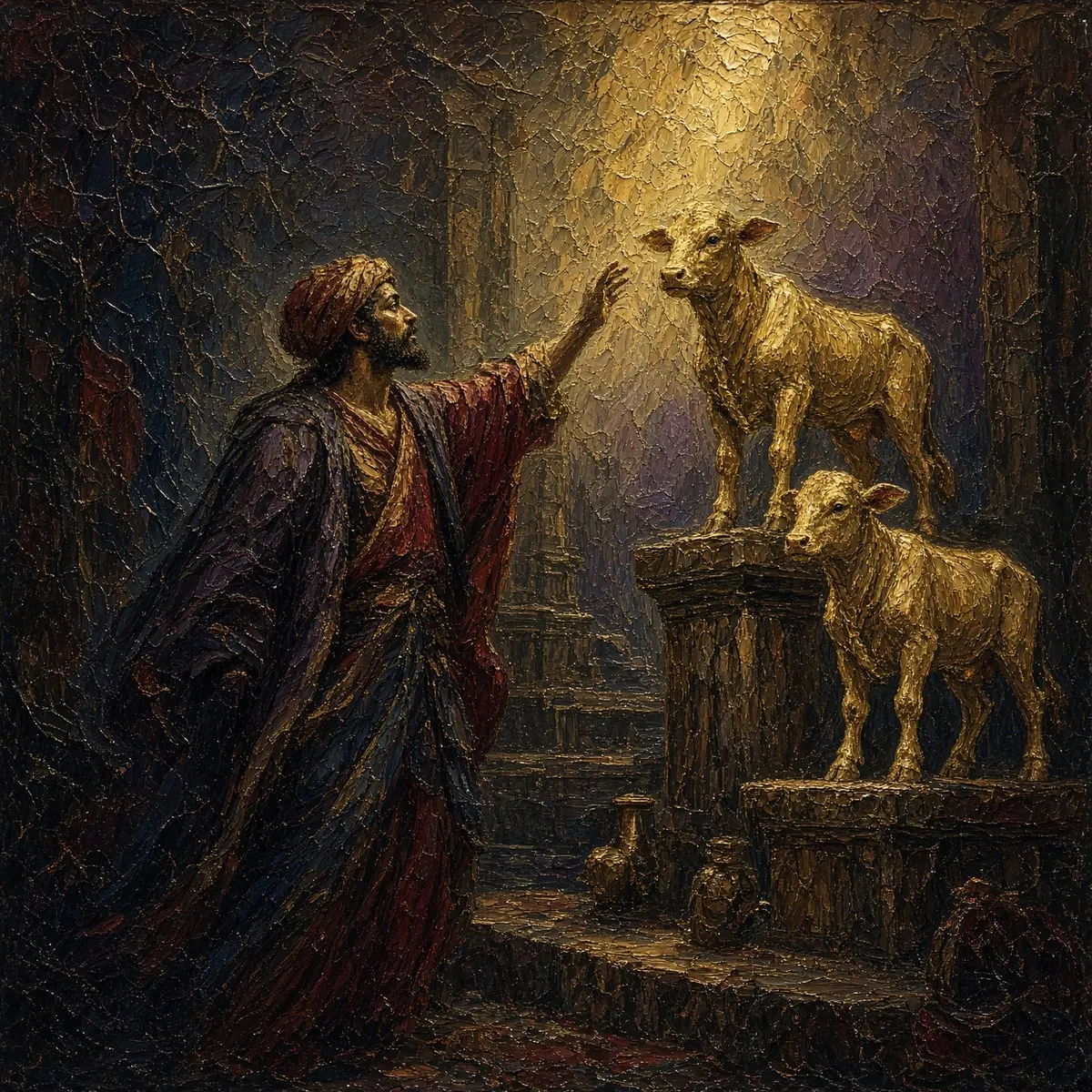
Two Calves of Gold
1 Kings 12-14
Lyrics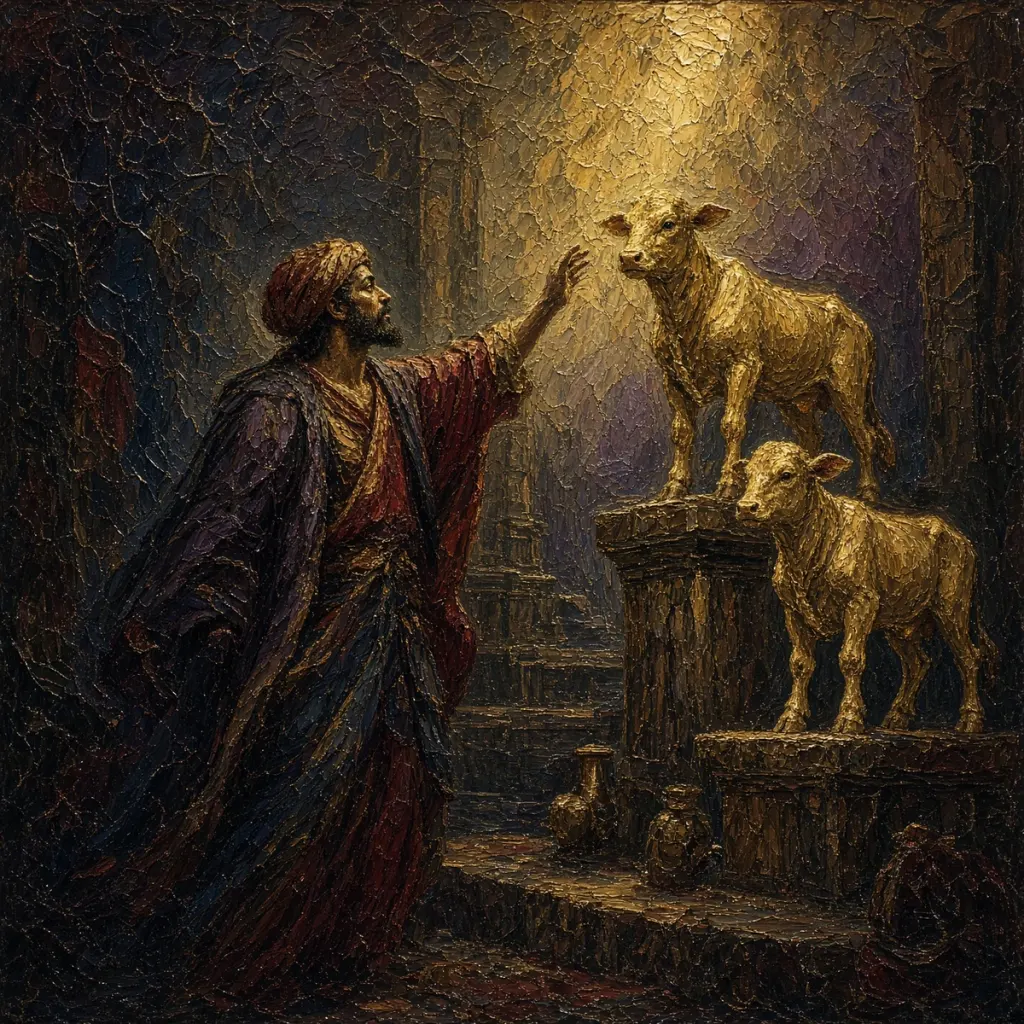
About this song
About this song
This song belongs to the 1 Kings collection. 8 recordings are available to play here, with the complete lyrics below.
- Bible book
- 1 Kings
- Collection
- 1 Kings
- Musical styles
- Acoustic, World Music, Electronic, Alternative Pop, Alternative Rock, Cinematic Rock
Named in this songRehoboamDavidShechemJeroboamJerusalemBethel
About the passage
1 Kings 12: The kingdom breaks where the king will not listen
The kingdom breaks at the point where Rehoboam refuses to listen. Israel gathers at Shechem prepared to make him king and asks only that Solomon’s heavy yoke be lightened. Older counselors advise service as the path to durable loyalty, while Rehoboam’s peers urge him to advertise greater severity. He chooses the threat of heavier burdens, the northern tribes reject Davidic rule, Adoram is killed, and Rehoboam flees to Jerusalem. The Book of 1 Kings identifies the division as fulfillment of Ahijah’s prophecy while still preserving the human chain of choices through which it happens. Rehoboam then assembles an army to recover the kingdom, but Shemaiah calls the northern Israelites brothers and orders the force home. The king listens this time. Jeroboam, meanwhile, faces a different crisis of trust. Afraid that pilgrimage to Jerusalem will return the people’s hearts to Rehoboam, he creates golden calves, alternate shrines, a new priesthood, and his own festival calendar. Political insecurity produces a religious system the book directly calls sin.
Study 1 Kings 12 in depth1 Kings 13: A true word, a lying prophet, and an unturned king
A man of God confronts Jeroboam’s altar with a prophecy naming Josiah and an immediate sign that authenticates the distant warning. Jeroboam’s attempt to seize him ends with a useless hand and a broken altar, and the king must ask the very messenger he threatened to pray for his restoration. The man of God then refuses royal food and reward because his commission forbids eating, drinking, or returning by the same route. He keeps that command until an older prophet claims an angel has revised it. The Book of 1 Kings calls the claim a lie. Yet at the meal, a genuine word of judgment does come through the same older prophet, and the deceived messenger dies by a lion for disobeying the command he originally received. The old prophet retrieves and buries him, asks eventually to share his grave, and insists that the prophecy against Bethel will still come true. The chapter closes with the most consequential refusal to return: despite signs, mercy, warning, and death, Jeroboam does not turn from his high-place system.
Study 1 Kings 13 in depth1 Kings 14: A disguise fails, and gold gives way to brass
Jeroboam tries to hide the identity of the one person sent to seek a prophetic word, but the disguise is useless before Ahijah ever sees her. The blind prophet has already been told who is coming and why. What begins as an inquiry about a sick child opens into judgment on Jeroboam’s house and, beyond it, Israel’s future uprooting. The child alone in that household is marked for burial and mourning, and his death occurs exactly at the threshold named in the prophecy. The chapter then turns south and refuses to let Jerusalem’s chosen status excuse Judah. Rehoboam’s kingdom adopts condemned practices, Shishak removes treasures from temple and palace, and Solomon’s golden shields are replaced with brass. Royal ceremony continues, but the cheaper metal makes the decline visible without a speech explaining it.
Study 1 Kings 14 in depth