

Lyrics · Exodus
Let the People Go
Exodus 5:1-7:13
Lyrics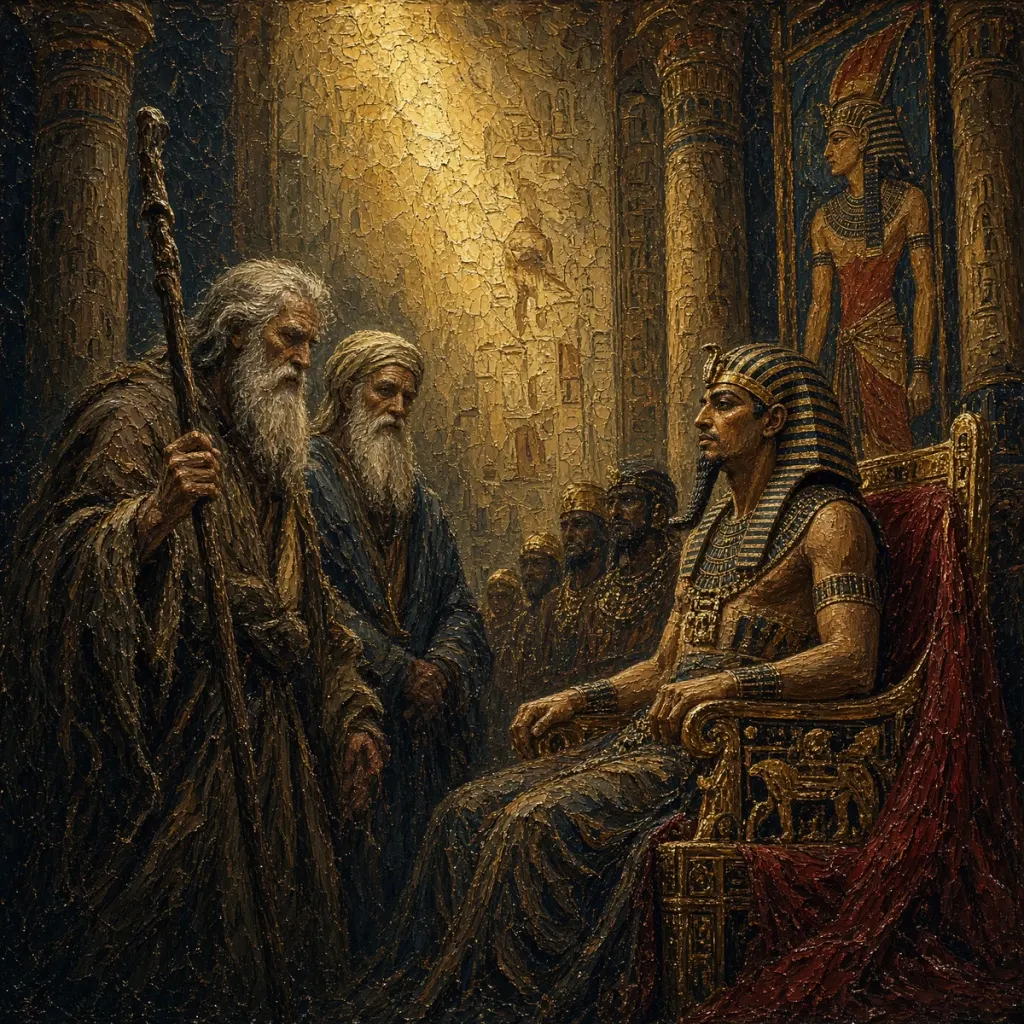
About this song
About this song
This song belongs to the Exodus collection. 8 recordings are available to play here, with the complete lyrics below.
- Bible book
- Exodus
- Collection
- Exodus
- Musical styles
- Pop, World Music, Electronic, Rock, Country & Americana, Worship & Gospel
Named in this songPharaohMosesAaronAbrahamIsaacJacobEgypt
About the passage
Exodus 5: The first demand makes the bondage worse
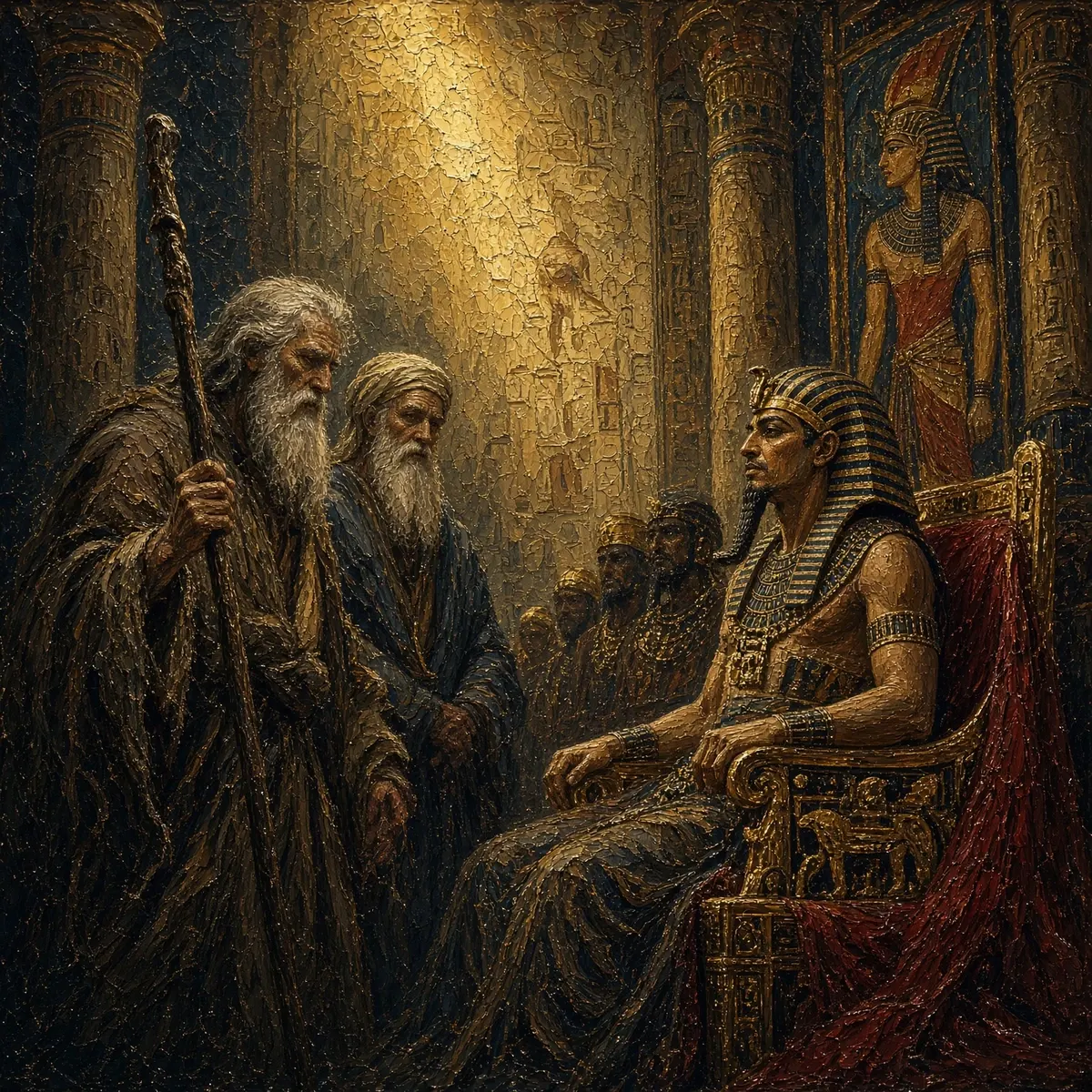
The first audience with Pharaoh makes almost everything visibly worse. Moses and Aaron bring the LORD's demand for Israel to hold a feast in the wilderness, and Pharaoh answers by denying the LORD's authority and reading worship as idleness. His countermeasure is exact and cruel: the brick quota stays, but the workers must now gather their own straw. Israelite officers are beaten for failing under conditions deliberately designed to make the quota harder to meet. When they appeal to Pharaoh, they discover that no lower official has distorted the policy. The king himself repeats it. They turn on Moses and Aaron, and Moses in turn carries the contradiction back to the LORD. Exodus lets the chapter end with his blunt complaint that since the commission began, Pharaoh has harmed the people and no deliverance has yet appeared.
Study Exodus 5 in depthExodus 6: The promise is repeated to people too crushed to hear
God answers Moses' complaint by returning to identity, covenant, and promises rather than by pretending the new suffering is insignificant. Israel will be brought out, redeemed, taken as God's people, and brought into the promised land. The people, however, are too crushed by anguish and cruel bondage to listen, and Exodus explicitly names those conditions before Moses turns their response into another objection about Pharaoh. The chapter then pauses for a genealogy, moving through Reuben and Simeon before narrowing to Levi and the household of Moses and Aaron. That interruption grounds the messengers in a real family and introduces relatives who will matter later. When the dialogue resumes, nothing about Moses' insecurity has magically vanished. The same man with "uncircumcised lips" still faces the same king, but now the covenant, the promise, and the identity of the messengers have been firmly restated.
Study Exodus 6 in depthExodus 7: Egypt begins to learn the name it dismissed
The confrontation with Pharaoh resumes under a clarified arrangement: Moses represents God's authority, Aaron speaks as his prophet, and both are commanded rather than self-directed. Their ages, eighty and eighty-three, quietly remove any image of inexperienced young adventurers taking on Egypt. The first court sign is matched by Egyptian specialists, but the imitation does not settle the contest because Aaron's staff swallows theirs. Pharaoh still refuses. The first plague then moves from the palace floor to Egypt's water. Moses meets the king by the river, the place already tied to the death decree and Moses' survival, and announces that Egypt will know the LORD through what follows. Water turns to blood, fish die, the river stinks, and ordinary people dig for something to drink. The magicians reproduce the affliction, but neither they nor Pharaoh can remove it.
Study Exodus 7 in depth