
Lyrics · Genesis
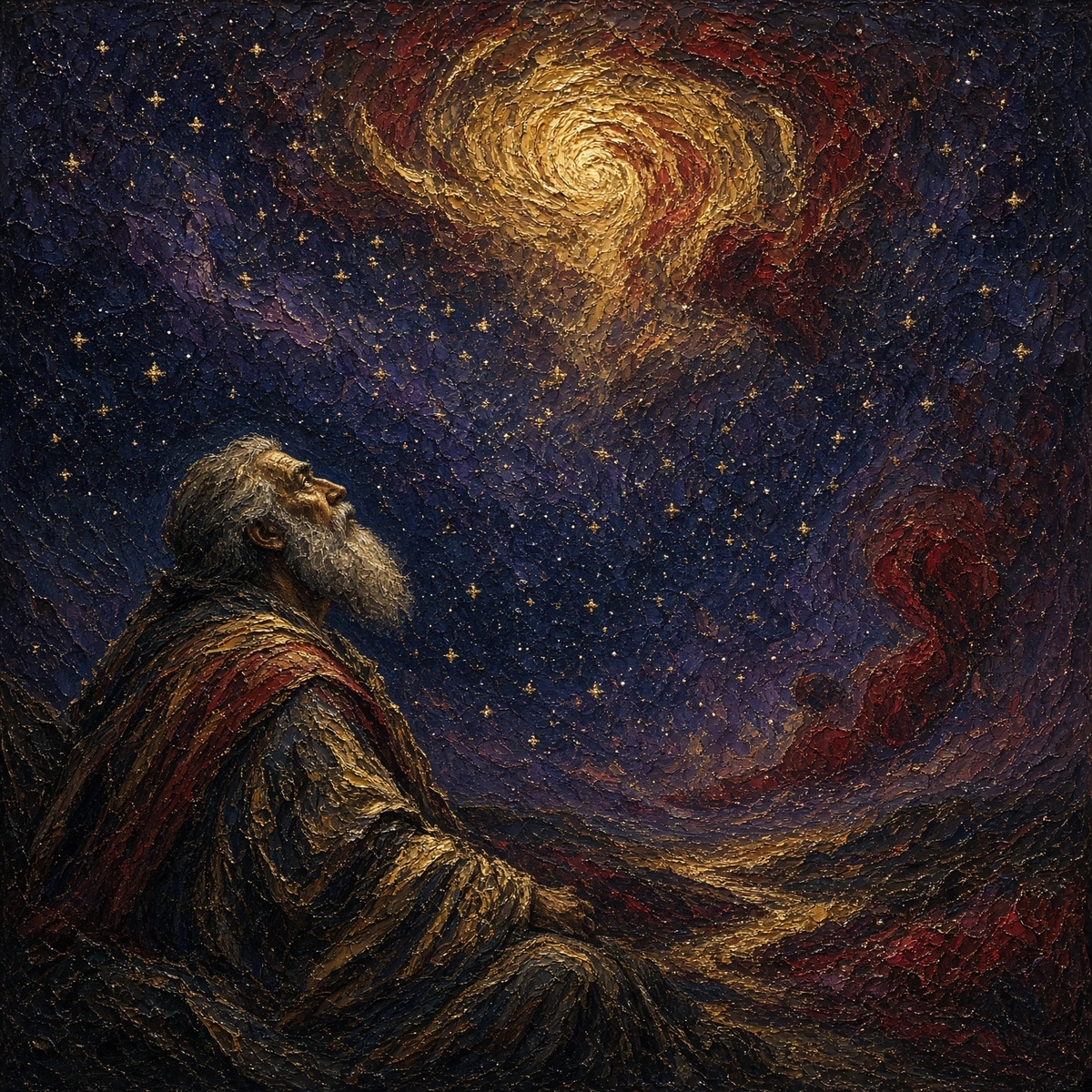
Count the Stars
Genesis 15:1-17:27
LyricsNamed in this songAbramHagarIshmaelIsaacSarai
About the passage
Genesis 15: Stars overhead and a covenant through the darkness
Genesis 15 turns from Abram’s possessions to the one thing his wealth cannot provide: an heir. God promises a son from Abram’s own body and descendants as uncountable as the stars, and Abram believes the LORD. Yet belief does not silence every question. When Abram asks how he will know he will inherit the land, the answer comes through a covenant ceremony and a disclosure that makes the future harder, not easier. His descendants will be strangers, servants, and sufferers for centuries before returning with judgment falling on the oppressing nation. Even the Amorites’ present moral condition becomes part of the timing, keeping existing inhabitants from disappearing behind Abram’s promise. At night, a smoking furnace and burning lamp pass between the divided pieces while Abram does not. The covenant is thus centered on God’s undertaking. The land is named more specifically, but fulfillment remains wrapped in darkness, delay, oppression, and a promise that outlives Abram himself.
Study Genesis 15 in depthGenesis 16: An unheard woman is addressed by name
Genesis 16 begins with an attempt to solve the promise by household arrangement. After ten years in Canaan, Sarai gives Hagar to Abram in hopes of obtaining children through her. Pregnancy arrives, but so do contempt, accusation, harsh treatment, and flight. Genesis then follows the Egyptian servant away from Abram’s tents and gives her a divine encounter centered on being named, heard, and seen. The angel of the LORD finds Hagar by a spring, asks where she has come from and where she is going, and gives the difficult command to return alongside a promise addressed directly to her. Her descendants will be numerous, and her son’s name, Ishmael, will remember that the LORD heard her affliction. Hagar answers by naming the God who sees her. The revelation received in the wilderness returns to the household when Abram gives the child that same name. The chapter’s failed solution does not make Hagar invisible.
Study Genesis 16 in depthGenesis 17: New names and a covenant marked in flesh
Genesis 17 turns a long-standing promise into something Abraham will hear in his own name, carry in his own body, and enforce throughout his household. Abram becomes Abraham before the nations attached to that name exist, and Sarai becomes Sarah before the son promised through her is born. The chapter keeps future scale and present specificity together: nations, kings, land, and generations stand beside an eighth-day command and a household acting on it that very day. Abraham laughs at the prospect of a child at their ages and asks for Ishmael, but neither reaction changes the identified mother or heir. Ishmael is heard and substantially blessed, while Isaac remains the covenant son. By the end, the promised birth is still ahead, but Abraham, Ishmael, and every male in the household already bear the sign.
Study Genesis 17 in depth