

Lyrics · Numbers
A Shepherd for the Congregation (Official)
Numbers 25:1-27:23
Lyrics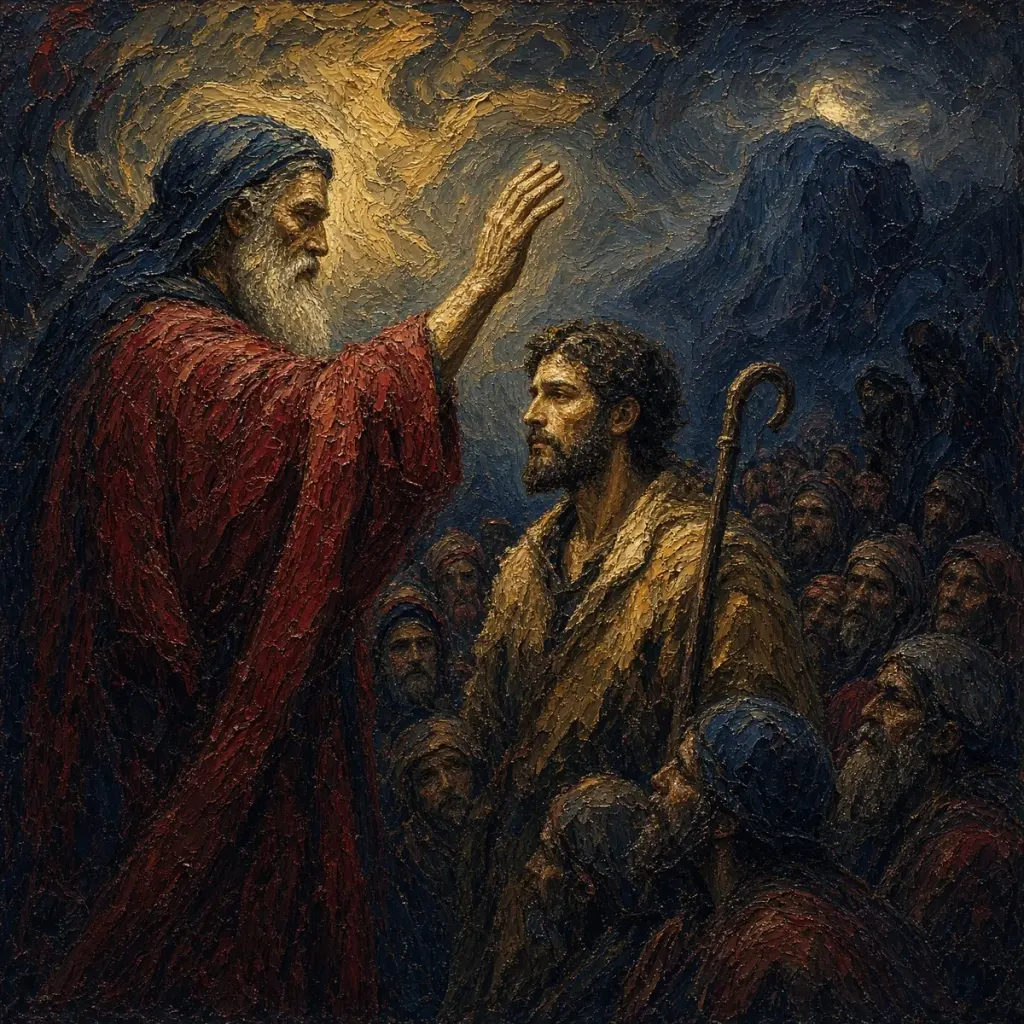
Playing next
About this song
About this song
This song belongs to the Numbers collection. One recording is available to play here, with the complete lyrics below.
- Bible book
- Numbers
- Collection
- Numbers
- Musical styles
- Country & Americana
Named in this songPhinehasCalebJoshuaAaron
About the passage
Numbers 25: The danger enters the camp at Peor
Numbers 25 makes a sharp turn from the failed curse outside the camp to compromise inside it. Balak could not purchase a word strong enough to overturn Israel's blessing, yet Israelites themselves join sexual misconduct with sacrificial meals and worship at Baal-peor. Judgment enters the camp in the form of a plague and orders against those joined to the cult. In the middle of public mourning, Zimri brings Cozbi, a Midianite woman from a leading household, before the congregation. Phinehas kills them, the plague stops, and the LORD explicitly interprets his act as zeal that turned away wrath and made atonement for Israel. The covenant of peace that follows such violence is intentionally striking, but the passage ties the approval to this named priest and crisis rather than giving an unlimited license for private religious violence. The chapter closes by naming the households involved and shifting attention toward Midian, whose connection to Peor will lead directly into later conflict.
Study Numbers 25 in depthNumbers 26: Nearly the same total, a different generation
Numbers 26 takes a second military census after the plague and turns a long list of names into evidence that an entire generation has changed. Men twenty years old and upward who are able to go to war are counted by tribal families, while the Levites are counted separately from one month old because their role and inheritance are different. The total of 601,730 is remarkably close to the first census, yet the closing lines forbid a superficial reading of that similarity: apart from Caleb and Joshua, none of the men from the earlier military registration remains. Within the lists, memory keeps interrupting arithmetic. Dathan, Abiram, Korah, Er, Onan, Nadab, and Abihu are recalled, while the survival of Korah's children is expressly preserved. Five daughters of Zelophehad are named in a male military roll because their household will soon raise an inheritance question. The census therefore looks backward to judgment and forward to land, war, succession, and settlement all at once.
Study Numbers 26 in depthNumbers 27: An inheritance secured and a shepherd appointed
Numbers 27 addresses continuity first within a family and then within national leadership. Zelophehad's five daughters, already named in the census, publicly ask why their father's name should disappear from his family simply because he has no son. Moses brings the case before the LORD, and the answer is direct: "The daughters of Zelophehad speak right." Their inheritance is granted, and the ruling becomes a statute governing similar cases. The chapter then turns to Moses himself. He will see the land but will not lead Israel into it because the sentence of Meribah still stands. His recorded response is concern for the congregation, asking that they not be left "as sheep which have no shepherd." Joshua is chosen, publicly commissioned before Eleazar and the people, and given authority while Moses is still alive. Both halves of the chapter protect continuity without pretending death is absent: a father's line retains its holding, and a departing leader does not leave Israel directionless.
Study Numbers 27 in depth