
Exodus 27:1-8
Hollow with boards shalt thou make it
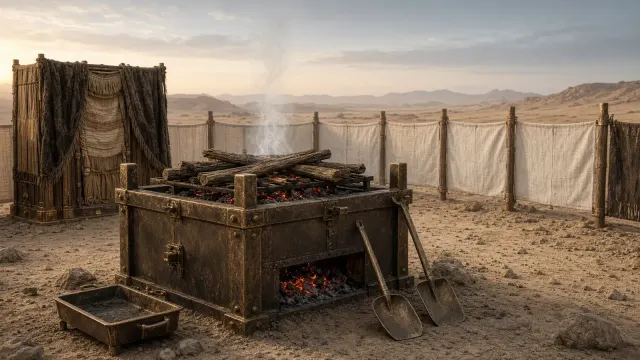
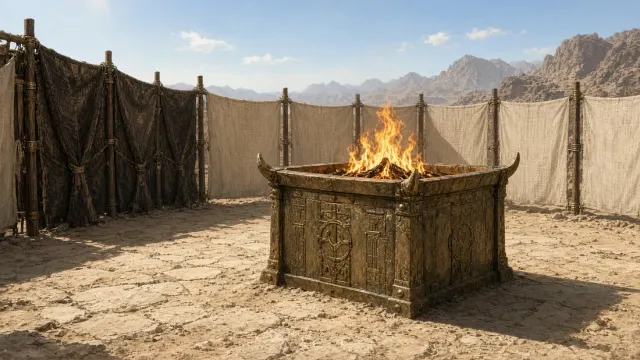
The altar is built to be carried. Horns at the corners, a brass grate, rings and staves, and nothing solid in the middle.
Verse by verse
- 27:2
The Hebrew nechoshet covers copper or bronze. KJV brass should not be read as a precise specification of the modern copper-zinc alloy.
- 27:4-5
The exact reconstruction of the grate and surrounding ledge is debated; the text places the network at the altar's midpoint.
- 27:8
Hollow with boards distinguishes this portable framework from a solid stone or solid metal block.
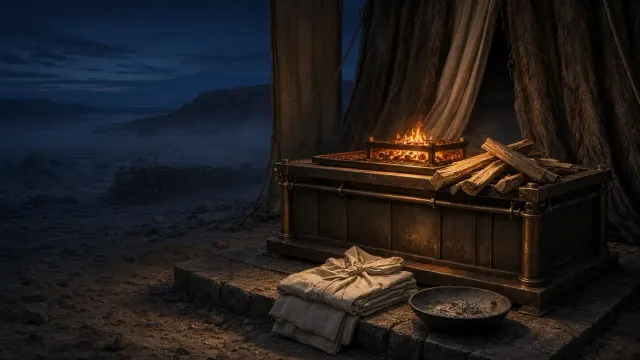
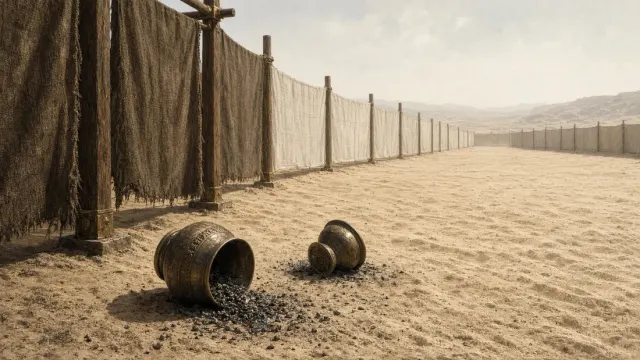
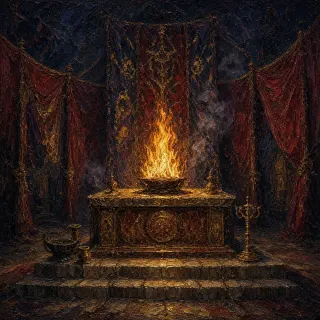

The altar comes with shovels. That detail prevents its holiness from becoming weightless. Ashes have to be gathered, blood received in basins, flesh handled with hooks, and fire attended. The instructions make room for the tools because the service will leave things that need cleaning up. Sacred work does not excuse anyone from the ash pile.
The substantial square body is nevertheless hollow, made from boards and overlaid with bronze. Rings and carrying poles belong to the same plan. This is not a stone monument rooted to one patch of ground; the place of sacrifice must travel with the people. The description gives the framework without explaining every practical detail of how the interior handled heat. Reconstructions that fill it with earth may be reasonable proposals, but this paragraph does not issue that instruction.
Its horns rise from its own corners rather than appearing as detachable accessories. Leviticus 9:9 will put blood on those horns, bringing the shape into the actual rite. The altar is built for use, not simply for recognition. Before the sanctuary becomes a procession of gleaming inner furnishings, there is bronze, animal blood, and a shovel.