Objects of the Bible

The golden image on the plain of Dura

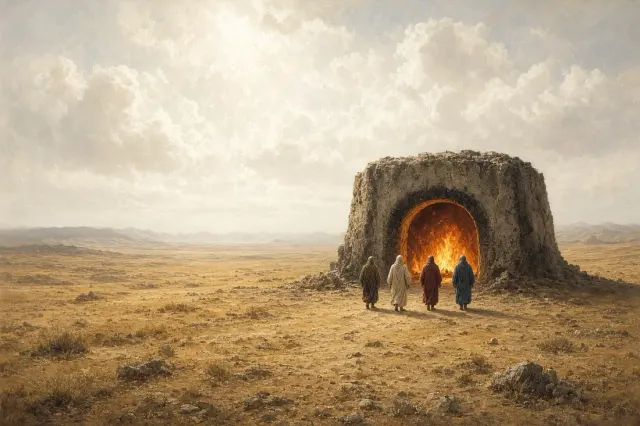
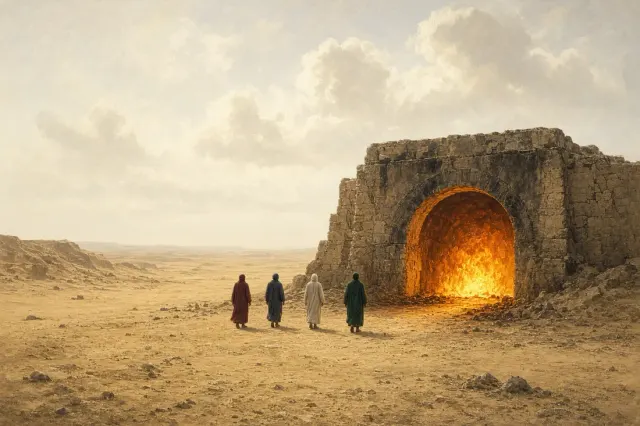
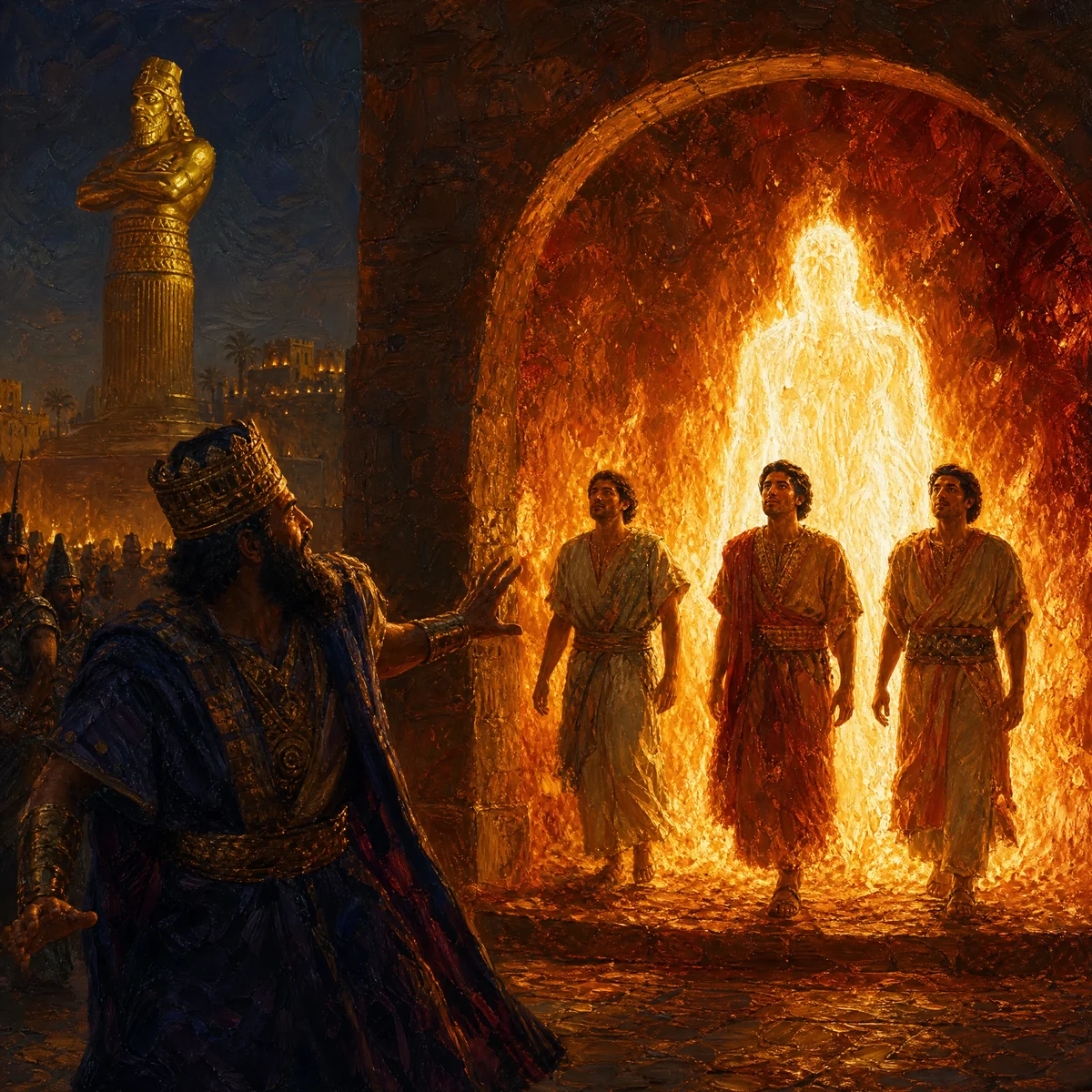
Ninety feet high and nine feet wide, which is the wrong proportion for a statue and the right one for a message.

Threescore cubits high and six cubits broad. That is a ratio of ten to one, far too narrow for a human figure, which suggests a pillar or an obelisk with a figure on it rather than a colossus. It is set up on a plain rather than in a temple, where everyone summoned can see it at once, and the list of who was summoned is read out twice: the princes, the governors, and the captains, the judges, the treasurers, the counsellors, the sheriffs, and all the rulers of the provinces.

Where it appearsDaniel 3

Scroll down to the account
The golden image on the plain of Dura

The movements, in the order the text gives them.

The Account of The golden image on the plain of Dura

  1. 01

    Daniel 3:1

    Whose height was threescore cubits

    The dimensions are given before anything else and they do not describe a statue of a man. The shape is part of the argument.

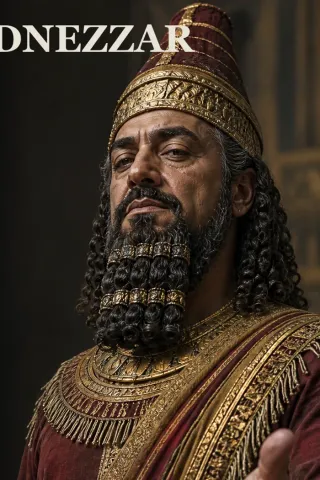
    Sixty cubits high, six wide: the proportions announce height before the passage supplies a face. In fact, it never supplies one. The image is identified by its gold, its dimensions, its location and the king who erected it. Calling it a portrait of Nebuchadnezzar or assigning it to a named Babylonian god adds something the verse does not identify.

    The proportions are ten to one, but the text does not explain whether the measurements include a pedestal. That uncertainty matters more than a confident reconstruction. What is certain is the repeated human agency. Nebuchadnezzar made it; he set it up. The object before which worship will be demanded is introduced as the product of a royal undertaking.

    The previous chapter gives the comparison its edge. There Nebuchadnezzar sees an image in a dream, with a head of gold and lower parts of other materials. Here he constructs an image of gold. The contrast is on the page even though his private reason for choosing it is not. The king who needed someone to explain an image now has one standing on the plain.

    Verse by verse

    1. 3:1

      Threescore is sixty. The stated height-to-width ratio is ten to one, regardless of the cubit's precise modern equivalent.

    2. 3:1

      The image's represented figure and construction method are not identified; gold does not by itself establish that it was solid gold.

    3. 3:1

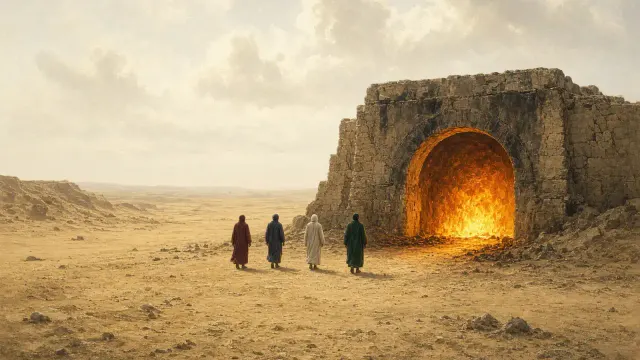
      Dura is located within the province of Babylon, but this verse provides no coordinates or further site description.
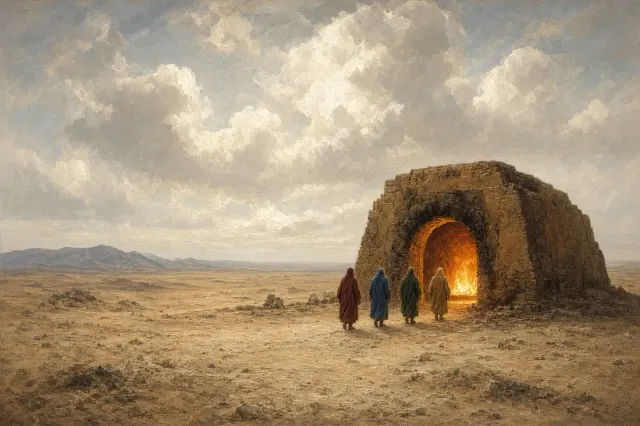
    Daniel 3:1

    King James Version · 1 verse

    3:1Nebuchadnezzar the king made an image of gold, whose height was threescore cubits, and the breadth thereof six cubits: he set it up in the plain of Dura, in the province of Babylon.

    Daniel 3:1: Whose height was threescore cubits
  2. 02

    Daniel 3:2-3

    The princes, the governors, and the captains

    The list of officials is given in full and then repeated, which shows the event was an administrative exercise before it was a religious one.

    The court has to be named twice. First come the offices summoned to the dedication; then the same procession of titles arrives. Princes, governors, captains, judges, treasurers, counsellors, sheriffs. The repetition is not an accidental failure to shorten a guest list. It gives the royal command its public weight: the administration is assembled around the image.

    Set up keeps returning as well. Even after the image has been introduced, the chapter repeatedly attaches it to Nebuchadnezzar's act of erecting it. Its splendor does not hide its origin. There is a quiet pressure in placing an object made by royal order in front of the people who carry out royal orders. Before worship begins, the human machinery of the occasion is already visible.

    They stood before the image completes the arrangement. At this point the verse reports their attendance and position, not yet their prostration. The distinction keeps the dedication from becoming an indistinct crowd scene. These are officials called in their official capacities, and their gathered presence makes the ceremony an affair of the provinces, not merely a private observance in the king's household. The monument has acquired an administration.

    Verse by verse

    1. 3:2

      Dedication names the formal inauguration of the image; the explicit worship command follows in 3:4-6.

    2. 3:2

      The KJV uses familiar English office titles for the ancient administrative ranks; they should not be equated automatically with modern offices.

    3. 3:3

      Stood before describes the gathering's position. The command to fall down has not yet been announced.

    Daniel 3:2-3

    King James Version · 2 verses

    3:2Then Nebuchadnezzar the king sent to gather together the princes, the governors, and the captains, the judges, the treasurers, the counsellors, the sheriffs, and all the rulers of the provinces, to come to the dedication of the image which Nebuchadnezzar the king had set up.

    3:3Then the princes, the governors, and captains, the judges, the treasurers, the counsellors, the sheriffs, and all the rulers of the provinces, were gathered together unto the dedication of the image that Nebuchadnezzar the king had set up; and they stood before the image that Nebuchadnezzar had set up.

    Daniel 3:2-3: The princes, the governors, and the captains
  3. 03

    Daniel 3:4-6

    And whoso falleth not down and worshippeth

    The penalty arrives in the same breath as the instruction. Nobody in the crowd is left in any doubt about the terms.

    The music is not entertainment between speeches. It is the signal for a required act of worship. The herald tells a gathering of peoples, nations and languages to perform one action at one audible cue. A varied crowd is to become a single movement of bodies before the golden image.

    The decree joins ceremony to execution without leaving a gap for polite misunderstanding. Fall down and worship, or be cast into the furnace. The musicians and the fire belong to the same announcement. Whatever honor the occasion displays, participation is not being offered as an invitation. The consequence for refusal is stated before the first reported performance.

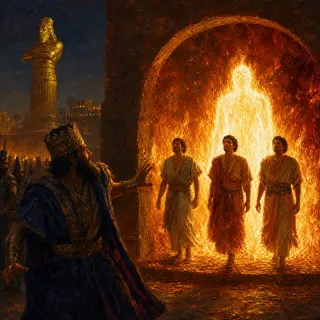
    That pairing explains why this cannot be reduced to a harmless bow of social courtesy. The command explicitly calls for worship of an image, and Exodus 20:3-5 forbids serving other gods and bowing to such objects. The three men's refusal therefore concerns the action demanded, not a failure to appreciate music or respect an orderly ceremony. The image's size made it conspicuous. The decree makes the position of every person before it consequential. A sound is to settle allegiance.

    Verse by verse

    1. 3:4

      People, nations, and languages is the decree's way of addressing the gathering in its varied collective identities.

    2. 3:5

      The instrument names are KJV renderings of ancient terms, not a precise inventory of a modern orchestra.

    3. 3:6

      The furnace is part of the announced penalty, not an accidental danger discovered after the ceremony begins.

    Daniel 3:4-6

    King James Version · 3 verses

    3:4Then an herald cried aloud, To you it is commanded, O people, nations, and languages,

    3:5That at what time ye hear the sound of the cornet, flute, harp, sackbut, psaltery, dulcimer, and all kinds of musick, ye fall down and worship the golden image that Nebuchadnezzar the king hath set up:

    3:6And whoso falleth not down and worshippeth shall the same hour be cast into the midst of a burning fiery furnace.

    Daniel 3:4-6: And whoso falleth not down and worshippeth
  4. 04

    Daniel 3:7

    All the people, the nations, and the languages, fell down

    The compliance is total and it is reported in one verse, which is what makes the next verse matter.

    The command becomes an action with almost no space between them. The same sequence returns: the sound is heard, the people fall down, the image receives worship. The repeated vocabulary gives the ceremony a mechanical efficiency. The royal instruction has been translated into bodies on the ground.

    All the people is the broad view of that response, not a claim that the chapter has forgotten the three men named as exceptions a few verses later. The Book of Daniel moves from the collective scene to the particular refusal. It does not supply a private motive for each person in the crowd. The visible obedience is what the sentence records, and that is exactly what the decree demanded.

    The phrase the king had set up closes the verse yet again. Amid the assembled provinces and the sound of many instruments, the object remains something Nebuchadnezzar erected. Nothing in the description gives it a voice, an act of rescue or an independent command. The order comes from the king, the signal from the musicians, and the movement from the people. The gold itself contributes no action.

    Verse by verse

    1. 3:7

      The verse reports the broad public response; 3:12 identifies the men who did not comply.

    2. 3:7

      Heard, fell down and worshipped follow the same order laid out in the herald's instruction.

    3. 3:7

      The shorter instrument list should be preserved, not silently expanded to match 3:5.

    Daniel 3:7

    King James Version · 1 verse

    3:7Therefore at that time, when all the people heard the sound of the cornet, flute, harp, sackbut, psaltery, and all kinds of musick, all the people, the nations, and the languages, fell down and worshipped the golden image that Nebuchadnezzar the king had set up.

    Daniel 3:7: All the people, the nations, and the languages, fell down
  5. 05

    Daniel 3:8-12

    There are certain Jews whom thou hast set over the affairs

    The accusation names the promotion before it names the offence, which tells you what the complaint was really about.

    The accusation begins with a compliment to the king and ends by making him the injured party. O king, live for ever is followed by a careful recital of his decree, including its punishment. Only then do the accusers name the Jews whose conduct they want him to judge. They have made the king hear his own rule before presenting the exception.

    Whom thou hast set over the affairs is particularly pointed. Their appointment had come at Daniel's request in 2:49. The accusers now turn that royal favor into part of the charge: these are men the king elevated, and they have not regarded him. Their refusal to worship is presented as personal disregard for the benefactor who appointed them.

    The closing clauses distinguish the religious acts clearly. They do not serve the king's gods, and they do not worship his image. Their employment in Babylon has not made those acts interchangeable with administrative service. The chapter gives the accusers' argument, not a diary of their feelings; envy need not be invented to see how the charge works. The men hold royal office. The accusation treats that office as a claim upon their worship.

    Verse by verse

    1. 3:8

      Certain Chaldeans are the accusers here; the verse does not assign their conduct to every Chaldean.

    2. 3:12

      Daniel 2:49 records the appointment of Shadrach, Meshach and Abednego over the affairs of Babylon at Daniel's request.

    3. 3:12

      Daniel himself is not mentioned in this episode. The chapter does not explain his absence.

    Daniel 3:8-12

    King James Version · 5 verses

    3:8Wherefore at that time certain Chaldeans came near, and accused the Jews.

    3:9They spake and said to the king Nebuchadnezzar, O king, live for ever.

    3:10Thou, O king, hast made a decree, that every man that shall hear the sound of the cornet, flute, harp, sackbut, psaltery, and dulcimer, and all kinds of musick, shall fall down and worship the golden image:

    3:11And whoso falleth not down and worshippeth, that he should be cast into the midst of a burning fiery furnace.

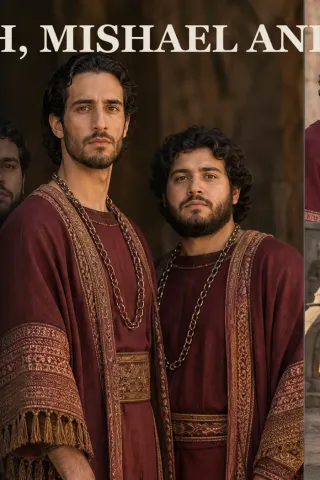
    3:12There are certain Jews whom thou hast set over the affairs of the province of Babylon, Shadrach, Meshach, and Abed-nego; these men, O king, have not regarded thee: they serve not thy gods, nor worship the golden image which thou hast set up.

Why it matters

The mechanism is a piece of civil procedure with music in it. At what time ye hear the sound of the cornet, flute, harp, sackbut, psaltery, dulcimer, and all kinds of musick, ye fall down and worship. The instrument list is repeated four times in the chapter, which is the writer’s way of showing you how the thing was run. The penalty is stated in the same sentence as the invitation, and the accusation that follows is made by people described as certain Chaldeans, who accused the Jews, and it is about employment as much as religion: these men have not regarded thee.

3 songs

The music

Every song in the catalogue whose passage falls inside these chapters.

  1. Daniel 3:1-30

    In the Midst of the Fire

    Play here
    Open song pageRead lyrics
  2. Daniel 3

    Through the Fire

  3. Daniel 3:1-30

    We Will Not Serve Thy Gods

Nearby

All the objects

Report an error on this page