Objects of the Bible

The lions’ den

The trap was legal, the king wanted him out, and the law would not let either of them stop it.

Daniel is about eighty and running a third of the empire, and doing it so well the king is planning to promote him again. His colleagues cannot find a fault, and the account is specific about why: they sought to find occasion against Daniel concerning the kingdom; but they could find none occasion nor fault. So they say out loud what they will have to do instead: we shall not find any occasion against this Daniel, except we find it against him concerning the law of his God.

Where it appearsDaniel 6

Scroll down to the account
The lions’ den

The movements, in the order the text gives them.

The Account of The lions’ den

  1. 01

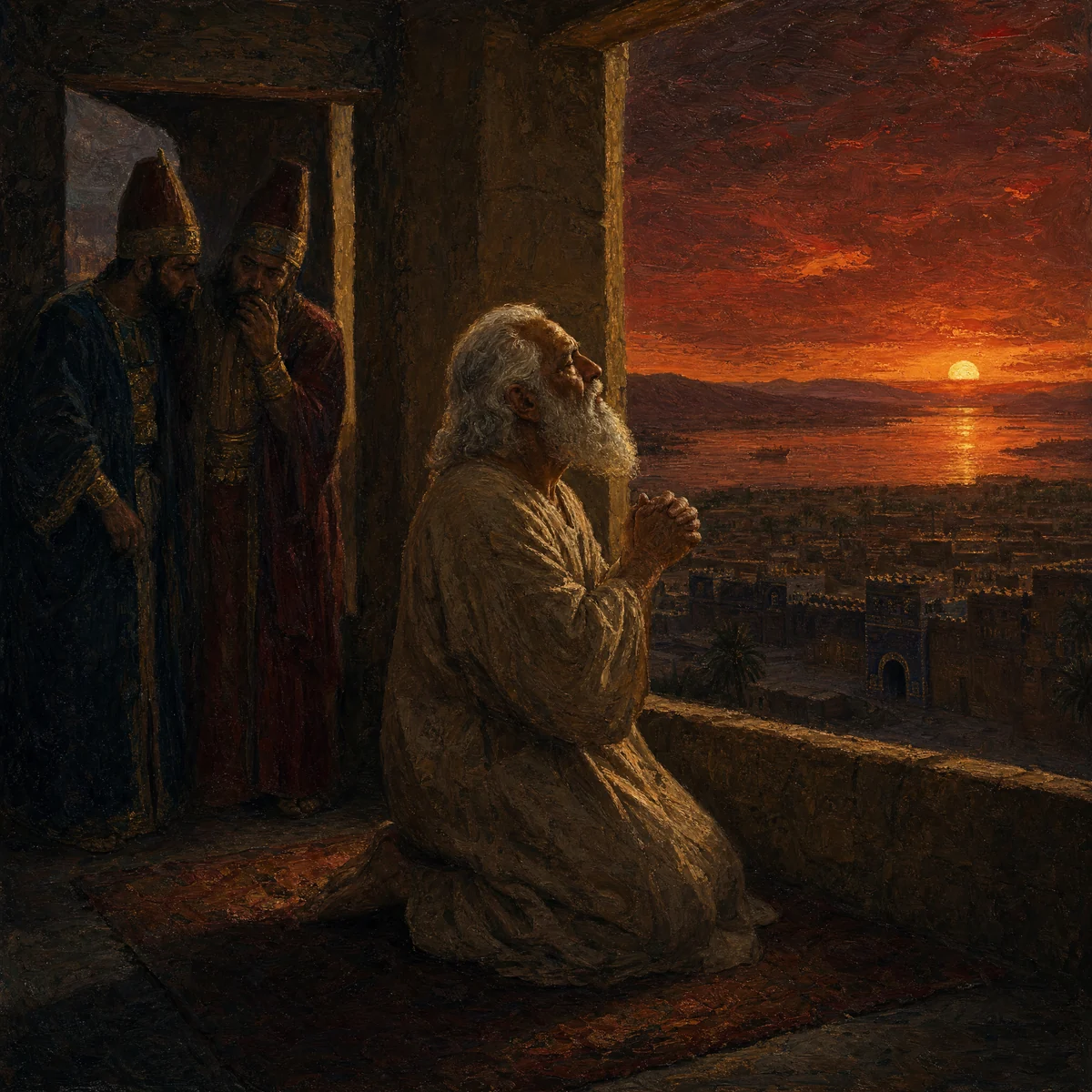
    Daniel 6:4-5

    Except we find it against him concerning the law of his God

    The conspirators say the quiet part out loud. The only vulnerability in an unimpeachable official is his religion.

    His opponents end up supplying the character reference. They investigate Daniel's conduct in the kingdom and can find neither corruption nor negligence. The chapter does not merely say that he hides his misconduct successfully. It gives the reason for their failure: he was faithful. Their search is defeated by the quality of the service they are examining.

    Concerning the kingdom sets the scope. These are charges sought against an official in his public work, not a declaration that Daniel has never sinned. Error and fault close off both careless administration and corrupt behavior. The officials cannot turn his appointment into evidence that he is unfit for it.

    Their conclusion is unusually revealing. They expect his loyalty to God to be as dependable as the conduct they have just investigated. The law of his God must become the point of attack, because his service to the kingdom supplies none. The scheme therefore depends on a collision between obligations, not on discovering a hidden theft. A man whose wrongdoing cannot be found can still be endangered by making his established practice punishable. Their case needs a new law.

    Verse by verse

    1. 6:4

      Occasion means a ground for accusation in this context, not simply an event or opportunity.

    2. 6:4

      The inquiry concerns Daniel's administration of royal affairs; the verse is not a claim of universal sinlessness.

    3. 6:5

      The officials identify fidelity to God's law as the only available basis for a charge. They are not reporting that his public service has failed.

    Daniel 6:4-5

    King James Version · 2 verses

    6:4Then the presidents and princes sought to find occasion against Daniel concerning the kingdom; but they could find none occasion nor fault; forasmuch as he was faithful, neither was there any error or fault found in him.

    6:5Then said these men, We shall not find any occasion against this Daniel, except we find it against him concerning the law of his God.

    Daniel 6:4-5: Except we find it against him concerning the law of his God
  2. 02

    Daniel 6:10

    As he did aforetime

    Three words carry the whole decision. He does not start praying more or less, or differently, or out of sight.

    As he did aforetime is the sentence's anchor. Daniel does not begin praying because the king signs a decree, and the verse does not present an improvised demonstration at a newly opened window. It describes his continuing practice after he knows exactly what has been signed. The law changes. His prayer does not.

    The physical details are precise without becoming theatrical: his house, an upper room, windows toward Jerusalem, bent knees, three occasions each day. Toward Jerusalem gives the prayer a direction rooted in Israel's worship, not in the location of the king's throne. Daniel serves in the kingdom, but his petitions do not take the route the decree has prescribed.

    Gave thanks deserves its place beside prayed. The verse does not reduce the whole act to a request for escape, and it does not supply the words of his thanksgiving. Inventing those words would make the scene less exact. What is recorded is continuity of address and action. The officials can find him because his devotion is not a new emergency measure. The practice they mean to use against him has not been suspended for their convenience.

    Verse by verse

    1. 6:10

      Chamber renders an Aramaic term for an upper room. The text describes the windows as open, without narrating a new gesture of opening them.

    2. 6:10

      Psalm 55:17 also names prayer in the evening, morning and at noon; Daniel 6:10 gives the frequency without naming exact hours.

    3. 6:10

      Daniel knows the decree has been signed. His action is not attributed to ignorance of the prohibition.

    Daniel 6:10

    King James Version · 1 verse

    6:10Now when Daniel knew that the writing was signed, he went into his house; and his windows being open in his chamber toward Jerusalem, he kneeled upon his knees three times a day, and prayed, and gave thanks before his God, as he did aforetime.

  3. 03

    Daniel 6:14-16

    He laboured till the going down of the sun to deliver him

    The king spends a working day trying to find a way out of his own decree, and the law he signed defeats him.

    The king spends the remaining daylight trying to undo what his own signature has made possible. His displeasure and his desire to deliver Daniel are stated plainly. This is not a case in which the ruler secretly welcomes the accusation and pretends reluctance. The Book of Daniel gives no warrant for replacing his recorded effort with an invented motive.

    The officials answer that effort by repeating the rule about an unalterable decree. They do not need to prove that Daniel is a dishonest servant; that inquiry has already failed. They need the king to carry out the statute he established. The authority placed at the center of every petition by the thirty-day decree is now unable to grant the release it wants.

    The final words make the limit audible. Darius speaks of Daniel's God delivering him while ordering Daniel into the den. The command and the appeal stand side by side. Continually also matters: the king acknowledges the sustained service that the accusation has turned into an offense. He can issue the order that exposes Daniel to the lions. He cannot produce the rescue he desires.

    Verse by verse

    1. 6:14

      The KJV explicitly says the king was displeased with himself and labored until sunset to deliver Daniel.

    2. 6:15

      The unalterable decree is the legal obstacle stated within this account; this verse alone does not establish every practice of Persian law.

    3. 6:16

      Continually recognizes Daniel's established service to God, the same continuity described in 6:10.

    Daniel 6:14-16

    King James Version · 3 verses

    6:14Then the king, when he heard these words, was sore displeased with himself, and set his heart on Daniel to deliver him: and he laboured till the going down of the sun to deliver him.

    6:15Then these men assembled unto the king, and said unto the king, Know, O king, that the law of the Medes and Persians is, That no decree nor statute which the king establisheth may be changed.

    6:16Then the king commanded, and they brought Daniel, and cast him into the den of lions. Now the king spake and said unto Daniel, Thy God whom thou servest continually, he will deliver thee.

  4. 04

    Daniel 6:18-20

    The king arose very early in the morning

    The night is described from the palace rather than the pit: no food, no music, no sleep, and a run to the den at dawn.

    The sleepless man is in the palace. The chapter records Darius without food, without the entertainment named in the KJV, and without rest, while it gives no corresponding description of how Daniel passes the hours inside the den. A comfortable sleep among the lions may furnish a painting, but it is not a detail supplied here.

    Morning does not bring the king a report delivered at leisure. He goes early and in haste, and his voice is lamentable. The contrast with the machinery of decrees and seals is sharp: the man whose order confined Daniel now stands outside calling for an answer he cannot command into existence.

    His address holds two things together. Daniel is servant of the living God, and that God is the one he serves continually. The accusation had represented repeated prayer as disregard for the king; the king now describes the same constancy as service. The question concerns whether deliverance has happened, not whether Daniel's loyalty was real. The palace has supplied neither sleep nor certainty. At the den, Darius must listen for a voice other than his own.

    Verse by verse

    1. 6:18

      The account describes the king's sleepless night. It does not say whether Daniel slept, sang or spoke with the angel.

    2. 6:19

      Very early and in haste emphasize the king's immediate visit rather than a routine inspection later in the day.

    3. 6:20

      Lamentable describes the king's distressed voice. Continually repeats his acknowledgment of Daniel's service in 6:16.

    Daniel 6:18-20

    King James Version · 3 verses

    6:18Then the king went to his palace, and passed the night fasting: neither were instruments of musick brought before him: and his sleep went from him.

    6:19Then the king arose very early in the morning, and went in haste unto the den of lions.

    6:20And when he came to the den, he cried with a lamentable voice unto Daniel: and the king spake and said to Daniel, O Daniel, servant of the living God, is thy God, whom thou servest continually, able to deliver thee from the lions?

  5. 05

    Daniel 6:21-23

    No manner of hurt was found upon him, because he believed in his God

    The verdict on the rescue is given in a subordinate clause, and the reason offered is trust rather than innocence.

    The voice from the den still knows the courtesy of the court. O king, live for ever is Daniel's first recorded reply, the same greeting the officials used before presenting their scheme in verse 6. A polite form of address proves neither innocence nor guilt. What follows it makes the difference.

    Daniel attributes his preservation to God sending his angel and shutting the lions' mouths. He does not claim to have overpowered the animals. His statement about innocence also addresses both tribunals: innocence before God, and no harm done to the king. Continuing to pray violated the newly signed prohibition, but Daniel denies that it constituted injury to the ruler. The accusation and the actual character of his conduct are not treated as the same thing.

    The examination of his body confirms the report from below: no manner of hurt. The Book of Daniel expressly connects that preservation with his trust in God. The verbal pattern reaches back to the first investigation. No fault could be found in his service; now no wound can be found upon him. The search for something against Daniel has ended with evidence of his deliverance.

    Verse by verse

    1. 6:22

      The angel is not named. Daniel 3:28 also attributes rescue to God sending an angel, without identifying the two appearances as the same individual.

    2. 6:22

      Daniel distinguishes the charge under the decree from wrongdoing against God or harm done to the king.

    3. 6:23

      The following verse records the king ordering the accusers, their wives and their children into the den. That order is attributed to Darius, not presented as a command spoken by God.

    Daniel 6:21-23

    King James Version · 3 verses

    6:21Then said Daniel unto the king, O king, live for ever.

    6:22My God hath sent his angel, and hath shut the lions’ mouths, that they have not hurt me: forasmuch as before him innocency was found in me; and also before thee, O king, have I done no hurt.

    6:23Then was the king exceeding glad for him, and commanded that they should take Daniel up out of the den. So Daniel was taken up out of the den, and no manner of hurt was found upon him, because he believed in his God.

Why it matters

The device is a thirty day decree forbidding petitions to anyone but the king, signed under a Medo-Persian rule the king cannot revoke, the same rule that runs the book of Esther. Daniel changes nothing: his windows being open in his chamber toward Jerusalem, he kneeled upon his knees three times a day, as he did aforetime. The king spends the night fasting, refuses music, cannot sleep, and arrives at dawn and calls down the hole with a lamentable voice. The answer that comes up is polite: O king, live for ever.

2 songs

The music

Every song in the catalogue whose passage falls inside these chapters.

  1. Daniel 6:1-28

    His Windows Open toward Jerusalem

  2. Daniel 6

    The Lions Closed Their Mouths

Nearby

All the objects

Report an error on this page