

Esther 1:5-8
White, green and blue hangings
The inventory of the feast runs for verses. The court is described the way a court wants to be described, which is the point.
Verse by verse
- 1:5
These days refers to the hundred and eighty days of royal display in 1:4; the seven-day banquet is distinguished from that period.
- 1:6
The Hebrew word behind beds also means couches, appropriate to the banquet setting; the verse is not describing bedrooms.
- 1:7
Diverse one from another describes the individual drinking vessels, all of which are said to be gold.
- 1:8
None did compel is the rule for drinking at this banquet, not a statement that every activity in the kingdom was voluntary.
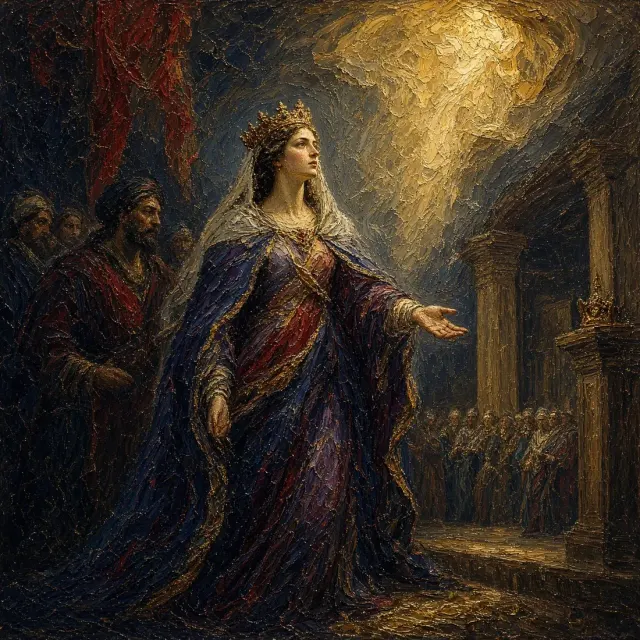

















Even the cups refuse to match. The parenthesis about the golden vessels being diverse one from another is a small detail with a large effect: ordinary repetition would not adequately describe this table. The Book of Esther pauses over the objects that make royal abundance visible. Silver holds the curtains; gold and silver furnish the couches; colored stone lies underfoot. Wealth is not merely announced. It surrounds the guests.
The seven-day banquet follows the earlier display of royal riches lasting a hundred and eighty days. Its invitation extends from great to small among those present in the citadel, rather than remaining restricted to the princes described in verse 3. The change of audience matters. This is still the king's garden, his furnishings, and his wine, but people of different standing are admitted to the display.
Then the description reaches a wonderfully precise piece of court administration. The drinking is according to the law, and the rule is that none shall compel. Each guest's pleasure has been authorized by the king and transmitted to the officers of his household. The verse describes freedom over drinking, not freedom from royal authority in general. Even permission to do as one pleases arrives from above. In these few lines, Susa is both lavish hospitality and carefully ordered access to the royal household.