23:4And the king commanded Hilkiah the high priest, and the priests of the second order, and the keepers of the door, to bring forth out of the temple of the LORD all the vessels that were made for Baal, and for the grove, and for all the host of heaven: and he burned them without Jerusalem in the fields of Kidron, and carried the ashes of them unto Beth-el.
23:5And he put down the idolatrous priests, whom the kings of Judah had ordained to burn incense in the high places in the cities of Judah, and in the places round about Jerusalem; them also that burned incense unto Baal, to the sun, and to the moon, and to the planets, and to all the host of heaven.
23:6And he brought out the grove from the house of the LORD, without Jerusalem, unto the brook Kidron, and burned it at the brook Kidron, and stamped it small to powder, and cast the powder thereof upon the graves of the children of the people.
23:7And he brake down the houses of the sodomites, that were by the house of the LORD, where the women wove hangings for the grove.
23:8And he brought all the priests out of the cities of Judah, and defiled the high places where the priests had burned incense, from Geba to Beer-sheba, and brake down the high places of the gates that were in the entering in of the gate of Joshua the governor of the city, which were on a man’s left hand at the gate of the city.
23:9Nevertheless the priests of the high places came not up to the altar of the LORD in Jerusalem, but they did eat of the unleavened bread among their brethren.
23:10And he defiled Topheth, which is in the valley of the children of Hinnom, that no man might make his son or his daughter to pass through the fire to Molech.
23:11And he took away the horses that the kings of Judah had given to the sun, at the entering in of the house of the LORD, by the chamber of Nathan-melech the chamberlain, which was in the suburbs, and burned the chariots of the sun with fire.
23:12And the altars that were on the top of the upper chamber of Ahaz, which the kings of Judah had made, and the altars which Manasseh had made in the two courts of the house of the LORD, did the king beat down, and brake them down from thence, and cast the dust of them into the brook Kidron.
23:13And the high places that were before Jerusalem, which were on the right hand of the mount of corruption, which Solomon the king of Israel had builded for Ashtoreth the abomination of the Zidonians, and for Chemosh the abomination of the Moabites, and for Milcom the abomination of the children of Ammon, did the king defile.
23:14And he brake in pieces the images, and cut down the groves, and filled their places with the bones of men.


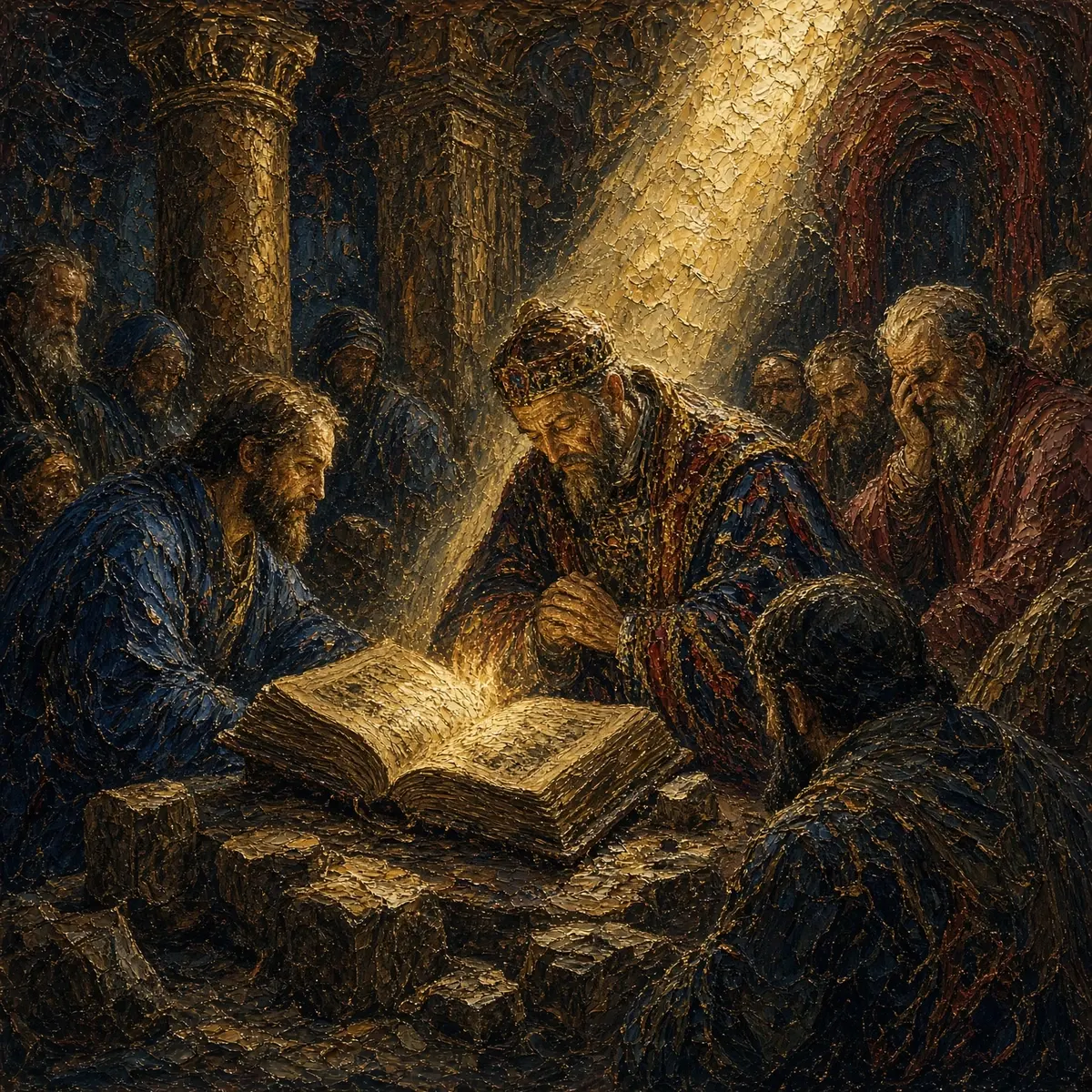
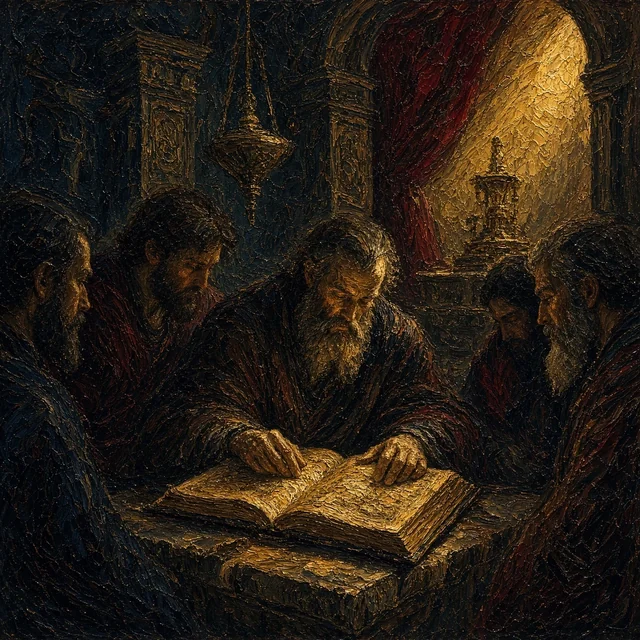
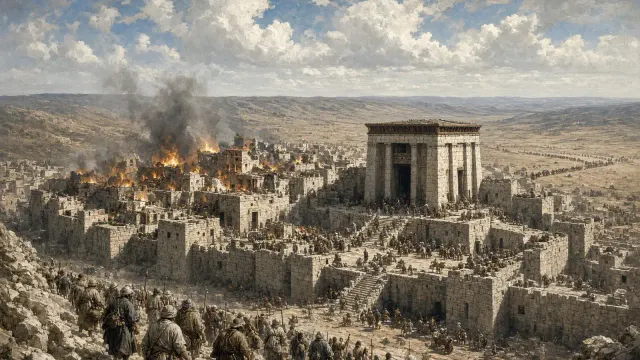

The building work has acquired a document that is not a building account. The surrounding verses concern money, carpenters, masons, timber and stone. Then Hilkiah places the book of the law in Shaphan's hands. It has been found inside the house whose breaches are being repaired. The institution is still functioning, money is being collected and workers are being paid, while this finding exposes a different kind of breach.
The short chain of actions matters: Hilkiah finds, gives, and Shaphan reads. The scroll is not simply identified and put safely away. Its words enter the proceedings. In verse 10 Shaphan reads it before the king, so the movement from temple to palace is also a movement from possession to hearing. Nor does the discovery mark the beginning of every reform Josiah ever attempted: 2 Chronicles 34:3 places earlier purges before the eighteenth-year repairs. The Book of Second Kings is concentrating attention here on the recovered law and its authority. Repairing the house and hearing what governs the house are not the same operation.