


Joshua 6:3-5
Seven priests shall bear before the ark seven trumpets
The plan is counted out in sevens, and the signal for the shout is the sound of the horn rather than an order from a commander.
Verse by verse
- 6:3
Compass means go around or encircle, not measure the city.
- 6:4
The Hebrew shofar names a horn instrument; the silver trumpets of Numbers 10 have a different Hebrew name.
- 6:5
Fall down flat states the promised result, not the physical mechanism that brings it about.

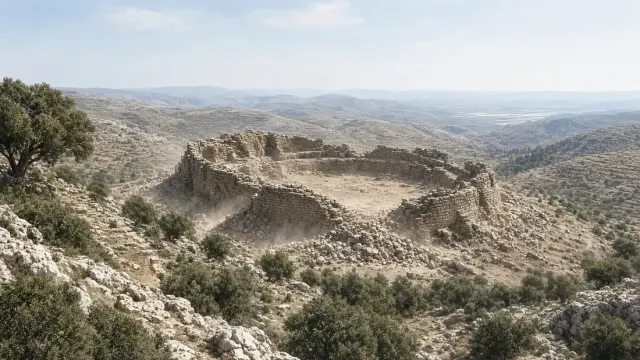

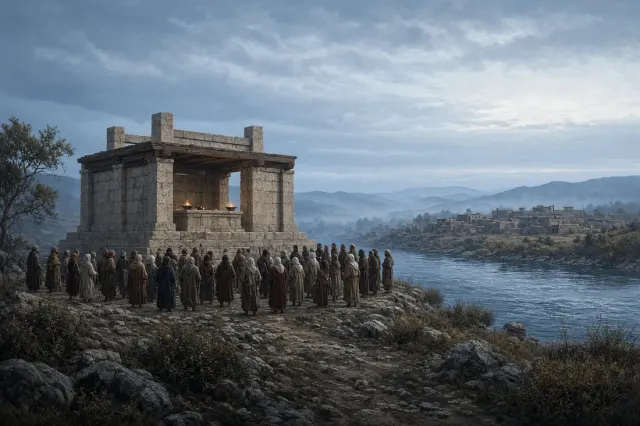
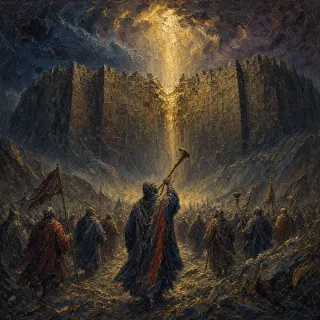




The battle plan spends more time counting priests than describing weapons. Seven priests, seven horns, seven days, and seven circuits on the final day: the arrangement is too deliberate to pass for a tactical improvisation. The men of war are present, but the instructions put the ark and its attendants at the center. Jericho is being approached as a city under the LORD's claim, not merely as an obstacle in Joshua's campaign.
The horns also have a precise job. Their prolonged blast signals the people's shout; neither the instruments nor the shouting are described as a mechanical means of breaking masonry. The promise that the wall will fall comes before any sound is made. That order matters. The Book of Joshua supplies an act of God, not an early experiment in acoustics. Even the final movement is specified: every man straight before him. No gate has to become the single narrow point of entry. The barrier itself is to cease being a barrier.