New · FreePlay The Witnesses The in-depth puzzle battle quest through Bible history

Objects of the Bible

The scarlet cord

The rope she used to let them out became the mark that let her live, and it stayed in the window.

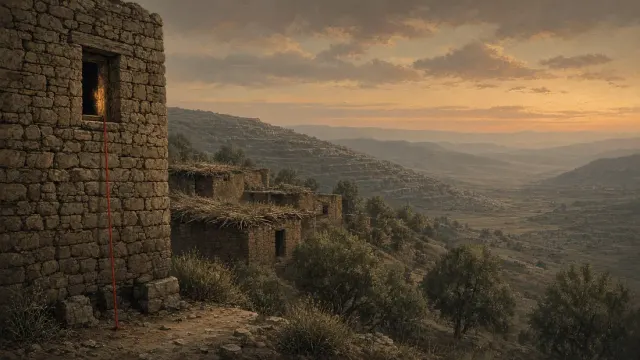
The spies are let down by a cord through a window, because her house is upon the town wall and she dwelt upon the wall. The same object then does a second job. The men attach a condition to their oath: thou shalt bind this line of scarlet thread in the window which thou didst let us down by, and thou shalt bring thy father and thy mother and thy brethren and all thy father’s household home unto thee.

Where it appearsJoshua 2 · Joshua 6

Scroll down to the account
The scarlet cord

The movements, in the order the text gives them.

The Account of The scarlet cord

  1. 01

    Joshua 2:15

    She let them down by a cord through the window

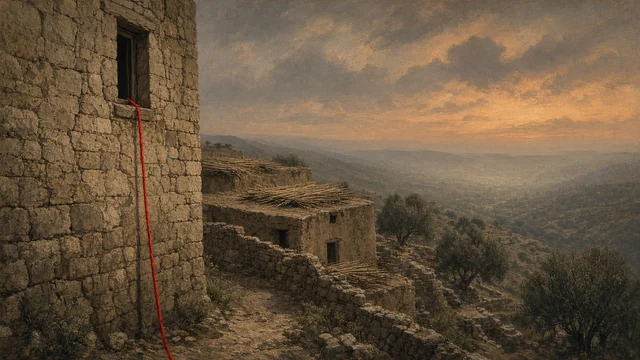
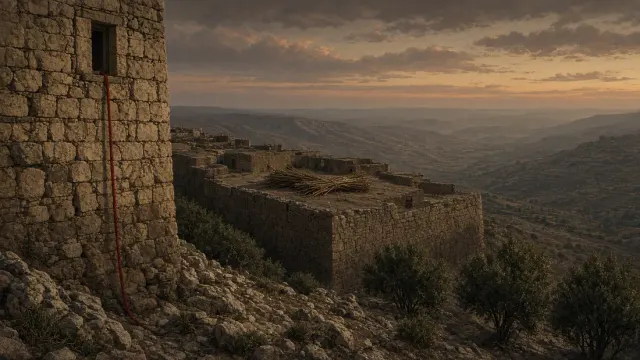
    The rope is a practical object first. Her house is on the wall, which is why the escape works and why the mark can be seen from outside.

    The city wall has a household built into its defenses, and that household supplies a way around the guarded gate. The Book of Joshua mentions the location twice in one verse because the architecture explains the escape. The royal search has gone toward the Jordan; the spies leave by a window. Jericho's security arrangements have not reckoned with the woman living in the wall.

    This first cord is practical before it is anything symbolic: it bears the weight of men being lowered. The passage does not describe its color. The scarlet line appears in the later agreement, and the Hebrew uses different words for the rope here and the identifying line there. They might have been associated objects, but their identity should not be announced as a fact the text has established. What is established is Rahab's action. Her earlier confession about the LORD now has a physical consequence, a route of escape. James 2:25 specifically remembers that she received the messengers and sent them out another way. That other way includes a window in the defenses.

    Verse by verse

    1. 2:15

      The repeated reference to the wall explains why the window provides an exit beyond the city gate.

    2. 2:15

      James 2:25 recalls the alternative escape route as part of Rahab's action on behalf of the messengers.
    Joshua 2:15

    King James Version · 1 verse

    2:15Then she let them down by a cord through the window: for her house was upon the town wall, and she dwelt upon the wall.

    Joshua 2:15: She let them down by a cord through the window
  2. 02

    Joshua 2:17-20

    Bind this line of scarlet thread in the window

    The oath is made conditional on one visible sign and one rule about staying indoors, and the men state plainly what voids it.

    The scarlet line belongs to an oath with terms, not to a collection of lucky objects. The spies define the protected household, the visible marker, the duty of secrecy, and responsibility if someone leaves. Blood upon his head is the language of liability for a death. The wording is exact because the promised protection is exact: those gathered in the marked house are covered by the agreement.

    That makes the window more than a convenient place to hang something red. It identifies the house whose inhabitants the spies have pledged to preserve. The physical arrangement recalls Passover in Exodus 12: a marked dwelling, people gathered inside, danger outside, and an instruction not to leave. The situations are not identical. Here the protected house belongs to a woman of Jericho, and the mark is thread rather than blood. The resemblance is strongest when those differences remain visible. The oath cuts a protected space into a city facing destruction. Its boundary runs through a doorway, not along the city's wall.

    Verse by verse

    1. 2:18

      The household includes Rahab's relatives gathered into her house, not merely people already living there.

    2. 2:19

      Blood upon a head assigns responsibility for death; it does not describe blood being physically applied.

    3. 2:20

      Quit of the oath means released from its obligation if the agreed secrecy is broken.

    Joshua 2:17-20

    King James Version · 4 verses

    2:17And the men said unto her, We will be blameless of this thine oath which thou hast made us swear.

    2:18Behold, when we come into the land, thou shalt bind this line of scarlet thread in the window which thou didst let us down by: and thou shalt bring thy father, and thy mother, and thy brethren, and all thy father’s household, home unto thee.

    2:19And it shall be, that whosoever shall go out of the doors of thy house into the street, his blood shall be upon his head, and we will be guiltless: and whosoever shall be with thee in the house, his blood shall be on our head, if any hand be upon him.

    2:20And if thou utter this our business, then we will be quit of thine oath which thou hast made us to swear.

    Joshua 2:17-20: Bind this line of scarlet thread in the window
  3. 03

    Joshua 2:21

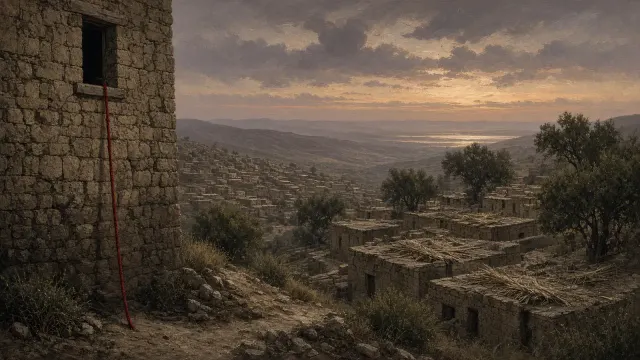
    She bound the scarlet line in the window

    She ties it immediately, before the army is anywhere near, which means the mark hangs there through everything that follows.

    The agreement ends with a knot. Rahab answers the men, sends them away, and binds the line in the window. The sequence gives her assent a visible form without stopping to describe her inner life. The Book of Joshua does not need to report how firmly she felt anything. The thread is there.

    There is a useful restraint in this small verse. It does not turn the line into a charm, say that its fibers have changed, or claim that the color itself will prevent death. Its significance comes from the words just spoken and the action that follows them. The same window through which the men escaped now identifies the house to which their promise applies. Secrecy and visibility sit together: the mission must remain undisclosed, while the agreed marker must be displayed. The chapter leaves both requirements intact. Nor does it provide a long interval of hesitation before the binding. In the order of the account, Rahab acts before the spies return to Joshua with their report.

    Verse by verse

    1. 2:21

      The binding fulfills the instruction of Joshua 2:18; the text supplies no additional ritual.

    2. 2:21

      The verse places the binding before the spies' return in Joshua 2:23, without giving an exact date or hour.

    Joshua 2:21

    King James Version · 1 verse

    2:21And she said, According unto your words, so be it. And she sent them away, and they departed: and she bound the scarlet line in the window.

    Joshua 2:21: She bound the scarlet line in the window
  4. 04

    Joshua 6:22-25

    Bring out thence the woman

    The two spies are sent to keep the promise in person, and the account says she dwelleth in Israel even unto this day.

    The men sent to bring Rahab out are the same two men she brought out. Joshua makes their earlier oath part of the military order: as ye sware unto her. The rescue is not a fresh favor granted after victory. It is an existing obligation being honored, with the original witnesses responsible for carrying it through.

    The family is first placed outside Israel's camp, but the account does not end there. Verse 25 says that Rahab dwells in Israel. Those two locations should not be flattened into one: there is an initial removal from the doomed city and then a statement of enduring inclusion. The passage does not describe a purification ceremony or the timetable between them. It does name her parents, siblings, and wider kin, preventing the promised household from dissolving into a vague crowd. The scarlet line itself is no longer mentioned. It has done its identifying work; the attention belongs to the people brought out alive. Matthew 1:5 later places Rahab, spelled Rachab in the KJV there, within the genealogy leading to David and Jesus.

    Verse by verse

    1. 6:22

      As ye sware explicitly connects the rescue order with the oath in Joshua 2.

    2. 6:23

      Without the camp means outside the camp. The text does not specify the reason for that initial placement.

    3. 6:25

      Unto this day is the account's own time reference, not a claim that Rahab remained alive in later centuries.

    Joshua 6:22-25

    King James Version · 4 verses

    6:22But Joshua had said unto the two men that had spied out the country, Go into the harlot’s house, and bring out thence the woman, and all that she hath, as ye sware unto her.

    6:23And the young men that were spies went in, and brought out Rahab, and her father, and her mother, and her brethren, and all that she had; and they brought out all her kindred, and left them without the camp of Israel.

    6:24And they burnt the city with fire, and all that was therein: only the silver, and the gold, and the vessels of brass and of iron, they put into the treasury of the house of the LORD.

    6:25And Joshua saved Rahab the harlot alive, and her father’s household, and all that she had; and she dwelleth in Israel even unto this day; because she hid the messengers, which Joshua sent to spy out Jericho.

    Joshua 6:22-25: Bring out thence the woman

Why it matters

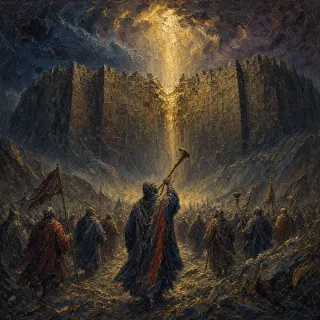
The terms are unusually precise about responsibility. Whoever goes out of the doors of the house into the street, his blood shall be upon his head, and we will be guiltless. The safety is the house, marked, with everyone inside it. It is the Passover arrangement in a different city: a red mark on the outside of a dwelling, seen by the people who are coming, not by the people sheltering. When the wall falls, the two young men that were spies go in and fetch out Rahab and all she has.

5 songs

The music

Every song in the catalogue whose passage falls inside these chapters.

  1. Joshua 1:1-2:24

    Be Strong and Very Courageous

  2. Joshua 2

    A Cord of Scarlet

  3. Joshua 5:1-6:27

    The Seventh Circuit

  4. Joshua 5:13-6:27

    The Walls Came Down

  5. Joshua 6

    The Walls Come Down

Nearby

All the objects

Report an error on this page