
New · FreePlay The Witnesses The in-depth puzzle battle quest through Bible history

People of the Bible

Rahab

Hid two spies under drying flax, bargained for her whole family, and ended up in the line of the Messiah.

Rahab keeps a house on the city wall of Jericho and is introduced by her trade, which Scripture never softens. When two spies come in, the king’s men are behind them within hours, and she hides the men on her roof and sends the search the wrong way. Then she does the thing that matters: she tells them she knows what happened at the Red Sea forty years ago and that the whole city has been melting with fear ever since, and asks for her father, mother, brothers and sisters to be spared. She gets it in writing, in the form of a scarlet cord.

Where she appearsJoshua 2 · Joshua 6

Scroll down to the account
Rahab

The movements, in the order the text gives them.

The Account of Rahab

  1. 01

    Joshua 2:1-7

    Under the flax on the roof

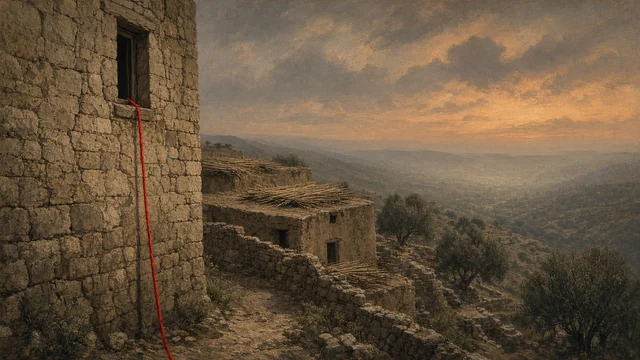
    The king sends word to bring the men out. She admits they came, says they left at dark and the gate is closing, and sends the pursuit towards the fords while they lie under stalks of flax.

    The secret mission is known to the king by the second verse. The two men have scarcely entered Jericho before their safety depends on the woman whose house they chose. Rahab controls the exchange at the door, the hiding place overhead, and the false direction in which the search party runs. For this stretch of the mission, the spies contribute chiefly by remaining under the flax.

    Her answer is a lie, and the Book of Joshua makes that unmistakable by placing the men on the roof immediately after she says they have gone. There is no need to turn the contradiction into a clever technical truth. Nor does the passage pause to settle every later argument about deception in war. It shows precisely whom she protects and whom she refuses to obey. The city's gate shuts on the pursuers' heels. The men they want are still inside.

    Verse by verse

    1. 2:1

      The two spies are not named. The passage also does not say that they engaged in sexual activity in Rahab's house.

    2. 2:4-6

      Her claim that the men departed is contradicted by the explicit statement that she hid them on the roof.

    3. 2:6

      The flax is laid out in stalks on the roof. That concrete detail explains the hiding place without proving that weaving was her sole occupation.

    4. 2:7

      Fords are places where a river can be crossed. The pursuers head toward the Jordan rather than searching the hiding place.

    Joshua 2:1-7

    King James Version · 7 verses

    2:1And Joshua the son of Nun sent out of Shittim two men to spy secretly, saying, Go view the land, even Jericho. And they went, and came into an harlot’s house, named Rahab, and lodged there.

    2:2And it was told the king of Jericho, saying, Behold, there came men in hither to night of the children of Israel to search out the country.

    2:3And the king of Jericho sent unto Rahab, saying, Bring forth the men that are come to thee, which are entered into thine house: for they be come to search out all the country.

    2:4And the woman took the two men, and hid them, and said thus, There came men unto me, but I wist not whence they were:

    2:5And it came to pass about the time of shutting of the gate, when it was dark, that the men went out: whither the men went I wot not: pursue after them quickly; for ye shall overtake them.

    2:6But she had brought them up to the roof of the house, and hid them with the stalks of flax, which she had laid in order upon the roof.

    2:7And the men pursued after them the way to Jordan unto the fords: and as soon as they which pursued after them were gone out, they shut the gate.

    Joshua 2:1-7: Under the flax on the roof
  2. 02

    Joshua 2:8-14

    We heard, and our hearts melted

    She recites the Red Sea and the two kings east of the Jordan and says the LORD is God in heaven above and on earth beneath. Then she asks for her family by name.

    The most confident statement about Israel's future comes from a woman in the city marked for conquest. I know that the LORD hath given you the land. She has not watched the Red Sea part; she has heard what happened there and what happened to Sihon and Og. Her confession is built from reported events, and it moves beyond recognizing a dangerous enemy to naming God in heaven above, and in earth beneath.

    The same reports have melted the courage of the city. Rahab turns that knowledge into a negotiated oath. Father, mother, brothers, sisters: she makes the men hear the people included in the promise. Kindness already shown is to be answered with kindness, and she asks them to swear by the very LORD she has just confessed. The exchange is not a vague assurance that everything will turn out well. Their lives are pledged for hers, under stated terms.

    Verse by verse

    1. 2:9

      Hath given treats the coming possession as settled in her confession, although Jericho has not yet fallen.

    2. 2:10

      The Red Sea and the defeats of Sihon and Og are separate events. She explicitly says she heard reports of them.

    3. 2:12

      The repeated Hebrew hesed links the kindness she has shown with the loyal treatment she requests in return.

    4. 2:14

      The pledge is conditional on keeping the mission secret; the men are not issuing an unrestricted guarantee.

    Joshua 2:8-14

    King James Version · 7 verses

    2:8And before they were laid down, she came up unto them upon the roof;

    2:9And she said unto the men, I know that the LORD hath given you the land, and that your terror is fallen upon us, and that all the inhabitants of the land faint because of you.

    2:10For we have heard how the LORD dried up the water of the Red sea for you, when ye came out of Egypt; and what ye did unto the two kings of the Amorites, that were on the other side Jordan, Sihon and Og, whom ye utterly destroyed.

    2:11And as soon as we had heard these things, our hearts did melt, neither did there remain any more courage in any man, because of you: for the LORD your God, he is God in heaven above, and in earth beneath.

    2:12Now therefore, I pray you, swear unto me by the LORD, since I have shewed you kindness, that ye will also shew kindness unto my father’s house, and give me a true token:

    2:13And that ye will save alive my father, and my mother, and my brethren, and my sisters, and all that they have, and deliver our lives from death.

    2:14And the men answered her, Our life for yours, if ye utter not this our business. And it shall be, when the LORD hath given us the land, that we will deal kindly and truly with thee.

  3. 03

    Joshua 2:15-21

    The scarlet cord in the window

    She lets them down the wall by the same rope that will mark the house. The terms are exact: the cord in the window, the family inside, and nobody in the street.

    The window does two jobs. It lets the spies escape the closed city, and it marks the house they must recognize when they return. Rahab supplies the route and the timetable as well: hide in the hills for three days, then cross back after the pursuit has ended. The woman sheltered by their oath is also arranging their survival.

    The agreement becomes exact about space. Inside this house, the men accept responsibility for her family; outside it, they do not. That boundary gives the scarlet line its immediate purpose. It is a sign attached to a sworn undertaking, not an object to which the Book of Joshua assigns independent power. Rahab binds it in the window before the chapter has finished the departure. The terms have been spoken, accepted, and made visible.

    Verse by verse

    1. 2:15

      The Hebrew word for the escape rope differs from the expression used for the scarlet line in 2:18. The text does not require them to be the same piece of cord.

    2. 2:18

      Her household must gather in her house. Kinship alone, without remaining in the designated place, does not meet the stated terms.

    3. 2:19

      Blood upon the head is language of responsibility for a death, not a description of how the death would occur.

    4. 2:21

      James 2:25 specifically remembers her receiving the messengers and sending them out another way, highlighting the practical actions of this rescue.

    Joshua 2:15-21

    King James Version · 7 verses

    2:15Then she let them down by a cord through the window: for her house was upon the town wall, and she dwelt upon the wall.

    2:16And she said unto them, Get you to the mountain, lest the pursuers meet you; and hide yourselves there three days, until the pursuers be returned: and afterward may ye go your way.

    2:17And the men said unto her, We will be blameless of this thine oath which thou hast made us swear.

    2:18Behold, when we come into the land, thou shalt bind this line of scarlet thread in the window which thou didst let us down by: and thou shalt bring thy father, and thy mother, and thy brethren, and all thy father’s household, home unto thee.

    2:19And it shall be, that whosoever shall go out of the doors of thy house into the street, his blood shall be upon his head, and we will be guiltless: and whosoever shall be with thee in the house, his blood shall be on our head, if any hand be upon him.

    2:20And if thou utter this our business, then we will be quit of thine oath which thou hast made us to swear.

    2:21And she said, According unto your words, so be it. And she sent them away, and they departed: and she bound the scarlet line in the window.

  4. 04

    Joshua 6:22-25

    Bring out the woman

    The walls fall and the two men are sent back in for her household. Everything else in the city is destroyed. She is brought out and settles in Israel.

    As ye sware unto her is the sentence that holds this rescue together. Joshua sends the very men who made the promise, and the account repeats the household terms rather than reducing them to Rahab alone. The oath survives the change from reconnaissance to conquest. The men who once needed her to bring them out must now bring her out.

    The movement does not stop at rescue from the city. First the family is placed without the camp; then Rahab is said to dwell in Israel. Outside is a location in the immediate evacuation, not the final verdict on her belonging. The surrounding destruction is explicit, and the text does not soften it into an empty city falling. Against that account stand named relatives, a kept oath, and a woman who continues living among the people whose messengers she hid.

    Verse by verse

    1. 6:22

      The same two men are commissioned to carry out the oath they personally swore in chapter 2.

    2. 6:23

      Without the camp means outside the camp. No particular purification ritual is described here.

    3. 6:24

      The metals enter the LORD's treasury rather than becoming private spoil, a distinction essential to the account of Achan in chapter 7.

    4. 6:25

      Hebrews 11:31 attributes her survival to faith and identifies her peaceful reception of the spies as the action accompanying it.

    Joshua 6:22-25

    King James Version · 4 verses

    6:22But Joshua had said unto the two men that had spied out the country, Go into the harlot’s house, and bring out thence the woman, and all that she hath, as ye sware unto her.

    6:23And the young men that were spies went in, and brought out Rahab, and her father, and her mother, and her brethren, and all that she had; and they brought out all her kindred, and left them without the camp of Israel.

    6:24And they burnt the city with fire, and all that was therein: only the silver, and the gold, and the vessels of brass and of iron, they put into the treasury of the house of the LORD.

    6:25And Joshua saved Rahab the harlot alive, and her father’s household, and all that she had; and she dwelleth in Israel even unto this day; because she hid the messengers, which Joshua sent to spy out Jericho.

    Joshua 6:22-25: Bring out the woman

Why it matters

Rahab is a Canaanite prostitute inside a condemned city who makes a better confession than most of Israel manages in the wilderness. Joshua records that she lived in Israel from that day. Hebrews lists her among the faithful, James uses her as the example of faith that acted, and Matthew puts her in the genealogy of Jesus as the mother of Boaz. Four chapters later Achan hides plunder and his whole household dies, which is the same structure run the other way.

5 songs

The music

Every song in the catalogue whose passage falls inside these chapters.

  1. Joshua 1:1-2:24

    Be Strong and Very Courageous

  2. Joshua 2

    A Cord of Scarlet

  3. Joshua 5:1-6:27

    The Seventh Circuit

  4. Joshua 5:13-6:27

    The Walls Came Down

  5. Joshua 6

    The Walls Come Down

Nearby

All the people

Report an error on this page