New · FreePlay The Witnesses The in-depth puzzle battle quest through Bible history

People of the Bible

Obadiah

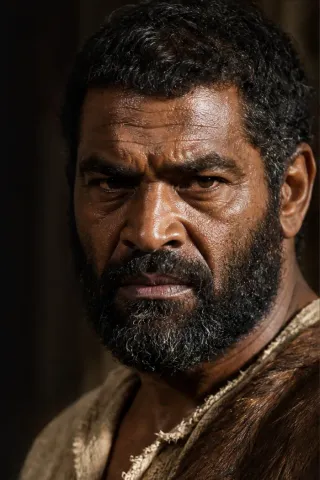
Twenty-one verses, the shortest book in the Old Testament, about a brother who stood on the other side of the road.

Obadiah has no dates, no father named and no biography, and the whole book is one oracle against Edom. Edom is the nation descended from Esau, which means the quarrel is a family one and about eight hundred years old. The charge is precise: not that Edom attacked Jerusalem but that it stood on the other side on the day strangers carried away the city, looked on, rejoiced, spoke proudly in the day of distress, and stood in the crossway to cut off those who escaped.

Where he appearsObadiah 1

Scroll down to the account
Obadiah

The movements, in the order the text gives them.

The Account of Obadiah

  1. 01

    Obadiah 1:1-4

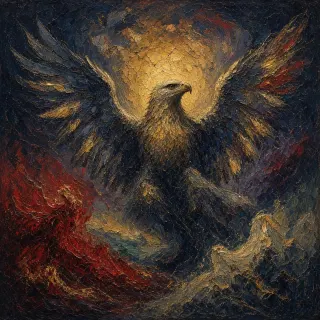
    Though you exalt yourself as the eagle

    The pride of your heart has deceived you, dwelling in the clefts of the rock, saying who shall bring me down to the ground. The answer names the height and then removes it.

    Edom has mistaken altitude for immunity. The rock clefts and high dwelling are real features of the picture, but the decisive diagnosis is not geographical: the pride of thine heart hath deceived thee. Before an enemy crosses the border, Edom has already believed something false about its own security. The heart gives the fortress a guarantee that the fortress cannot keep.

    The answer follows the boast upward. A high dwelling becomes an eagle's nest; an eagle's nest is imagined among the stars. The LORD does not dispute whether the climb can be made. Even there, the sentence still ends with down. Against all that elevation stands the blunt declaration of verse 2: small. The opening puts Edom's estimate of itself beside God's estimate, and the measurements do not agree.

    Verse by verse

    1. 1:1

      The heading supplies neither a king nor a date. It does not identify this Obadiah with Ahab's official in 1 Kings 18:3-4.

    2. 1:1

      Rumour here is a report or message, not necessarily an unreliable piece of gossip.

    3. 1:4

      The nest among the stars intensifies the image of inaccessible height; it is not a description of an actual settlement.


    Obadiah 1:1-4

    King James Version · 4 verses

    1:1The vision of Obadiah. Thus saith the Lord GOD concerning Edom; We have heard a rumour from the LORD, and an ambassador is sent among the heathen, Arise ye, and let us rise up against her in battle.

    1:2Behold, I have made thee small among the heathen: thou art greatly despised.

    1:3The pride of thine heart hath deceived thee, thou that dwellest in the clefts of the rock, whose habitation is high; that saith in his heart, Who shall bring me down to the ground?

    1:4Though thou exalt thyself as the eagle, and though thou set thy nest among the stars, thence will I bring thee down, saith the LORD.

    Obadiah 1:1-4: Though you exalt yourself as the eagle
  2. 02

    Obadiah 1:10-14

    You stood on the other side

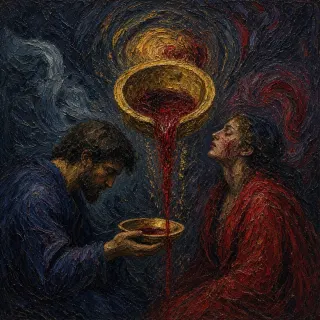
    Eight things not to have done, each beginning with a day: the day you stood by, the day strangers carried away his forces, the day of his calamity, the day of their destruction, the day of distress.

    Brother is the word that makes this more than a border dispute. Genesis 36:1 identifies Esau as Edom; the national names carry a family relationship into the accusation. Edom did not need to command the invading army to belong in its company. Even thou wast as one of them. Standing apart did not make standing innocent.

    The repeated day of distress slows the indictment down until each action has to be faced separately. Looking becomes rejoicing and boasting; entry into the ruined city becomes seizure of its goods; the crossroads become a place to catch the people who escaped. These are not interchangeable descriptions of bad feeling. They name participation, profit, and the closing of an escape route. The final picture is not a rival safely behind its own walls. It is a brother waiting at the road.

    Verse by verse

    1. 1:10

      Jacob and Esau function here as ancestral names for peoples, not as the two brothers personally taking part in this attack.

    2. 1:11

      No invading king or year is named in this passage. A precise historical identification requires evidence beyond these verses.

    3. 1:14

      The crossway is a point where fugitives can be intercepted; the verse explicitly includes handing survivors over.

    Obadiah 1:10-14

    King James Version · 5 verses

    1:10For thy violence against thy brother Jacob shame shall cover thee, and thou shalt be cut off for ever.

    1:11In the day that thou stoodest on the other side, in the day that the strangers carried away captive his forces, and foreigners entered into his gates, and cast lots upon Jerusalem, even thou wast as one of them.

    1:12But thou shouldest not have looked on the day of thy brother in the day that he became a stranger; neither shouldest thou have rejoiced over the children of Judah in the day of their destruction; neither shouldest thou have spoken proudly in the day of distress.

    1:13Thou shouldest not have entered into the gate of my people in the day of their calamity; yea, thou shouldest not have looked on their affliction in the day of their calamity, nor have laid hands on their substance in the day of their calamity;

    1:14Neither shouldest thou have stood in the crossway, to cut off those of his that did escape; neither shouldest thou have delivered up those of his that did remain in the day of distress.

    Obadiah 1:10-14: You stood on the other side
  3. 03

    Obadiah 1:15-16

    As you have done

    The day of the LORD is near upon all the nations. As you have done, it shall be done to you, and your reward shall return upon your own head.

    The accusation against one nation opens into a judgment upon all the heathen. Edom is not being told that its enemies enjoy a permanent exemption. It is being placed inside a reckoning larger than its own quarrel, under a principle fitted exactly to its conduct: as thou hast done. The actions listed in verses 11-14 have supplied the measure.

    Reward is a dangerous word to read too cheerfully here. This is recompense coming back upon the head of the perpetrator, not a prize. The drinking image then pushes the judgment beyond an ordinary reversal of fortune. Whether the opening drink refers to Edom's celebration or Judah's suffering is disputed; what follows is unmistakable. The nations drink judgment until the verse describes them as though they had not been. The language leaves no victory toast at the end.

    Verse by verse

    1. 1:15

      Heathen renders a word for nations; the announcement deliberately widens beyond Edom.

    2. 1:15

      Reward means repayment or recompense in this context, with no implication of a benefit.

    3. 1:16

      Jeremiah 49:12 explicitly uses drinking a cup for Edom's punishment, providing a close parallel for the judgment imagery.

    Obadiah 1:15-16

    King James Version · 2 verses

    1:15For the day of the LORD is near upon all the heathen: as thou hast done, it shall be done unto thee: thy reward shall return upon thine own head.

    1:16For as ye have drunk upon my holy mountain, so shall all the heathen drink continually, yea, they shall drink, and they shall swallow down, and they shall be as though they had not been.

    Obadiah 1:15-16: As you have done
  4. 04

    Obadiah 1:17-21

    The kingdom shall be the LORD’s

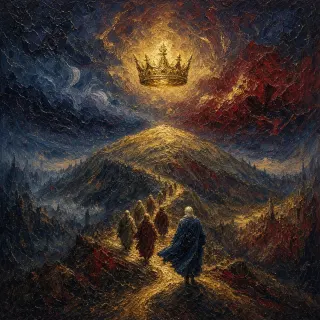
    The book that opened on a brother standing aside ends with saviours coming up on mount Zion to judge the mount of Esau, and the last five words giving the kingdom away.

    The mountain changes. Edom's high dwelling could not secure its survival; Zion is promised deliverance and holiness together. Possess their possessions sounds almost redundant until verse 13 supplies the missing fact: other people had laid hands on what belonged to the devastated community. The doubled expression speaks to dispossession. Those treated as loot are not to remain somebody else's property.

    The map that follows is not ornamental. Fields, towns, and named regions turn restoration into more than a comforting abstraction, while the captives of Jerusalem appear as people with a future beyond captivity. Yet the ending refuses to hand the last word to a territorial inventory. Deliverers ascend, Esau is judged, and the kingdom shall be the LORD'S. Human agents act inside the promise. They do not become its owners.

    Verse by verse

    1. 1:17

      Deliverance stands in direct contrast to the interception of those who escaped in verse 14.

    2. 1:20

      Sepharad's precise location is uncertain; Brown-Driver-Briggs records competing identifications. The promise names Jerusalem's exiles without requiring a settled modern map.

    3. 1:21

      Revelation 11:15 also announces the world's kingdoms becoming the kingdom of the Lord and his Christ; the thematic correspondence need not be treated as an explicit quotation.

    Obadiah 1:17-21

    King James Version · 5 verses

    1:17But upon mount Zion shall be deliverance, and there shall be holiness; and the house of Jacob shall possess their possessions.

    1:18And the house of Jacob shall be a fire, and the house of Joseph a flame, and the house of Esau for stubble, and they shall kindle in them, and devour them; and there shall not be any remaining of the house of Esau; for the LORD hath spoken it.

    1:19And they of the south shall possess the mount of Esau; and they of the plain the Philistines: and they shall possess the fields of Ephraim, and the fields of Samaria: and Benjamin shall possess Gilead.

    1:20And the captivity of this host of the children of Israel shall possess that of the Canaanites, even unto Zarephath; and the captivity of Jerusalem, which is in Sepharad, shall possess the cities of the south.

    1:21And saviours shall come up on mount Zion to judge the mount of Esau; and the kingdom shall be the LORD’s.

    Obadiah 1:17-21: The kingdom shall be the LORD’s

Why it matters

The book exists to say that watching is a position. Edom is indicted for standing by, for entering the gate after the fact, and for handing over survivors, and the sentence is framed as symmetry: as you have done, it shall be done to you. The other half is the security of the high place. Edom lives in the clefts of the rock and says who shall bring me down, and the answer is that though you exalt yourself as the eagle and set your nest among the stars, from there I will bring you down.

4 songs

The music

Every song in the catalogue whose passage falls inside these chapters.

  1. Obadiah 1:10-16

    As Thou Hast Done, It Shall Be Done

  2. Obadiah 1:1–21

    Obadiah (The Pride of Edom Falls)

    Play hereOpen song pageRead lyrics
  3. Obadiah 1:17-21

    The Kingdom Shall Be the LORD’s

  4. Obadiah 1:1-9

    Though Thou Exalt Thyself as the Eagle

Nearby

All the people

Report an error on this page