
Videos · Isaiah 1–39 · 5:24
The Holy One of Israel
This video sets Isaiah 1–39 to music and film, in 5 min 24 sec. Watch it here, then read what the passage covers and carry on into the study and the songs drawn from the same Scripture.
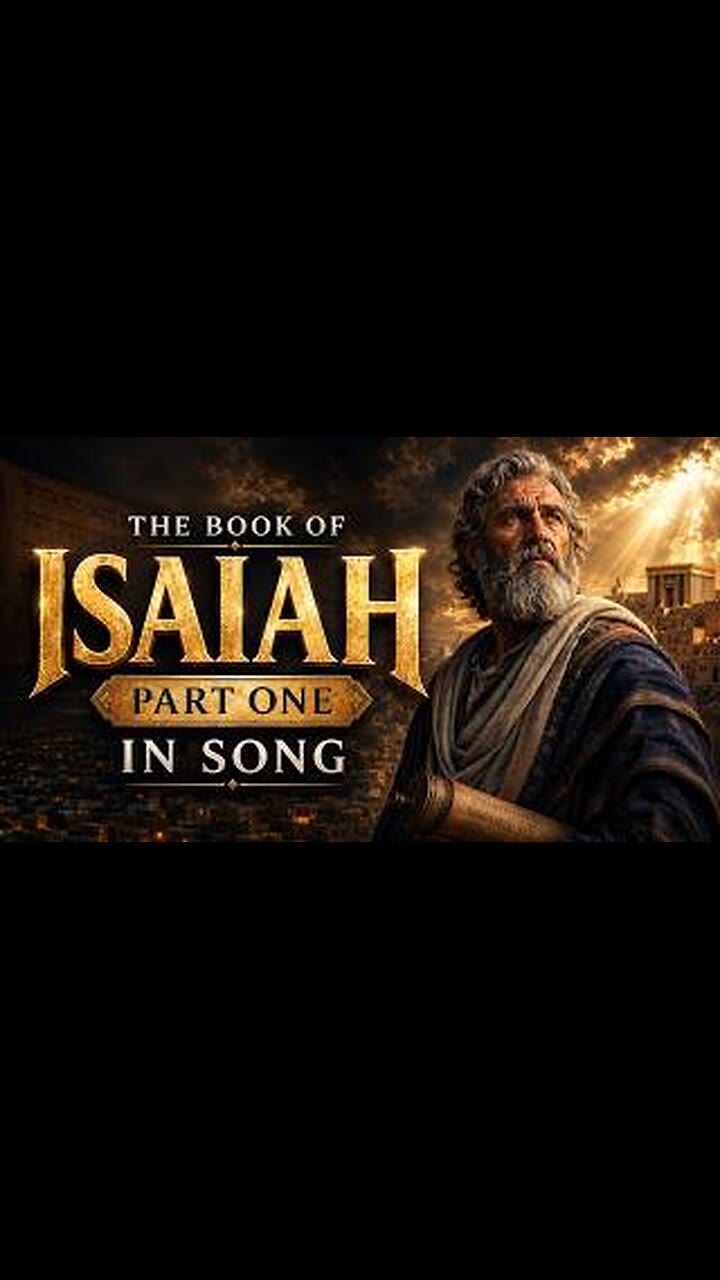
Now showing
The Holy One of Israel
Isaiah opens by putting Judah in the uncomfortable position of a child who has forgotten the hand that raised it. The images keep changing, but the charge does not soften: an untreated body, a besieged field hut, bloodied hands lifted in prayer, silver gone to dross, wine diluted with water.
About the passageAbout the passage
Isaiah 1: A crowded temple and a city full of blood
Isaiah opens by putting Judah in the uncomfortable position of a child who has forgotten the hand that raised it. The images keep changing, but the charge does not soften: an untreated body, a besieged field hut, bloodied hands lifted in prayer, silver gone to dross, wine diluted with water. Religious activity is everywhere, yet justice for the oppressed, the fatherless, and the widow is missing where it should be easiest to find. The chapter refuses both easy despair and easy reassurance. Zion is not discarded, but neither is its survival mistaken for approval. Cleansing has moral content, restoration passes through judgment, and the faithful city's old name is recovered only after the corruption attached to it is burned away. Isaiah ends where he began, with dependence exposed: the chosen garden cannot water itself.
Study Isaiah 1 in depthIsaiah 2: The mountain rises and human grandeur falls
Isaiah 2 begins with one of the book's great reversals of motion: nations flow uphill toward the LORD's mountain because instruction is going out from Zion. Weapons are remade for cultivation and war itself becomes something no longer studied. That future exposes Judah's present fullness. Its land is crowded with silver, gold, horses, chariots, imported practices, and handmade gods, yet none of that abundance produces the understanding the nations seek. The rest of the chapter is organized by height. Proud looks, trees, mountains, towers, walls, and ships all enter a catalogue of things that seem impressive enough to stand. They do not. People who trusted visible grandeur end up crawling into rocks while their precious idols are discarded to creatures of the dark. Only the LORD's exaltation survives the leveling, and Isaiah ends by reducing human grandeur to a breath in the nostrils.
Study Isaiah 2 in depthIsaiah 3: A society runs out of supports
Isaiah 3 imagines collapse by removing the supports that make ordinary society possible. Bread and water disappear beside soldiers, judges, elders, craftsmen, and counsellors, until leadership becomes so scarce that owning a coat almost qualifies a man for office. The chapter then shows that the ruin is not merely accidental institutional failure. The LORD brings a case against rulers whose houses contain the spoil of the poor, making exploitation visible as evidence. Isaiah turns next to conspicuous display, cataloguing the ornaments and garments of Zion's daughters before replacing fragrance, arranged hair, and finery with signs of humiliation and mourning. The final movement widens from individuals to the city herself. Warriors fall, gates lament, and Zion sits on the ground. Everything that had projected stability, status, and beauty has been stripped until the society is pictured in the posture of bereavement.
Study Isaiah 3 in depthSongs from this passage
- Though Your Sins Be ScarletIsaiah 1:1-2:5
- The Song of the VineyardIsaiah 5:1-30
- Here Am I, Send MeIsaiah 6:1-13
- God Is with UsIsaiah 7:1-8:18
- The Government upon His ShoulderIsaiah 9:1-11:16
- How Art Thou FallenIsaiah 13:1-14:27
- Death Swallowed UpIsaiah 24:1-27:13
- The Letter before the LORDIsaiah 36:1-37:38
- The Shadow Went BackIsaiah 38:1-39:8
- Isaiah Pt. 1, The Prophet's VisionIsaiah 1:1–39:8
- Here Am IIsaiah 6
- Wounded for Our TransgressionsIsaiah 7:14; 9:1-7; 11:1-10; 52:13-53:12
Named in this passageIsaiahZion
More videos from Isaiah
- The Book of Isaiah in Song: Chapters 40–66Isaiah · 3:18