The big picture
Manasseh, the son who follows King Hezekiah, rules Judah from Jerusalem, its capital, for fifty-five years. He restores false worship, uses forbidden spiritual practices and sacrifices his children. Assyrian forces, serving a foreign king, take him captive to Babylon, a distant city. In distress he humbles himself and prays to God. He is restored and tries to undo his wrongs. Amon, his son and successor, copies the earlier evil but refuses the humility that changed his father's course.
In this chapter
- Manasseh Fills God’s House with Idols 2 Chronicles 33:1-9
Manasseh becomes king at twelve and reverses Hezekiah's reforms.
- A Captive King Prays and Returns 2 Chronicles 33:10-13
God speaks to Manasseh and the people, but they do not listen.
- The Restored King Removes His Idols 2 Chronicles 33:14-17
Back in his kingdom, Manasseh strengthens the city walls and places commanders in Judah's fortified towns.
- His Prayer and Former Sin Remain Recorded 2 Chronicles 33:18-20
The account points to records of Manasseh's reign, his prayer and the warnings given by prophets.
- Amon Copies Evil and Rejects Humility 2 Chronicles 33:21-25
Amon begins to reign at twenty-two and rules for two years.
Central truth
Manasseh receives mercy after humbling himself and changes his conduct, but Amon repeats his father's evil without following his repentance.

Scripture beside the summary
2 Chronicles · King James Version · 252 Chronicles 33:1-9
Manasseh Fills God’s House with Idols
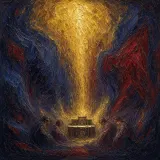
Manasseh becomes king at twelve and reverses Hezekiah's reforms. He rebuilds false altars, worships the stars and places an idol inside God's house. He practises magic and seeks messages through forbidden spirits. He also makes his children pass through fire. The temple had been chosen for God's name, and life in the land was tied to obeying his law. Manasseh leads the people away from both. Their conduct becomes worse than that of the peoples removed before them. Long rule does not mean faithful rule.
In everyday life
A child-protection archivist reads files from a community whose leader made harmful practices seem sacred. She records both the leader's acts and the pressure that drew others into them. Respect for a title must not hide the victims. Manasseh's crimes include child sacrifice and placing rival gods in the house chosen for God's name.
Notice
2 Chronicles 33:7 The idol stands inside the house chosen for God's own name. Its location makes the king's act more than worship at a distant rival shrine.
2 Chronicles 33:1-9
King James Version1Manasseh was twelve years old when he began to reign, and he reigned fifty and five years in Jerusalem:
2But did that which was evil in the sight of the LORD, like unto the abominations of the heathen, whom the LORD had cast out before the children of Israel.
3For he built again the high places which Hezekiah his father had broken down, and he reared up altars for Baalim, and made groves, and worshipped all the host of heaven, and served them.
4Also he built altars in the house of the LORD, whereof the LORD had said, In Jerusalem shall my name be for ever.
5And he built altars for all the host of heaven in the two courts of the house of the LORD.
6And he caused his children to pass through the fire in the valley of the son of Hinnom: also he observed times, and used enchantments, and used witchcraft, and dealt with a familiar spirit, and with wizards: he wrought much evil in the sight of the LORD, to provoke him to anger.
7And he set a carved image, the idol which he had made, in the house of God, of which God had said to David and to Solomon his son, In this house, and in Jerusalem, which I have chosen before all the tribes of Israel, will I put my name for ever:
8Neither will I any more remove the foot of Israel from out of the land which I have appointed for your fathers; so that they will take heed to do all that I have commanded them, according to the whole law and the statutes and the ordinances by the hand of Moses.
9So Manasseh made Judah and the inhabitants of Jerusalem to err, and to do worse than the heathen, whom the LORD had destroyed before the children of Israel.
2 Chronicles 33:10-13
A Captive King Prays and Returns
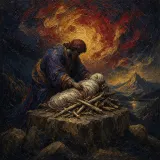
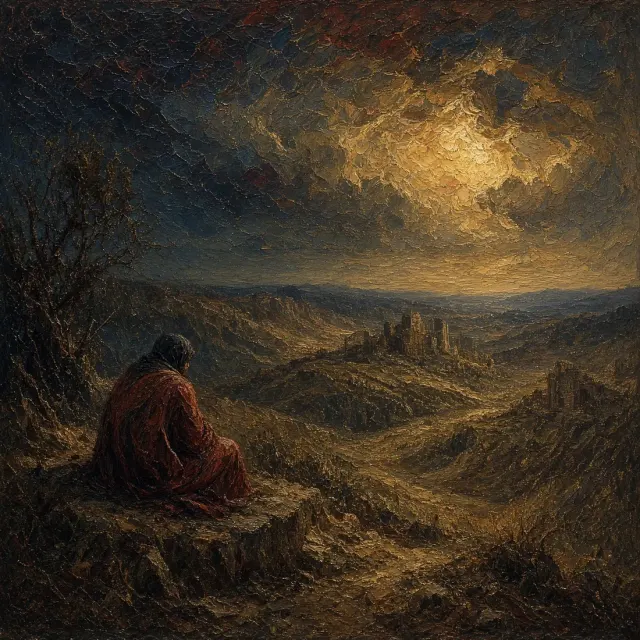
God speaks to Manasseh and the people, but they do not listen. Assyria's officers seize the king, bind him and take him to Babylon. In his suffering he begs God for help and humbles himself deeply. God hears the prayer and restores him to Jerusalem and his kingdom. Then Manasseh knows that the Lord is God. The change begins when the ruler who ignored warning loses his freedom. His return is presented as an answer to prayer, not a victory won by his own force.
In everyday life
A disgraced team captain sits alone in a suspension room and finally admits the conduct she had denied. She writes a plea for help without blaming the people who reported her. Her return later depends on mercy she cannot command. Manasseh is restored to kingship by God after foreign captivity and humble prayer.
Notice
2 Chronicles 33:13 Manasseh recognises God after his prayer is heard and he returns. The restored throne is linked to a changed understanding of whom he must serve.
2 Chronicles 33:10-13
King James Version10And the LORD spake to Manasseh, and to his people: but they would not hearken.
11Wherefore the LORD brought upon them the captains of the host of the king of Assyria, which took Manasseh among the thorns, and bound him with fetters, and carried him to Babylon.
12And when he was in affliction, he besought the LORD his God, and humbled himself greatly before the God of his fathers,
13And prayed unto him: and he was intreated of him, and heard his supplication, and brought him again to Jerusalem into his kingdom. Then Manasseh knew that the LORD he was God.
2 Chronicles 33:14-17
The Restored King Removes His Idols
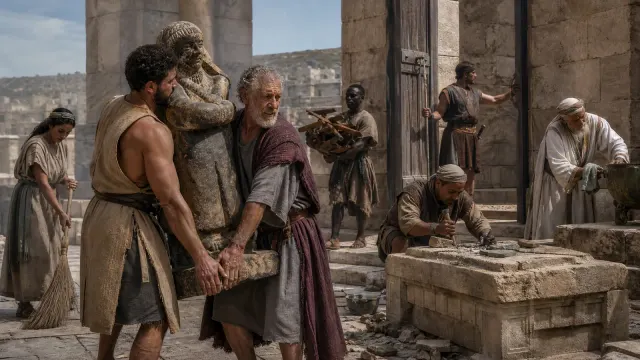
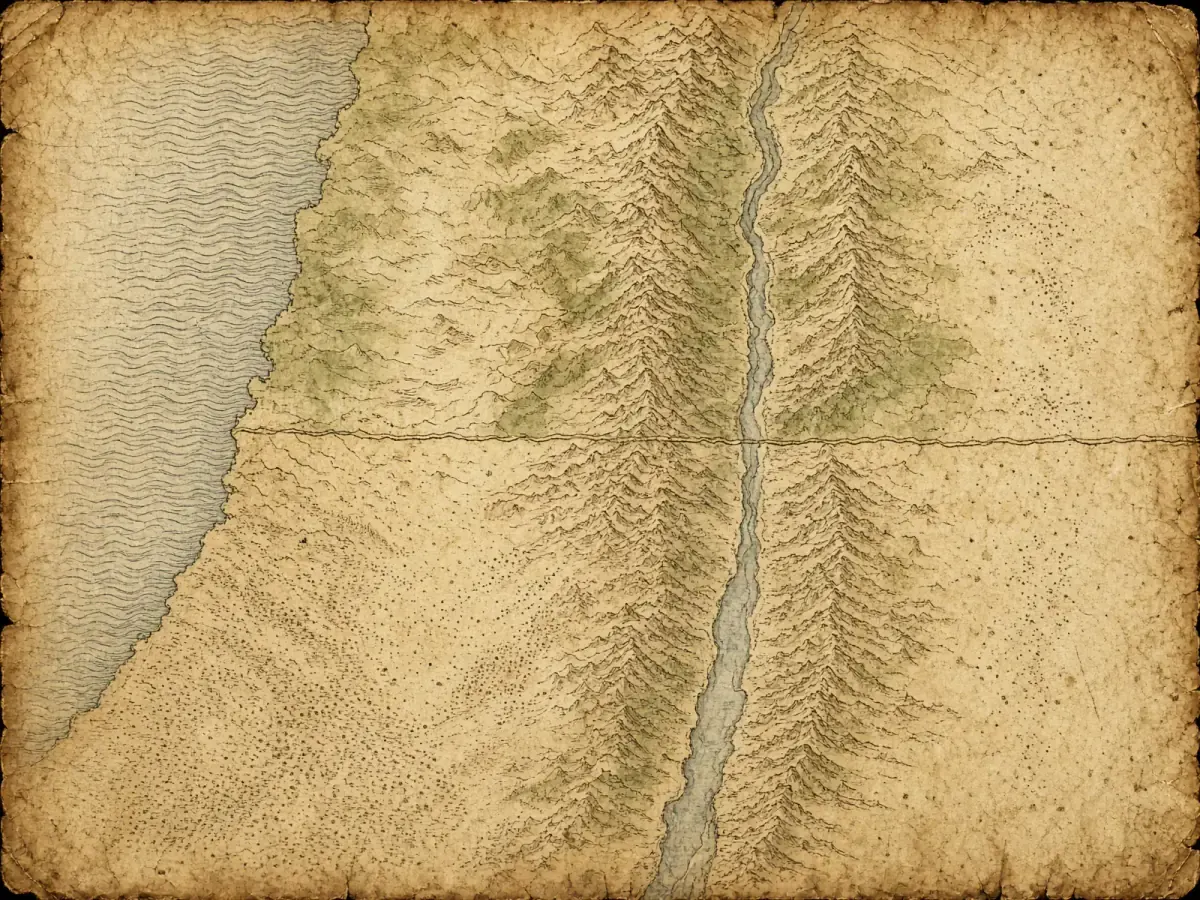
Back in his kingdom, Manasseh strengthens the city walls and places commanders in Judah's fortified towns. He removes the foreign gods and the idol from the temple. The altars he built are thrown outside the city. He repairs God's altar, brings peace and thank offerings, and commands Judah to serve God. Yet people still sacrifice at the hilltop sites, though now to God alone. The king's change leads to public action, but the people's practices do not become fully ordered at once.
In everyday life
A former nightclub owner removes hidden gaming machines and opens the room for lawful events. Some regulars still seek the old back-room deals despite the changed use. His own reform does not control every guest. Manasseh's return concerns repentance before God and the removal of worship that had led his people into sin.
Notice
2 Chronicles 33:15 Manasseh removes the very altars he had built. His response to mercy includes undoing public acts through which he had led others into wrong.
2 Chronicles 33:14-17
King James Version14Now after this he built a wall without the city of David, on the west side of Gihon, in the valley, even to the entering in at the fish gate, and compassed about Ophel, and raised it up a very great height, and put captains of war in all the fenced cities of Judah.
15And he took away the strange gods, and the idol out of the house of the LORD, and all the altars that he had built in the mount of the house of the LORD, and in Jerusalem, and cast them out of the city.
16And he repaired the altar of the LORD, and sacrificed thereon peace offerings and thank offerings, and commanded Judah to serve the LORD God of Israel.
17Nevertheless the people did sacrifice still in the high places, yet unto the LORD their God only.
2 Chronicles 33:18-20
His Prayer and Former Sin Remain Recorded
The account points to records of Manasseh's reign, his prayer and the warnings given by prophets. Those records also include his earlier sins and the places where he set up idols. His humility does not require the past to be erased. Both the wrong and God's answer to him remain part of the record. He dies and is buried at his own house. Amon then takes the throne. The ending holds judgement and mercy together instead of preserving only one period of the king's life.
In everyday life
A prison memoir editor keeps the writer's account of his offences beside the chapter about change. Removing the first part would make the later gratitude false to what happened. The record needs both harm and response. Manasseh's record also preserves prayer heard by God and restoration to a throne after captivity.
Notice
2 Chronicles 33:19 The record includes sins committed before Manasseh humbled himself. His later prayer does not make those earlier acts disappear from the account of his reign.
2 Chronicles 33:18-20
King James Version18Now the rest of the acts of Manasseh, and his prayer unto his God, and the words of the seers that spake to him in the name of the LORD God of Israel, behold, they are written in the book of the kings of Israel.
19His prayer also, and how God was intreated of him, and all his sin, and his trespass, and the places wherein he built high places, and set up groves and graven images, before he was humbled: behold, they are written among the sayings of the seers.
20So Manasseh slept with his fathers, and they buried him in his own house: and Amon his son reigned in his stead.
2 Chronicles 33:21-25
Amon Copies Evil and Rejects Humility
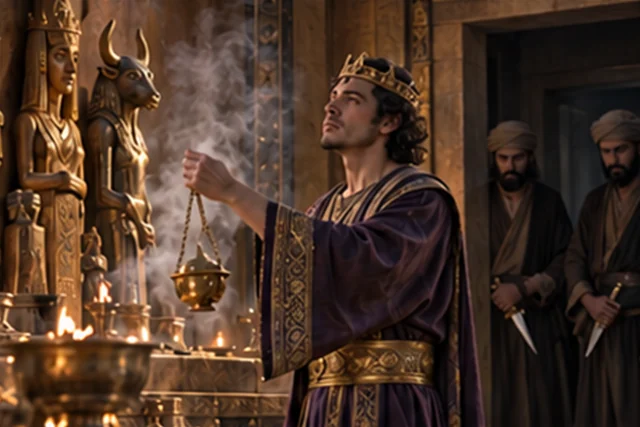
Amon begins to reign at twenty-two and rules for two years. He serves the carved images his father once made. Unlike Manasseh, he does not humble himself before God; his guilt grows instead. His servants plot against him and kill him in his house. The people then kill the plotters and make his son Josiah king. Amon copies the part of his father's life that brought ruin while refusing the turn toward mercy. His short reign ends through violence within his own household.
In everyday life
A son takes over a repair shop and copies his father's old dishonest pricing. The father has admitted the wrong and changed, but the son dismisses that lesson and increases the charges. Inheriting a business does not mean inheriting its later reform. Amon rejects humility before God and is killed by his own servants.
Notice
2 Chronicles 33:23 Amon is compared with his father specifically in the refusal to humble himself. He follows Manasseh's earlier sins while rejecting the response that brought restoration.
2 Chronicles 33:21-25
King James Version21Amon was two and twenty years old when he began to reign, and reigned two years in Jerusalem.
22But he did that which was evil in the sight of the LORD, as did Manasseh his father: for Amon sacrificed unto all the carved images which Manasseh his father had made, and served them;
23And humbled not himself before the LORD, as Manasseh his father had humbled himself; but Amon trespassed more and more.
24And his servants conspired against him, and slew him in his own house.
25But the people of the land slew all them that had conspired against king Amon; and the people of the land made Josiah his son king in his stead.
Details worth noticing
The opening image
2 Chronicles 33:1 begins with “Manasseh was twelve years old when he began to reign, and he reigned fifty and five years in Jerusalem:”
Where the chapter turns
2 Chronicles 33:14 forms a natural hinge: “Now after this he built a wall without the city of David, on the west side of Gihon, in the valley, even to the entering in at the fish gate, and compassed…”
The final note
2 Chronicles 33:25 leaves the reader with “But the people of the land slew all them that had conspired against king Amon; and the people of the land made Josiah his son king in his stead.”
A word trail through the chapter
The words LORD, Manasseh, house, Israel, Jerusalem, built help reveal the chapter’s repeated concerns.
KJV words made clear
- behold
- look, or pay close attention
- unto
- to
- spake
- spoke
- wherefore
- for that reason
Music and video connected to the passage
Related media appears when its Scripture reference overlaps this study. Music and video can illuminate a theme while the biblical text remains the foundation.