
The big picture
Freedom and family shape the appeal to believers in Galatia, the region receiving this letter. Paul speaks as a messenger of Jesus Christ. Jesus is the Son whom God sent to free people and make them his children. Paul has argued that the law served for a limited time. Now he uses family life to explain the change. He also recalls the warmth these believers once showed him. Rival teachers threaten both their freedom and their trust in the message he brought.
In this chapter
- God Gives His Children an Inheritance Galatians 4:1-7
A young heir owns an estate in prospect but cannot yet control it.
- Returning to Old Forms of Slavery Galatians 4:8-11
Before knowing God, these believers served beings that were not truly gods.
- Past Welcome Makes Present Distance Painful Galatians 4:12-20
Paul asks them to return to their former bond with him.
- Two Mothers Represent Two Covenants Galatians 4:21-27
The law itself supplies Paul with an account about two sons.
- The Promise Defines Their Inheritance Galatians 4:28-31
Believers stand beside Isaac in this comparison.
Central truth
The believers have a place as free children of God, and Paul warns against trading it for slavery.

Scripture beside the summary
Galatians · King James Version · 31Galatians 4:1-7
God Gives His Children an Inheritance
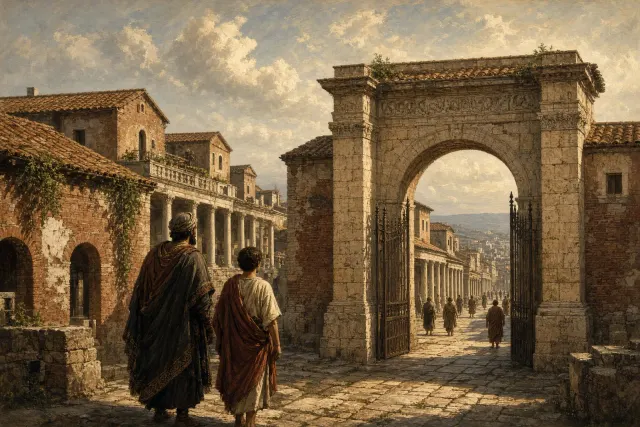
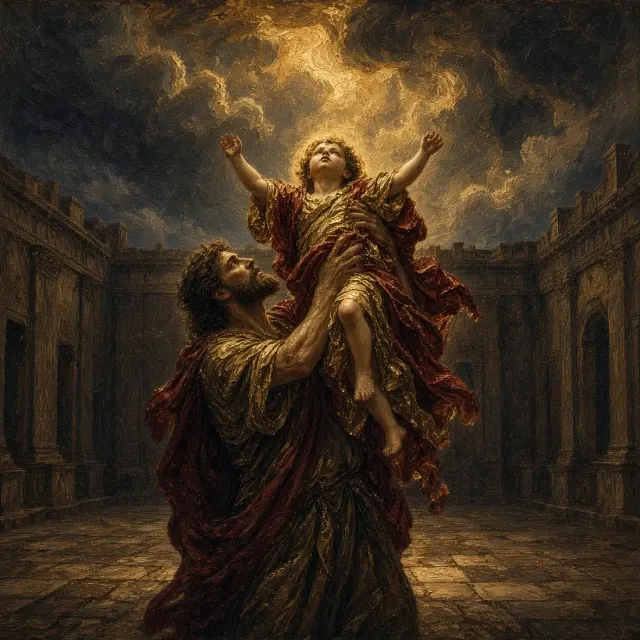
A young heir owns an estate in prospect but cannot yet control it. Guardians manage life until the time the father has set. Paul compares this to living under the basic powers or rules of the world. The exact forces he means are disputed. At the right time God sent his Son, born from a woman and placed under the law. He came to free those under law and give them the place of children. God also sends the Spirit of his Son into their hearts. They can call God Father and inherit as his children.

In everyday life
The new heir stands in a workshop while the trustee hands her its keys. For years others managed the tools and accounts on her behalf. Now the date named in the trust has arrived, and she takes charge of what was set aside for her. Paul describes a gift of sonship through Christ, not adulthood reached by age.
Notice
Galatians 4:6 The Spirit enables the cry to God as Father. Paul links the new family standing with a new way of addressing God, not merely a change of legal label.
Galatians 4:1-7
King James Version1Now I say, That the heir, as long as he is a child, differeth nothing from a servant, though he be lord of all;
2But is under tutors and governors until the time appointed of the father.
3Even so we, when we were children, were in bondage under the elements of the world:
4But when the fulness of the time was come, God sent forth his Son, made of a woman, made under the law,
5To redeem them that were under the law, that we might receive the adoption of sons.
6And because ye are sons, God hath sent forth the Spirit of his Son into your hearts, crying, Abba, Father.
7Wherefore thou art no more a servant, but a son; and if a son, then an heir of God through Christ.
Galatians 4:8-11
Returning to Old Forms of Slavery
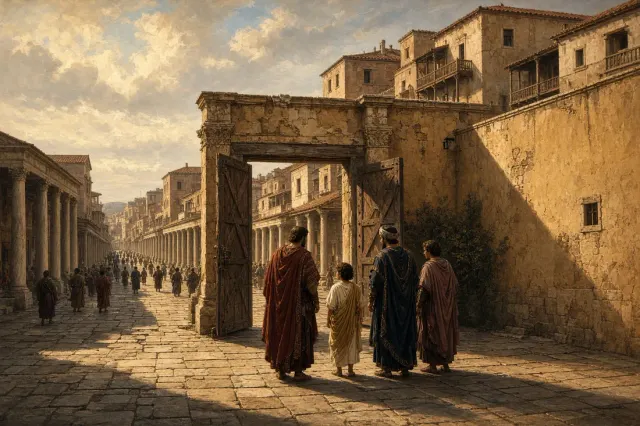
Before knowing God, these believers served beings that were not truly gods. Now they know God, or more precisely, God knows them. Paul wonders why they want to return to weak and poor forms of bondage. He sees their careful keeping of special days, months, seasons, and years as part of this turn. He fears his labour among them has been wasted. Christians differ over which observances Paul condemns and how this bears on church calendars. His concern here is a return to slavery after receiving freedom.
In everyday life
The retired bus driver stands in the depot with his old shift card. He has begun reporting for unpaid checks because a former supervisor keeps calling him back. His release papers lie folded in his pocket. A colleague asks why he still accepts a duty that has ended. Paul concerns himself with spiritual bondage, not retirement terms.
Notice
Galatians 4:9 Paul corrects his own wording to stress that God knows them. Their changed place begins with God reaching them, which makes their return to bondage so troubling.
Galatians 4:8-11
King James Version8Howbeit then, when ye knew not God, ye did service unto them which by nature are no gods.
9But now, after that ye have known God, or rather are known of God, how turn ye again to the weak and beggarly elements, whereunto ye desire again to be in bondage?
10Ye observe days, and months, and times, and years.
11I am afraid of you, lest I have bestowed upon you labour in vain.
Galatians 4:12-20
Past Welcome Makes Present Distance Painful
Paul asks them to return to their former bond with him. Paul first preached to them while he was physically unwell. They did not reject him for that weakness. They welcomed him with great love and would have given their own eyes to help. Now he asks whether telling the truth has made him an enemy. Rival teachers court their loyalty in order to shut them away from others. Paul wants lasting good for them. He compares his concern to labour in childbirth until their lives take the shape of Christ.

In everyday life
A saddlery trainee pauses beside a half stitched saddle as her old tutor arrives. She once welcomed his help when he worked with an injured wrist. Now a new trainer flatters her and insists she stop listening to anyone else. The tutor points to a weak seam despite her cold reply. Paul seeks formation in Christ, not skill in leatherwork.
Notice
Galatians 4:15 The offer of their eyes expresses how deeply they once cared. It does not identify Paul’s illness, so the words alone cannot settle what bodily trouble he had.
Galatians 4:12-20
King James Version12Brethren, I beseech you, be as I am; for I am as ye are: ye have not injured me at all.
13Ye know how through infirmity of the flesh I preached the gospel unto you at the first.
14And my temptation which was in my flesh ye despised not, nor rejected; but received me as an angel of God, even as Christ Jesus.
15Where is then the blessedness ye spake of? for I bear you record, that, if it had been possible, ye would have plucked out your own eyes, and have given them to me.
16Am I therefore become your enemy, because I tell you the truth?
17They zealously affect you, but not well; yea, they would exclude you, that ye might affect them.
18But it is good to be zealously affected always in a good thing, and not only when I am present with you.
19My little children, of whom I travail in birth again until Christ be formed in you,
20I desire to be present with you now, and to change my voice; for I stand in doubt of you.
Galatians 4:21-27
Two Mothers Represent Two Covenants
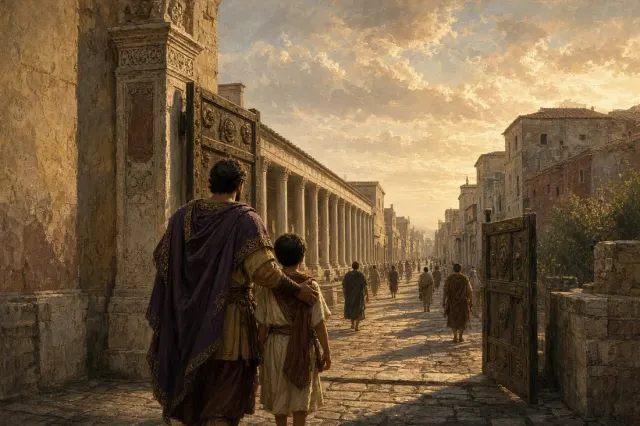
The law itself supplies Paul with an account about two sons. Their father is Abraham, the ancestor who received the promise of God. One mother was enslaved; the other was free. Ordinary birth brought the first son, while God’s promise brought the second. Paul makes them stand for two covenants, binding relationships with God. Agar, the enslaved mother, stands for mount Sinai, the mountain in Arabia where law was given. He links her with earthly Jerusalem, a city described as bound. The free mother stands for Jerusalem above, a free home for God’s people. Scripture promises a once childless woman more children than a married woman has.
In everyday life
The tenancy archivist spreads two deeds across a reading room desk. Both concern the same family, but one grants temporary use while the other grants lasting ownership. A descendant points to the shared surname. The archivist shows why the terms still differ. Paul interprets two mothers as covenants, not two modern property contracts.
Notice
Galatians 4:24 Paul tells readers that he is using the women as an allegory. The contrast gives their family roles a further meaning in his argument about law and promise.
Galatians 4:21-27
King James Version21Tell me, ye that desire to be under the law, do ye not hear the law?
22For it is written, that Abraham had two sons, the one by a bondmaid, the other by a freewoman.
23But he who was of the bondwoman was born after the flesh; but he of the freewoman was by promise.
24Which things are an allegory: for these are the two covenants; the one from the mount Sinai, which gendereth to bondage, which is Agar.
25For this Agar is mount Sinai in Arabia, and answereth to Jerusalem which now is, and is in bondage with her children.
26But Jerusalem which is above is free, which is the mother of us all.
27For it is written, Rejoice, thou barren that bearest not; break forth and cry, thou that travailest not: for the desolate hath many more children than she which hath an husband.
Galatians 4:28-31
The Promise Defines Their Inheritance
Believers stand beside Isaac in this comparison. He is the son born through the promise of God. Paul compares present hostility with the hostility that child faced from the other son. Then he recalls the demand to send away the enslaved mother and her son. The two sons would not share the same inheritance. This is a harsh part of the family account, and Paul uses it to press a sharp choice. His hearers belong with the free mother. Their place comes through promise, not through accepting the slavery he has warned against.
In everyday life
An adult learner stands at a college records desk with her completed award. An old course record lists restrictions that no longer govern her place. The clerk sorts the two files and confirms which one now applies. She does not have to return to the earlier terms. Paul’s family account includes expulsion, not a harmless correction of records.
Notice
Galatians 4:31 The closing claim identifies the believers with the free mother. Paul uses the family contrast to state where they belong before urging them to hold that freedom.
Galatians 4:28-31
King James Version28Now we, brethren, as Isaac was, are the children of promise.
29But as then he that was born after the flesh persecuted him that was born after the Spirit, even so it is now.
30Nevertheless what saith the scripture? Cast out the bondwoman and her son: for the son of the bondwoman shall not be heir with the son of the freewoman.
31So then, brethren, we are not children of the bondwoman, but of the free.
Details worth noticing
The opening image
Galatians 4:1 begins with “Now I say, That the heir, as long as he is a child, differeth nothing from a servant, though he be lord of all;”
Where the chapter turns
Galatians 4:16 forms a natural hinge: “Am I therefore become your enemy, because I tell you the truth?”
The final note
Galatians 4:31 leaves the reader with “So then, brethren, we are not children of the bondwoman, but of the free.”
A word trail through the chapter
The words children, bondage, bondwoman, flesh, born, brethren help reveal the chapter’s repeated concerns.
KJV words made clear
- unto
- to
- thou
- you
- hath
- has
- spake
- spoke
- wherefore
- for that reason
Music and video connected to the passage
Related media appears when its Scripture reference overlaps this study. Music and video can illuminate a theme while the biblical text remains the foundation.