The big picture
Human families have spread outside the garden, with both new skills and deadly violence among them. Genesis now follows the family line of Adam, the first man, through Seth, his son. Names, ages, births, and deaths carry the account forward. Enoch, one descendant, receives a strikingly different ending. The list finally reaches Noah, a man whose father hopes he will bring relief from the toil of farming cursed ground.
In this chapter
- Births Continue and Death Returns Genesis 5:1-20
The family record begins by recalling that God made male and female in his likeness and blessed them.
- God Takes Enoch Away Genesis 5:21-24
Enoch becomes the father of Methuselah and has other children.
- Noah's Father Hopes for Relief Genesis 5:25-32
Methuselah fathers Lamech and lives longer than anyone else named in this list before he dies.
Central truth
The family line continues through long lives and repeated deaths, while Enoch's departure and Noah's birth interrupt the pattern.
Scripture beside the summary
Genesis · King James Version · 32Genesis 5:1-20
Births Continue and Death Returns
The family record begins by recalling that God made male and female in his likeness and blessed them. Adam then fathers Seth in his own likeness. The account follows Seth's line through Enos, Cainan, Mahalaleel, and Jared. For each man, it gives his age when the named son was born, his later years, and his total lifespan. Other sons and daughters are mentioned without names. The lives are very long, but each ends in death. The next generation keeps arriving; no length of life removes the ending announced after the garden's disobedience.

In everyday life
My neighbour unfolds a family chart on her dining table. Beside each name sit a birth date, children, and a death date. She follows one branch with her finger while explaining that many unnamed relatives belonged to it too. The repeated dates keep loss beside new life. Her chart does not claim the extraordinary lifespans recorded here.
Notice
Genesis 5:3 Seth bears Adam's likeness after the chapter recalls humanity bearing God's likeness. The family link carries creation's language into the next generation.
Genesis 5:1-20
King James Version1This is the book of the generations of Adam. In the day that God created man, in the likeness of God made he him;
2Male and female created he them; and blessed them, and called their name Adam, in the day when they were created.
3And Adam lived an hundred and thirty years, and begat a son in his own likeness, after his image; and called his name Seth:
4And the days of Adam after he had begotten Seth were eight hundred years: and he begat sons and daughters:
5And all the days that Adam lived were nine hundred and thirty years: and he died.
6And Seth lived an hundred and five years, and begat Enos:
7And Seth lived after he begat Enos eight hundred and seven years, and begat sons and daughters:
8And all the days of Seth were nine hundred and twelve years: and he died.
9And Enos lived ninety years, and begat Cainan:
10And Enos lived after he begat Cainan eight hundred and fifteen years, and begat sons and daughters:
11And all the days of Enos were nine hundred and five years: and he died.
12And Cainan lived seventy years, and begat Mahalaleel:
13And Cainan lived after he begat Mahalaleel eight hundred and forty years, and begat sons and daughters:
14And all the days of Cainan were nine hundred and ten years: and he died.
15And Mahalaleel lived sixty and five years, and begat Jared:
16And Mahalaleel lived after he begat Jared eight hundred and thirty years, and begat sons and daughters:
17And all the days of Mahalaleel were eight hundred ninety and five years: and he died.
18And Jared lived an hundred sixty and two years, and he begat Enoch:
19And Jared lived after he begat Enoch eight hundred years, and begat sons and daughters:
20And all the days of Jared were nine hundred sixty and two years: and he died.
Genesis 5:21-24
God Takes Enoch Away
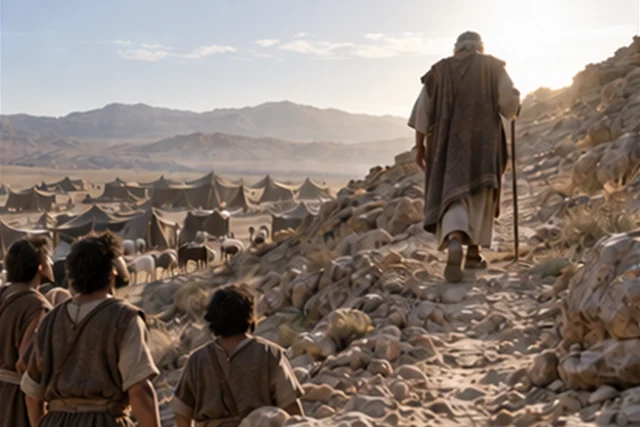
Enoch becomes the father of Methuselah and has other children. His life is described in a way that stands apart from the surrounding names: he walks with God. This means a life lived in close relation to God, rather than a location or walking route. The record gives his total years but does not end with the usual report of death. Instead, God takes him, and he is no longer there. Genesis offers no detailed description of how this happens. His departure remains brief and distinct.
In everyday life
An archivist reads aloud a row of cemetery records, then stops at a family letter tucked between the pages. This name has a different final entry, so she refuses to fill the gap with the usual wording. She preserves what the document actually says. Enoch's ending is more than an unusual record: Genesis says God took him.
Notice
Genesis 5:24 The usual report that a man died is absent for Enoch. Genesis ties that difference to God taking the man who walked with him.
Genesis 5:21-24
King James Version21And Enoch lived sixty and five years, and begat Methuselah:
22And Enoch walked with God after he begat Methuselah three hundred years, and begat sons and daughters:
23And all the days of Enoch were three hundred sixty and five years:
24And Enoch walked with God: and he was not; for God took him.
Genesis 5:25-32
Noah's Father Hopes for Relief
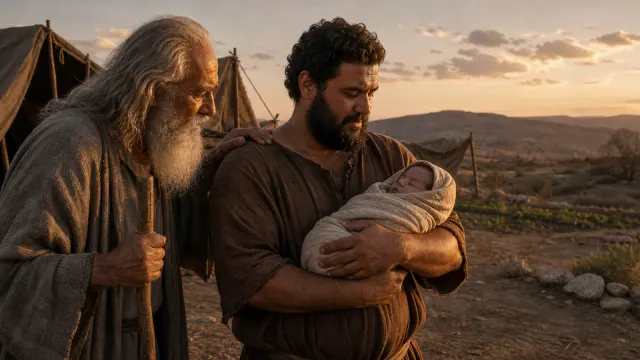
Methuselah fathers Lamech and lives longer than anyone else named in this list before he dies. Lamech then has Noah. He names the child with a hope for comfort amid hard work on ground God has cursed. The record still includes other children and the death of Lamech. Hope has entered the list without ending human loss. Finally, Noah becomes the father of Shem, Ham, and Japheth. Those three sons bring the family record to the household that will stand at the centre of the coming flood account.
In everyday life
A new father writes a newborn daughter's name inside the cover of a worn farm ledger. Beside years of repairs and failed harvests, he adds his hope that her life will be less hard. The family still has tomorrow's chores and debts. A parent's written hope cannot promise relief; Noah's place will unfold through God's actions.
Notice
Genesis 5:29 Lamech's hope concerns the painful work of the ground. The family list still carries the consequences of the curse spoken in the garden.
Genesis 5:25-32
King James Version25And Methuselah lived an hundred eighty and seven years, and begat Lamech:
26And Methuselah lived after he begat Lamech seven hundred eighty and two years, and begat sons and daughters:
27And all the days of Methuselah were nine hundred sixty and nine years: and he died.
28And Lamech lived an hundred eighty and two years, and begat a son:
29And he called his name Noah, saying, This same shall comfort us concerning our work and toil of our hands, because of the ground which the LORD hath cursed.
30And Lamech lived after he begat Noah five hundred ninety and five years, and begat sons and daughters:
31And all the days of Lamech were seven hundred seventy and seven years: and he died.
32And Noah was five hundred years old: and Noah begat Shem, Ham, and Japheth.
Details worth noticing
The opening image
Genesis 5:1 begins with “This is the book of the generations of Adam. In the day that God created man, in the likeness of God made he him;”
Where the chapter turns
Genesis 5:16 forms a natural hinge: “And Mahalaleel lived after he begat Jared eight hundred and thirty years, and begat sons and daughters:”
The final note
Genesis 5:32 leaves the reader with “And Noah was five hundred years old: and Noah begat Shem, Ham, and Japheth.”
A word trail through the chapter
The words years, begat, lived, days, daughters, five help reveal the chapter’s repeated concerns.
KJV words made clear
- begat
- Became the father of a child named in the family record.
- generations
- A record of a family line and its descendants.
Music and video connected to the passage
Related media appears when its Scripture reference overlaps this study. Music and video can illuminate a theme while the biblical text remains the foundation.