
The big picture
Jerusalem, Judah's capital, falls after a siege that began in King Zedekiah's ninth year and ends in his eleventh. Babylon's officials enter, and the king attempts to flee. The violence that follows destroys his household and leaves him blinded and captive. Homes burn, people are deported, and some of the poor receive land. Amid that loss, Jeremiah is released under the conqueror's orders. Ebed-melech is the Ethiopian court servant who helped him. An earlier promise from God says that he too will live.
In this chapter
- The Fleeing King Is Captured and Blinded Jeremiah 39:1-7
Babylon's army breaches the city in the fourth month of Zedekiah's eleventh year.
- Burned Houses and Deportation Change the Land Jeremiah 39:8-10
The Chaldeans, Babylon's forces, burn the palace and ordinary homes and break down the city's walls.
- Jeremiah Is Released Into the Remaining Community Jeremiah 39:11-14
Babylon's king gives the guard commander specific instructions about Jeremiah.
- Trust Is Answered with Preservation of Life Jeremiah 39:15-18
The account recalls a word God gave Jeremiah while he was still confined.
Central truth
Jerusalem's fall fulfils the warning of judgement, while Jeremiah and Ebed-melech receive protection and the poorest residents are left with land.

Scripture beside the summary
Jeremiah · King James Version · 18Jeremiah 39:1-7
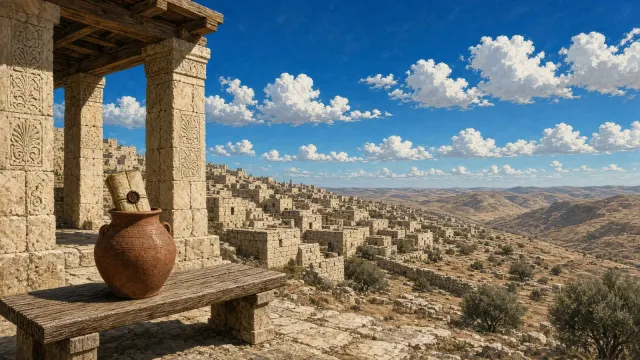
The Fleeing King Is Captured and Blinded
Babylon's army breaches the city in the fourth month of Zedekiah's eleventh year. Enemy officials take their places at a central gate. Seeing them, the king and his soldiers flee at night through a route near the royal garden. The army catches him near Jericho, a town by the plain, and takes him to Riblah, a northern royal camp. Babylon's king judges him there. His sons and leading men are killed before him. Then his eyes are put out, and he is chained for removal to Babylon. Flight has not prevented the announced capture.
In everyday life
A survivor-support worker receives a man whose family was killed and whose injuries have left him dependent on help. She arranges privacy before asking what he needs, refusing to turn the violence into a spectacle. His whole life has changed. Jeremiah records a king's capture under divine judgement; her work assigns no such meaning to suffering.
Notice
Jeremiah 39:7 Zedekiah loses sight after witnessing his sons' deaths. The order is plain. His sons' deaths are the last thing he sees before he is blinded.
Jeremiah 39:1-7
King James Version1In the ninth year of Zedekiah king of Judah, in the tenth month, came Nebuchadrezzar king of Babylon and all his army against Jerusalem, and they besieged it.
2And in the eleventh year of Zedekiah, in the fourth month, the ninth day of the month, the city was broken up.
3And all the princes of the king of Babylon came in, and sat in the middle gate, even Nergal-sharezer, Samgar-nebo, Sarsechim, Rab-saris, Nergal-sharezer, Rab-mag, with all the residue of the princes of the king of Babylon.
4And it came to pass, that when Zedekiah the king of Judah saw them, and all the men of war, then they fled, and went forth out of the city by night, by the way of the king’s garden, by the gate betwixt the two walls: and he went out the way of the plain.
5But the Chaldeans’ army pursued after them, and overtook Zedekiah in the plains of Jericho: and when they had taken him, they brought him up to Nebuchadnezzar king of Babylon to Riblah in the land of Hamath, where he gave judgment upon him.
6Then the king of Babylon slew the sons of Zedekiah in Riblah before his eyes: also the king of Babylon slew all the nobles of Judah.
7Moreover he put out Zedekiah’s eyes, and bound him with chains, to carry him to Babylon.
Jeremiah 39:8-10
Burned Houses and Deportation Change the Land
The Chaldeans, Babylon's forces, burn the palace and ordinary homes and break down the city's walls. Nebuzar-adan, the guard commander, takes the remaining residents and those who surrendered into captivity. The city loses both its buildings and much of its population. Yet the commander leaves some of the poorest people in Judah. Those who previously possessed nothing receive vineyards and fields. The poorest people gain land while others are taken away. Their gain is real. Yet it does not undo the ruin of the city.
In everyday life
A rural relief clerk registers small plots for families who owned no land before a district's collapse. Beyond the desk, burned houses still stand empty and neighbours remain missing. Land gives them a new start. It does not make the disaster good. Jeremiah describes redistribution ordered by a conquering army, not a voluntary recovery programme.
Notice
Jeremiah 39:10 The people left with fields are described as previously having nothing. Their lives change too. The account names that change alongside the fate of rulers.
Jeremiah 39:8-10
King James Version8And the Chaldeans burned the king’s house, and the houses of the people, with fire, and brake down the walls of Jerusalem.
9Then Nebuzar-adan the captain of the guard carried away captive into Babylon the remnant of the people that remained in the city, and those that fell away, that fell to him, with the rest of the people that remained.
10But Nebuzar-adan the captain of the guard left of the poor of the people, which had nothing, in the land of Judah, and gave them vineyards and fields at the same time.
Jeremiah 39:11-14
Jeremiah Is Released Into the Remaining Community
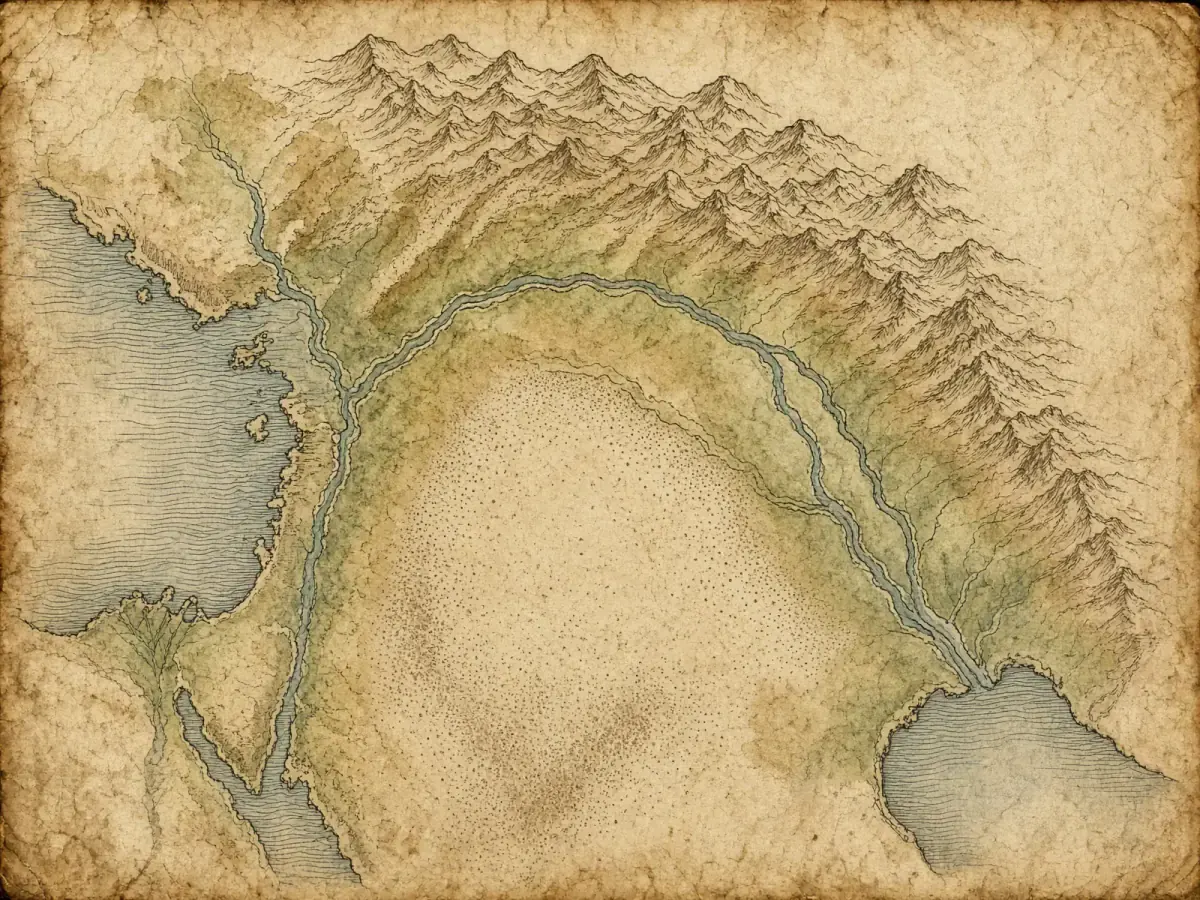
Babylon's king gives the guard commander specific instructions about Jeremiah. He is to be cared for, not harmed, and treated according to what he asks. Senior officers send for the prophet and take him from the prison court. They entrust him to Gedaliah, son of Ahikam and a local leader, so he can be taken home. Jeremiah then lives among the people who remain. His own rulers held him in prison. The invader now protects him. The city he warned lies broken around him.
In everyday life
A released detainee receives an escort's written instruction that he is to be protected and taken back to his community. The official who once held him no longer controls the gate. He steps outside to find neighbours scattered and homes damaged. Jeremiah's release comes through the conqueror during fulfilment of his prophetic warning, not an ordinary prison discharge.
Notice
Jeremiah 39:12 The conqueror's order explicitly forbids harm and requires care. The officers are told how to treat him. His care is not left to chance amid the city's fall.
Jeremiah 39:11-14
King James Version11Now Nebuchadrezzar king of Babylon gave charge concerning Jeremiah to Nebuzar-adan the captain of the guard, saying,
12Take him, and look well to him, and do him no harm; but do unto him even as he shall say unto thee.
13So Nebuzar-adan the captain of the guard sent, and Nebushasban, Rab-saris, and Nergal-sharezer, Rab-mag, and all the king of Babylon’s princes;
14Even they sent, and took Jeremiah out of the court of the prison, and committed him unto Gedaliah the son of Ahikam the son of Shaphan, that he should carry him home: so he dwelt among the people.
Jeremiah 39:15-18
Trust Is Answered with Preservation of Life
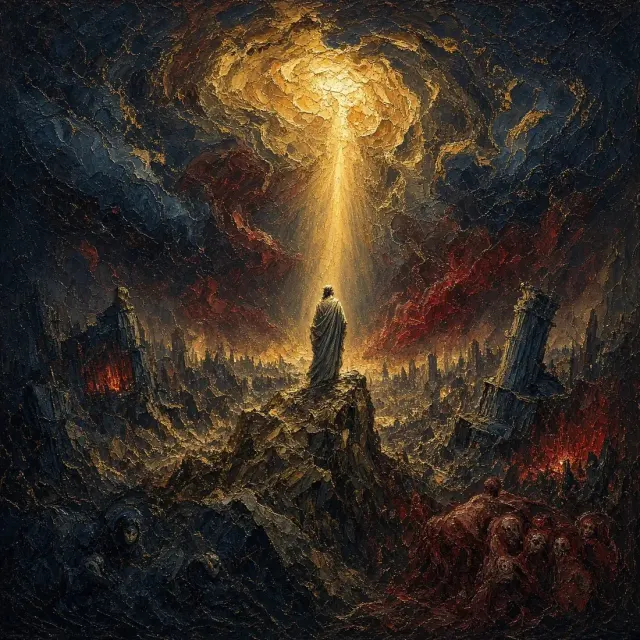
The account recalls a word God gave Jeremiah while he was still confined. He was to tell Ebed-melech that the announced disaster would happen before his eyes. Yet God would deliver him from the men he feared. He would not die by the sword; his life would be the gain he carried through the crisis. God gives the reason as his trust in the Lord. He will see the city fall. That will not be his own end. God promises to keep him alive through it.
In everyday life
The hospital orderly who helped a threatened patient waits anxiously as a violent emergency reaches the surrounding streets. A protection team arrives with a specific plan to bring him out alive. He still sees the damage while leaving. God promises Ebed-melech survival because of trust in him, which a human protection plan cannot guarantee.
Notice
Jeremiah 39:18 His own life is the gain God promises. Ebed-melech is assured survival through the disaster, not possessions, office, or freedom from seeing what happens to the city.
Jeremiah 39:15-18
King James Version15Now the word of the LORD came unto Jeremiah, while he was shut up in the court of the prison, saying,
16Go and speak to Ebed-melech the Ethiopian, saying, Thus saith the LORD of hosts, the God of Israel; Behold, I will bring my words upon this city for evil, and not for good; and they shall be accomplished in that day before thee.
17But I will deliver thee in that day, saith the LORD: and thou shalt not be given into the hand of the men of whom thou art afraid.
18For I will surely deliver thee, and thou shalt not fall by the sword, but thy life shall be for a prey unto thee: because thou hast put thy trust in me, saith the LORD.
Details worth noticing
The opening image
Jeremiah 39:1 begins with “In the ninth year of Zedekiah king of Judah, in the tenth month, came Nebuchadrezzar king of Babylon and all his army against Jerusalem, and they besieged…”
Where the chapter turns
Jeremiah 39:9 forms a natural hinge: “Then Nebuzar-adan the captain of the guard carried away captive into Babylon the remnant of the people that remained in the city, and those that fell away…”
The final note
Jeremiah 39:18 leaves the reader with “For I will surely deliver thee, and thou shalt not fall by the sword, but thy life shall be for a prey unto thee: because thou hast put thy trust in me…”
A word trail through the chapter
The words king, Babylon, people, Zedekiah, adan, captain help reveal the chapter’s repeated concerns.
KJV words made clear
- remnant
- The people remaining after others have died, fled, or been taken away.
- prey
- Something gained or carried away, here a life preserved through disaster.
Music and video connected to the passage
Related media appears when its Scripture reference overlaps this study. Music and video can illuminate a theme while the biblical text remains the foundation.