
Matthew
28 Chapters
Matthew: The Whole Book, Chapter by Chapter
A Royal Line with Its Wounds Still Showing
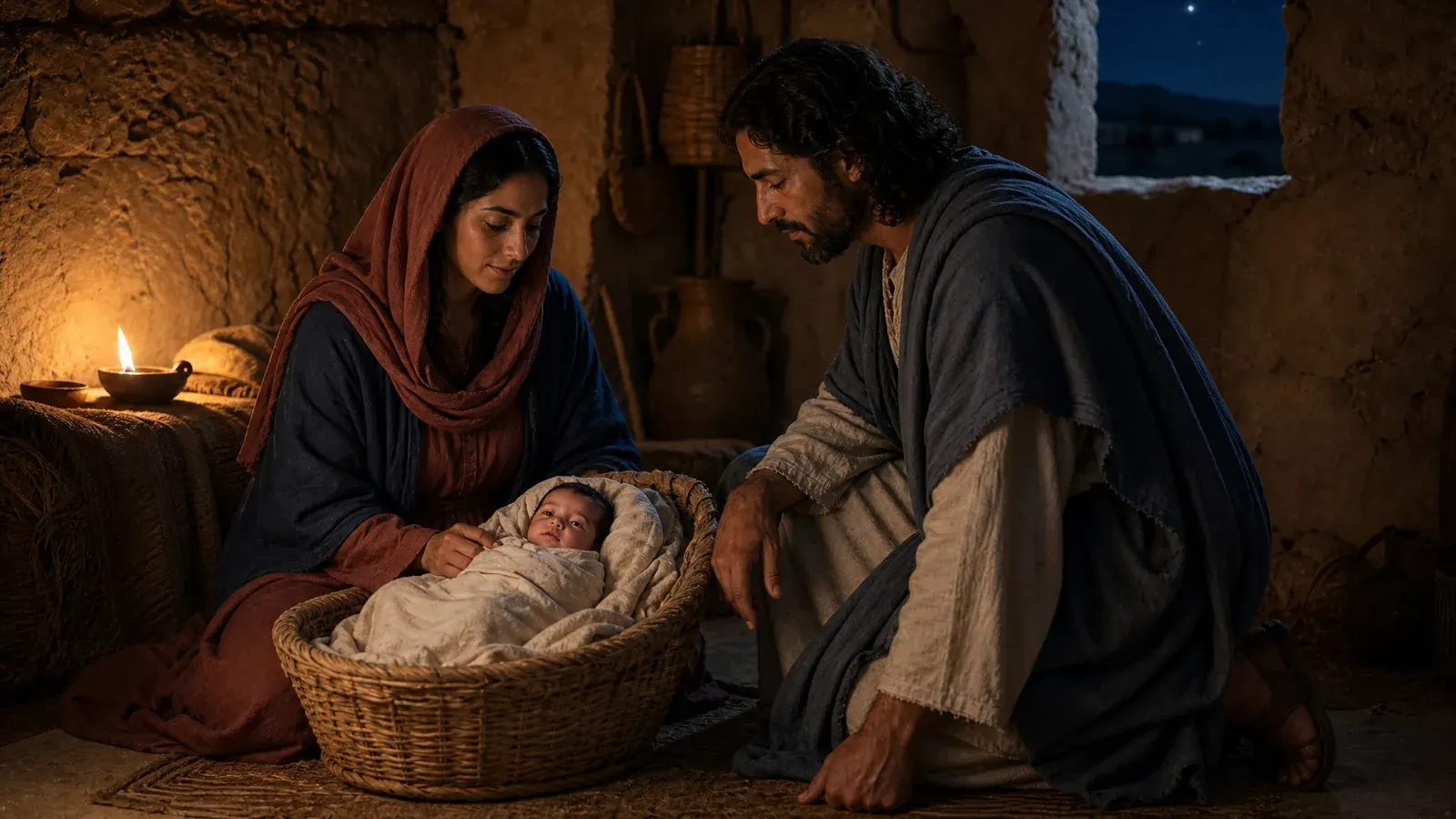
Matthew opens with a royal genealogy that does not hide its damaged places. David is named as king, Babylon marks the collapse of visible kingship, and several women interrupt the expected father-to-son rhythm before the repeated formula changes at Joseph. He is Mary’s husband, not the biological father Matthew is preparing to exclude. The chapter then narrows from generations to one man’s decision. Joseph plans a quiet separation on the information available to him, receives a different explanation in a dream, and acts on it. Jesus and Emmanuel do different work in the closing verses: one is the commanded name, the other Matthew’s explanation of the birth as “God with us.”
One complete chapter pageOpen chapter →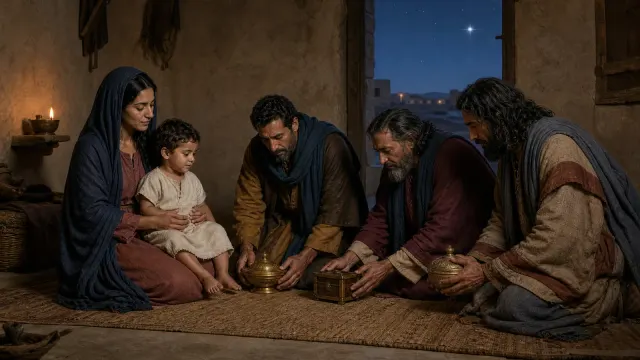
A King Sought, a Child Hunted
Foreign visitors arrive asking for the king of the Jews while Herod already occupies the throne, and that collision drives the chapter. The religious specialists know Bethlehem from Scripture, the visitors intend worship, and Herod turns correct information into a concealed search for a rival. The child is found in a house, honored with gifts, and protected when the visitors leave by another route. Joseph then carries Jesus into Egypt while Bethlehem bears the cost of Herod’s violence. Return becomes possible only after Herod’s death, and even then Archelaus makes Judaea unsafe. Matthew keeps fulfillment beside danger throughout, ending with Nazareth and a prophetic connection whose exact Old Testament route remains debated.
One complete chapter pageOpen chapter →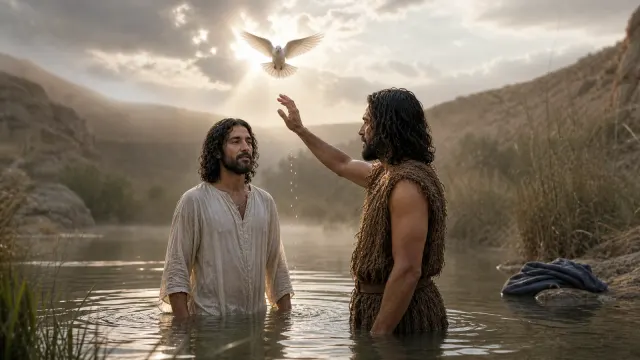
The Wilderness Voice and the Opened Heaven
The center of attention moves into the wilderness, where John announces the nearness of the kingdom and makes repentance visible in confession rather than ancestry. Jerusalem and Judaea go out to him instead of waiting for a message from the center. When Pharisees and Sadducees appear, John refuses Abrahamic descent as an exemption and sets fruit, axe, wheat, and chaff beside the coming one’s greater work. Then Jesus arrives asking for baptism. John sees the mismatch and objects, but Jesus describes the act as fitting the fulfillment of righteousness. The chapter closes with opened heaven, the Spirit descending like a dove, and the Father identifying Jesus as the beloved Son before that sonship is tested.
One complete chapter pageOpen chapter →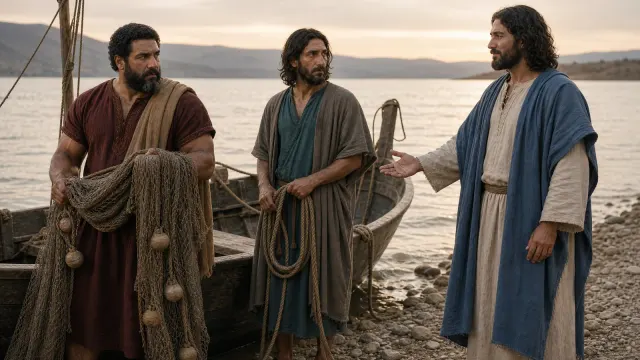
Sonship Tested Before the Crowds Arrive
Jesus enters the wilderness after the Father has named him Son, and each temptation presses on what that identity will mean in practice. Hunger is real, Scripture is quoted on both sides, and Jesus answers from Israel’s wilderness texts rather than turning sonship into self-provision, spectacle, or worship exchanged for rule. After the tempter leaves, Matthew moves to Galilee, where John’s imprisonment marks a transition rather than the end of the proclamation. Isaiah’s light rises in the old territories of Zabulon and Nephthalim, Jesus announces the kingdom, and two pairs of brothers leave fishing work to follow him. Teaching, preaching, and healing then move together across a widening map, explaining why the crowds gather for what follows.
One complete chapter pageOpen chapter →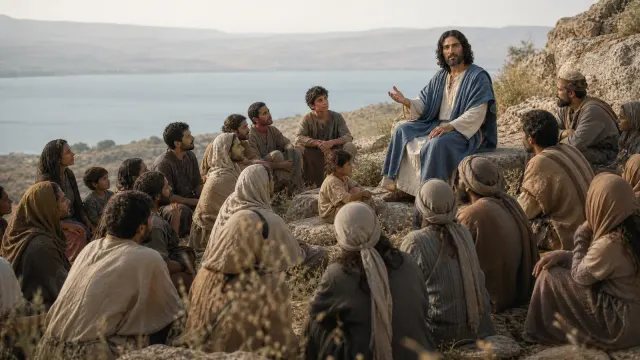
Righteousness Reaches Beneath the Surface
The mountain discourse begins with blessing, but the conditions named are hardly a parade of visible success: poverty of spirit, mourning, hunger for righteousness, mercy, peacemaking, and persecution all appear before the chapter turns to demands. Salt and light make discipleship public, while Jesus’ treatment of the law rules out simple disposal. The repeated movement then drives beneath external compliance. Murder reaches into anger and contempt, adultery into intentional desire, divorce beyond paperwork, oaths into ordinary truthfulness, retaliation into refusal to match injury, and neighbor love across the boundary of hostility. The chapter’s righteousness is therefore not a smaller checklist. It is a deeper and wider account of what allegiance looks like in conduct, speech, desire, and relationship.
One complete chapter pageOpen chapter →
When Devotion Chooses Its Audience
Matthew 6 asks a recurring question of religious practice: who is the intended audience? Giving, prayer, and fasting can all be directed toward God while quietly seeking human recognition, so Jesus contrasts public performance with the Father who sees in secret. The model prayer then joins the largest concerns, God’s name, kingdom, and will, to ordinary needs for bread, forgiveness, and deliverance. From there the chapter turns toward possession and anxiety. Earthly treasure can be eaten, corrupted, or stolen; the eye and the master images expose divided orientation; and anxious care cannot secure the life it worries over. Birds, flowers, daily need, and daily trouble remain real. The closing command orders concern toward the kingdom without pretending tomorrow contains no difficulty.
One complete chapter pageOpen chapter →
Hearing Is Not the Same as Building
The mountain discourse closes by refusing several comfortable substitutions. Hypocrisy is not clear judgment, asking is not manipulation, popularity is not safety, impressive religious works are not the same as being known by Jesus, and hearing is not building. The beam and mote expose a critic who cannot see well enough to perform the surgery he offers. The Father’s goodness grounds asking, seeking, and knocking, then turns outward in the treatment of others. Narrow and broad ways, sheep’s clothing, and fruit insist that appearance requires discernment. Finally, two builders hear the same sayings and meet the same storm, but only one has acted on them. The crowd’s astonishment at Jesus’ authority is genuine, yet the conclusion has already distinguished admiration from obedience.
One complete chapter pageOpen chapter →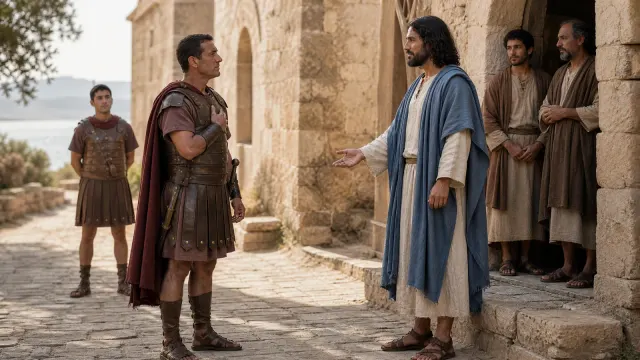
Authority Reaches the Places People Cannot
The authority displayed in teaching now reaches leprosy, paralysis, fever, distance, weather, and demons. Jesus touches a man before announcing him clean, speaks a word a centurion trusts without demanding physical proximity, and restores Peter’s mother-in-law inside an ordinary household before many more are healed that evening. Between these acts, Matthew places demanding exchanges about following, stripping enthusiasm of guarantees about comfort or delay. The disciples then follow Jesus into a boat and discover that following does not prevent a storm. His command produces a great calm and a question about his identity. Across the water, demons answer that question with the title “Son of God,” but their recognition is not allegiance, and the nearby town responds to his authority by asking him to leave.
One complete chapter pageOpen chapter →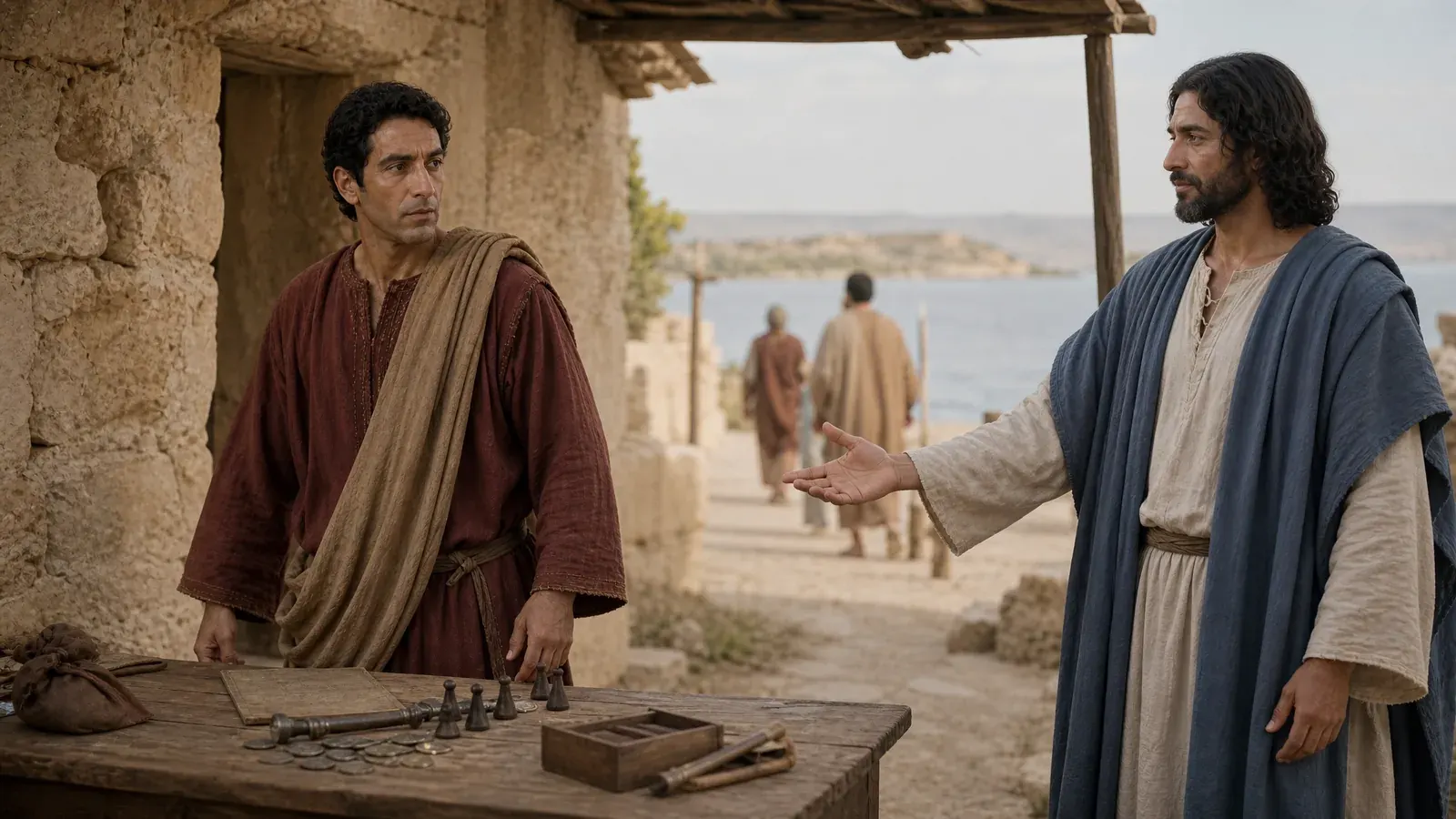
Mercy Keeps Crossing the Disputed Line
Forgiveness, fellowship, fasting, healing, and opposition all crowd into Matthew 9. A paralyzed man receives forgiveness before movement, and the visible healing serves as evidence for the invisible claim that provokes the scribes. Matthew then leaves the customs station, and a meal with publicans and sinners becomes the setting for Jesus’ physician image and Hosea’s language of mercy. A question about fasting is answered through the bridegroom, new cloth, and new wine, making timing and presence central. The chapter’s healings then interlock: one daughter is restored on the way to another, blind men invoke the Son of David, and restored speech produces opposite explanations from crowds and Pharisees. The closing view is not triumphal crowd counting but compassion and a shortage of workers.
One complete chapter pageOpen chapter →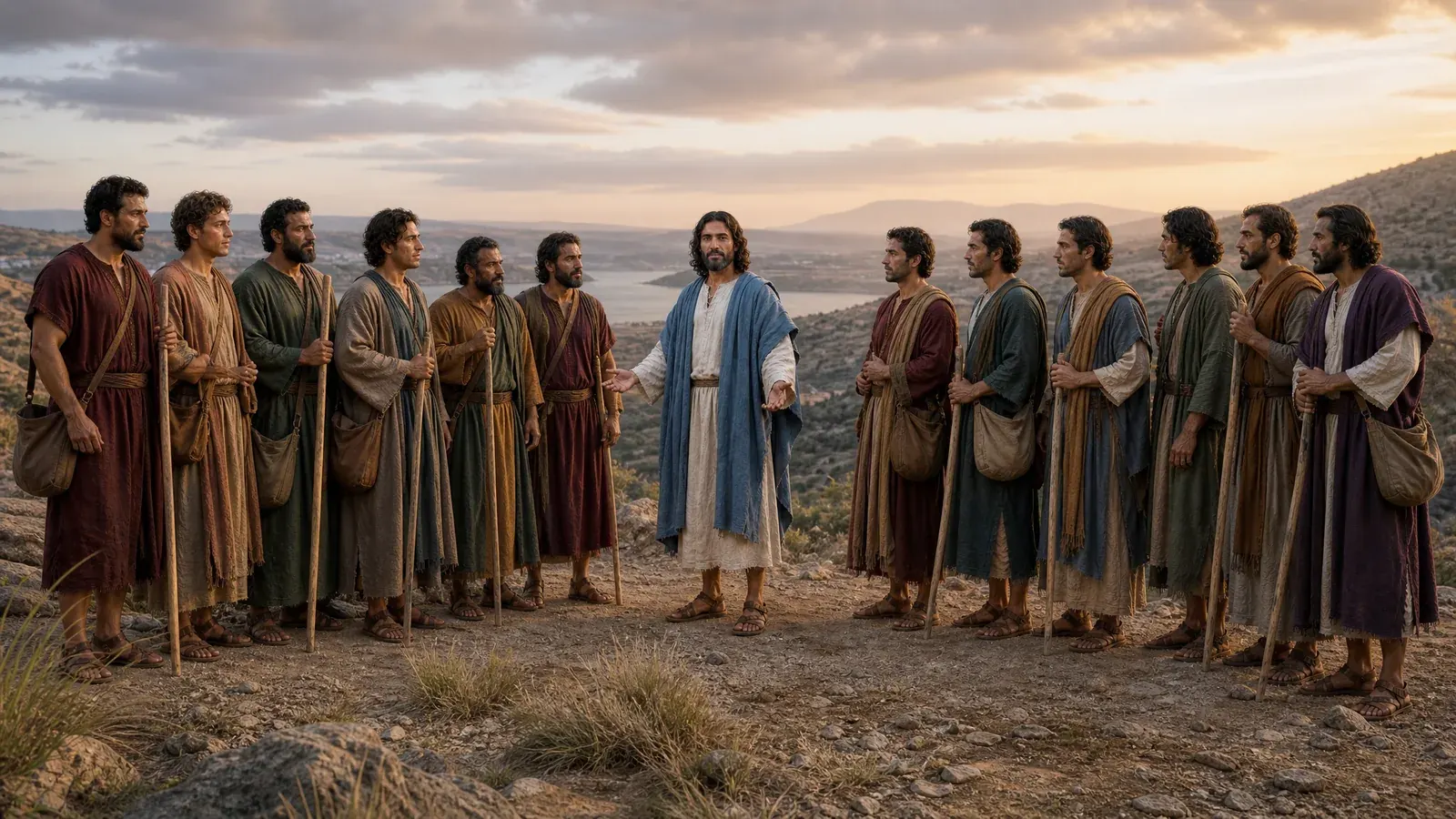
The Messengers Receive Both Authority and Warning
Jesus gives the twelve authority and names every member of the commissioned group, including the man Matthew already identifies as the future betrayer. Their immediate route is limited to Israel, their proclamation is joined to acts of restoration, and their dependence is made visible by restricted supplies and reliance on hospitality. The discourse then widens beyond a short trip. Councils, governors, kings, family betrayal, hatred, flight, and the Spirit’s help in testimony all enter the picture. Fear is measured against the Father’s detailed knowledge, even down to sparrows and numbered hairs. Allegiance can divide households and carries the image of the cross, yet the chapter ends not with rulers or courts but with reception and a cup of cold water. Small hospitality is folded into the mission’s significance.
One complete chapter pageOpen chapter →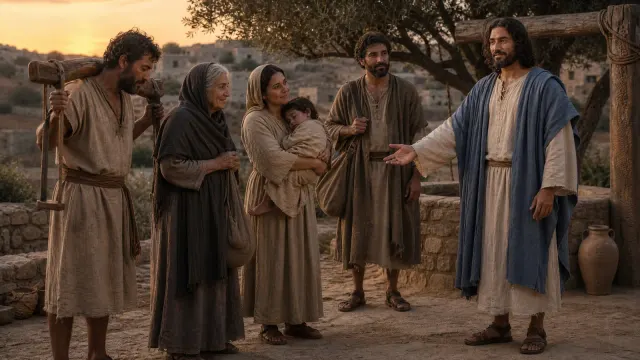
The Expected One Arrives in an Unexpected Manner
John asks from prison whether Jesus is the expected one, and the answer comes through what his messengers can hear and see: sight, movement, cleansing, hearing, life, and good news to the poor. Jesus then praises John after the messengers leave, identifying him with the promised preparer and placing him at a decisive threshold. The chapter next exposes a generation able to reject opposite styles of messenger, condemning John’s austerity and Jesus’ table fellowship with contradictory accusations. Towns that have witnessed mighty works receive a more severe warning because amazement has not become repentance. The closing movement is striking: after judgment language, Jesus speaks of the Son’s unique knowledge of the Father and invites the burdened to take his yoke, where authority and gentleness remain together.
One complete chapter pageOpen chapter →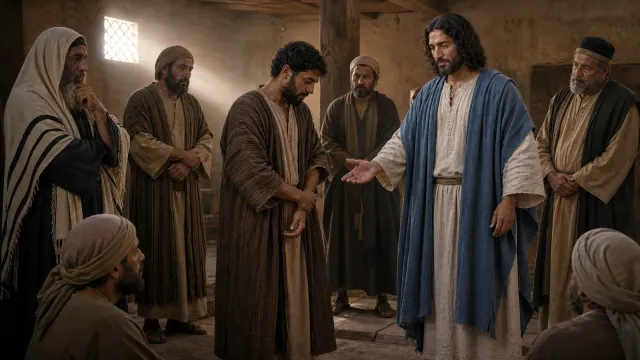
Mercy Exposes What Opposition Has Become
Sabbath disputes bring Matthew 12 to a sharper point. Jesus defends hungry disciples from Scripture, heals a withered hand, and the response to that act of good is a council considering his destruction. Matthew then places Jesus’ withdrawal and continued healing under Isaiah’s servant language, where gentleness and coming justice are held together. A further restoration produces a harsher accusation: the Pharisees call deliverance the work of Beelzebub. Jesus answers with the divided kingdom, the bound strong man, the Spirit of God, and a severe warning about attributing the Spirit’s work to evil. Speech is traced back to the heart, sign-seeking follows a sign already dismissed, and the chapter ends by redefining family relationship around doing the Father’s will rather than mere physical proximity.
One complete chapter pageOpen chapter →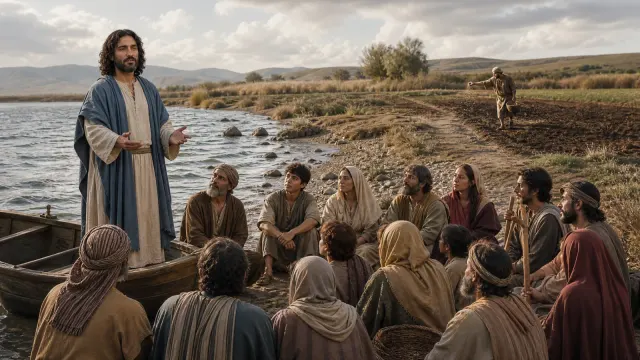
The Kingdom Grows Where Hearing Takes Root
Matthew 13 turns the act of hearing into one of its central subjects. A sower scatters the same seed into different ground, and Jesus’ explanation shows that initial reception, endurance, competing cares, understanding, and fruit are not the same thing. Parables both disclose and expose, making the disciples’ privileged hearing a responsibility rather than a decorative status. Wheat and tares delay final separation to the harvest, while mustard seed and leaven describe a kingdom whose visible beginnings do not reveal its eventual reach. Treasure and pearl show discovery that reorganizes value, and the net returns to judgment at the end of the age. The chapter closes in Jesus’ own country, where people possess detailed family knowledge yet cannot receive the wisdom and works in front of them without offence.
One complete chapter pageOpen chapter →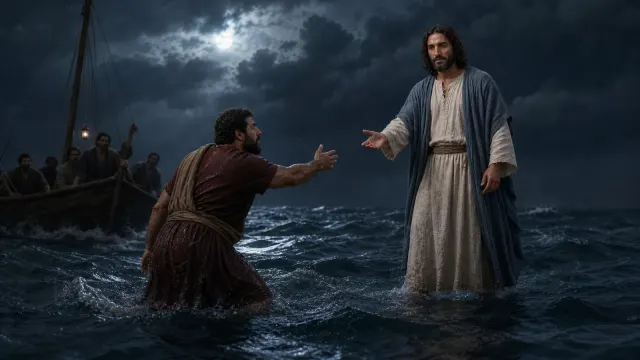
Two Tables, a Storm, and an Outstretched Hand
The Book of Matthew sets two very different gatherings beside each other. Herod’s birthday feast becomes the setting for John the Baptist’s death, with a ruler allowing his public oath and the watching guests to govern what he does. Jesus then meets a hungry multitude in a deserted place and refuses to send them away, drawing the disciples into distributing food that begins with only five loaves and two fishes and ends with twelve baskets left over. On the sea, the disciples first mistake Jesus for a threat. Peter then moves from boldness to fear, but the rescuing hand reaches him before the rebuke about little faith is finished. The wind ceases, worship follows, and the chapter closes at Gennesaret, where recognition spreads through the countryside and the sick are brought to Jesus. Execution, provision, fear, rescue, and healing all turn on what people do when power stands before them.
One complete chapter pageOpen chapter →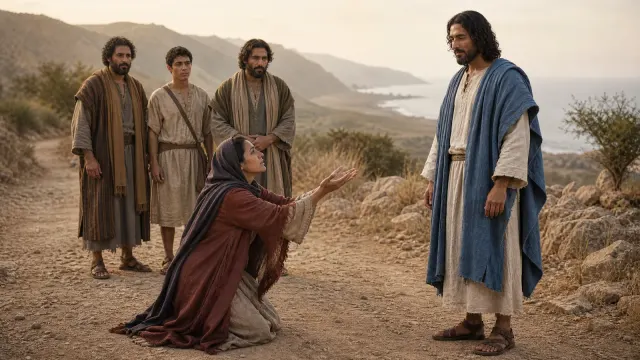
The Heart, the Table, and the Unexpected Guest
A dispute about unwashed hands becomes a much larger examination of what actually defiles and what religious practice can conceal. Jesus answers the appeal to tradition by pointing to a practice that can leave parents unsupported while sounding devout, then traces harmful speech and action back to the heart rather than to food entering the body. The chapter then crosses a difficult boundary when a Canaanite woman persists in seeking mercy for her daughter. She does not deny Israel’s priority, but refuses to treat that priority as proof that no mercy can reach her household, and Jesus commends her faith as great. The mountain scene that follows is filled with visible restoration as the lame walk, the blind see, and the crowd glorifies the God of Israel. Finally, four thousand men besides women and children are fed from seven loaves and a few fishes, leaving another set of full baskets and another lesson the disciples will soon be asked to remember.
One complete chapter pageOpen chapter →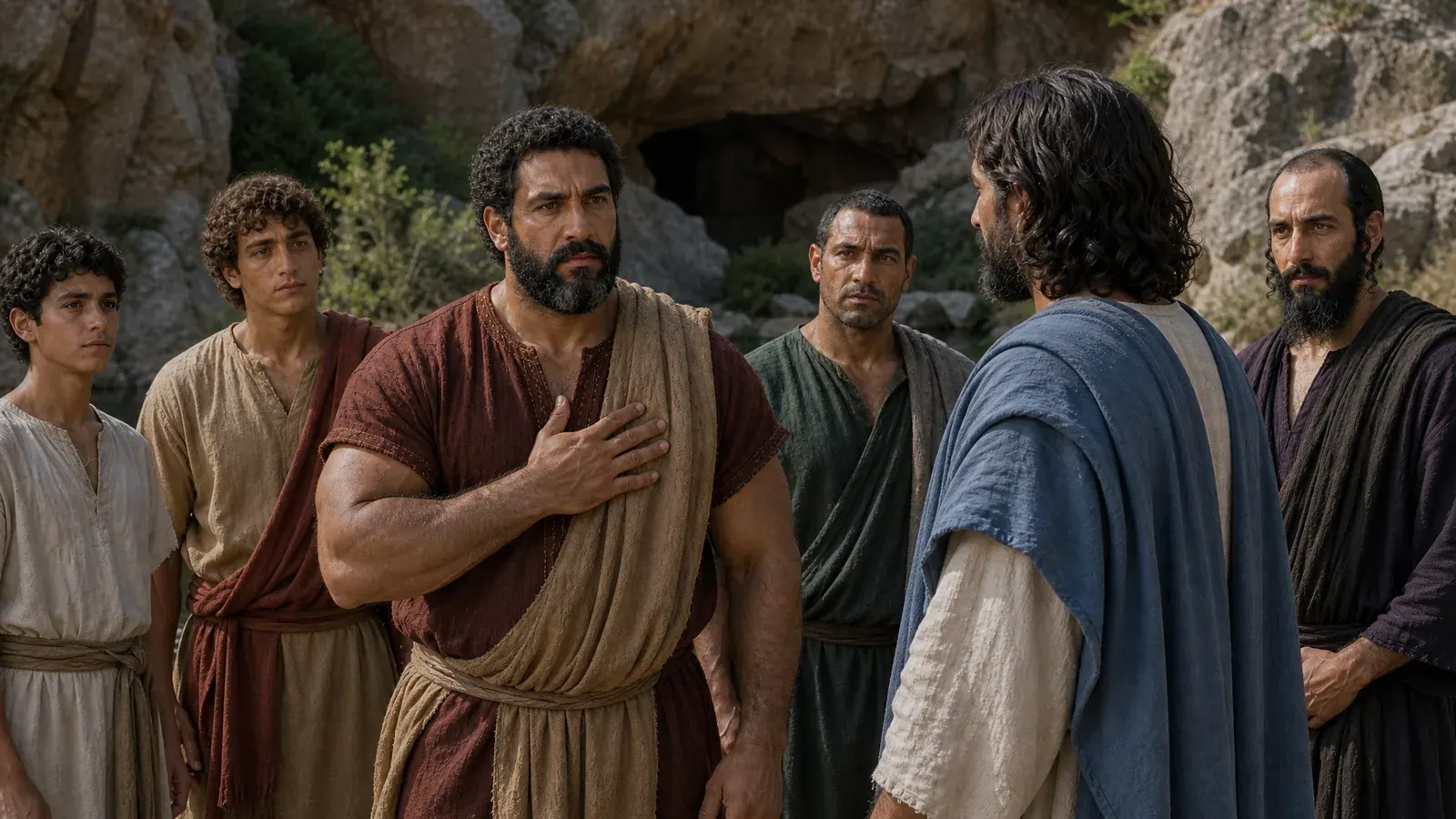
The Confession That Must Learn the Cross
The chapter begins with people demanding a sign while failing to read the significance of what is already before them, then turns to disciples who have seen two great feedings and are still preoccupied with missing bread. From that muddle comes one of the clearest confessions in the Book of Matthew: Peter names Jesus as the Christ, the Son of the living God, and receives words about the rock, the church, the keys, and authority. Yet the confession is immediately tested by the meaning of the title. Jesus begins to speak plainly of Jerusalem, suffering, death, and resurrection, and Peter tries to reject that path. The man just blessed is now called an obstacle because he wants a Messiah without the announced suffering. Jesus then extends the shape of the cross to those who follow him, placing the apparent gain of the whole world beside the possible loss of the self and setting present cost under the horizon of the Son of man’s coming glory.
One complete chapter pageOpen chapter →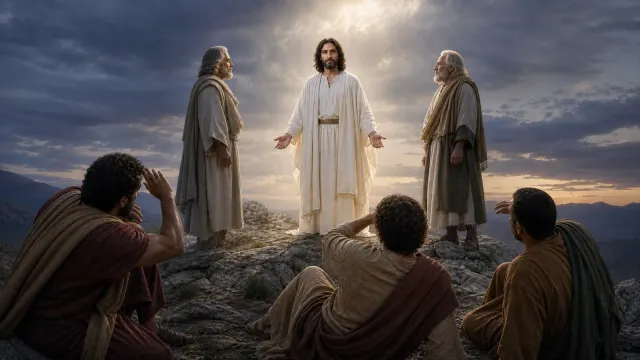
Glory on the Mountain, Weakness Below
Glory on the mountain does not cancel the road to suffering. Jesus is transfigured before Peter, James, and John, with Moses and Elijah present, but the heavenly voice interrupts Peter’s proposal and directs the disciples to the beloved Son: “hear ye him.” The command matters because Jesus has already told them what they do not want to hear about the cross. As they descend, the discussion of Elijah turns toward John the Baptist and the rejection that both messenger and Son of man will face. Below the mountain, the disciples’ inability to help a suffering boy exposes the difference between possessing a prior commission and acting in continuing dependence on God. Jesus again announces betrayal, death, and resurrection, while the disciples answer with sorrow. The chapter ends with the temple tribute question, where Jesus explains the freedom of the Son yet chooses to pay rather than create needless offence. Identity and humility remain joined from the mountain to the house.
One complete chapter pageOpen chapter →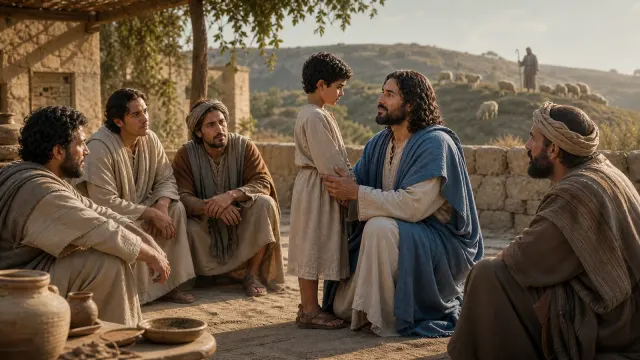
A Community Measured by Its Smallest Members
A question about greatness is answered by placing a child in the middle of the disciples’ argument. The Book of Matthew shifts attention from rank to humility, reception, and the severe responsibility not to make vulnerable believers stumble. The concern narrows further to one straying sheep, whose absence is not treated as a rounding error in a flock of one hundred. That same recovery logic shapes correction within the community: the first conversation is private, the circle widens only when necessary, and the stated aim is to “gain” the brother rather than to win a public quarrel. Peter’s attempt to put a number on forgiveness then opens into a parable of wildly unequal debts. A servant receives cancellation of an obligation he could never realistically repay, then seizes a fellow servant over a far smaller debt. The chapter makes mercy received and mercy withheld impossible to separate. Greatness is measured downward, toward the child, the straying one, the offending brother, and the debtor asking for patience.
One complete chapter pageOpen chapter →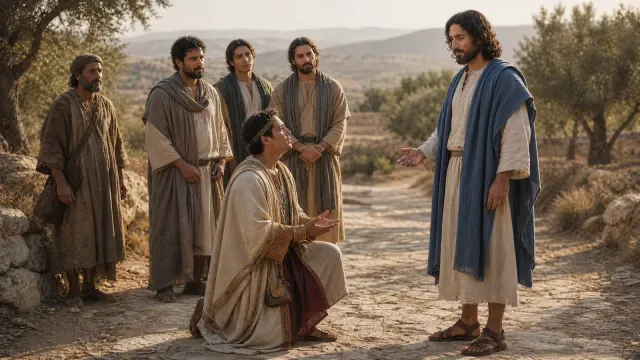
What Cannot Be Kept by Holding Tighter
Marriage, children, wealth, and reward all become tests of what people think they can hold and control. Jesus answers a dispute about divorce by going behind the broadest use of a concession and returning to creation, where two become one flesh. When the disciples react by questioning marriage itself, he distinguishes forms of life without making either marriage or celibacy an easy escape from costly obligation. Children are then brought to him, and the disciples again try to control access, only to be overruled as Jesus receives and blesses them. A wealthy young man approaches with an impressive account of obedience, yet his question about what he still lacks reaches the place where possessions and allegiance meet. He leaves sorrowful because he has great possessions. Jesus follows with the camel and the eye of a needle, locating the possibility of salvation with God rather than human ability. Peter’s question about what the disciples will receive is answered with promise, but also with the unsettling reversal that many first will be last.
One complete chapter pageOpen chapter →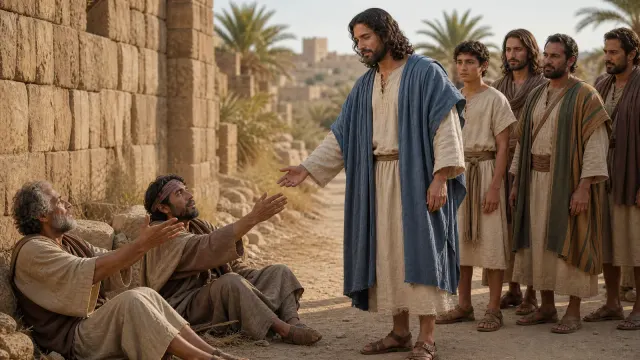
The Last Payment and the Lowest Place
The first and last saying becomes a vineyard in which the earliest workers receive exactly the wage they agreed to, yet resent the owner because late arrivals receive the same amount. The offence is not broken contract but generosity shown to someone else. From there, Jesus gives the twelve his clearest description yet of what awaits in Jerusalem: condemnation, delivery to the Gentiles, mockery, scourging, crucifixion, and resurrection. The next request makes the contrast almost painful. The mother of Zebedee’s sons asks for places of honour, the ten become indignant, and Jesus redefines greatness through service rather than dominion. His own life, given as a ransom for many, becomes the measure. The chapter ends with two blind men by the road asking not for thrones but for sight. The crowd tries to silence them, Jesus stops, compassion is named, their eyes are opened, and they follow him toward the city whose suffering he has just described.
One complete chapter pageOpen chapter →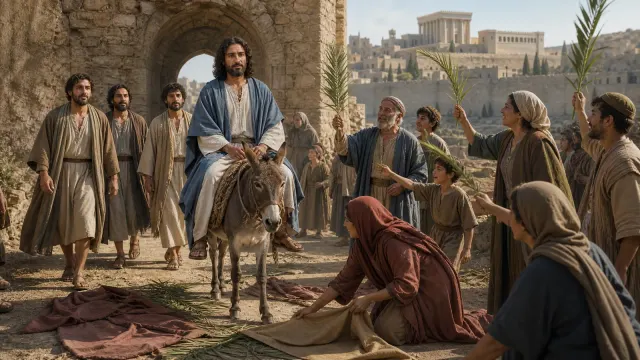
The King Enters, and the Question Becomes Fruit
Jerusalem receives Jesus with royal language, prophetic imagery, and public uncertainty about who he is. The Book of Matthew presents the entrance as deliberate: Jesus sends for the animals, the crowd cries “Hosanna,” and Zechariah’s meek king frames the procession. In the temple, he drives out buying and selling, but the cleared space is immediately filled with healing as the blind and lame come to him and children continue the praise the leaders resent. A fruitless fig tree then turns the chapter’s concern toward what visible promise actually produces. The question of authority leads to John’s baptism, where the leaders calculate the consequences of each possible answer rather than state what they believe. Two vineyard parables press the issue further. One son refuses but later obeys; another speaks respectfully and does nothing. Tenants recognize the heir and kill him. Again and again, correct position, speech, or stewardship is tested by fruit, and the chapter closes with leaders recognizing themselves in the warning without repenting.
One complete chapter pageOpen chapter →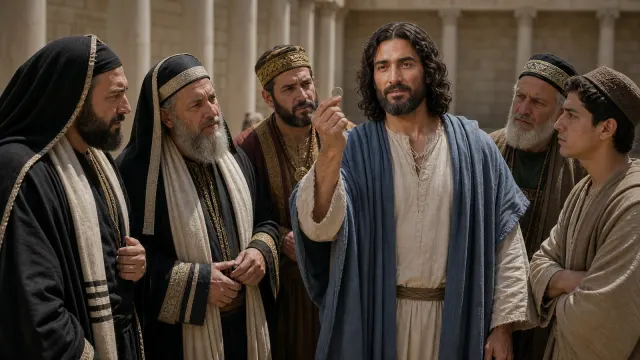
Invitations Refused and Questions Turned Around
The chapter opens with a wedding invitation refused by people who either ignore it or attack the servants carrying it. The hall is then filled from the highways with both bad and good, yet the king’s inspection makes clear that a widened invitation has not abolished judgment. A series of public challenges follows. The tribute question tries to force Jesus into a political trap, but the coin’s image becomes the starting point for distinguishing Caesar’s claim from the larger claim of God. The Sadducees build a resurrection puzzle out of seven marriages, and Jesus rejects the assumption that risen life must reproduce present arrangements unchanged. A lawyer asks for the great commandment and receives two joined answers: love of God and love of neighbour, on which the law and prophets hang. Finally, Jesus turns questioner and asks how David can call his own descendant Lord. The familiar title Son of David remains true, but no longer sufficient by itself to account for the authority described in Psalm 110.
One complete chapter pageOpen chapter →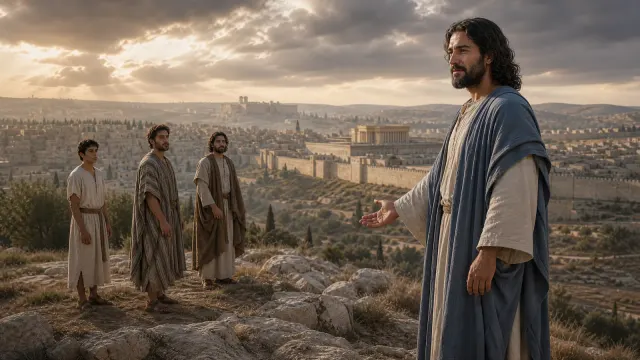
Clean Surfaces, Heavy Burdens, and a Grieving Lament
Jesus’ public indictment begins by distinguishing the authority associated with Moses’ seat from teachers whose conduct contradicts what they say. Heavy burdens are placed on others, religious signs are enlarged for visibility, and public honours become part of the problem because the governing desire is to be seen. The woes then move through blocked access, exploitation, misdirected zeal, evasive oaths, distorted priorities, and clean surfaces hiding corrupt contents. The image of straining at a gnat while swallowing a camel gives the chapter some of its sharpest humour, but the point is deadly serious: precision about small matters can coexist with neglect of judgment, mercy, and faith. Honouring the tombs of dead prophets is finally placed beside the announced persecution of living messengers, exposing continuity with the conduct the leaders claim to reject. Yet the final movement is not satisfaction at coming judgment. The Book of Matthew closes the address with Jesus lamenting Jerusalem as a hen desiring to gather her young beneath her wings.
One complete chapter pageOpen chapter →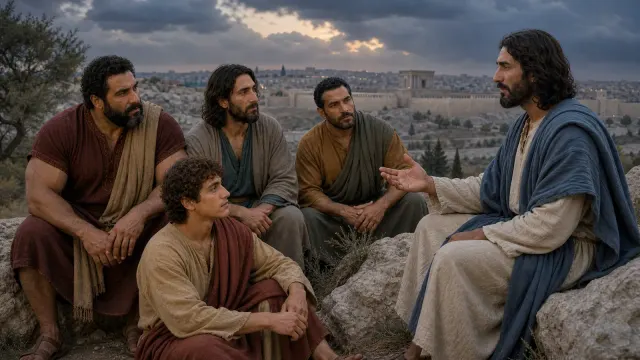
The Temple Will Fall; the Hour Remains Unknown
The disciples admire the temple buildings, but Jesus answers with a prediction of destruction that strips visible grandeur of any claim to permanence. Their private questions then join the temple’s fall, the coming of the Son of man, and the end, and the long answer refuses to reduce those matters to a simple timetable. Jesus warns first about deception. Wars, famines, pestilences, earthquakes, persecution, and false prophets are real, yet some of these are explicitly called the beginning rather than the end. The warning about Judaea includes urgent, local instructions for flight, while the coming of the Son of man is compared with lightning rather than a secret report from a hidden place. Cosmic language, the fig tree, and the difficult phrase “this generation” keep the interpretive pressure visible. Then the chapter states what calculation cannot solve: the day and hour are unknown. Readiness is therefore pictured not as date setting, but as a servant faithfully feeding the household while the master is away.
One complete chapter pageOpen chapter →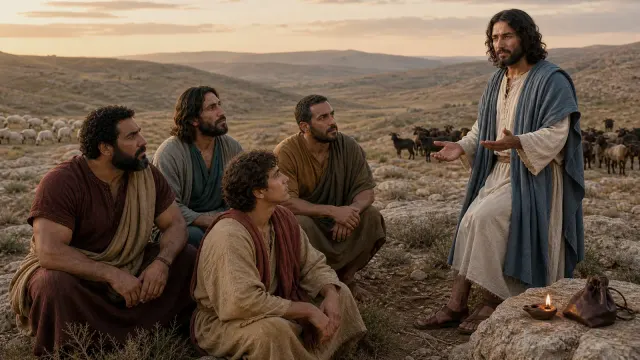
What the Waiting Reveals
Three scenes complete the teaching on readiness by asking what delay reveals. Ten attendants all grow sleepy while the bridegroom tarries, so the dividing line is not physical wakefulness but preparation made before the midnight announcement. The next comparison gives servants unequal amounts of their master’s money according to ability. The first two produce different totals yet receive the same welcome, while the third buries what was entrusted and defends inaction by accusing the master of harshness. The final scene leaves domestic imagery behind for the Son of man seated in glory before gathered nations. Food, drink, welcome, clothing, visitation, and presence with prisoners become matters of judgment because the king identifies himself with “the least of these.” Both groups are surprised by that identification, but their conduct is not the same. The Book of Matthew ends the discourse with eternal life and everlasting punishment set side by side. Unknown timing never means empty time; what people do during the delay becomes visible at the return.
One complete chapter pageOpen chapter →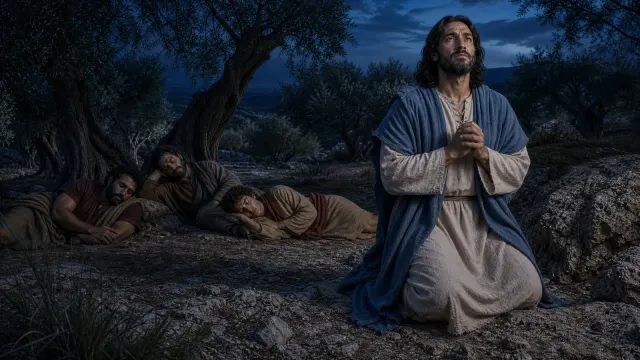
The Given Body and the Scattered Disciples
The final teaching has ended, and the passion begins under the shadow of Passover. Jesus announces his crucifixion before the leaders describe their plan, holding his foreknowledge beside their responsibility. An unnamed woman pours costly ointment on him and is defended against the charge of waste; immediately afterward Judas asks what he will be paid to deliver Jesus. At the Passover table, betrayal is announced from within the twelve, then bread and cup receive their interpretation as body, blood, covenant, and remission of sins. Jesus predicts that all the disciples will scatter and that Peter will deny him three times, but he also promises a meeting in Galilee beyond the failure. In Gethsemane, sorrow is explicit and the cup is faced through repeated submission to the Father’s will. Arrest follows by a kiss, yet Jesus refuses the sword and says angelic rescue is available but not sought. Before the council he speaks of the Son of man at the right hand of power. Outside, Peter’s denials intensify until the cock crows and memory breaks his confidence into bitter tears.
One complete chapter pageOpen chapter →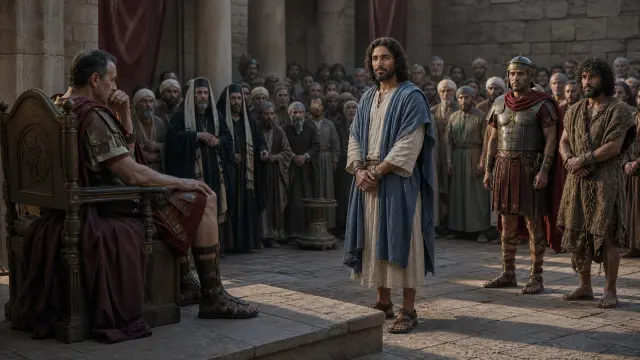
The Rejected King, the Opened Graves, and the Sealed Tomb
Matthew 27 keeps placing declarations of Jesus’ innocence beside decisions that move his execution forward. Judas confesses “innocent blood,” Pilate knows envy is involved, Pilate’s wife calls Jesus just, and the governor himself asks what evil he has done, yet the chapter still moves from hearing to scourging and crucifixion. Royal language follows Jesus into the abuse: robe, crown, kneeling, accusation, and repeated mockery all call him king while attempting to empty the title of meaning. At his death, the scale changes. Darkness falls, the veil tears, the earth shakes, rocks split, and graves open. The centurion and those with him respond in fear, while the women remain as witnesses. Joseph then gives Jesus his own new tomb. The chapter ends with the stone sealed and a watch set because Jesus’ opponents remember his resurrection prediction well enough to fear what might be said next.
One complete chapter pageOpen chapter →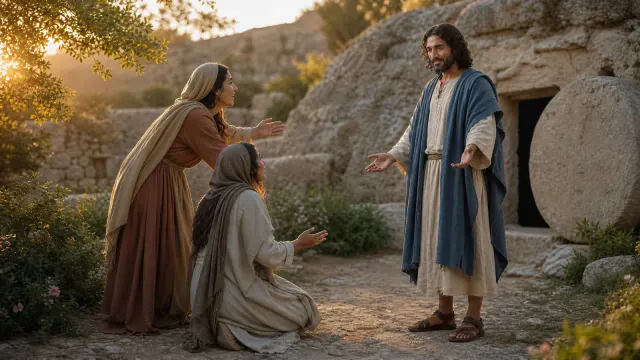
The Sealed Ending Opens Onto All Nations
Matthew 28 begins where the previous chapter tried hardest to close the matter: at a sealed tomb under guard. The women return, an earthquake accompanies the angel’s descent, the stone is rolled away, and the keepers become “as dead men.” The empty place is not left unexplained. The women are told that the crucified Jesus is risen “as he said,” then they meet Jesus himself, take hold of his feet, worship, and carry his summons to the disciples. At the same time, some guards carry another report to the leaders, who answer it with money and a rehearsed account of theft. The book finally gathers the eleven in Galilee. Worship and doubt remain in the same company, yet the commission rests on Jesus’ authority rather than their perfection. The Gospel closes by expanding from Israel toward all nations and by returning to its opening Emmanuel theme in Jesus’ promise to remain with them.
One complete chapter pageOpen chapter →Source: eBible.org · eng-kjv2006