The big picture
The day chosen by Haman’s lot finally arrives, but the expected balance of power has changed. The Jews assemble in their cities, officials support them under the growing influence of Mordecai, and those seeking their harm are defeated. The Book of Esther does not soften the violence: it records five hundred killed in Shushan, the ten sons of Haman, three hundred more after Esther requests a second day in the city, and seventy-five thousand foes in the provinces. Yet three times the account emphasizes that the Jews do not take the spoil permitted by the counter-decree. Rest comes on different dates in Shushan and elsewhere, and those dates become days of feasting and gladness. Mordecai’s letters establish annual observance, shared portions, and gifts to the poor. Pur, once cast to schedule destruction, gives Purim its name. Esther’s own authority then confirms the remembrance in writing.
In this chapter
- The Day Arrives with the Balance Reversed Esther 9:1-4
The date fixed by Haman’s lot is not removed from the calendar.
- The Names Are Followed by a Refusal Esther 9:5-10
The Book of Esther does not soften the violence once the confrontation begins.
- A Second Day in Shushan and a Large Toll Elsewhere Esther 9:11-16
The king receives the Shushan casualty report and invites another petition from Esther.
- Rest Fixes the Festival’s Dates Esther 9:17-19
Rest, rather than the first moment of victory, determines the festival dates.
- The Lot Gives Its Name to the Reversal Esther 9:20-28
Mordecai turns the recent events into an annual obligation through letters sent to Jews near and far.
- Esther’s Authority Confirms the Remembrance Esther 9:29-32
Esther’s authority joins Mordecai’s in confirming Purim.

Scripture beside the summary
Esther · King James Version · 32Esther 9:1-4
The Day Arrives with the Balance Reversed
The date fixed by Haman’s lot is not removed from the calendar. Adar thirteenth arrives, and those who expected to gain power over the Jews encounter what the Book of Esther describes as a direct reversal. The Jews gather in their cities against people seeking their harm, while fear changes the calculations of both the general population and the imperial officials. Governors, deputies, lieutenants, and other officers now help the Jews because Mordecai’s standing has grown throughout the provinces. That support shows why the transfer of royal authority mattered far beyond Shushan. The same administrative world that once carried Haman’s plan is responding to a different man’s influence. The account does not describe rescue as the disappearance of every enemy before conflict begins. It describes changed legal permission, organized assembly, official support, and an altered balance of fear as the appointed confrontation starts. Reversal happens within the machinery that had previously magnified the threat.

Deep dive
The opening sentence carries the expectation and its reversal together. The date established by Haman’s lot has not been deleted from the calendar, yet those who hoped to gain power find that the opposite has become possible. Esther states the turn explicitly rather than leaving it only to the sequence of events. The assembly authorized in chapter 8 now occurs in the cities where the Jews live. The enemies are described as those seeking their harm, keeping the confrontation connected to the existing threat.
The provincial authorities also act, and their motive is named: fear of Mordecai. The official machinery that once transmitted Haman’s orders is not represented as holding an unchanging loyalty to his project. His replacement’s growing stature alters its behaviour. This is one reason the transfer of the ring mattered beyond a palace ceremony. The book’s language of fear extends from the people generally to the rulers and officers. The reversal therefore involves permission to resist, organized gathering, and a changed calculation among those exercising local power. It is not narrated as the disappearance of every enemy before any confrontation can take place.
Words to trace: Jews, Mordecai, provinces, fear, fell, greater
Verse-by-verse path
- Esther 9:1
The bracket holds the hinge of the whole book: “it was turned to the contrary” is venahafokh hu, literally “and it was overturned”, the phrase that became the motto of Purim. The day that Haman’s lot fixed eleven months earlier still comes; what turns over is who has power on it.
- Esther 9:2
“Lay hand on” is the phrase the book has used for Bigthan and Teresh plotting against the king (2:21) and for Haman scorning to touch Mordecai alone (3:6). “The fear of them fell upon all people” is the language of Exodus 15:16, where fear and dread fall on the nations who hear of the crossing.
- Esther 9:3
The officials who help are the same four ranks that received Haman’s letters in 3:12 and Mordecai’s in 8:9. “Helped” is literally “lifted up”. The imperial machinery does not change sides out of principle; the verse says it feared Mordecai.
- Esther 9:4
“Waxed greater and greater” is the idiom of going and growing used of Isaac, who “went forward, and grew until he became very great” (Genesis 26:13), and of David’s house that “waxed stronger and stronger” (2 Samuel 3:1). The man at the gate is now the power behind it.
Esther 9:1-4
King James Version1Now in the twelfth month, that is, the month Adar, on the thirteenth day of the same, when the king’s commandment and his decree drew near to be put in execution, in the day that the enemies of the Jews hoped to have power over them, (though it was turned to the contrary, that the Jews had rule over them that hated them;)
2The Jews gathered themselves together in their cities throughout all the provinces of the king Ahasuerus, to lay hand on such as sought their hurt: and no man could withstand them; for the fear of them fell upon all people.
3And all the rulers of the provinces, and the lieutenants, and the deputies, and officers of the king, helped the Jews; because the fear of Mordecai fell upon them.
4For Mordecai was great in the king’s house, and his fame went out throughout all the provinces: for this man Mordecai waxed greater and greater.
Esther 9:5-10
The Names Are Followed by a Refusal
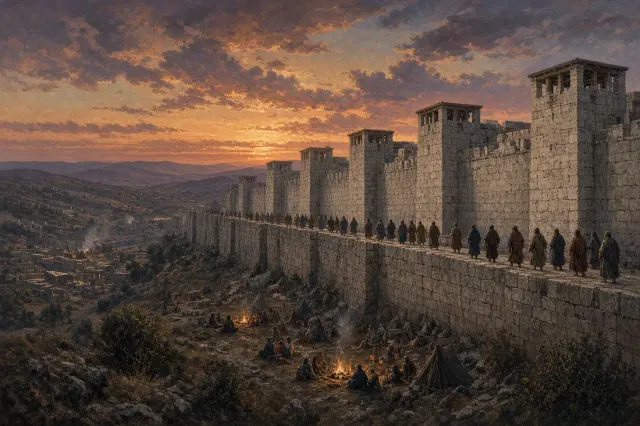
The Book of Esther does not soften the violence once the confrontation begins. It speaks of sword, slaughter, and destruction and reports five hundred men killed in Shushan. Then it gives the names of Haman’s ten sons one by one, making the collapse of his household concrete rather than leaving it as an anonymous total. Haman had once included his many children in the catalogue of honours he recited to his friends; now his ten sons appear inside the record of his defeated house. The closing clause changes the character of the victory without making the deaths disappear: the Jews do not lay their hands on the spoil. Both Haman’s original decree and Mordecai’s counter-decree permitted plunder, yet that permission is not used here. The refusal will recur twice more. Its repetition makes gain from property a deliberate point of contrast with the destruction order that first placed Jewish lives and possessions together as available prey.
Deep dive
The language of sword, slaughter, and destruction is severe and should remain so. Esther does not present the day as harmless pageantry, even though it identifies the defeated as enemies who hated the Jews. The five hundred men reported in Shushan are followed by the individual names of Haman’s ten sons. Naming the sons gives particular definition to the collapse of the household whose multitude Haman had included among his honours in chapter 5.
The sentence concerning spoil then interrupts what might otherwise be read as a report of conquest for gain. Haman’s original order allowed the attackers to seize Jewish property, and the counter-decree allowed the reverse. Here permission is not used. The refusal will be repeated twice more, making it a deliberate feature of the account rather than an incidental absence of detail. It also invites comparison with the disputed spoil in Saul’s conflict with Agag in 1 Samuel 15, though Esther does not explain the refusal by explicitly quoting that chapter. The connection is suggestive; the refusal itself is stated beyond doubt.
Words to trace: Jews, slew, Adalia, Aridai, Aridatha, Arisai
Verse-by-verse path
- Esther 9:5
“Did what they would” is kirtsonam, “according to their pleasure”, the phrase of the king’s drinking law in 1:8, where every man did according to his own pleasure. The book that opened on royal pleasure uses the same word for the day the Jews could no longer be harmed.
- Esther 9:6
Five hundred are killed in the citadel itself, not in the city below. The royal fortress held enough of Haman’s partisans to make that number, an inference from the place, since the text names no one but his sons.
- Esther 9:7
The ten names are Persian: Aspatha may contain aspa, the Persian word for horse, and Parshandatha seems to end in data, “given”, as Hammedatha does. In the Hebrew scroll the ten names are written in a narrow column down the page, each on its own line, a layout the Talmud (Megillah 16b) says was required.
- Esther 9:8
Jewish custom has the reader of the scroll at Purim say all ten names, from Parshandatha to Vajezatha, in a single breath, a practice the Talmud (Megillah 16b) connects with the sons dying together. Adalia and Aridatha are otherwise unknown.
- Esther 9:9
In the traditional scroll Vajezatha is written with an elongated first letter, the vav, and three letters in the list of names are written small. The meanings of Parmashta, Arisai and Aridai are uncertain, but all three sound Persian, like their father’s name.
- Esther 9:10
Saul was condemned for taking the spoil of Amalek when he had been told to leave it (1 Samuel 15:9, 15:19). Here the Benjamite Mordecai’s people, facing the house of Haman the Agagite, lay no hand on the spoil. Haman had boasted of “the multitude of his children” (5:11); all ten are named among the dead.
Esther 9:5-10
King James Version5Thus the Jews smote all their enemies with the stroke of the sword, and slaughter, and destruction, and did what they would unto those that hated them.
6And in Shushan the palace the Jews slew and destroyed five hundred men.
7And Parshandatha, and Dalphon, and Aspatha,
8And Poratha, and Adalia, and Aridatha,
9And Parmashta, and Arisai, and Aridai, and Vajezatha,
10The ten sons of Haman the son of Hammedatha, the enemy of the Jews, slew they; but on the spoil laid they not their hand.
Esther 9:11-16
A Second Day in Shushan and a Large Toll Elsewhere
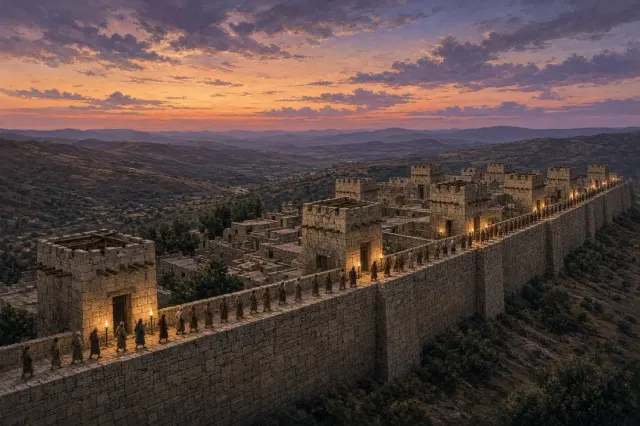
The king receives the Shushan casualty report and invites another petition from Esther. She asks for the Jews in Shushan to act under the decree for one additional day and for Haman’s ten sons to be displayed on the gallows. The sons have already been reported dead, so this later hanging concerns public exposure of their bodies rather than another set of executions. The Book of Esther does not explain why Esther seeks a second day in the city, and the account should not be supplied with a particular hidden attack plan that it never names. It records the result instead: three hundred more men are killed in Shushan, while the wider provinces report seventy-five thousand foes killed as the Jews stand for their lives and gain rest from their enemies. The scale is severe. Twice more the account notes that no prey is taken, separating survival and vengeance against attackers from enrichment through the property the decree had authorized them to seize.
Deep dive
The king’s report brings the Shushan figures before Esther and offers a further request. She asks for another day under the same decree in the city, and for Haman’s ten sons to be hung. Their deaths have already been reported in verse 10, so this later action concerns the exposure of their bodies, not ten additional executions of living sons. The chronology keeps the account from being counted twice.
The reason an additional day is needed in Shushan is not explained. Continued danger is a plausible reading of the surrounding conflict, while other readings emphasize the severity of the requested extension. The text should not be supplied with a particular undisclosed ambush or a claim that every remaining circumstance is known. It records three hundred more men killed there and, in the wider provinces, seventy-five thousand foes. Those are the KJV’s figures, not a metaphor for a small disagreement. The description of standing for their lives frames the provincial action, and the refusal to take prey appears with both reports. Rest and survival are the stated result, but their arrival does not make the loss of life disappear from the page.
Words to trace: Shushan, Jews, king, sons, decree, Esther
Verse-by-verse path
- Esther 9:11
The day’s count is brought to the king the same day, a tally of the dead reported as the empire reported everything. The king who once received an offer of ten thousand talents for this killing now receives a figure for the killing that went the other way.
- Esther 9:12
The king guesses at the provinces from the capital and then, without waiting for an answer, offers Esther another request. It is the fourth time he has asked (5:3, 5:6, 7:2), and this time he does not even mention half the kingdom.
- Esther 9:13
Displaying the bodies of defeated enemies was common practice: Joshua hanged five Amorite kings on trees until evening (Joshua 10:26), and the Philistines fastened Saul’s body to the wall of Beth-shan (1 Samuel 31:10). The sons were already dead (verse 10); the hanging is a public exhibition.
- Esther 9:14
“The decree was given at Shushan” is the closing formula of 3:15 and 8:14. A third decree goes out from the same citadel, and this one is issued at the queen’s request.
- Esther 9:15
On the first day the fighting was in “Shushan the palace”, the citadel (verses 6, 11, 12); on the second it is simply “Shushan”, the city below, the city that had been “perplexed” when Haman’s decree was published (3:15). Three hundred more fall there, and again the spoil is left.
- Esther 9:16
The Greek translation gives fifteen thousand, not seventy five thousand. “Had rest from their enemies” is the language of Deuteronomy 12:10 and of 2 Samuel 7:1, where “the LORD had given him rest round about from all his enemies”. The people who stood for their lives are given the promise of the land even in exile.
Esther 9:11-16
King James Version11On that day the number of those that were slain in Shushan the palace was brought before the king.
12And the king said unto Esther the queen, The Jews have slain and destroyed five hundred men in Shushan the palace, and the ten sons of Haman; what have they done in the rest of the king’s provinces? now what is thy petition? and it shall be granted thee: or what is thy request further? and it shall be done.
13Then said Esther, If it please the king, let it be granted to the Jews which are in Shushan to do to morrow also according unto this day’s decree, and let Haman’s ten sons be hanged upon the gallows.
14And the king commanded it so to be done: and the decree was given at Shushan; and they hanged Haman’s ten sons.
15For the Jews that were in Shushan gathered themselves together on the fourteenth day also of the month Adar, and slew three hundred men at Shushan; but on the prey they laid not their hand.
16But the other Jews that were in the king’s provinces gathered themselves together, and stood for their lives, and had rest from their enemies, and slew of their foes seventy and five thousand, but they laid not their hands on the prey,
Esther 9:17-19
Rest Fixes the Festival’s Dates
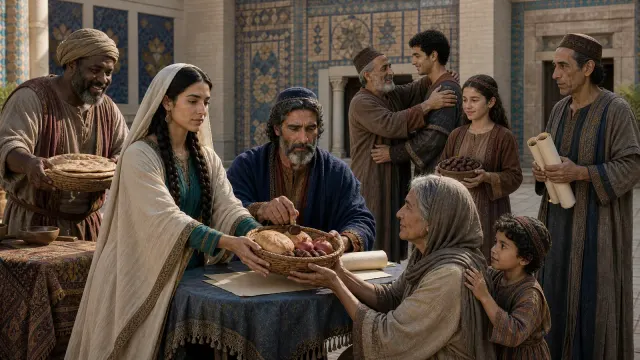
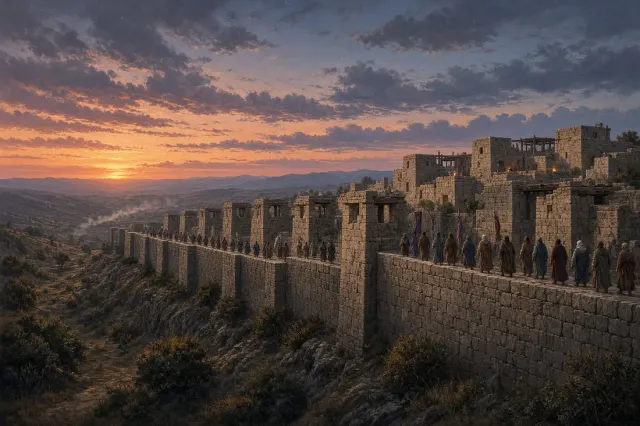
Rest, rather than the first moment of victory, determines the festival dates. In the provinces the Jews fight on the thirteenth and rest on the fourteenth, turning that day into one of feasting and gladness. Shushan follows a different sequence because the city has a second day of assembly and conflict, so its rest falls on the fifteenth. The Book of Esther preserves both calendars instead of forcing one local experience onto everyone. That difference matters because remembrance is built from what actually happened in distinct places. Feasting also returns in a form very different from the opening chapters. Ahasuerus’s banquets displayed wealth, rank, and imperial abundance. Here celebration grows out of survival and is marked by sending portions to one another. Gladness has a social practice attached to it. The movement from fasting and mourning to shared food does not erase the earlier grief. It gives the change in circumstances a repeatable communal form tied to days of rest.
Deep dive
The dates are tied to rest rather than merely to the moment an enemy is defeated. In the provinces, the thirteenth is followed by rest and celebration on the fourteenth. Shushan has a second day of assembly and fighting, so its rest falls on the fifteenth. The distinction explains why the emerging observance cannot be reduced to one identical local sequence. Esther preserves that difference instead of smoothing it away for a tidier calendar.
Feasting returns with a markedly changed centre. The book opened with the king exhibiting resources and status; here the Jews in unwalled towns mark relief by sharing portions with one another. The text describes an actual social action, not only an inward feeling of joy. The repeated pairing of feasting and gladness also answers the earlier pairing of fasting and mourning. Survival is becoming communal memory through a date and a practice. The exchange of food is therefore not an ornamental custom appended after the serious events. It is part of how the change in circumstances receives a repeatable public form.
Words to trace: feasting, fourteenth, gladness, Adar, Jews, month
Verse-by-verse path
- Esther 9:17
The fourteenth of Adar falls exactly one month before the fourteenth of Nisan, the Passover. The decree of death was written on the eve of Passover (3:12), and the feast of deliverance lands a month before the next one.
- Esther 9:18
Because the capital fought two days, its rest came a day later. The fifteenth is still kept as Shushan Purim, and in Jerusalem Purim is celebrated on that day to this day.
- Esther 9:19
“Unwalled towns” are perazot, open settlements, the “land of unwalled villages” of Ezekiel 38:11. The Mishnah (Megillah 1:1) turned the distinction into a rule: towns walled since the days of Joshua keep the fifteenth, all others the fourteenth.
Esther 9:17-19
King James Version17On the thirteenth day of the month Adar; and on the fourteenth day of the same rested they, and made it a day of feasting and gladness.
18But the Jews that were at Shushan assembled together on the thirteenth day thereof, and on the fourteenth thereof; and on the fifteenth day of the same they rested, and made it a day of feasting and gladness.
19Therefore the Jews of the villages, that dwelt in the unwalled towns, made the fourteenth day of the month Adar a day of gladness and feasting, and a good day, and of sending portions one to another.
Esther 9:20-28
The Lot Gives Its Name to the Reversal
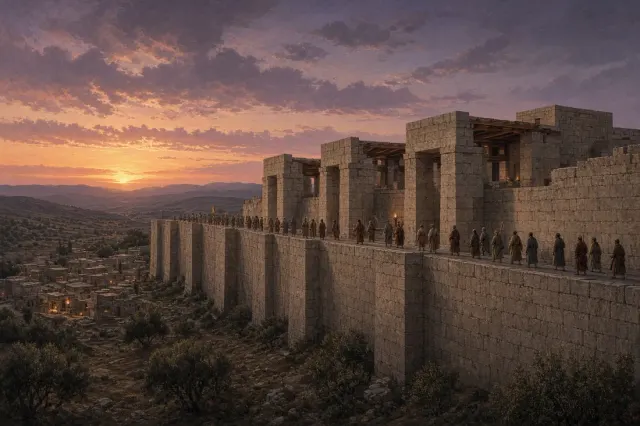
Mordecai turns the recent events into an annual obligation through letters sent to Jews near and far. The dates are remembered as the time when rest replaced danger and when sorrow and mourning were turned into joy and a good day. The practices are correspondingly communal: feasting, gladness, portions sent to one another, and gifts to the poor. Provision for the poor prevents the memorial from becoming only a celebration for households already able to feast comfortably. The name Purim comes from Pur, the lot Haman cast when arranging destruction. The Book of Esther therefore preserves the enemy’s chosen instrument inside the vocabulary of deliverance. The lot does not disappear from memory; its meaning is reversed. What once fixed a date for death now names the recurring days that remember survival. The repeated references to generations, families, provinces, and cities give the observance a deliberately durable scale. The people once marked to perish establish a memorial that must not perish among their descendants.
Deep dive
Mordecai writes to Jews both near and far, extending the act of remembering across the same geographical spread that made the earlier danger so great. The summary is built from paired reversals: sorrow into joy, mourning into a good day, and threat into rest. Portions sent to one another are joined by gifts to the poor, so the instructions distinguish mutual exchange from provision for those who need it. A celebration of collective survival is not described solely in terms of households able to host their own feast.
The name Purim comes from Pur, the lot cast in Haman’s scheme. That naming preserves the enemy’s chosen instrument without granting it the final meaning. What once determined a date for destruction now helps identify a date of remembrance. The compressed account of Haman and his sons must be read with the fuller sequence earlier in the book; it summarizes the reversal rather than creating a second chronology. The repeated references to generations, families, provinces, and cities make continuity the aim. The people who were to perish undertake to keep the memorial from perishing among their descendants.
Words to trace: Jews, days, destroy, devised, fail, keep
Verse-by-verse path
- Esther 9:20
Some ancient readers took “Mordecai wrote these things” to mean he wrote the Book of Esther itself. The context points to the letters that follow, sent to every Jewish community “both nigh and far”, well beyond the reach of any single feast in Susa.
- Esther 9:21
“Stablish” is qayyem, to make stand, confirm, and the verb returns in verses 27, 29, 31 and 32. Mordecai joins the two local practices into one, asking every community to keep both days, the fourteenth and the fifteenth.
- Esther 9:22
“Turned” is the verb of verse 1, the overturning. The Talmud (Megillah 7a) later ruled that everyone must give at least two gifts to two poor people at Purim, so “gifts to the poor” is still a requirement and not a suggestion. Joy is measured partly by who else gets to eat.
- Esther 9:23
“Undertook” is qibbel, to receive or accept, the root of the later word Kabbalah, received tradition. The people had already begun to keep the days before Mordecai wrote, so the letter confirmed a practice that the people themselves started.
- Esther 9:24
“To consume them” is hummam, to rout or throw into panic, the verb Exodus 14:24 uses when the LORD “troubled the host of the Egyptians”. Haman is now “the enemy of all the Jews”, with “all” added to his usual title.
- Esther 9:25
The Hebrew says only “when she came” or “when it came before the king”, and it may mean the matter rather than the queen. The King James supplies Esther’s name. The summary is compressed: the banquets and the sleepless night are gone, and only the turn remains.
- Esther 9:26
Purim is a Hebrew plural of the Akkadian loanword pur, so “Lots”. The festival is named after the enemy’s method, not after the rescuers. Three sources are listed for keeping it: the letter, what they had seen, and what had come to them.
- Esther 9:27
“All such as joined themselves unto them” is hannilvim, proselytes, the word of Isaiah 56:6 for “the sons of the stranger, that join themselves to the LORD”. “So as it should not fail” is lo ya’avor, “it shall not pass away”, the very phrase that made the laws of the Persians and the Medes unalterable (1:19).
- Esther 9:28
The Law had commanded Israel to “blot out the remembrance of Amalek” (Deuteronomy 25:19). Here the remembrance of Purim is not to perish. Jewish practice joined the two: on the sabbath before Purim the passage about Amalek, Deuteronomy 25:17–19, is read in synagogue.
Esther 9:20-28
King James Version20And Mordecai wrote these things, and sent letters unto all the Jews that were in all the provinces of the king Ahasuerus, both nigh and far,
21To stablish this among them, that they should keep the fourteenth day of the month Adar, and the fifteenth day of the same, yearly,
22As the days wherein the Jews rested from their enemies, and the month which was turned unto them from sorrow to joy, and from mourning into a good day: that they should make them days of feasting and joy, and of sending portions one to another, and gifts to the poor.
23And the Jews undertook to do as they had begun, and as Mordecai had written unto them;
24Because Haman the son of Hammedatha, the Agagite, the enemy of all the Jews, had devised against the Jews to destroy them, and had cast Pur, that is, the lot, to consume them, and to destroy them;
25But when Esther came before the king, he commanded by letters that his wicked device, which he devised against the Jews, should return upon his own head, and that he and his sons should be hanged on the gallows.
26Wherefore they called these days Purim after the name of Pur. Therefore for all the words of this letter, and of that which they had seen concerning this matter, and which had come unto them,
27The Jews ordained, and took upon them, and upon their seed, and upon all such as joined themselves unto them, so as it should not fail, that they would keep these two days according to their writing, and according to their appointed time every year;
28And that these days should be remembered and kept throughout every generation, every family, every province, and every city; and that these days of Purim should not fail from among the Jews, nor the memorial of them perish from their seed.
Esther 9:29-32
Esther’s Authority Confirms the Remembrance
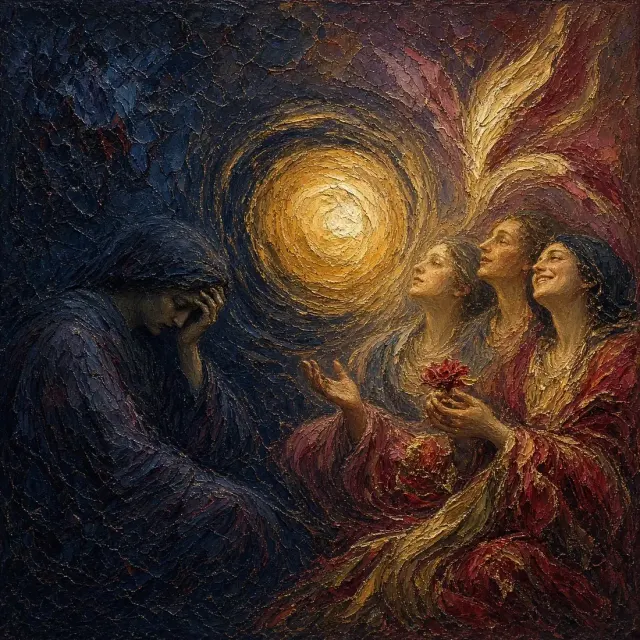
Esther’s authority joins Mordecai’s in confirming Purim. She is identified again as the daughter of Abihail as well as queen, connecting the woman introduced through family loss and concealed identity with the formal written establishment of a public memorial. The letters extend through all one hundred and twenty-seven provinces with words characterized as peace and truth, using the same geographic scale that earlier measured royal display and then the reach of Haman’s danger. Fasting and the people’s cry are also preserved in the observance. The Book of Esther does not allow later gladness to make earlier terror unreal. Mourning belongs to the memory of deliverance alongside feasting. Writing has carried several different kinds of power through the book: an order of destruction, an unnoticed record of loyal service, a counter-decree allowing resistance, and now a commitment to remember. Esther’s decree gives continuity to what happened so that relief does not depend on one generation retaining the events by accident.
Deep dive
Esther is again identified by her father’s name, bringing the daughter introduced before her royal advancement into the formal confirmation of Purim. She and Mordecai write with authority, and the letters travel through the empire’s one hundred and twenty-seven provinces. That recurring scale once measured royal display and then the reach of danger. It now measures the reach of a communal memorial. The words carried are characterized by peace and truth, a pointed contrast with the earlier representation of a supposedly intolerable people.
The mention of fastings and the people’s cry keeps the period of grief attached to the festival’s establishment. The outcome is not allowed to turn the earlier threat into an unreal inconvenience. Esther’s decree confirms the observance, and the final notice says it was written in the book without identifying that record more precisely. Writing has moved through several roles: authorizing danger, preserving a forgotten rescue, permitting resistance, and securing remembrance. Here it serves continuity rather than sudden command. The book’s royal apparatus has not vanished, but the surviving community now has an enduring written claim on its own memory.
Words to trace: Esther, Purim, confirm, matters, Mordecai, queen
Verse-by-verse path
- Esther 9:29
“With all authority” is literally “with all strength”, toqef, the word used of Mordecai’s power in 10:2. Jezebel wrote letters in Ahab’s name and sealed them with his seal (1 Kings 21:8); Esther writes in her own name, with her father’s name beside it.
- Esther 9:30
“Peace and truth” is the pair Zechariah 8:19 uses when the fasts of the fourth, fifth, seventh and tenth months are to become “joy and gladness, and cheerful feasts; therefore love the truth and peace”. Zechariah too spoke of fasts turned into feasts.
- Esther 9:31
“As they had decreed for themselves” echoes the self-imposed ordinance of Nehemiah 10:32, where the community charged itself with the temple tax. The fasting and the crying are written into the memorial alongside the feasting, the three days of 4:16 kept in remembrance.
- Esther 9:32
“The decree of Esther” is ma’amar, and the book ends its account of Purim on the queen’s word. The Book of Esther itself is still read from a scroll, the Megillah, twice at every Purim, evening and morning.
Esther 9:29-32
King James Version29Then Esther the queen, the daughter of Abihail, and Mordecai the Jew, wrote with all authority, to confirm this second letter of Purim.
30And he sent the letters unto all the Jews, to the hundred twenty and seven provinces of the kingdom of Ahasuerus, with words of peace and truth,
31To confirm these days of Purim in their times appointed, according as Mordecai the Jew and Esther the queen had enjoined them, and as they had decreed for themselves and for their seed, the matters of the fastings and their cry.
32And the decree of Esther confirmed these matters of Purim; and it was written in the book.
Questions to keep in mind while reading
- Track who acts, who speaks, who is affected, and what changes.
- Notice repeated promises, failures, rescues, and consequences.
- Do not assume the account approves every action that is reported.
Text first
Where readers differ
The chapter summary begins with what the passage says and how its parts fit together. It does not assume one denomination has already settled every question. Where a conclusion depends on a tradition, literary theory, or historical reconstruction, that dependence is named openly.
The KJV text is presented first. Interpretive conclusions are labeled, and differences are introduced only when they help a reader understand why serious communities do not always reach the same answer.
Comparative interpretive notes for this chapter are in preparation. Until reviewed notes are ready, this page separates the KJV text from summary and application without claiming that serious readers agree on every question.
Questions beneath the surface
- What account of God, human freedom, responsibility, and the good life emerges from Esther 9?
- Which tension does the chapter refuse to resolve quickly?
- What changes when the chapter is read as part of the whole canon rather than as an isolated moral lesson?
- Where might a sincere reader confuse a familiar tradition with something the text states directly?
Questions for serious personal contemplation
These open-ended questions make room for tension, honest response, prayer, and conclusions that remain accountable to the chapter.
Observe without rushing
What part of Esther 9 makes you stop, feel unsettled, or feel surprised, and why?
Which detail in the passage would be easiest to overlook? How does that detail change your understanding?
Where do you see tension between what happens and this focus: Jewish communities defending themselves and then resting with gladness?
What important question does the passage leave open instead of resolving quickly?
Examine your inner life honestly
Which person, response, fear, or desire in the passage feels most like your own life right now?
What assumption about God, other people, or yourself does this text challenge?
Which part would you rather soften, avoid, or explain away too quickly? What might that reaction reveal?
If this Scripture could ask you one direct question, what do you think it would ask?
Respond with wisdom and courage
What do you need to remember, confess, grieve, thank God for, or trust after reading this passage?
How might another faithful person read this situation differently without ignoring the text?
What obedient response would be costly, uncomfortable, or slow, yet still faithful to Scripture?
What question will you carry into prayer this week, and which verses will you keep in front of you?
Music and video connected to the passage
Related media appears when its Scripture reference overlaps this study. Music and video can illuminate a theme while the biblical text remains the foundation.