The big picture
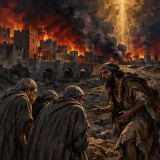
Pharaoh is told to look at Assyria and answer a question about greatness. Ezekiel turns the former empire into a cedar of extraordinary height, beauty, reach, and usefulness. Birds nest in its branches, animals gather beneath it, and nations live under its shade. Yet the poem keeps naming what lies below the visible magnificence: abundant water, roots, and finally God himself as the one who made the tree beautiful. The tree's error begins when its heart rises with its height. It is handed over, cut down, and abandoned until the branches that once sheltered life become fallen timber. The descent continues into the pit, where other former powers are already gathered. The final identification turns the comparison back on Egypt. Pharaoh is not being invited to admire a ruined predecessor from safety, but to recognize his own place inside the same pattern of dependence, pride, and descent.
In this chapter
- The Water Beneath the Magnificence Ezekiel 31:1-9
Pharaoh is asked whom he resembles in greatness, and Ezekiel answers with Assyria rather than with Egypt itself.
- The Canopy Becomes Fallen Timber Ezekiel 31:10-14
The cedar falls first in its own heart.
- The Descent of a Former Shelter Ezekiel 31:15-18
The tree’s descent is felt both above and below.

Scripture beside the summary
Ezekiel · King James Version · 18Ezekiel 31:1-9
The Water Beneath the Magnificence
Pharaoh is asked whom he resembles in greatness, and Ezekiel answers with Assyria rather than with Egypt itself. The distinction matters because the chapter sets a fallen predecessor in front of a present power and asks the present power to recognize the comparison. Assyria is a cedar of extraordinary height, breadth, beauty, and usefulness. Birds nest above, animals gather below, and nations live in its shade. Yet the poem keeps drawing attention downward to the waters feeding the roots. The visible grandeur depends on a source less visible than the crown. Finally God says directly that he made the tree beautiful. The cedar’s magnificence is therefore not denied. It is explained. Assyria really did shelter a crowded world, but its size was never self-generated. The whole picture prepares Pharaoh to see that impressive reach and genuine dependence can occupy the same tree, whether the tree acknowledges that dependence or not.
Deep dive
Pharaoh is addressed, but Assyria supplies the comparison. That distinction must remain visible: the passage does not begin by calling Egypt Assyria. It places a magnificent predecessor before Egypt and asks the reigning power to recognize the scale of the example. The cedar rises above the surrounding trees, but its greatness is repeatedly connected to water beneath it. Height is visible; dependence is less conspicuous, though the poem keeps naming it.
The tree also supports a crowded world. Birds nest in its branches, animals bring forth beneath its boughs, and great nations dwell in its shade. Imperial greatness is portrayed as a structure on which others depend, not merely a private ornament. Then God states that he made the tree beautiful. The coming judgment will not require denying the beauty. Instead, the decisive error will be the tree's elevation of its heart because of the height that another source had sustained.
Words to trace: branches, trees, boughs, fair, field, garden
Verse-by-verse path
- Ezekiel 31:1
The date is June 587 BC, two months after 30:20, with Jerusalem still under siege. Assyria’s fall was within living memory: Nineveh was destroyed in 612 BC and the last Assyrian stand at Harran collapsed in 609, barely twenty-five years before this word.
- Ezekiel 31:2
The question is a riddle set for Pharaoh, and the chapter holds back its answer until the last verse, which asks it again and then says, “This is Pharaoh.” “Multitude” is hamon, the court, army and pomp that made up the king’s greatness.
- Ezekiel 31:3
Some scholars read “the Assyrian” (Ashur) as te’ashur, a kind of cypress, the same tree name suspected in 27:6; the verse would then describe Egypt itself as a tree. The King James and most translations keep Assyria, a fallen empire held up to a standing one. “A shadowing shroud” means shade as thick as a forest.
- Ezekiel 31:4
“Little rivers” are channels or conduits, the language of irrigation. Assyria’s kings were master water engineers: Sennacherib cut canals and built a stone aqueduct at Jerwan to carry mountain water to the gardens of Nineveh. The tree’s greatness came up from its water.
- Ezekiel 31:5
In Hebrew, being high and being proud share one root, gavah. The tree’s height here, “exalted above all the trees”, is spelled with the same letters as the lifting up of its heart in verse 10. The growth of the branches is credited to “the multitude of waters”.
- Ezekiel 31:6
Daniel 4:12 uses the same picture for Nebuchadnezzar in his dream: “the fowls of the heaven dwelt in the boughs thereof”, and the interpretation says, “It is thou, O king” (4:22). A great tree sheltering every creature is the ancient image of an empire at its height.
- Ezekiel 31:7
“His root was by great waters” is the image Jeremiah 17:8 uses for the one who trusts in the LORD: “as a tree planted by the waters, and that spreadeth out her roots by the river”. The picture of a blessed life is here given to an empire, and it still depends on what feeds it.
- Ezekiel 31:8
The garden of God is Eden (Genesis 2:8). “Could not hide him” means could not outshine or eclipse him. “Chesnut” in the King James is the plane tree, the same word as the rods Jacob peeled in Genesis 30:37. Even Eden’s trees stood lower than this one.
- Ezekiel 31:9
“I have made him fair” gives the beauty its maker. “Envied” is qinne’, the verb of Genesis 37:11, “his brethren envied him”, said of Joseph. Only here in Scripture do trees envy. The rivalry of Eden’s trees is a fitting compliment in a poem about pride.
Ezekiel 31:1-9
King James Version1And it came to pass in the eleventh year, in the third month, in the first day of the month, that the word of the LORD came unto me, saying,
2Son of man, speak unto Pharaoh king of Egypt, and to his multitude; Whom art thou like in thy greatness?
3Behold, the Assyrian was a cedar in Lebanon with fair branches, and with a shadowing shroud, and of an high stature; and his top was among the thick boughs.
4The waters made him great, the deep set him up on high with her rivers running round about his plants, and sent out her little rivers unto all the trees of the field.
5Therefore his height was exalted above all the trees of the field, and his boughs were multiplied, and his branches became long because of the multitude of waters, when he shot forth.
6All the fowls of heaven made their nests in his boughs, and under his branches did all the beasts of the field bring forth their young, and under his shadow dwelt all great nations.
7Thus was he fair in his greatness, in the length of his branches: for his root was by great waters.
8The cedars in the garden of God could not hide him: the fir trees were not like his boughs, and the chesnut trees were not like his branches; nor any tree in the garden of God was like unto him in his beauty.
9I have made him fair by the multitude of his branches: so that all the trees of Eden, that were in the garden of God, envied him.
Ezekiel 31:10-14
The Canopy Becomes Fallen Timber
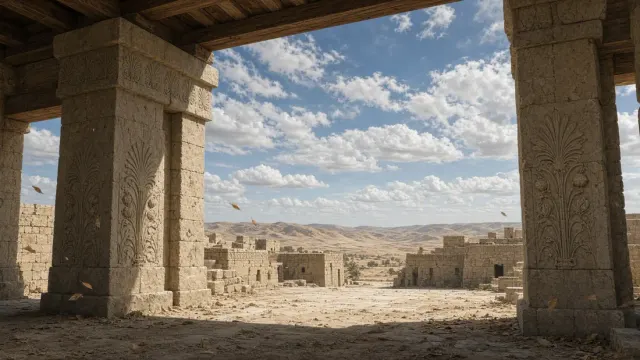
The cedar falls first in its own heart. Before strangers cut anything, the tree is said to lift itself up in height, and its heart rises with the top among the thick boughs. Visible achievement becomes the occasion for an inward claim larger than the gift that produced it. Only then is the tree handed over and cut down. Its branches scatter across mountains, valleys, and rivers, while the peoples that once lived under its shade leave because the shade no longer exists. Even the birds and animals remain in a changed relationship to the tree. They now stand on the ruin and fallen branches instead of nesting within a living canopy. What was shelter becomes timber. Ezekiel then turns the fall into a warning for every other tree drinking from abundant water. Nourishment, height, and usefulness do not create immortality. Greatness can make the crash wider without making the tree exempt from death.
Deep dive
The crucial movement happens inside the image before an axe appears: the tree lifts itself up, and its heart is lifted with its height. The visible achievement becomes the basis of an inflated claim. God then delivers it into the hand of a mighty ruler, and strangers cut it down. The pronouncement connects the fall with wickedness; that judgment is explicit in the oracle rather than supplied by the commentator.
The creatures remain, but their relationship to the tree changes. Birds rest on the ruin, and animals occupy the fallen branches. What was shelter above them becomes timber beneath them. The neighboring peoples depart from its shade because that shade no longer exists. Verse 14 extends the pattern to other trees sustained by water: none possesses life in a way that places it beyond death. The grandeur has not been unreal, but it has never been independent or immortal. The tree's height made its fall larger, not less possible.
Words to trace: height, boughs, branches, delivered, earth, left
Verse-by-verse path
- Ezekiel 31:10
The grammar slips: “thou hast lifted up thyself” is second person, then “his heart” returns to the third. The addressee, Pharaoh, seems to break into the description of Assyria, as if the comparison had already landed on him; many translations smooth the change away.
- Ezekiel 31:11
“Driven him out” is the verb of Genesis 3:24, “So he drove out the man” from Eden. The tree of God’s garden is expelled from it like Adam. “The mighty one of the heathen” is literally “the ram of the nations”, a leader; Assyria fell to Babylon and the Medes.
- Ezekiel 31:12
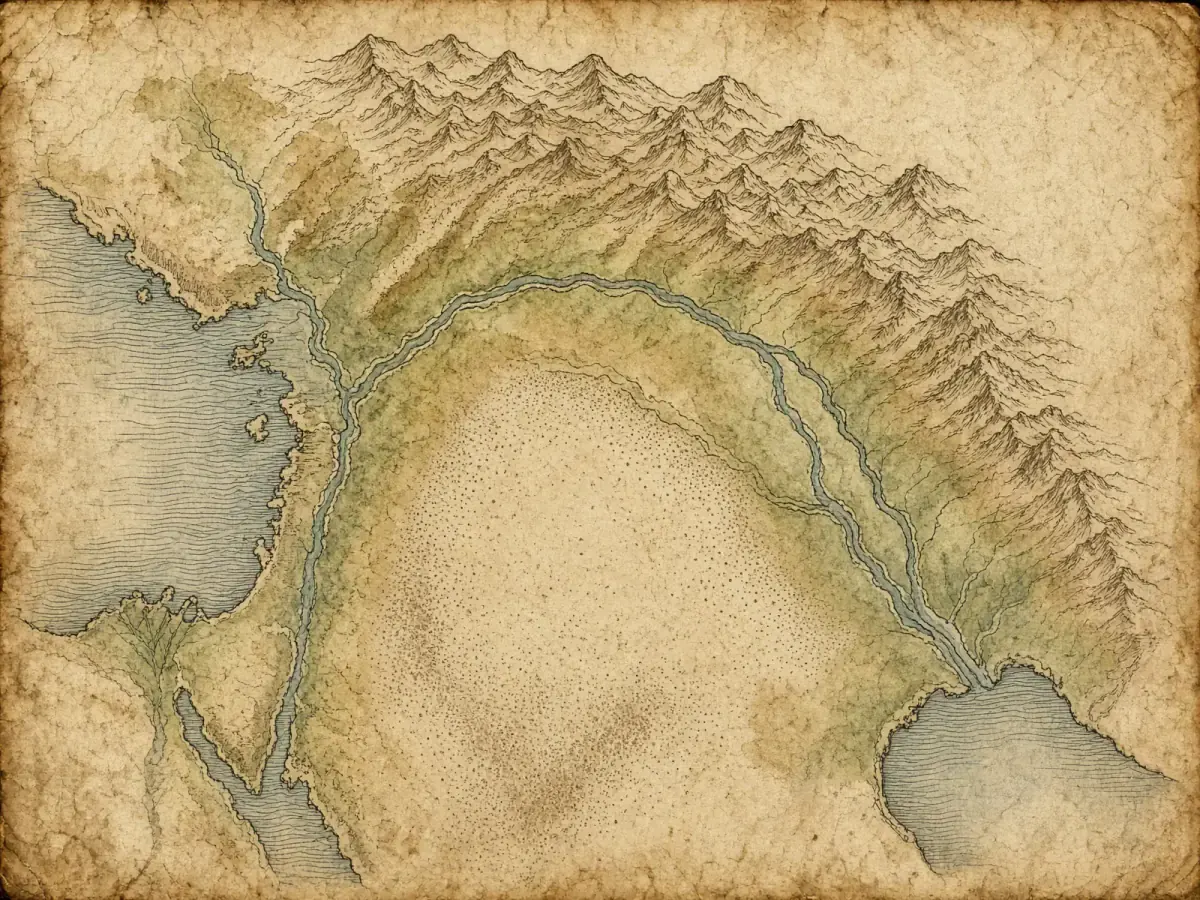
The Babylonian Chronicle records the fall of Nineveh in 612 BC: the city was plundered and turned “into a mound and ruin heap”. The felled tree lies across mountains, valleys and river beds, its boughs broken wherever they came down.
- Ezekiel 31:13
Zephaniah 2:13–14 had pictured fallen Nineveh this way: “flocks shall lie down in the midst of her, all the beasts of the nations: both the cormorant and the bittern shall lodge in the upper lintels of it.” The same birds and beasts that once lived in the tree now sit on its trunk.
- Ezekiel 31:14
The purpose clause widens the lesson to every well-watered tree. “In the midst of the children of men” means kings die as ordinary people die; Psalm 82:7 says the same to the mighty: “ye shall die like men, and fall like one of the princes.” “The nether parts of the earth” is the lowest world.
Ezekiel 31:10-14
King James Version10Therefore thus saith the Lord GOD; Because thou hast lifted up thyself in height, and he hath shot up his top among the thick boughs, and his heart is lifted up in his height;
11I have therefore delivered him into the hand of the mighty one of the heathen; he shall surely deal with him: I have driven him out for his wickedness.
12And strangers, the terrible of the nations, have cut him off, and have left him: upon the mountains and in all the valleys his branches are fallen, and his boughs are broken by all the rivers of the land; and all the people of the earth are gone down from his shadow, and have left him.
13Upon his ruin shall all the fowls of the heaven remain, and all the beasts of the field shall be upon his branches:
14To the end that none of all the trees by the waters exalt themselves for their height, neither shoot up their top among the thick boughs, neither their trees stand up in their height, all that drink water: for they are all delivered unto death, to the nether parts of the earth, in the midst of the children of men, with them that go down to the pit.
Ezekiel 31:15-18
The Descent of a Former Shelter
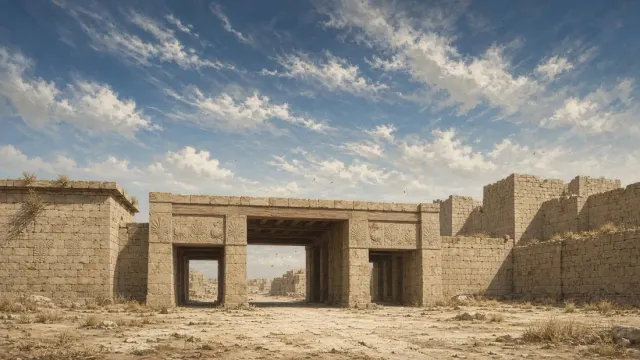
The tree’s descent is felt both above and below. Waters are restrained, Lebanon mourns, the trees faint, and nations shake at the sound of the fall. Then Ezekiel drives the image beneath the earth, where the great cedar joins other former powers already in the pit. The KJV’s “hell” belongs to that descent into the realm of the dead; these verses are not attempting to map every feature of final judgment. The other trees are said to be comforted by the arrival of another fallen greatness, a grim leveling in which exceptional height has produced no exceptional escape. Even those who were the cedar’s arm and lived under its shade share the downward movement. At the very end, the comparison lands where it was always headed: “This is Pharaoh and all his multitude.” Egypt is not a spectator studying Assyria’s ruin. It is being shown its own announced pattern.
Deep dive
The poem sends the great tree down to the pit and makes its fall felt through the waters and forests that once supported it. This is not a literal botanical account of underground trees. The imagery joins the cedar's destruction to the realm of the dead, where other former powers are already waiting. The KJV's "hell" here functions within that descent imagery; the passage does not give a complete account of final judgment or the conditions of every departed person.
Those other trees are said to be comforted, a grim recognition that exceptional greatness has not obtained an exceptional escape. Some had been the cedar's strength and had lived under its shadow. The network of dependence follows its center into ruin. At the end, the oracle names Pharaoh and his multitude. The comparison has reached its destination: Egypt is not invited to admire a fallen predecessor from a safe distance. Its own abundance now stands inside the same announced pattern of height, pride, and descent.
Words to trace: trees, Eden, caused, earth, hell, Lebanon
Verse-by-verse path
- Ezekiel 31:15
“The grave” is Sheol, named here for the first of three times in the chapter. God orders the mourning himself: the deep is covered as mourners covered themselves, the rivers are held back, and Lebanon, home of cedars, grieves for one of its own.
- Ezekiel 31:16
Isaiah 14:9–10 offers the closest parallel, for the king of Babylon: “Hell from beneath is moved for thee to meet thee at thy coming... Art thou also become weak as we?” The trees already below take comfort that the greatest tree has joined them.
- Ezekiel 31:17
“His arm” means his allies, the strength he leaned on, the word used of Pharaoh’s broken arms in chapter 30. Those who “dwelt under his shadow” were vassals, as in Jotham’s fable, where the bramble offers: “come and put your trust in my shadow” (Judges 9:15).
- Ezekiel 31:18
Egyptians practised circumcision, and Jeremiah 9:25–26 lists Egypt among circumcised peoples who are still “uncircumcised in the heart”. To lie “in the midst of the uncircumcised” would be a special disgrace to an Egyptian king. Then the riddle of verse 2 is answered: “This is Pharaoh.”
Ezekiel 31:15-18
King James Version15Thus saith the Lord GOD; In the day when he went down to the grave I caused a mourning: I covered the deep for him, and I restrained the floods thereof, and the great waters were stayed: and I caused Lebanon to mourn for him, and all the trees of the field fainted for him.
16I made the nations to shake at the sound of his fall, when I cast him down to hell with them that descend into the pit: and all the trees of Eden, the choice and best of Lebanon, all that drink water, shall be comforted in the nether parts of the earth.
17They also went down into hell with him unto them that be slain with the sword; and they that were his arm, that dwelt under his shadow in the midst of the heathen.
18To whom art thou thus like in glory and in greatness among the trees of Eden? yet shalt thou be brought down with the trees of Eden unto the nether parts of the earth: thou shalt lie in the midst of the uncircumcised with them that be slain by the sword. This is Pharaoh and all his multitude, saith the Lord GOD.
Questions to keep in mind while reading
- Identify the historical crisis, covenant failure, warning, and promised hope.
- Distinguish the prophet’s immediate audience from later biblical connections.
- Do not turn present-day headlines into confident fulfillment claims without textual evidence.
Text first
Where readers differ
The chapter summary begins with what the passage says and how its parts fit together. It does not assume one denomination has already settled every question. Where a conclusion depends on a tradition, literary theory, or historical reconstruction, that dependence is named openly.
The KJV text is presented first. Interpretive conclusions are labeled, and differences are introduced only when they help a reader understand why serious communities do not always reach the same answer.
Comparative interpretive notes for this chapter are in preparation. Until reviewed notes are ready, this page separates the KJV text from summary and application without claiming that serious readers agree on every question.
Questions beneath the surface
- What account of God, human freedom, responsibility, and the good life emerges from Ezekiel 31?
- Which tension does the chapter refuse to resolve quickly?
- What changes when the chapter is read as part of the whole canon rather than as an isolated moral lesson?
- Where might a sincere reader confuse a familiar tradition with something the text states directly?
Questions for serious personal contemplation
These open-ended questions make room for tension, honest response, prayer, and conclusions that remain accountable to the chapter.
Observe without rushing
What part of Ezekiel 31 makes you stop, feel unsettled, or feel surprised, and why?
Which detail in the passage would be easiest to overlook? How does that detail change your understanding?
Where do you see tension between what happens and this focus: Ezekiel 31 develops its own movement around trees, branches, boughs, field, height?
What important question does the passage leave open instead of resolving quickly?
Examine your inner life honestly
Which person, response, fear, or desire in the passage feels most like your own life right now?
What assumption about God, other people, or yourself does this text challenge?
Which part would you rather soften, avoid, or explain away too quickly? What might that reaction reveal?
If this Scripture could ask you one direct question, what do you think it would ask?
Respond with wisdom and courage
What do you need to remember, confess, grieve, thank God for, or trust after reading this passage?
How might another faithful person read this situation differently without ignoring the text?
What obedient response would be costly, uncomfortable, or slow, yet still faithful to Scripture?
What question will you carry into prayer this week, and which verses will you keep in front of you?
Music and video connected to the passage
Related media appears when its Scripture reference overlaps this study. Music and video can illuminate a theme while the biblical text remains the foundation.