
The big picture
The Book of Philippians answers rivalry by placing the mind of Christ in the middle of the congregation's shared life. Christ's movement from divine equality to servanthood and the cross gives lowliness content, while God's exaltation shows honor received rather than seized. The chapter then refuses to let that theology float above ordinary relationships. Working out salvation belongs beside God's working within them, and shining in the world appears in the unglamorous form of life without murmurings and disputes. Timotheus embodies genuine concern for other people, while Epaphroditus nearly dies carrying out the service distance kept the Philippians from giving personally. The chapter begins with a command to look beyond one's own interests and ends by honoring a man whose dangerous labor did exactly that.
In this chapter
- One Mind Is More Than Matching Opinions Philippians 2:1-4
The repeated “if” gathers realities Paul treats as already present among the Philippians: consolation in Christ, the comfort of love, fellowship of the Spirit, and tender concern.
- Equality Expressed Through the Form of a Servant Philippians 2:5-8
This is not theology inserted to decorate a practical appeal.
- The Confession That Reaches Every Realm Philippians 2:9-11
The verbs change hands.
- God's Working Takes Form in Their Shared Obedience Philippians 2:12-18
“Work out” is followed immediately by “For it is God which worketh,” and the Book of Philippians refuses to use either half to erase the other.
- Timotheus Makes Concern for Others Visible Philippians 2:19-24
Timotheus turns an earlier command into a person the Philippians already know.
- An Honored Return After Nearly Dying Philippians 2:25-30
Before the illness can be mistaken for a failed mission, Paul stacks honor around Epaphroditus: brother, companion in labor, fellow soldier, messenger, and minister to his need.

Scripture beside the summary
Philippians · King James Version · 30Philippians 2:1-4
One Mind Is More Than Matching Opinions
The repeated “if” gathers realities Paul treats as already present among the Philippians: consolation in Christ, the comfort of love, fellowship of the Spirit, and tender concern. From that shared ground, the Book of Philippians asks for one mind without asking everyone to become the same personality. The problem is not difference itself. It is what strife and vainglory do with difference, turning another person's standing into a threat and making self-importance the center of attention. Paul answers with lowliness of mind and a deliberate outward turn toward “the things of others.” The small word “also” keeps the appeal from becoming theatrical self-erasure; people still have their own responsibilities and interests. What changes is the refusal to make those interests the only ones that count. The next passage will make this considerably more demanding than agreeable manners, because Christ's own movement into service supplies the shape of the humility Paul has in view.

Deep dive
The repeated "if" does not sound like uncertainty about whether anything Christian has happened among the Philippians. Paul is gathering the realities his appeal rests upon: consolation in Christ, the comfort of love, fellowship of the Spirit, and tender concern. Unity is to grow from what they share, not from a demand to manufacture a common temperament. The joy he already described would be brought to fullness by their common love and purpose.
The obstacle is named with equal precision. Strife turns another person's standing into a threat, and vainglory makes attention to self the governing concern. Against that, Paul places lowliness of mind and attention to the affairs of others. The word "also" in verse 4 is useful: concern for others is not described as having no responsibilities or interests of one's own. Nor is the passage asking for a contest in exaggerated self-denigration. Its direction is outward. The following account of Christ will give this lowliness its content, making the appeal considerably more demanding than a request for agreeable manners.
Words to trace: love, mind, accord, better, bowels, Christ
Verse-by-verse path
- Philippians 2:1
Each “if” assumes the thing is true: since there is. “Comfort” is paramuthion, soothing words, found only here in the New Testament. The Greek of the last clause is ungrammatical, a masculine “any” paired with a neuter noun, and copyists tried to smooth it, which suggests a letter dictated in a rush of feeling.
- Philippians 2:2
“Fulfil ye my joy” is make it full, as a cup is filled to the brim. “Of one accord” is sympsychoi, together-souled, a word found only here. Four phrases for unity follow one another, and two of them use phroneo, the letter’s verb for a shared way of thinking.
- Philippians 2:3
“Vainglory” is kenodoxia, empty glory, the noun behind the “desirous of vain glory” of Galatians 5:26. “Esteem” is hegeomai, to consider or reckon after thought. “Better than themselves” is hyperecho, to stand above, the word Romans 13:1 uses for “the higher powers”.
- Philippians 2:4
“Look” is skopeo, to keep the eye fixed on a thing, the root of scope. The same family comes back in 3:14, where Paul presses toward “the mark”, skopos, and in 3:17, “mark them which walk so”. What a person watches is what he is running toward.
Philippians 2:1-4
King James Version1If there be therefore any consolation in Christ, if any comfort of love, if any fellowship of the Spirit, if any bowels and mercies,
2Fulfil ye my joy, that ye be likeminded, having the same love, being of one accord, of one mind.
3Let nothing be done through strife or vainglory; but in lowliness of mind let each esteem other better than themselves.
4Look not every man on his own things, but every man also on the things of others.
Philippians 2:5-8
Equality Expressed Through the Form of a Servant
This is not theology inserted to decorate a practical appeal. The Book of Philippians places the mind of Christ here because Christ's conduct is the content of the argument against rivalry. “The form of God” and “the form of a servant” mark the extraordinary distance of the movement. The one described in relation to equality with God does not climb toward a status he lacks; he moves toward service, human likeness, and obedience. The KJV's “thought it not robbery” has been read in more than one precise way, either denying that equality was a wrongful claim or stressing that equality was not exploited for self-advantage. The action that follows controls the point. “Made himself of no reputation” reflects the language of self-emptying, and Paul explains that emptying by what Christ takes on, not by listing divine qualities supposedly discarded. The descent reaches a deliberately specific end: not death in the abstract, but “the death of the cross.”

Deep dive
The passage's theological height serves the argument about relationships. Paul has not interrupted practical concerns with a decorative statement about Christ; Christ's conduct is the substance of his appeal. "The form of God" and "the form of a servant" stand in deliberate contrast. The movement is not from a person grasping upward at a status he lacks, but from the one described in relation to divine equality toward the place of service.
The wording "thought it not robbery" is disputed in its precise force. The KJV can be read as saying that equality with God was no wrongful claim; another major interpretation emphasizes that this equality was not treated as an advantage to exploit for himself. Both readings must be weighed within the action that follows. The Greek verb ekenosen, behind "made himself of no reputation," means "emptied himself." Paul explains that self-emptying by taking a servant's form, entering human likeness, and becoming obedient. He does not provide a list of divine attributes supposedly discarded.
The descent continues through death to "the death of the cross." That final phrase prevents death from becoming a general statement about mortality. Obedience reaches a specifically degrading execution. The one whose status could have supplied the largest possible argument for self-importance instead becomes the ground of Paul's argument against it.
Words to trace: death, form, became, Christ, cross, equal
Verse-by-verse path
- Philippians 2:5
The Greek has no verb in the second half: literally “this think among you, which also in Christ Jesus”. Readers supply either “was”, making Christ the example, or “you think”, making it the mind proper to those in Christ. “In you” can mean among you, as a community.
- Philippians 2:6
Many read verses 6 to 11 as an early hymn about Christ, quoted or composed by Paul, because of their balanced lines. “Being” is a present participle for continuing existence. Some hear a contrast with Adam, told in Genesis 3:5 “ye shall be as gods”, who grasped at what this one did not; that is an interpretation, though a widely held one.
- Philippians 2:7
“Made himself of no reputation” is Tyndale’s phrase, kept by the King James; the Greek ekenosen means emptied himself, and it gave nineteenth-century theology the term kenosis. “Likeness” is homoioma, the word of Romans 8:3, “in the likeness of sinful flesh”.
- Philippians 2:8
“Fashion” is schema, outward appearance as others see it, distinct from the morphe, form, of verses 6 and 7. “Found” suggests what observers found when they looked. Crucifixion was a punishment Roman citizens were normally spared, and Cicero called it the cruellest and most disgusting of penalties; in a colony of citizens the phrase would land hard.
Philippians 2:5-8
King James Version5Let this mind be in you, which was also in Christ Jesus:
6Who, being in the form of God, thought it not robbery to be equal with God:
7But made himself of no reputation, and took upon him the form of a servant, and was made in the likeness of men:
8And being found in fashion as a man, he humbled himself, and became obedient unto death, even the death of the cross.
Philippians 2:9-11
The Confession That Reaches Every Realm
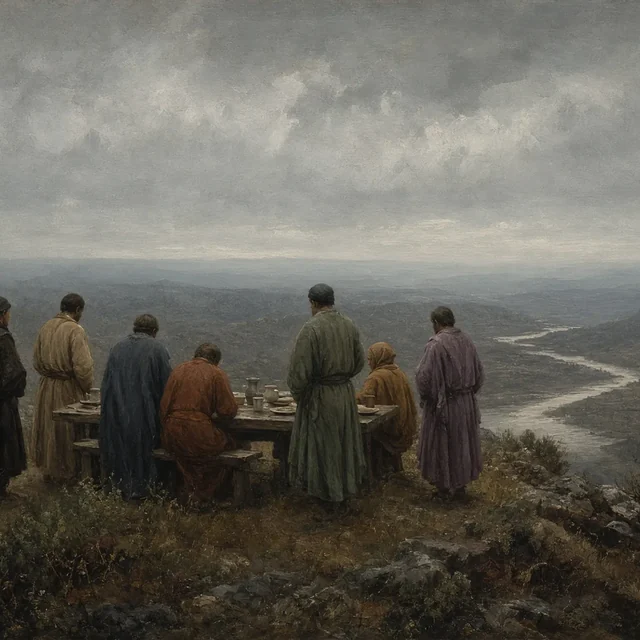
The verbs change hands. Christ humbles himself; God highly exalts him. That shift matters in a chapter already opposing vainglory, because the honor in the Book of Philippians is received rather than seized. Yet the scale suddenly expands beyond anything a local dispute or ordinary promotion could explain. Heaven, earth, and what lies beneath the earth are all drawn into the bowing of every knee and the confession of every tongue. Isaiah 45:23 gives the language its scriptural force, where universal bowing belongs to the LORD, and Philippians brings that recognition to the confession that “Jesus Christ is Lord.” The Son's honor is not set against the Father, since the confession ends “to the glory of God the Father.” These verses are sweeping about acknowledgment, but they do not pause to map every individual's final experience of salvation. Their emphasis is the unmatched reach of Jesus' lordship and the universal confession of it.
Deep dive
The subject changes: Christ humbled himself, and God highly exalted him. The honor is given rather than seized. That movement answers the chapter's opening contrast between self-importance and lowliness without reducing the passage to an ordinary promotion account. The scope is now heaven, earth, and what lies beneath the earth. No local congregation, imperial audience, or human court supplies the boundaries of this acknowledgment.
Isaiah 45:23 gives the scriptural weight of the language. There the LORD declares the bowing of every knee and the allegiance of every tongue. Philippians takes up that universal recognition in the confession that Jesus Christ is Lord. The passage joins this confession to the Father's glory rather than setting the Son's honor against it. The name above every name culminates in the acknowledgment of Jesus' lordship; the emphasis falls on its unmatched authority. Universal acknowledgment is what these verses describe. They do not pause to explain every individual's final experience of salvation, and the breadth of the confession should not be made to settle that separate question by itself.
Words to trace: name, earth, Jesus, Christ, confess, exalted
Verse-by-verse path
- Philippians 2:9
“Highly exalted” is hyperupsoo, over-exalted, found only here in the New Testament. “Given” is charizomai, freely bestowed, the verb built on grace. The name above every name is most often taken as “Lord”, Kyrios, the word the Greek Old Testament used in place of the divine name.
- Philippians 2:10
“Under the earth” is katachthonios, a word for the underworld and the dead, found only here in the New Testament. “At the name” is literally in the name. The English custom of bowing the head at the name of Jesus in the Creed was drawn from this verse and made a rule of the Church of England in 1604.
- Philippians 2:11
“Jesus Christ is Lord” is among the earliest Christian confessions (Romans 10:9; 1 Corinthians 12:3). Under the empire the rival formula was “Caesar is Lord”; the aged Polycarp was urged to say it to save his life and refused. “Confess” is exomologeo, to acknowledge openly.
Philippians 2:9-11
King James Version9Wherefore God also hath highly exalted him, and given him a name which is above every name:
10That at the name of Jesus every knee should bow, of things in heaven, and things in earth, and things under the earth;
11And that every tongue should confess that Jesus Christ is Lord, to the glory of God the Father.
Philippians 2:12-18
God's Working Takes Form in Their Shared Obedience
“Work out” is followed immediately by “For it is God which worketh,” and the Book of Philippians refuses to use either half to erase the other. God's activity reaches both willing and doing, while the Philippians' obedience remains real, communal, and especially important in Paul's absence. The “wherefore” also keeps Christ's obedience from the preceding passage in view. Then the grand language lands in very ordinary territory: no murmurings and disputings. Their shining in a crooked surrounding generation is tied to blameless life and holding forth the word of life, not to announcing their own superiority. Paul measures his labor against their perseverance at the day of Christ and then imagines his possible death as a drink offering poured upon their sacrifice and service of faith. Even there, he will not make himself the main offering and everyone else the decoration. His joy is shared with them, and their joy is shared with him.


Deep dive
The "wherefore" connects this instruction to Christ's obedience, while Paul's absence makes the congregation's responsibility immediate. "Work out" is followed by "For it is God which worketh." The second statement supplies the ground of the first rather than taking it back. God's activity reaches both willing and doing; the Philippians' obedience is therefore neither an independent achievement nor an unnecessary exercise. The address is plural, and the chapter's concern with their shared life remains in view.
That shared life quickly becomes concrete: no murmurings or disputings. The contrast with a crooked surrounding generation is not built on announcing superiority, but on being blameless and holding forth the word of life. Paul connects their perseverance with the meaning of his own labor at the day of Christ. He then uses the image of a drink offering poured upon a sacrifice. Their faith and service already constitute the offering beside which his possible death would be poured out. Even in imagining his death, Paul does not make the congregation a minor decoration around his importance. His joy is something to be shared, not admiration to be directed at him.
Words to trace: rejoice, vain, absence, always, beloved, blameless
Verse-by-verse path
- Philippians 2:12
“Work out” is katergazomai, to carry through to completion. “Your own salvation” is plural, and soteria also meant welfare or health, so some read it of the congregation’s common life more than each person’s standing. “Much more in my absence” turns the prisoner’s distance into their test.
- Philippians 2:13
A wordplay runs across the two verses: katergazesthe, work out, answered by energon, working in. God works both “to will” and “to do”, and the second verb is energeo again, so the Greek says God energises the willing and the energising. “Of his good pleasure” can also mean for the sake of good will among them.
- Philippians 2:14
“Murmurings” is gongusmos, a word that sounds like the low grumble it names. It is the Greek Old Testament’s term for Israel murmuring in the wilderness (Exodus 16:7–9; Numbers 14:27). “Disputings” is dialogismos, arguments, or doubting second thoughts.
- Philippians 2:15
“A crooked and perverse nation” comes from the Song of Moses, Deuteronomy 32:5, where it describes Israel itself; Paul turns it outward. “Harmless” is akeraios, unmixed, used of unwatered wine or pure metal. “Lights” is phosteres, the Greek word for the sun and moon in Genesis 1:14–16.
- Philippians 2:16
“Holding forth” is epecho, which can mean holding out, as one offers something, or holding fast. “Laboured in vain” echoes the servant of Isaiah 49:4, “I have laboured in vain, I have spent my strength for nought”. Paul pictures the day of Christ as the finish line of his race.
- Philippians 2:17
“Be offered” is spendomai, to be poured out as a drink offering, the wine poured over or beside a sacrifice in both Jewish and pagan worship. The same verb returns in 2 Timothy 4:6, “I am now ready to be offered”. “Service” is leitourgia, priestly service, the root of liturgy.
- Philippians 2:18
The sentence mirrors verse 17 with the roles reversed: there Paul rejoices with them, here they rejoice with him. “Rejoice with” is synchairo, and the command stands in the face of his possible execution. The joy asked for is not relief that he will live but gladness in the offering either way.
Philippians 2:12-18
King James Version12Wherefore, my beloved, as ye have always obeyed, not as in my presence only, but now much more in my absence, work out your own salvation with fear and trembling.
13For it is God which worketh in you both to will and to do of his good pleasure.
14Do all things without murmurings and disputings:
15That ye may be blameless and harmless, the sons of God, without rebuke, in the midst of a crooked and perverse nation, among whom ye shine as lights in the world;
16Holding forth the word of life; that I may rejoice in the day of Christ, that I have not run in vain, neither laboured in vain.
17Yea, and if I be offered upon the sacrifice and service of your faith, I joy, and rejoice with you all.
18For the same cause also do ye joy, and rejoice with me.
Philippians 2:19-24
Timotheus Makes Concern for Others Visible
Timotheus turns an earlier command into a person the Philippians already know. The Book of Philippians has told each believer to look beyond private interests, and Paul now names a messenger who “will naturally care for your state.” The contrast with people seeking their own things repeats the chapter's problem without requiring a sweeping verdict on every other Christian alive. Paul is explaining why Timotheus is unusually fitted for this mission. His “proof” is tested service the congregation has already observed, and the father-and-son language describes closeness without reducing him to an errand runner. He has served “with me in the gospel,” a phrase that preserves partnership within affection and hierarchy. Even Paul's plans remain conditional. He hopes to send Timotheus after learning how his own case goes, and he trusts in the Lord without pretending that trust has supplied a court date or erased the need to wait for information. Concern travels both directions despite prison and distance.
Deep dive
The travel plans are part of the argument, not an abrupt return from theology to administrative details. Verse 4 called for attention to the interests of others; Timotheus is the person Paul can name as genuinely caring for this congregation. The contrast with people seeking their own interests repeats the chapter's opening problem. Paul's severe assessment of others should not be inflated into a verdict on every believer everywhere. He is explaining the unusual suitability of the messenger available for this task.
The Philippians already know Timotheus's "proof," his tested service. The father-and-son comparison describes the closeness and continuity of that labor, but Paul says he served "with me in the gospel," not merely that he performed errands for an important superior. The plans remain conditional on learning how Paul's case will go. Confidence in the Lord has not supplied a departure date or removed the need to wait for information. Timotheus's proposed visit would bring news back to Paul, extending the mutual concern that imprisonment has complicated but not ended.
Words to trace: Jesus, know, Lord, send, shortly, state
Verse-by-verse path
- Philippians 2:19
“I trust” is literally “I hope in the Lord Jesus”, plans placed inside Christ. “Be of good comfort” is eupsucheo, found only here in the New Testament, a word often carved on Greek gravestones as a farewell: take heart. Paul wants news, not only to send it.
- Philippians 2:20
“Likeminded” is isopsychos, equal-souled, found only here, a cousin of the “one accord” of verse 2. “Naturally” is gnesios, genuinely, the word for a legitimate, true-born child; 1 Timothy 1:2 calls Timothy Paul’s “own son” with the same word.
- Philippians 2:21
“All” is hoi pantes, all of them, those available to send. “Seek their own” answers verse 4 directly, “look not every man on his own things”, and it recalls 1 Corinthians 13:5, where charity “seeketh not her own”.
- Philippians 2:22
“Proof” is dokime, tested worth, like metal that has come through the fire. The sentence begins “as a son to a father” and then shifts: not “he served me” but “he hath served with me”. Paul turns the image of a son at a father’s side into two slaves working for the same master.
- Philippians 2:23
“Presently” is 1611 English for immediately, at once. “See” is aphorao, to look away into the distance, as one peers down a road for what is coming. What is coming is the outcome of Paul’s case, which decides the next moves.
- Philippians 2:24
Verse 19 said “I hope”; this says “I trust”, pepoitha, I have been persuaded and remain so. The step from hope to persuasion is small but real. “I also myself” doubles the pronoun: not only Timothy will come.
Philippians 2:19-24
King James Version19But I trust in the Lord Jesus to send Timotheus shortly unto you, that I also may be of good comfort, when I know your state.
20For I have no man likeminded, who will naturally care for your state.
21For all seek their own, not the things which are Jesus Christ’s.
22But ye know the proof of him, that, as a son with the father, he hath served with me in the gospel.
23Him therefore I hope to send presently, so soon as I shall see how it will go with me.
24But I trust in the Lord that I also myself shall come shortly.
Philippians 2:25-30
An Honored Return After Nearly Dying
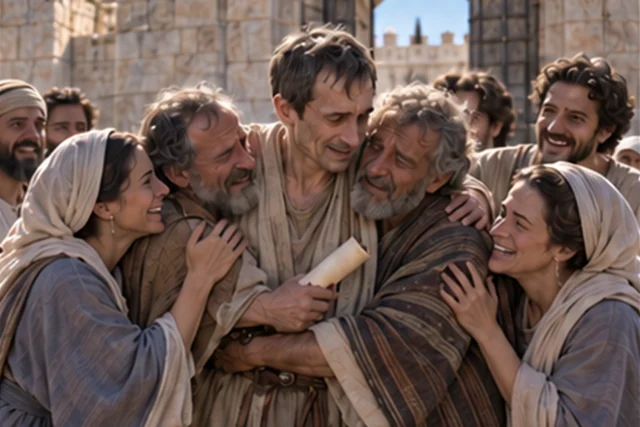
Before the illness can be mistaken for a failed mission, Paul stacks honor around Epaphroditus: brother, companion in labor, fellow soldier, messenger, and minister to his need. The Book of Philippians lets those names interpret the man before describing how close he came to death. His emotional burden is strikingly outward-facing. He is distressed because the Philippians have heard that he is sick, so concern runs from the congregation to him and then back again as he worries about their worry. Paul calls the recovery mercy for Epaphroditus and mercy for himself, because another loss would have meant “sorrow upon sorrow.” Repeated joy has not made grief impossible. Sending him home promises gladness for them and less sorrow for Paul. Their earlier inability to serve Paul personally came from distance, not indifference, and Epaphroditus supplied what that distance prevented. The chapter closes by attaching public honor to exactly this kind of costly, other-directed service.
Deep dive
Paul piles up descriptions of Epaphroditus: brother, fellow worker, fellow soldier, the Philippians' messenger, and the minister to his need. Those titles interpret the returning man before his illness can be mistaken for a failure of service. The account is exact about his distress: he was troubled because the Philippians had heard he was sick. Concern is traveling in both directions, with the sick man burdened by the thought of the congregation's concern for him.
The illness was genuinely near death. Paul calls the recovery mercy for Epaphroditus and mercy for himself, since bereavement would have added "sorrow upon sorrow." The letter's repeated joy has not required an inability to grieve. Sending Epaphroditus home promises gladness for the congregation and a less sorrowful Paul. Their "lack of service" is met by the messenger who supplied what distance prevented them from supplying personally, not an accusation that they had never cared. His dangerous labor is the reason for honor. The chapter ends by attaching public regard to precisely the kind of self-giving service with which it began.
Words to trace: death, nigh, sick, sorrow, brother, carefully
Verse-by-verse path
- Philippians 2:25
Epaphroditus bears a name built on Aphrodite, kept unchanged after his conversion. “Messenger” is apostolos, the word for apostle used in its plain sense of an envoy sent by a church. “Ministered” is leitourgos, a public servant, the one who performs the leitourgia of verse 17.
- Philippians 2:26
“Full of heaviness” is ademoneo, the word used of Jesus in Gethsemane, when he “began to be sore amazed, and to be very heavy” (Mark 14:33). “Longed after” is the epipotheo of 1:8. The news had travelled both ways between Philippi and Paul’s prison, which says something about how often letters and people passed.
- Philippians 2:27
“Nigh unto death” is paraplesion thanato, next door to death. Paul, through whom healings are reported in Acts 19:11–12, claims no miracle here; the recovery is simply God’s mercy. “Sorrow upon sorrow” pictures grief arriving on top of grief, like one wave on another.
- Philippians 2:28
“More carefully” is spoudaioteros, more eagerly, with greater haste; in 1611 “carefully” meant with anxious care, not with caution. “Less sorrowful” is a comparative: Paul will have some sorrow still, but less of it.
- Philippians 2:29
“Hold such in reputation” is entimos, honoured or precious, the word Luke 7:2 uses for the centurion’s servant “who was dear unto him”. “In the Lord” sets the welcome on the footing of Christ, not of what the church had hoped the man would achieve.
- Philippians 2:30
“Not regarding his life” is paraboleuomai, to gamble, to stake one’s life as on a throw of dice. In the early church a brotherhood who nursed the sick and buried plague victims took their name, the parabolani, from this word. “Lack” is hysterema, only what distance kept them from doing, not a fault.
Philippians 2:25-30
King James Version25Yet I supposed it necessary to send to you Epaphroditus, my brother, and companion in labour, and fellowsoldier, but your messenger, and he that ministered to my wants.
26For he longed after you all, and was full of heaviness, because that ye had heard that he had been sick.
27For indeed he was sick nigh unto death: but God had mercy on him; and not on him only, but on me also, lest I should have sorrow upon sorrow.
28I sent him therefore the more carefully, that, when ye see him again, ye may rejoice, and that I may be the less sorrowful.
29Receive him therefore in the Lord with all gladness; and hold such in reputation:
30Because for the work of Christ he was nigh unto death, not regarding his life, to supply your lack of service toward me.
Questions to keep in mind while reading
- Identify the audience, problem, argument, command, and pastoral purpose.
- Follow connecting words so that one sentence remains inside the author’s reasoning.
- Distinguish a universal theological claim from an instruction shaped by a particular situation.
Text first
Where readers differ
The chapter summary begins with what the passage says and how its parts fit together. It does not assume one denomination has already settled every question. Where a conclusion depends on a tradition, literary theory, or historical reconstruction, that dependence is named openly.
The KJV text is presented first. Interpretive conclusions are labeled, and differences are introduced only when they help a reader understand why serious communities do not always reach the same answer.
Comparative interpretive notes for this chapter are in preparation. Until reviewed notes are ready, this page separates the KJV text from summary and application without claiming that serious readers agree on every question.
Questions beneath the surface
- What account of God, human freedom, responsibility, and the good life emerges from Philippians 2?
- Which tension does the chapter refuse to resolve quickly?
- What changes when the chapter is read as part of the whole canon rather than as an isolated moral lesson?
- Where might a sincere reader confuse a familiar tradition with something the text states directly?
Questions for serious personal contemplation
These open-ended questions make room for tension, honest response, prayer, and conclusions that remain accountable to the chapter.
Observe without rushing
What part of Philippians 2 makes you stop, feel unsettled, or feel surprised, and why?
Which detail in the passage would be easiest to overlook? How does that detail change your understanding?
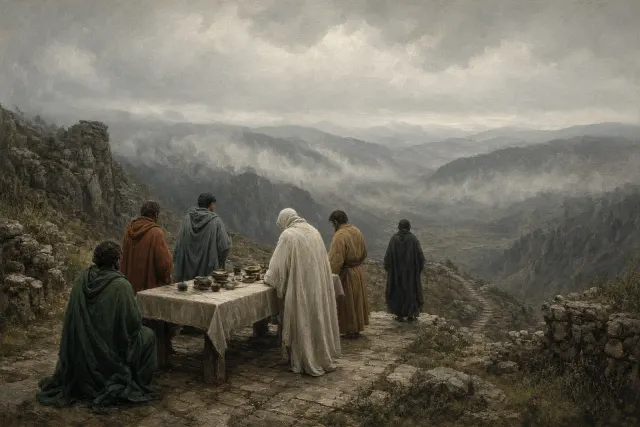
Where do you see tension between what happens and this focus: A proud place at the table willingly surrendered as Christ’s humility shapes service, obedience, and lights in a dark world; Timothy’s genuine care and Epaphroditus risking his life to carry service between Philippi and Paul?
What important question does the passage leave open instead of resolving quickly?
Examine your inner life honestly
Which person, response, fear, or desire in the passage feels most like your own life right now?
What assumption about God, other people, or yourself does this text challenge?
Which part would you rather soften, avoid, or explain away too quickly? What might that reaction reveal?
If this Scripture could ask you one direct question, what do you think it would ask?
Respond with wisdom and courage
What do you need to remember, confess, grieve, thank God for, or trust after reading this passage?
How might another faithful person read this situation differently without ignoring the text?
What obedient response would be costly, uncomfortable, or slow, yet still faithful to Scripture?
What question will you carry into prayer this week, and which verses will you keep in front of you?
Music and video connected to the passage
Related media appears when its Scripture reference overlaps this study. Music and video can illuminate a theme while the biblical text remains the foundation.