The big picture
Exodus 23 gathers courtroom integrity, treatment of enemies, agricultural rest, annual worship, and the journey toward the promised land into one covenant frame. False reports, majority pressure, favoritism, and bribes are all denied the right to determine judgment, while even an enemy’s wandering or burdened animal still creates an obligation. Rest then extends beyond one weekly schedule to the field itself, where the seventh year leaves produce for the poor and the beasts. Three annual feasts bind agricultural abundance to remembered deliverance from Egypt. The chapter then looks ahead: an angel will go before Israel, bearing extraordinary authority because God’s name is in him. Entry into the land remains tied to exclusive worship and is described as gradual rather than instantaneous, since empty territory brings its own danger. The promises are large, but the chapter keeps giving them practical edges: witnesses, livestock, fields, calendars, roads, boundaries, and the risks of adopting another people’s gods.
Central truth
Exodus 23 orders Israel’s public life around truthful justice, practical mercy, shared rest, appointed worship, and obedience to the Lord’s messenger as he brings them toward the promised land.


The study notes have a page of their own
The movement by movement analysis, the words to trace, the verse by verse notes and where readers differ are written for someone studying alone. They are on the Deep Personal Reflections page for this chapter. This page is the lesson.
A chapter-specific teaching brief
These anchors come from this chapter itself. They help a teacher use the Level 1 overview, the Level 2 study, and the Scripture text as one lesson.
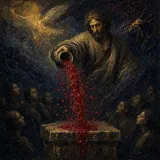
Open with the chapter’s first image
Exodus 23:1: “Thou shalt not raise a false report: put not thine hand with the wicked to be an unrighteous witness.”
Slow down at the turning point
Exodus 23:18: “Thou shalt not offer the blood of my sacrifice with leavened bread; neither shall the fat of my sacrifice remain until the morning.”
Keep this word trail visible
land, year, bread, drive, feast, field
What to explain, in order
Teach the passage in this order. Each step names the verses it rests on, so every point can be shown in the text before it is applied.
Exodus 23:1-3
No false report, no crowd, no favouritism
Begin with the courtroom. Read 23:1-3 and explain “raise a false report” as spreading an untrue account, and “wrest judgment” as twisting it. Show the three pressures on a witness or judge: a lie, a crowd, and sympathy. Explain “countenance” as showing partiality. Teach this first because it is the chapter’s foundation: a people delivered by a just God must have just courts. Point out how modern 23:2 sounds, not following a multitude to do evil, and let the class name where they meet that pressure, while keeping 23:3 in view so that kindness never becomes a reason to bend the truth.
Exodus 23:4-5
Your enemy’s donkey
Read 23:4-5 and picture it: the donkey of a man who hates you, fallen under its load by the road. The text even names the reluctance, “wouldest forbear to help him”, and then commands, “thou shalt surely help with him”. Explain “with him” as working beside the owner, not merely reloading the animal for him. Set Proverbs 25:21 and Matthew 5:44 beside it. Teach this here, between two sections on courts, because it shows that justice in Israel is not only about verdicts but about how you treat someone who has wronged you when no court is watching.
Exodus 23:6-9
The poor, the innocent and the stranger
Read 23:6-9 and pair 23:6 with 23:3 so the class sees both sides of impartiality. Explain “Keep thee far from a false matter” as staying away from a lying case, and point to God’s own commitment, “I will not justify the wicked”. Read 23:8 slowly: a gift blinds the wise. Then read 23:9 and its reason, “ye know the heart of a stranger”. Teach this to show that Israel’s memory of Egypt shapes its justice. They know from experience what it is to be the outsider, and that knowledge is meant to make them fair.
Exodus 23:10-13
Rest that is shared
Read 23:10-12 and draw a simple chart with two rows, the seventh year and the seventh day, and list who benefits in each: the poor, wild animals, working animals, the servant’s son and the stranger. Explain that the rest is not only for the owner’s leisure. It lets the land lie still and gives food to those who own none. Then read 23:13 and explain “circumspect” as careful. Teach this after the courts because it carries the same concern for the weak into the calendar, and because 23:13 links rest to loyalty: Israel’s time belongs to the LORD, and other gods are not even to be named.
Exodus 23:14-19
Three feasts
Read 23:14-17 and name the feasts in the chapter’s own words: unleavened bread in Abib, harvest of firstfruits, and ingathering at the year’s end. Explain that later Scripture names them Passover with unleavened bread, the feast of weeks, and tabernacles, but use the chapter’s names first. Note “none shall appear before me empty”. Then read 23:18-19 and explain “seethe a kid in his mother’s milk” as boiling a young goat in its mother’s milk. Say honestly that the text does not give the reason, and present the suggestions readers have made as suggestions. Teach this as worship built around God’s deliverance and his gifts.
Exodus 23:20-26
The Angel in whom is my name
Read 23:20-23 and explain that God sends an Angel to keep Israel in the way, one in whom God’s name dwells, who must be obeyed and not provoked. Mention that many Christian readers have identified this Angel with the Son before his incarnation, and that the passage itself does not name him; label that as interpretation. Then read 23:24-26 and show that the promises of blessing, health and fruitfulness are tied to serving the LORD and refusing the gods of the land. Teach this before the conquest verses so the class sees that the journey depends on God’s presence and Israel’s loyalty.
Exodus 23:27-33
Little by little
Read 23:27-33 and keep it in its setting: God’s promise to Israel about the land of Canaan, given in the covenant at Sinai. Explain the hornets as an image of God driving the peoples out, and dwell on 23:29-30: not in one year, but little by little, so the land does not become desolate. Then read 23:32-33 and the danger of covenants with the land’s gods. Make clear that these verses are not a pattern for any modern nation or group and must not be applied to present conflicts. Teach this last because it ends the book of the covenant on God’s faithful, measured pace.
Where learners get stuck
The misreadings this passage tends to produce, and how to answer each from the text.
“God is on the side of the poor, so the poor should always win in court.”
Exodus 23:3 forbids favouring “a poor man in his cause”, and 23:6 forbids twisting the judgment of the poor. God’s care for the poor shows in the gleanings of the seventh year (23:11) and in the warnings against oppression (22:21-27), but in the courtroom he requires truth for everyone. Leviticus 19:15 says the same: neither respect the poor nor honour the mighty. Justice that bends either way is not his justice.
“The law only tells me not to harm my enemy.”
Exodus 23:4-5 commands positive help: bring back the enemy’s straying animal, and help the man who hates you with his fallen donkey, even when you would rather not. Proverbs 25:21 tells you to feed a hungry enemy, and Jesus in Matthew 5:44 tells his followers to love their enemies. The Old Testament already asks for more than avoiding harm. It asks for help given by your own hands.
“The Sabbath is a day off for me to do whatever I like.”
Exodus 23:12 gives the purpose: “that thine ox and thine ass may rest, and the son of thy handmaid, and the stranger, may be refreshed”. The rest is shared with those who work under you and those who are outsiders, and in the seventh year with the poor and the wild animals (23:11). Christians keep the day differently, but the chapter shows that God’s rest is generous by design. It reaches those who cannot claim it for themselves.
“These verses mean my nation or my group has a right to take land.”
The promises of 23:23-33 are given to Israel about Canaan within the covenant at Sinai, with named peoples and stated borders (23:31). They are not a charter for any modern state, church or group, and they must not be used to justify present conflicts. What the passage teaches readers today is God’s faithfulness to his word, his measured pace (23:29-30), and the danger of divided loyalty to other gods (23:33).
“If I obey, I will never be sick.”
Exodus 23:25 promises Israel that God “will take sickness away from the midst of thee” as they serve him in the land. It is a covenant blessing on a people, tied to the land and to their faithfulness. Scripture does not treat every illness as a sign of disobedience; Job and the man born blind in John 9:2-3 show otherwise. Never use this verse to suggest someone is ill because of their sin.
Learning objectives
- Distinguish impartial judgment from favoritism for either side.
- Describe the help required for an enemy’s animals.
- Identify beneficiaries of the seventh year and day.
- Name the three appointed feasts.
- Explain the messenger’s authority and Israel’s required response.
- Give the stated reason for gradual possession of the land.
Teacher preparation
- Read Exodus 23 in three movements: justice in 1–9, rest and feasts in 10–19, and the promised journey in 20–33.
- Explain “wrest” as distort, “countenance” as favor, and “seethe a kid” as boil a young goat.
- Mark both 23:3 and 23:6; do not confuse compassion for poor people with predetermined verdicts.
- Prepare a year-and-week chart showing who benefits from rest and agricultural provision.
- Keep land promises and conquest commands in their specified covenant setting; do not transfer them to a modern state or private conflict.
Evidence and interpretation checks
Explicit
Establish from Exodus 23:3, 6 that neither favoring a poor litigant nor denying the poor a just hearing is allowed.
Scripture-supported
Compare Exodus 23:4–5 with Proverbs 25:21: material assistance to an enemy has support beyond this livestock case.
Strong inference
Infer from Exodus 23:10–12 that rest redistributes benefit to the poor, workers, strangers, and animals; it is more than the owner’s private leisure.
Possible or traditional reading
Present identifying the Angel in Exodus 23:20–23 with the preincarnate Christ as a Christian interpretation; the passage stresses God’s name in him but does not name Jesus.
Limit
State that Exodus 23:19 does not explain the milk prohibition, and 23:25–33 does not grant every modern reader unconditional health or territorial entitlement.
Discussion with answer guidance
1. How can favoring a poor litigant and denying a poor litigant justice both be wrong?
What a good answer contains
Because justice must follow the truth, not the person. “Neither shalt thou countenance a poor man in his cause” (23:3) forbids tilting a verdict toward the poor out of sympathy; “Thou shalt not wrest the judgment of thy poor in his cause” (23:6) forbids tilting it against them. Around both stand the warnings against false report, following a crowd and taking a gift (23:1-2, 7-8). A good answer says the poor deserve a true hearing, not a guaranteed result. A weak answer reads 23:3 as indifference to poverty.
Show teacher guidance
Read 23:3, 6 with 23:1–2, 7–8. Expect truthful judgment free of pressure, favoritism, and bribes, not indifference to poverty.
2. What must an Israelite do when an enemy’s animal is lost or burdened?
What a good answer contains
Help him. “If thou meet thine enemy’s ox or his ass going astray, thou shalt surely bring it back to him again” (23:4). And if you see the ass of “him that hateth thee lying under his burden”, even if you would rather not, “thou shalt surely help with him” (23:5). A good answer sees practical help given to someone who is hostile, working alongside him. A weak answer settles for avoiding the enemy or not harming him, when the verses require positive action.
Show teacher guidance
Identify returning the animal and helping with its burden (23:4–5). Reject “avoid the enemy” as an adequate answer.
3. Who gains from the seventh year and the seventh day?
What a good answer contains
In the seventh year the land rests “that the poor of thy people may eat”, and what they leave goes to “the beasts of the field” (23:11). On the seventh day the ox and the ass rest, and “the son of thy handmaid, and the stranger, may be refreshed” (23:12). A good answer lists the poor, wild animals, working animals, the servant’s son and the foreigner. A weak answer treats the Sabbath only as a rest for the landowner and misses that it shares rest with those beneath him.
Show teacher guidance
Name the poor and field animals in 23:11, then work animals, the handmaid’s son, and the stranger in 23:12.
4. What do the three feasts recall or mark?
What a good answer contains
The feast of unleavened bread, kept in the month Abib, “for in it thou camest out from Egypt” (23:15); the feast of harvest, “the firstfruits of thy labours” (23:16); and the feast of ingathering “in the end of the year, when thou hast gathered in thy labours out of the field”. One remembers the exodus, two mark the farming year as God’s gift. A good answer uses the chapter’s own names. A weak answer substitutes later names without explaining them.
Show teacher guidance
Use 23:14–17: departure from Egypt, firstfruits of labor, and ingathering. Do not replace the chapter’s names with unexplained later terminology.
5. Why does the Angel’s presence require obedience rather than carelessness?
What a good answer contains
Because the Angel carries God’s authority: “Beware of him, and obey his voice, provoke him not; for he will not pardon your transgressions: for my name is in him” (23:21). He will keep them in the way and bring them to the prepared place (23:20), and obedience brings God’s defence (23:22). A good answer holds protection and accountability together and connects them with refusing the gods of the land (23:24). A weak answer treats a guide as a guarantee that conduct no longer matters.
Show teacher guidance
Follow 23:20–24: protection, God’s name, warnings about transgression, and rejection of rival gods. A promised guide does not cancel accountability.
6. Why is the land not cleared in one year, and what must Israel refuse there?
What a good answer contains
“I will not drive them out from before thee in one year; lest the land become desolate, and the beast of the field multiply against thee” (23:29). God will do it “By little and little” until Israel has grown enough to inherit it (23:30). Meanwhile they must make “no covenant with them, nor with their gods” (23:32), because their gods would be a snare (23:33). A good answer gives the stated reason for the gradual pace and the stated danger. A weak answer reduces it to a slogan about patience.
Show teacher guidance
Use 23:29–33: avoid desolation and multiplying wild beasts, then reject covenants with inhabitants and their gods. Keep the stated reason ahead of generic patience slogans.
Responsible application
Heart and habits
Ask learners to revise a fictional verdict shaped by popularity rather than evidence, using Exodus 23:1–3.
Relationships and community
Propose safe, practical help for a fictional disliked neighbor facing an ordinary difficulty; do not equate mercy with removing necessary safety boundaries.
Rest with beneficiaries
Design an imaginary work calendar that makes rest possible for the least powerful participants, not only the people approving the calendar.
Session plans
Two timings of the same lesson. The shorter keeps the reading, the central discussion and one response; the longer gives the confusions and the application their own time.
45 minutes
Two wrong verdicts
Present two contradictory fictional verdicts and read 23:1-9. Take question one and confusion one.
The enemy’s donkey
Read 23:4-5 again and take question two and confusion two.
Rest for others
Read 23:10-13 and fill in the year and week chart. Take question three and confusion three.
Three feasts
Read 23:14-19 and take question four, using the chapter’s own names for the feasts.
The Angel and the land
Read 23:20-33. Take questions five and six and confusion four, keeping the promises in their covenant setting.
Response and handout
Choose one application, read the key verse together and pray for courts, witnesses and judges.
90 minutes
Pressure in the crowd
Ask when someone last felt pressure to agree with a group. Then read 23:1-2.
Neither for nor against
Read 23:3, 6-9 and Leviticus 19:15. Take question one and confusion one, then use the fictional group-chat accusation.
Help with him
Read 23:4-5, Proverbs 25:21 and Matthew 5:43-44. Take question two and confusion two.
A generous rest
Read 23:10-13 and complete the chart. Take question three and confusion three.
Feasts of the year
Read 23:14-19 with 12:14-17. Take question four and discuss the unexplained milk rule honestly.
My name is in him
Read 23:20-26. Take question five and confusion five, labelling the Christian identification of the Angel as interpretation.
Little by little
Read 23:27-33. Take question six and confusion four, and keep modern politics out of the discussion.
Application and prayer
In pairs, take one application, then read the key verse together and pray.
Adapting the lesson
Children
Use lost-pet cards: a dog belonging to someone who was unkind to you has run away, so what do you do? Read 23:4 and let them see that God says bring it back. Then show a picture of a donkey with too heavy a load and ask who should help. Talk about a day of rest that God gave even to animals and to workers. Leave out the conquest verses and do not ask children to name enemies.
Youth
Start with a fictional group-chat rumour and read 23:1-2 about false reports and following the crowd. Discuss how hard it is to stand alone. Then read 23:4-5 and ask what helping an enemy would look like at school. Keep 23:20-33 in its setting, and if anyone raises current wars or politics, bring the discussion back to the text and to God’s faithfulness to his promise.
Adults
Adults can work through impartial justice, care for enemies, the generosity of the Sabbath and the shape of Israel’s feasts. Spend time on 23:20-23 and the different ways Christians have understood the Angel. Handle the conquest verses carefully: name the difficulty, keep them in Israel’s covenant setting, and do not map them onto modern nations. Ask where bribery and favouritism tempt them at work.
One to one
Ask the person which command in the chapter is hardest for them right now: telling the truth when it costs, being fair to someone they do not like, or resting. Read that section together. If they are facing a dispute, read 23:1-8 as a guide to honest conduct. If they are weary, read 23:12 and let them hear that God built refreshment into the week.
Song and video learning lab
A song or video may interpret, compress, or dramatize the text. Its value becomes clearer when its choices are compared with Scripture.
- Before the media: the exact passage and its central movement.
- During the media: the words, people, events, and emotions the artist emphasizes.
- After the media: what it clarifies, what it leaves out, and what belongs back in the biblical text.
Handout
One page for learners to take home. The print button prints this section alone.
Exodus 23:1–33
The passage in brief
Exodus 23 completes God’s laws for Israel at Sinai. Courts must be truthful: no false reports, no following the crowd, no bribes, and no bending the verdict for or against the poor. Israel must help even an enemy’s animal. Every seventh year and seventh day bring rest to the poor, servants, strangers and animals. Three yearly feasts remember God’s deliverance and his gifts. God sends his Angel ahead, and promises to bring Israel into the land little by little.
A verse to keep
If thou meet thine enemy’s ox or his ass going astray, thou shalt surely bring it back to him again. If thou see the ass of him that hateth thee lying under his burden, and wouldest forbear to help him, thou shalt surely help with him.
Exodus 23:4-5 · King James Version
Questions to take home
What three pressures on justice does 23:1-3 warn against?
What does 23:4-5 ask you to do for someone who hates you?
Who is the seventh-day rest for, according to 23:12?
This week
Do one practical kindness this week for someone who has been unkind to you, without telling anyone.
Music and video connected to the passage
Related media appears when its Scripture reference overlaps this study. Music and video can illuminate a theme while the biblical text remains the foundation.