The big picture
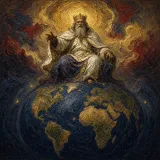
Psalm 47 sounds like a public coronation stretched to the borders of the earth. Hands clap, voices shout, a trumpet sounds, and the command to sing praises is repeated until the poem itself feels like an assembly being drawn into a refrain. Israel’s inheritance appears inside this larger kingship, chosen by the Lord rather than treated as an achievement independent of him. The nations may be subdued, yet they are also the audience summoned to acclaim the King “over all the earth.” The final scene places God on the throne of holiness and gathers princes in relation to “the God of Abraham.” Even the “shields of the earth,” the powers by which peoples imagine themselves protected, are said to belong to him. The psalm therefore holds particular covenant belonging and universal sovereignty together without allowing either to erase the other.
Central truth
Psalms 46–48 celebrate the LORD as refuge, universal king, and the glory of Zion: creation may convulse and nations rage, yet God is present with his city, stills warfare, reigns over all peoples, and gives his worshipers a place they can inspect, remember, and commend to the next generation.

The study notes have a page of their own
The movement by movement analysis, the words to trace, the verse by verse notes and where readers differ are written for someone studying alone. They are on the Deep Personal Reflections page for this chapter. This page is the lesson.
A chapter-specific teaching brief
These anchors come from this chapter itself. They help a teacher use the Level 1 overview, the Level 2 study, and the Scripture text as one lesson.
Open with the chapter’s first image
Psalms 47:1: “O clap your hands, all ye people; shout unto God with the voice of triumph.”
Slow down at the turning point
Psalms 47:5: “God is gone up with a shout, the LORD with the sound of a trumpet.”
Keep this word trail visible
praises, sing, people, earth, King, LORD
What to explain, in order
Teach the passage in this order. Each step names the verses it rests on, so every point can be shown in the text before it is applied.
Psalms 46-48
Three songs of the city of God
Begin by explaining that these three psalms belong together. Psalm 46 celebrates God as refuge when everything shakes, Psalm 47 celebrates him as King of all the earth, and Psalm 48 celebrates the city where he dwells. All three come from the sons of Korah. Some readers connect them with the deliverance of Jerusalem from Sennacherib in 2 Kings 19, when the Assyrian army withdrew; the psalms do not name an occasion, so teach that as a possibility. Teach the grouping first so learners hear one great theme: God with his people.
Psalm 46:1-7
When even mountains stop being reliable
Read verse 1 and explain refuge as a place to flee to and strength as the power to stand. A very present help means a help readily found. Then read verses 2-3 and let the class picture the end of the world as the ancients knew it. Then the contrast of verses 4-5, the quiet river and God in the midst of the city. Explain right early as at the break of dawn, the time when help arrived in the Bible's deliverances. Teach the refrain of verse 7: the LORD of hosts, commander of heaven's armies, is with us, and the God of Jacob, a flawed man's God, is our refuge.
Psalm 46:8-11
Be still after the weapons break
Invite the class to come and behold, as the psalm does. Explain what they see: a battlefield after God has ended the war, bows broken, spears snapped, chariots burned. Then teach verse 10 in context. Be still, literally let go or cease, is spoken first to the nations who raged in verse 6. Then show that it also speaks to God's people: stop striving and know who God is. Close with the refrain again. Martin Luther's hymn A Mighty Fortress is drawn from this psalm, and you may mention it.
Psalm 47:1-9
Clap because the King owns the map
Psalm 47 is loud. Explain clapping and shouting as the acclamation given to a newly crowned king. Then show God going up with a shout and the sound of a trumpet in verse 5, perhaps when the ark was carried up to Zion; the church has long read it at the ascension of Christ. Count the five sing praises of verse 6. Then teach verses 7-9: God is King of all the earth, and the princes of the peoples gather as the people of the God of Abraham. Explain that this is a picture of the nations joining Israel in worship, not only of conquest.
Psalm 48:1-8
Kings arrive confident and leave in a hurry
Read verses 1-3. Explain that Zion was not a high mountain, but in God's eyes it is beautiful and the joy of the whole earth. The sides of the north recalls the mountain where the Canaanites thought their gods lived, so the psalm claims that title for the LORD's city. Then teach the drama of verses 4-7. Kings gather, see, marvel, panic and flee. Explain the ships of Tarshish as great ocean-going ships broken by an east wind. Then verse 8: what they had heard, they have now seen.
Psalm 48:9-14
Walk the walls for the next generation
Teach verses 9-11 as worship inside the temple: thinking on God's lovingkindness, praise to the ends of the earth. Then teach the tour of verses 12-13. Explain tell the towers as count them, and mark the bulwarks as study the defences. The purpose is to tell the next generation. Then read verse 14 as the climax: this God is our God for ever, our guide even unto death. Teach this last, and turn the lesson toward what the class will pass on to children and grandchildren.
Where learners get stuck
The misreadings this passage tends to produce, and how to answer each from the text.
"Be still means God wants me to be passive and do nothing."
In 46:10 the command comes right after God makes wars cease and breaks the weapons (46:9). It is first a command to the warring nations to stop and acknowledge him, and then a call for his people to stop striving in fear. It is about trust, not inactivity. Nehemiah prayed and set a guard (Nehemiah 4:9). Being still before God frees us to act without panic.
"These psalms promise that our city or country will never be attacked."
The city of these psalms is Zion, where God chose to dwell among Israel. Jerusalem itself was later destroyed in 586 BC, as Lamentations mourns, when its people abandoned God. The psalms are not a guarantee for any modern city or nation. Hebrews 12:22 speaks of believers coming to the heavenly Jerusalem, and the promise of 46:1 is for all who take refuge in God.
"Psalm 47 is about Israel crushing other nations."
Verse 3 speaks of nations subdued, but the psalm's climax is the nations' princes gathered "even the people of the God of Abraham" (47:9), and all peoples told to clap and shout (47:1). God is "the King of all the earth" (47:7). The direction of the psalm is worship from every nation, as God promised Abraham in Genesis 12:3, not the triumph of one people over the rest.
"The river in 46:4 is a real river in Jerusalem."
Jerusalem had no great river; its water came from the Gihon spring and channels like Hezekiah's tunnel. The river of 46:4 is God's own life-giving presence, "God is in the midst of her" (46:5). The image runs through Scripture from Eden in Genesis 2:10 to Ezekiel 47 and Revelation 22:1. Teach it as a picture of God himself sustaining his people.
Learning objectives
- Trace the chaos imagery in Psalm 46 and explain why fearlessness depends on God as refuge rather than stable geography.
- Explain the river and city imagery in Psalm 46:4–5 beside the roaring waters of verses 2–3.
- Interpret Be still, and know that I am God in its context of broken weapons, desolated warfare, and international exaltation.
- Identify the universal kingship claims in Psalm 47 and the role of singing, shouting, and trumpet sound.
- Trace Zion's beauty, enemy panic, remembered lovingkindness, and inspected fortifications in Psalm 48.
- Explain how these psalms hold together God's universal rule and his particular presence with Zion.
Teacher preparation
- Mark Psalm 46's refrain in verses 7 and 11: the LORD of hosts is with us and is our refuge.
- Draw two water images for Psalm 46: roaring sea that threatens mountains and quiet river that makes glad the city.
- Trace Psalm 47 from all peoples summoned to praise to God's kingship and gathered princes.
- In Psalm 48, mark visual verbs: saw, have thought, walk about, tell the towers, mark bulwarks, consider palaces.
- Do not reduce Zion language to modern civic pride.
Evidence and interpretation checks
Explicit
Psalm 46 explicitly says God is refuge and strength while earth, mountains, waters, and nations move; Psalm 47 explicitly calls God King of all the earth; Psalm 48 explicitly names mount Zion as the city of the great King.
Scripture-supported
Reading Zion as part of a larger biblical city-of-God hope is supported by Hebrews 12:22 and Revelation 21, both of which take Zion and holy-city language into the consummated presence of God with his people.
Strong inference
The quiet river in Psalm 46 set against roaring seas strongly creates an ordered-chaos contrast: waters outside threaten stability, while the river associated with God's city gives gladness and steadiness.
Possible or traditional reading
Psalm 46 has often been connected with historical deliverance of Jerusalem, sometimes specifically with Hezekiah's day.
Limit
These psalms do not promise that the earthly city of Jerusalem will never experience invasion or destruction; the Bible itself records both.
Discussion with answer guidance
1. How extreme does Psalm 46 make the natural disaster before saying therefore will not we fear?
What a good answer contains
As extreme as the imagination can reach. "Therefore will not we fear, though the earth be removed, and though the mountains be carried into the midst of the sea; Though the waters thereof roar and be troubled, though the mountains shake with the swelling thereof" (46:2-3). Mountains were the picture of what never moves, and here they topple into the sea. A good answer sees that the confidence rests on verse 1, "God is our refuge and strength, a very present help in trouble", and that therefore links them. A weak answer softens the disaster and so makes the faith smaller.
Show teacher guidance
Earth is removed, mountains are carried into the sea, waters roar and trouble, and mountains shake.
2. How does the river in Psalm 46:4 differ from the waters in verses 2–3?
What a good answer contains
The waters of verses 2-3 roar, swell and shake the mountains; they are chaos. The river of verse 4 is quiet and life-giving: "There is a river, the streams whereof shall make glad the city of God." Jerusalem had no great river, only the spring of Gihon, so the river is God's own presence, as verse 5 says: "God is in the midst of her; she shall not be moved." A strong answer connects this to Eden's river in Genesis 2 and the river of Ezekiel 47 and Revelation 22. A weak answer misses the contrast between the two waters.
Show teacher guidance
The earlier waters roar and destabilize; the river's streams make glad the city of God.
3. What has God done immediately before Be still, and know that I am God in Psalm 46:10?
What a good answer contains
He has ended war. "Come, behold the works of the LORD, what desolations he hath made in the earth. He maketh wars to cease unto the end of the earth; he breaketh the bow, and cutteth the spear in sunder; he burneth the chariot in the fire" (46:8-9). Then God speaks: "Be still, and know that I am God" (46:10). A good answer sees that be still is first a command to the warring nations to stop, put down your weapons, and then an invitation to God's people to stop striving and trust. A weak answer turns it only into a call to quiet meditation.
Show teacher guidance
Verses 8–9 show desolations, wars made to cease, bow broken, spear cut, and chariot burned.
4. How many ways does Psalm 47 insist that God's kingship reaches beyond Israel?
What a good answer contains
Many ways: "O clap your hands, all ye people" (47:1); he is "a great King over all the earth" (47:2); "God is the King of all the earth" (47:7); "God reigneth over the heathen" (47:8); "The princes of the people are gathered together, even the people of the God of Abraham: for the shields of the earth belong unto God" (47:9). A strong answer notices that the princes of the nations are gathered as the people of the God of Abraham, echoing the promise of Genesis 12:3. A weak answer reads the psalm as Israel's victory over other nations only.
Show teacher guidance
Collect all ye people, all the earth, nations, heathen, gathered princes, and shields of the earth.
5. What happens to the assembled kings in Psalm 48:4–7 when they see Zion?
What a good answer contains
"For, lo, the kings were assembled, they passed by together. They saw it, and so they marvelled; they were troubled, and hasted away. Fear took hold upon them there, and pain, as of a woman in travail" (48:4-6). Then, "Thou breakest the ships of Tarshish with an east wind" (48:7). A good answer traces the rapid sequence: they came, saw, were astonished, panicked and fled, like labour pains or a fleet shattered in a storm. The city did not fight; God was known in her palaces as a refuge. A weak answer imagines a great battle that the psalm does not describe.
Show teacher guidance
The kings see Zion, marvel, panic, flee, and are broken like ships under an east wind.
6. Why does Psalm 48 tell worshipers to walk about Zion and count towers before speaking to the next generation?
What a good answer contains
Because what they see should become what they tell. "Walk about Zion, and go round about her: tell the towers thereof. Mark ye well her bulwarks, consider her palaces; that ye may tell it to the generation following. For this God is our God for ever and ever: he will be our guide even unto death" (48:12-14). A strong answer sees that the towers testify to God's protection, and that the real point is verse 14: the God of the city is the one to pass on. A weak answer makes the lesson about buildings rather than about God.
Show teacher guidance
Verses 12–13 turn observation into testimony: walk, tell, mark, consider, that ye may tell it to the generation following.
Responsible application
Read be still in a battlefield, not a spa
Use Psalm 46:8–11 to correct a detached use of verse 10.
Sing universal kingship
Use Psalm 47 to design a call to worship that names the scope of God's reign before discussing personal needs.
Inspect before you inherit
Use Psalm 48:12–14 to turn careful observation of inherited faith into concrete testimony for the next generation.
Session plans
Two timings of the same lesson. The shorter keeps the reading, the central discussion and one response; the longer gives the confusions and the application their own time.
45 minutes
Refuge
Read 46:1 together three times. Ask what a refuge is and where people run when afraid.
The shaking world
Read 46:2-7 and take questions one and two. Address confusion four.
Be still
Read 46:8-11 and take question three. Address confusion one.
The King of all the earth
Read Psalm 47 with clapping at verse 1. Take question four and confusion three.
The city
Read Psalm 48 and take questions five and six. Address confusion two.
Tell the next generation
Read the key verse together. Ask each person to name one younger person they could tell about God this week, then pray.
90 minutes
What shakes us
Ask the group what makes the ground feel unsteady in life. Then read Psalm 46 aloud.
Refuge in the earthquake
Take questions one and two. Read Genesis 2:10 and Revelation 22:1-2 for the river. Address confusion four.
Weapons broken
Read 46:8-11 and take question three. Address confusion one. Sing or read the opening of A Mighty Fortress if the group knows it.
Clap your hands
Read Psalm 47 aloud with clapping and shouting. Take question four. Read Genesis 12:1-3 and address confusion three.
Kings in a hurry
Read 48:1-8 and 2 Kings 19:32-36. Take question five.
Walk the walls
Read 48:9-14 and take question six. Address confusion two with Hebrews 12:22-24.
Application
In pairs, list three things God has done for them that they could tell a younger person, as 48:13 commands.
Handout and prayer
Read the key verse and pray 46:1-3 over any who are facing upheaval.
Adapting the lesson
Children
Build a tower of blocks and shake the table gently while reading 46:2-3. Then put a small figure inside a strong box as 46:1, God is our refuge. Let children clap and shout for Psalm 47. For Psalm 48, walk around the room counting pretend towers and then say, This God is our God for ever. Keep the fleeing kings light and simple.
Youth
Start with things in their world that feel like mountains falling: family breakdown, exams, news. Read 46:1-3. Spend time on 46:10 and the difference between striving and stillness. Let them design a modern version of the tour in 48:12-13: what evidence of God's faithfulness would they show a younger friend. Keep politics out of the discussion of nations.
Adults
Give time to the historical background in 2 Kings 18-19 and to the theology of God's presence with his people from Eden to the New Jerusalem. Discuss how adults pass faith on to the next generation, as 48:13 asks. Address confusion two carefully so that no nation is mapped onto Zion. Ask where they need the refuge of 46:1 now.
One to one
Ask what is shaking in their life right now. Read 46:1-3 together and let them name it. Then read 46:10 and spend a minute in silence. If they are a parent or grandparent, end with 48:13-14 and talk about what they want the next generation to know about God. Pray 46:7 over them.
Song and video learning lab
A song or video may interpret, compress, or dramatize the text. Its value becomes clearer when its choices are compared with Scripture.
- Before the media: the exact passage and its central movement.
- During the media: the words, people, events, and emotions the artist emphasizes.
- After the media: what it clarifies, what it leaves out, and what belongs back in the biblical text.
Handout
One page for learners to take home. The print button prints this section alone.
Psalms 46–48
The passage in brief
Psalms 46 to 48 celebrate God with his people. Psalm 46 says that God is our refuge and strength, so we will not fear even if the earth gives way, because a river of gladness flows through his city and he ends wars. Be still, and know that I am God. Psalm 47 calls all peoples to clap and shout because God is King of all the earth. Psalm 48 praises Zion, where kings fled in fear, and tells worshipers to walk its walls and tell the next generation.
A verse to keep
God is our refuge and strength, a very present help in trouble.
Psalms 46:1 · King James Version
Questions to take home
What feels like mountains falling into the sea in your life right now?
What does it mean for you to be still and know that God is God, as in 46:10?
What do you want the next generation to know about God, as in 48:13-14?
This week
Tell one younger person this week about something God has done for you, as Psalm 48:13 commands.
Music and video connected to the passage
Related media appears when its Scripture reference overlaps this study. Music and video can illuminate a theme while the biblical text remains the foundation.