

Exodus 32:32
Blot me, I pray thee, out of thy book
The first appearance of the image is an offer to be removed from it, made on behalf of other people.
Verse by verse
- 32:32
The Hebrew begins a conditional appeal and moves to its negative alternative without stating the positive conclusion. The KJV preserves that break in its punctuation.
- 32:32
The Hebrew verb behind blot me is machah, to wipe out or erase. Exodus calls this God's book without yet supplying Revelation's full description of the book of life.
- 32:32
God's answer in Exodus 32:33 assigns responsibility to the sinner. The text does not say that Moses' offered removal was accepted.
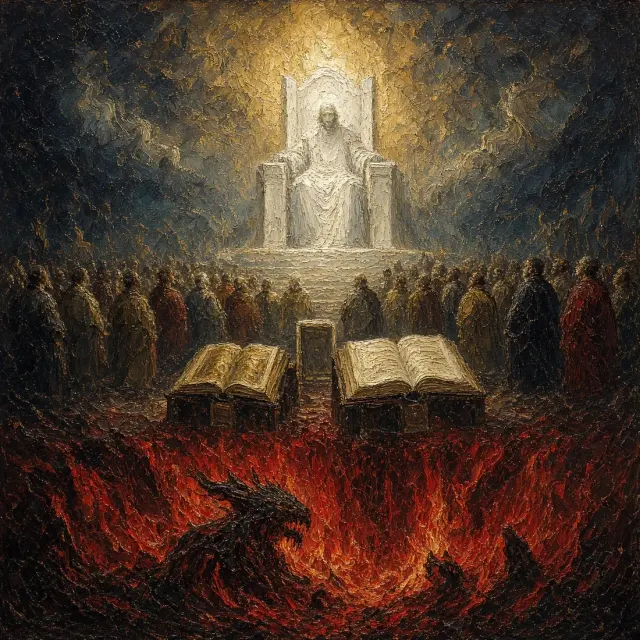

Moses leaves the first half of his sentence unfinished. If thou wilt forgive their sin. Then the prayer turns, and if not. The missing conclusion should not be filled with an invented speech or a description of his voice. The words themselves make the break plain. What he does finish is the terrible alternative: blot me out.
That offer has an edge supplied by the earlier conversation. In Exodus 32:10 God had spoken of making a great nation from Moses while consuming the people. Now Moses puts his own place in God's book beside their threatened future. He has already called the golden calf a great sin. This is not innocence argued badly; it is solidarity offered at personal cost.
The reply in verse 33 matters just as much as the offer. God names the sinner as the one subject to erasure. Moses cannot arrange the exchange merely by volunteering. The book is God's, written by God, and judgment remains God's. The intercessor can plead with extraordinary boldness. He does not take possession of the pen.